
Star Wars: The Rise of Skywalker Budget
 AdventureActionScience Fiction2h 22m
Updated
Synopsis
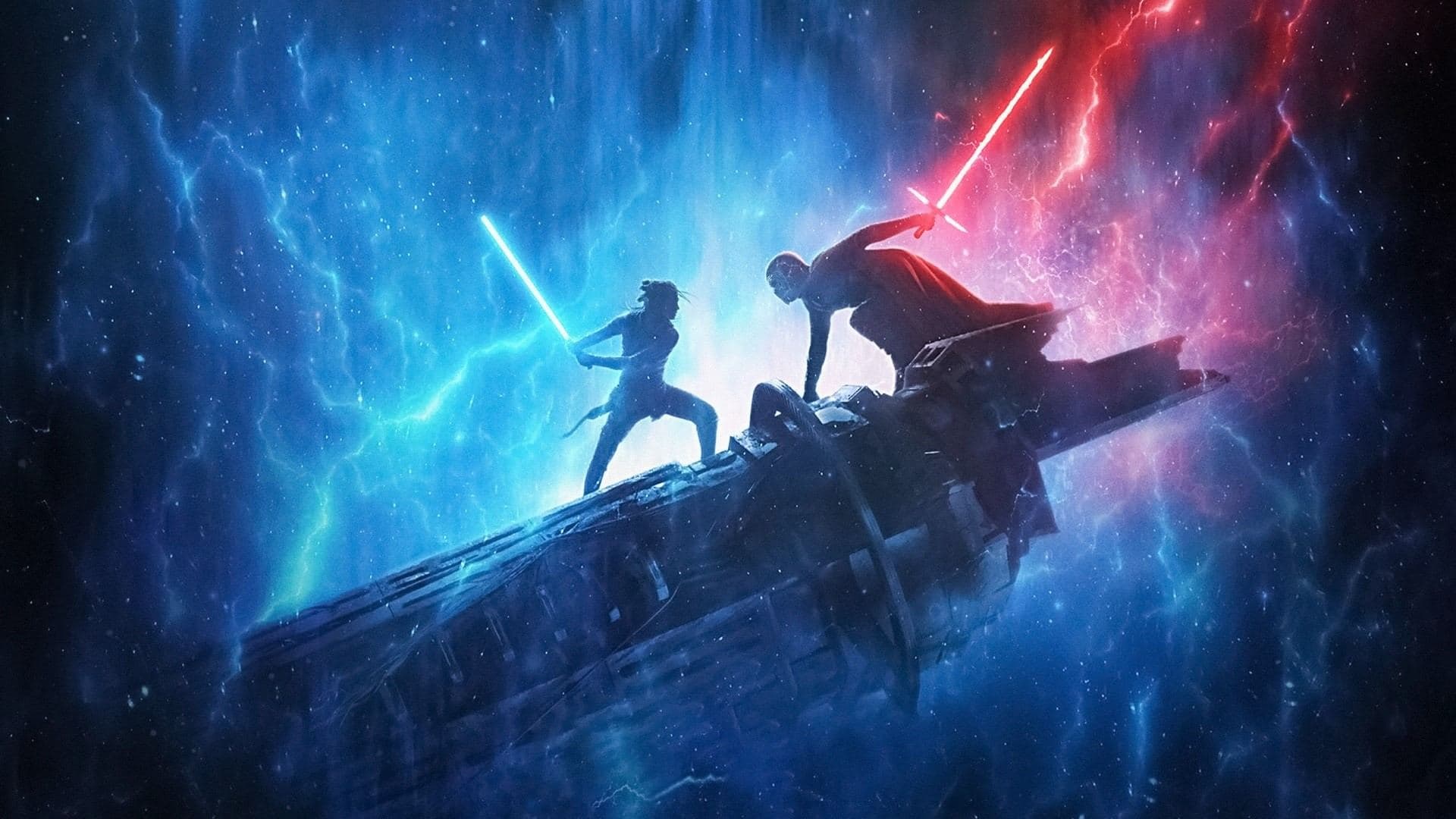
The surviving Resistance faces the First Order once more while Rey, Finn, and Poe Dameron embark on a desperate quest to find a Sith wayfinder that will lead them to the resurrected Emperor Palpatine, who has been secretly orchestrating the conflict from the Unknown Regions. As Rey confronts the truth of her heritage and Kylo Ren struggles between the light and dark, the final battle for the fate of the galaxy unfolds above the Sith world of Exegol.
What Is the Budget of Star Wars: The Rise of Skywalker?
Star Wars: The Rise of Skywalker (2019), directed by J.J. Abrams and distributed by Walt Disney Studios Motion Pictures, had a net production budget of approximately $490,000,000, making it the second most expensive film ever made at the time of its release. The gross budget reached $593.7 million before tax incentives. The film was produced by Lucasfilm and Bad Robot Productions, with Kathleen Kennedy, J.J. Abrams, and Michelle Rejwan serving as producers.
The nearly half-billion dollar production cost reflects the compounding pressures of concluding a nine-film saga spanning 42 years: the technical demands of integrating archive footage of the late Carrie Fisher, extensive reshoots following test screening feedback, the premium of bringing back J.J. Abrams after Colin Trevorrow's departure, and the sheer scale of a production designed to deliver a definitive ending to the Skywalker saga. UK tax incentives helped offset the gross budget, but the net cost still represented one of the largest single-film investments in cinema history.
Key Budget Allocation Categories
The Rise of Skywalker's $490 million net budget was shaped by the unique challenge of concluding the Skywalker saga while managing a mid-production director change and the death of a principal cast member:
- Above-the-Line Talent and Director Transition: J.J. Abrams' return as director after Colin Trevorrow's departure required renegotiation of his deal, reportedly at a significant premium over his Force Awakens compensation. The returning cast, including Daisy Ridley, Adam Driver, John Boyega, and Oscar Isaac, commanded higher fees reflecting the franchise's elevated profile. Ian McDiarmid's return as Emperor Palpatine and Billy Dee Williams' return as Lando Calrissian added further above-the-line costs.
- Carrie Fisher Archive Footage Integration: Following Fisher's death in December 2016, the production used unused footage from The Force Awakens to create her scenes rather than recasting or using a digital double. This required building new scenes around existing footage, matching lighting and set design to shots filmed years earlier, and developing VFX techniques to integrate the material seamlessly. The approach was more expensive and time-consuming than conventional filmmaking but honored the production's commitment to using Fisher's actual performance.
- Extensive Reshoots and Additional Photography: The film underwent two rounds of additional photography: two weeks in July 2019 and further sessions in September and October 2019 at Bad Robot's facilities. Reshoots on this scale add tens of millions in costs for crew, sets, VFX pipeline restarts, and cast availability. Reports indicated the reshoots addressed pacing and narrative clarity following test screening feedback.
- Visual Effects and Practical Production: Industrial Light & Magic delivered the VFX work, continuing the franchise's hybrid approach of practical effects and digital environments. The film's scale, including the climactic fleet battle, the Sith world of Exegol, and the Force connection sequences, required a massive VFX effort. Practical sets were constructed at Pinewood Studios and on location in Jordan's Wadi Rum desert.
- Score and Post-Production: John Williams composed his final Star Wars score, providing musical continuity across the entire saga. The recording sessions, sound design by Skywalker Sound, and the compressed post-production timeline (driven by the immovable December 2019 release date) all contributed to elevated finishing costs.
How Does The Rise of Skywalker's Budget Compare to Similar Films?
At $490,000,000 net, The Rise of Skywalker is among the most expensive films ever produced. The comparison reveals how franchise conclusion pressure inflates costs:
- Avengers: Endgame (2019): Budget $356,000,000 | Worldwide $2,799,400,000. Released the same year, Endgame concluded the Infinity Saga at lower cost and generated nearly triple the worldwide gross, making it a more efficient franchise conclusion by every financial metric.
- Star Wars: The Force Awakens (2015): Budget $245,000,000 | Worldwide $2,068,200,000. The trilogy opener cost half as much and earned nearly double, illustrating how sequel fatigue and creative controversy compounded costs while reducing returns.
- Star Wars: The Last Jedi (2017): Budget $200,000,000 | Worldwide $1,332,500,000. The middle chapter operated at the lowest budget of the sequel trilogy while generating returns between its siblings.
- Avatar: The Way of Water (2022): Budget $350,000,000 | Worldwide $2,320,200,000. James Cameron's sequel invested heavily in technology development but achieved a far stronger return ratio.
- Pirates of the Caribbean: On Stranger Tides (2011): Budget $410,600,000 | Worldwide $1,045,700,000. Previously the most expensive film ever made, it demonstrates the same pattern of escalating franchise costs producing diminishing returns.
Star Wars: The Rise of Skywalker Box Office Performance
The Rise of Skywalker opened on December 20, 2019, earning $177.4 million in its domestic opening weekend, the third-highest December opening in history behind The Force Awakens and The Last Jedi. The film crossed $1 billion worldwide but represented a significant decline from both its predecessors in the sequel trilogy.
Box Office Breakdown
Star Wars: The Rise of Skywalker

At approximately +119%, Star Wars: The Rise of Skywalker returned roughly $2.19 for every $1 of production budget invested during its theatrical run.
The film generated an estimated net profit of approximately $300 million for Disney after accounting for all costs and exhibitor splits. While profitable, this represented a dramatic decline from The Force Awakens' estimated $780 million profit and confirmed a clear downward trajectory across the sequel trilogy: $2.07 billion (TFA), $1.33 billion (TLJ), $1.07 billion (TROS). The $1 billion drop from first to last chapter, combined with the nearly doubled production costs, made The Rise of Skywalker one of the most expensive "profitable" conclusions in franchise history.
Star Wars: The Rise of Skywalker Production History
The Rise of Skywalker had one of the most turbulent development paths of any major franchise film. Colin Trevorrow (Jurassic World) was hired to direct in August 2015, but departed in September 2017 following creative differences with Lucasfilm president Kathleen Kennedy. His screenplay, co-written with Derek Connolly, was substantially reworked, though both retain story credits on the final film. J.J. Abrams agreed to return as director, making him the first filmmaker to direct both the opening and closing chapters of a Star Wars trilogy.
Chris Terrio (Argo, Batman v Superman) co-wrote the new screenplay with Abrams. The script faced the unprecedented challenge of concluding the nine-film Skywalker saga while incorporating Carrie Fisher's General Leia using only unused footage from The Force Awakens, after the actress's death in December 2016. The decision not to recast or digitally recreate Fisher shaped the entire narrative structure, as scenes had to be written around the existing footage rather than the other way around.
Principal photography ran from August 1, 2018, to February 15, 2019, primarily at Pinewood Studios in England with location shooting in Jordan's Wadi Rum desert standing in for the planet Pasaana. The production then underwent two significant rounds of additional photography: two weeks in July 2019 and further sessions in September and October 2019 at Bad Robot's facilities. These reshoots addressed pacing concerns and narrative clarity raised during test screenings, particularly around the revelation of Rey's lineage and the return of Emperor Palpatine.
The compressed post-production timeline was driven by the immovable December 20, 2019 release date. John Williams composed his ninth and final Star Wars score under this deadline pressure, completing what he described as the end of his involvement with the franchise. The film was reportedly still being edited weeks before its premiere, an unusually tight margin for a production of this scale.
Awards and Recognition
The Rise of Skywalker received three Academy Award nominations: Best Original Score (John Williams), Best Sound Editing, and Best Visual Effects. The film did not win in any category. At the Saturn Awards, the film won five awards: Best Science Fiction Film, Best Director, Best Music, Best Make-up, and Best Special Effects.
John Williams' score received a Grammy Award nomination, continuing his record-setting association with the franchise. The film earned additional technical nominations from BAFTA (three nominations) and various visual effects and sound editing guilds. The awards trajectory reflected the critical divide: technical achievements were recognized while the film's narrative choices were more divisively received.
Critical Reception
The Rise of Skywalker received the most divided critical response of the sequel trilogy, earning a 51% approval rating on Rotten Tomatoes from 522 critics. The consensus described "a frustrating lack of imagination" in the saga's conclusion. On Metacritic, the film scored 53 out of 100, the lowest of all nine main saga films. Audiences gave it a B+ via CinemaScore, the lowest score for any live-action Star Wars film.
The primary criticism centered on the film's perceived attempt to reverse course from The Last Jedi's more subversive creative choices. Critics argued the film prioritized fan service and nostalgia over narrative coherence, with the return of Emperor Palpatine and the retconning of Rey's parentage drawing particular scrutiny. The pacing was described as relentless, with multiple critics noting the film's first act crammed in enough plot for an entire film.
Defenders of the film praised the emotional weight of the performances, particularly Adam Driver's Kylo Ren arc, and the spectacle of the final battle. The handling of Carrie Fisher's final appearance was generally praised as respectful and emotionally effective given the constraints. Over time, the film's reputation has remained polarized, with the sequel trilogy's overall narrative arc continuing to generate debate among fans and critics about the costs of creative course-correction in franchise filmmaking.
Frequently Asked Questions
How much did it cost to make Star Wars: The Rise of Skywalker (2019)?
The net production budget was approximately $490,000,000 after UK tax incentives, with a gross budget of $593.7 million. This made it the second most expensive film ever made at the time. Marketing and distribution costs added an estimated $275,000,000 to $325,000,000, bringing the total investment to approximately $765,000,000 to $815,000,000.
How much did The Rise of Skywalker earn at the box office?
The film grossed $515,202,542 domestically and $558,941,706 internationally, totaling $1,074,144,248 worldwide. It opened with $177.4 million domestically, the third-highest December opening in history.
Was The Rise of Skywalker profitable?
Yes, the film generated an estimated net profit of approximately $300 million for Disney. However, this represented a significant decline from The Force Awakens' estimated $780 million profit and confirmed a downward trajectory across the sequel trilogy.
Why was The Rise of Skywalker so expensive to make?
The $490 million cost was driven by the mid-production director change (Colin Trevorrow to J.J. Abrams), the complex integration of Carrie Fisher's archive footage, two rounds of extensive reshoots in July and September-October 2019, and the massive VFX requirements of the saga's climactic battle sequences.
How does The Rise of Skywalker's budget compare to other Star Wars films?
At $490,000,000, it was by far the most expensive Star Wars film. The Force Awakens cost $245,000,000 and The Last Jedi cost $200,000,000. The cost nearly doubled from the trilogy opener to the conclusion while worldwide gross dropped from $2.07 billion to $1.07 billion.
Why did Colin Trevorrow leave The Rise of Skywalker?
Trevorrow departed in September 2017 following creative differences with Lucasfilm president Kathleen Kennedy. His screenplay, co-written with Derek Connolly, was substantially reworked by J.J. Abrams and Chris Terrio, though Trevorrow and Connolly retain story credits.
How was Carrie Fisher included after her death?
Following Fisher's death in December 2016, the production used unused footage from The Force Awakens to create her scenes. New scenes were written around existing footage, requiring matching lighting, sets, and VFX integration. The production chose not to recast or digitally recreate Fisher.
What was the ROI for The Rise of Skywalker?
The theatrical ROI was approximately 119%, calculated as ($1,074,144,248 - $490,000,000) / $490,000,000 x 100. This measures gross revenue against net production budget only and does not account for P&A or exhibitor shares.
What awards did The Rise of Skywalker win?
The film received three Academy Award nominations (Score, Sound Editing, Visual Effects) but did not win. It won five Saturn Awards including Best Science Fiction Film and Best Director. John Williams' score received a Grammy nomination.
Where was The Rise of Skywalker filmed?
Principal photography took place at Pinewood Studios in England and on location in Jordan's Wadi Rum desert (standing in for the planet Pasaana). Additional photography occurred at Bad Robot's facilities in July and September-October 2019.
Filmmakers
Star Wars: The Rise of Skywalker

Official Trailer
Build budgets like this one in Saturation
Start from an industry-standard feature film template, import the schedule and rates you already have, and let the cost report keep itself current as you spend. Real-time collaboration, no spreadsheets.