
Spider-Man 3 Budget
 ActionAdventureScience Fiction2h 19m
Updated
Synopsis
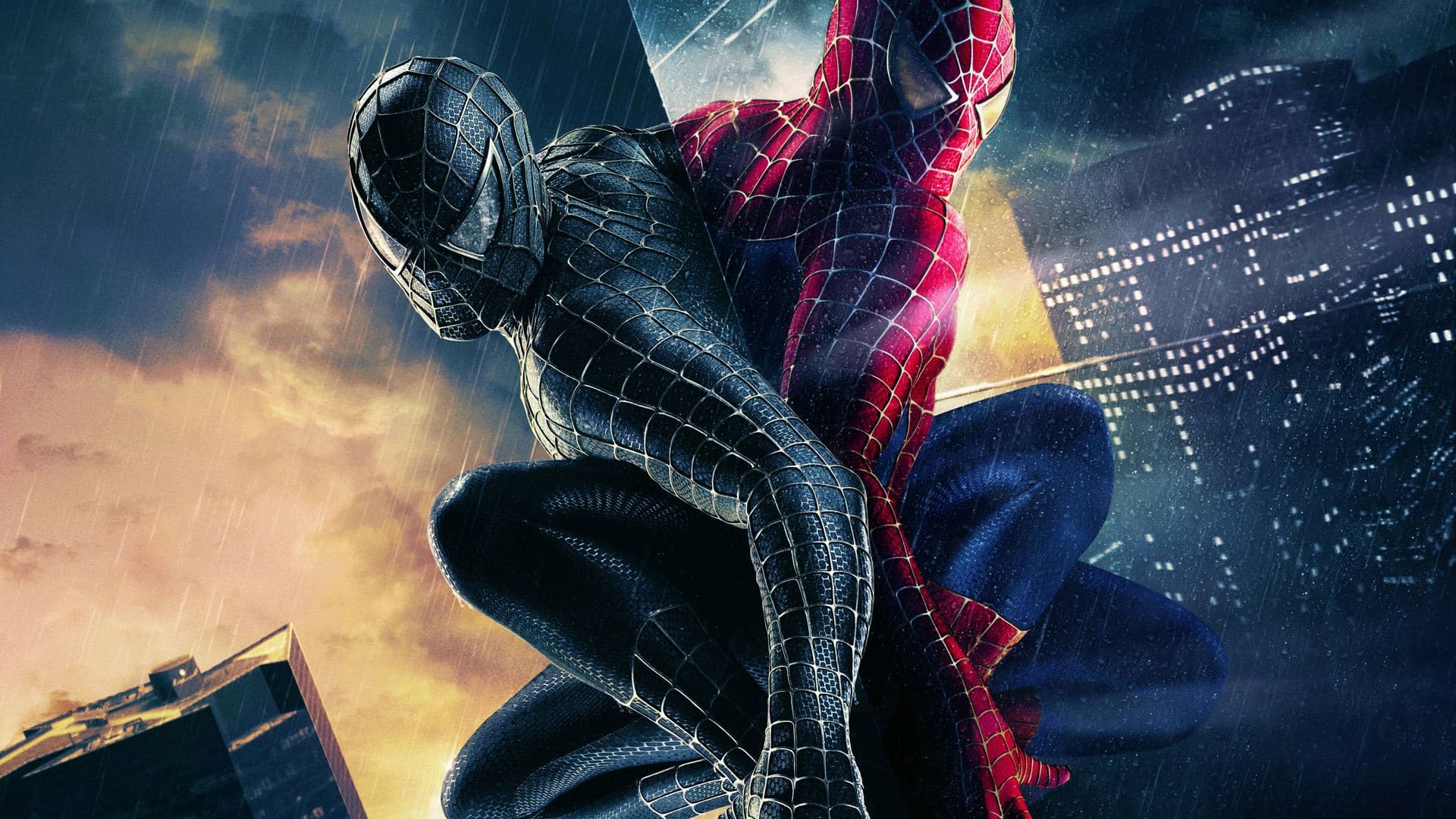
Peter Parker's life appears to be coming together: he is celebrated as Spider-Man, his relationship with Mary Jane Watson is deepening, and Harry Osborn seems to have moved past his vendetta. But when an alien symbiote attaches to Peter's suit, amplifying his aggression and darkest impulses, he begins to alienate everyone around him. As escaped convict Flint Marko is transformed into the Sandman and seeks to steal enough money for his sick daughter's treatment, and rival photographer Eddie Brock bonds with the symbiote to become the lethal Venom, Peter must confront the darkness within himself and learn that true strength lies in forgiveness rather than vengeance.
What Is the Budget of Spider-Man 3?
Spider-Man 3 (2007), directed by Sam Raimi and distributed by Sony Pictures Releasing through Columbia Pictures, was produced on a budget of $258,000,000. The third and final installment of Raimi's Spider-Man trilogy was, at the time of its release, the most expensive film ever made, a record driven by the film's ambitious scope: three villains (Sandman, Venom, and New Goblin), the symbiote suit storyline, elaborate practical and digital action sequences, and the star salaries commanded by the returning cast after two massive commercial hits.
The $258 million budget reflected the escalating costs of maintaining a franchise at the peak of its commercial momentum. Spider-Man (2002) had cost $139 million and Spider-Man 2 (2004) had cost $200 million, meaning the trilogy's production costs nearly doubled over five years. Sony's willingness to spend at this level demonstrated confidence in the franchise's earning potential, though the creative compromises that accompanied the budget, particularly the studio-mandated inclusion of Venom, would become a source of lasting controversy.
Key Budget Allocation Categories
Spider-Man 3's $258 million budget was distributed across the following production areas:
- Visual Effects and Three-Villain Complexity: The film's three-villain structure required distinct VFX pipelines for each antagonist. Sandman (Thomas Haden Church) was realized through groundbreaking sand particle simulation, with his transformation and giant sand form requiring some of the most complex effects work of the era. The Venom symbiote required fluid dynamics and organic animation to depict the alien substance bonding with both Peter Parker and Eddie Brock. The New Goblin (James Franco) demanded aerial combat choreography and practical stunt rigging. Sony Pictures Imageworks led the VFX work across approximately 900 effects shots.
- Cast Salaries and Returning Ensemble: Tobey Maguire's salary reportedly reached $15 million to $17 million plus backend participation. Kirsten Dunst and James Franco returned at significantly elevated rates from the previous films. New additions Thomas Haden Church and Topher Grace joined as Sandman and Eddie Brock/Venom respectively. Bryce Dallas Howard played Gwen Stacy. The ensemble salary package represented the largest single budget allocation, reflecting the leverage that a twice-proven franchise cast commanded.
- Practical Stunts and Action Sequences: Despite the heavy VFX component, Spider-Man 3 utilized extensive practical stunt work. The crane collapse sequence in downtown Manhattan involved constructing a partial crane rig on the Sony lot and combining it with location plates. The final battle between Spider-Man, Sandman, and Venom combined wire rigs, practical debris effects, and digital augmentation. Stunt coordinator Scott Rogers coordinated multi-character fight sequences that required weeks of rehearsal and shooting.
- Production Design and Multiple Set Builds: Production designer J. Michael Riva (who had designed Spider-Man 2) built multiple large-scale sets at Sony Pictures Studios in Culver City, California, and on location in Cleveland, Ohio, and Los Angeles. Key builds included a recreation of portions of Manhattan, the construction site for the final battle, and Harry Osborn's penthouse. Location work in Cleveland stood in for New York City, requiring street-level set dressing and crowd management.
- Score and Sound Design: Christopher Young composed the score, replacing Danny Elfman who had scored the first two films. The transition was reportedly due to a strained working relationship between Elfman and Raimi. Young's score needed to maintain continuity with the established musical identity while introducing new themes for the symbiote and the three villains, a demanding compositional task that required a full orchestral recording.
How Does Spider-Man 3's Budget Compare to Similar Films?
At $258,000,000, Spider-Man 3 was the most expensive film ever produced at the time of its release. Comparing it with other superhero blockbusters of the era:
- Spider-Man 2 (2004): Budget $200,000,000 | Worldwide $788,000,000. The previous installment cost 22% less and is widely regarded as the superior film. Spider-Man 2's tighter focus on a single villain (Doctor Octopus) allowed for better character development and more disciplined spending.
- The Dark Knight (2008): Budget $185,000,000 | Worldwide $1,003,000,000. Christopher Nolan's Batman sequel, released just one year later, cost 28% less and became the first superhero film to cross $1 billion, demonstrating that creative excellence mattered more than budget size.
- Iron Man (2008): Budget $140,000,000 | Worldwide $585,200,000. The MCU's launch film cost 46% less than Spider-Man 3 and inaugurated a franchise that would eventually eclipse Raimi's trilogy commercially, showing that superhero films could succeed at more disciplined budgets.
- X-Men: The Last Stand (2006): Budget $210,000,000 | Worldwide $459,400,000. Fox's third X-Men film, released a year before Spider-Man 3, similarly stuffed multiple characters and storylines into a trilogy finale with mixed results, earning substantially less despite a significant budget.
- Superman Returns (2006): Budget $204,000,000 | Worldwide $391,100,000. Warner Bros.' Superman relaunch carried years of accumulated development costs and underperformed, another cautionary tale about budget inflation in superhero franchises that Spider-Man 3 echoed.
Spider-Man 3 Box Office Performance
Spider-Man 3 opened in the United States on May 4, 2007, setting a new opening weekend record with $151.1 million domestically, surpassing Spider-Man's previous record of $114.8 million. The massive opening reflected enormous anticipation for the trilogy's conclusion, with audiences eager to see the symbiote suit and the introduction of Venom.
Box Office Breakdown
Spider-Man 3

At approximately +247%, Spider-Man 3 returned roughly $3.47 for every $1 of production budget invested during its theatrical run.
The $894.9 million worldwide gross made Spider-Man 3 the highest-grossing film of 2007 and the highest-grossing film in the Spider-Man franchise until Spider-Man: No Way Home surpassed it in 2021. Despite the massive total, the film's sharp week-over-week declines suggested audience disappointment: the domestic second weekend dropped 62%, a steep fall indicating negative word of mouth. The film was profitable for Sony but did not achieve the $1 billion milestone that the franchise's trajectory had suggested was within reach, and its mixed reception effectively ended Raimi's planned Spider-Man 4.
Spider-Man 3 Production History
Development on Spider-Man 3 began immediately after Spider-Man 2's commercial and critical success in 2004. Sam Raimi and co-writers Ivan Raimi and Alvin Sargent initially developed a story centered on Sandman and the New Goblin, with Sandman reimagined as the true killer of Uncle Ben. Raimi intended the film as a story about forgiveness, with Peter Parker confronting his desire for revenge.
The most consequential creative decision came when Sony Pictures pressed Raimi to include Venom, one of Spider-Man's most popular villains in comics. Raimi has publicly stated that he did not understand the character or find Venom interesting, but the studio believed the character was essential for the film's commercial appeal. The addition of Venom and Eddie Brock (Topher Grace) to an already crowded narrative became the film's most criticized element, with many viewers and critics feeling that three villains diluted each antagonist's development.
Principal photography ran from January to July 2006, primarily at Sony Pictures Studios in Culver City, California, with location work in Cleveland, Ohio (standing in for New York City), and various Los Angeles locations. The Cleveland shoot involved extensive street-level filming that required closing downtown blocks and redressing storefronts. The production employed over 1,000 crew members at its peak.
The Sandman effects required particular innovation. Thomas Haden Church performed scenes both practically and in a motion capture suit, with his sand transformation rendered through particle simulation that was cutting-edge for 2007. The symbiote suit sequences, depicting the alien substance bonding with and corrupting Peter Parker, utilized a combination of practical costume work (a black version of the Spider-Man suit) and digital effects for the symbiote's organic movements. The "emo Peter" montage, in which a symbiote-influenced Parker struts through Manhattan, became one of the most memed sequences in superhero cinema history.
Awards and Recognition
Spider-Man 3 was not nominated for any major industry awards, a notable absence for what had been a critically lauded franchise. The film was nominated for several Razzie Awards, including Worst Picture and Worst Sequel, though it did not "win" in any category. The Visual Effects Society recognized the Sandman effects work, which was considered groundbreaking for particle simulation and remains impressive when evaluated purely on technical merit.
The film's cultural impact, while not in the realm of critical prestige, has been substantial. The "emo Peter" dance scenes became enduring internet memes, and the symbiote suit storyline influenced subsequent Spider-Man adaptations. Sam Raimi's trilogy as a whole is now regarded as a foundational work in superhero cinema, and Spider-Man 3's ambition, even in its perceived excess, is reconsidered by fans who appreciate the filmmaker's personal vision in an era before the MCU standardized the genre.
Critical Reception
Spider-Man 3 earned a 51% approval rating on Rotten Tomatoes based on 268 reviews, a significant decline from Spider-Man 2's 93% and Spider-Man's 90%. On Metacritic, the film scored 59 out of 100, indicating "mixed or average reviews." Audiences gave it a B+ on CinemaScore.
Positive reviews acknowledged the film's ambition, the Sandman origin sequence (widely praised as a technical and emotional highlight), and individual performances, particularly Thomas Haden Church's nuanced Sandman and James Franco's conflicted Harry Osborn. The action sequences were recognized for their scale, with the crane collapse and the final three-way battle drawing praise for choreography and VFX integration.
Negative reviews focused on the overcrowded narrative, the underdeveloped Venom (who appears only in the film's final act despite being the most promoted villain), Topher Grace's miscasting as Eddie Brock, and the tonal inconsistency between the film's serious dramatic ambitions and its broader comedic moments (particularly the "emo Peter" sequence). Sam Raimi later acknowledged that trying to serve three villains, multiple character arcs, and studio mandates resulted in a film that lacked the focused emotional clarity of Spider-Man 2. The lesson of Spider-Man 3, that bigger budgets and more villains do not guarantee a better film, became a cautionary template for subsequent superhero franchises.
Frequently Asked Questions
How much did it cost to make Spider-Man 3?
The production budget was $258,000,000, making it the most expensive film ever produced at the time of its release. Costs were driven by three distinct villain VFX pipelines (Sandman particle simulation, Venom symbiote animation, New Goblin aerial combat), elevated cast salaries for the returning ensemble, and extensive practical and digital action sequences.
How much did Spider-Man 3 earn at the box office?
The film grossed $336,500,000 domestically and $558,400,000 internationally, totaling $894,900,000 worldwide. It opened with a then-record $151.1 million domestic opening weekend, the largest opening in cinema history at that time.
Was Spider-Man 3 profitable?
Yes. The $894.9 million worldwide gross comfortably exceeded the estimated break-even threshold of $516 million to $600 million, generating substantial theatrical profit for Sony. However, the film did not reach $1 billion as the franchise's trajectory had suggested, and steep weekly declines indicated audience disappointment.
Why did Sam Raimi include Venom in Spider-Man 3?
Sony Pictures pressed Raimi to include Venom, believing the popular comics villain was essential for commercial appeal. Raimi has publicly stated he did not understand or find the character interesting but accommodated the studio's mandate. The addition of Venom to an already crowded narrative with Sandman and New Goblin became the film's most criticized creative decision.
Where was Spider-Man 3 filmed?
Principal photography ran from January to July 2006, primarily at Sony Pictures Studios in Culver City, California. Location work took place in Cleveland, Ohio (standing in for New York City) and various Los Angeles locations. The Cleveland shoot required closing downtown blocks and redressing storefronts for the Manhattan sequences.
How does Spider-Man 3 compare to Spider-Man 2?
Spider-Man 2 cost $200 million and earned $788 million with a 93% Rotten Tomatoes score, while Spider-Man 3 cost $258 million and earned $894.9 million with a 51% score. The sequel earned more money but the budget increased by 29%, and the sharp decline in critical reception effectively ended Sam Raimi's planned Spider-Man 4.
What happened to Spider-Man 4?
Sam Raimi was developing Spider-Man 4 with Tobey Maguire set to return, but creative disagreements with Sony over the script and villain choices led Raimi to depart in January 2010. Sony instead rebooted the franchise with The Amazing Spider-Man (2012) starring Andrew Garfield.
Why is the emo Peter dance scene so famous?
The sequence in which a symbiote-influenced Peter Parker struts through Manhattan with exaggerated swagger became one of the most memed moments in superhero cinema. The scene's tonal clash with the film's dramatic ambitions divided audiences at the time but has since become an enduring piece of internet culture.
What was groundbreaking about Spider-Man 3's visual effects?
The Sandman particle simulation was considered cutting-edge for 2007, requiring innovative techniques to render Thomas Haden Church's character as billions of sand particles that could form, dissolve, and reconstitute. The Sandman birth sequence, in which Marko reassembles himself from sand, was widely praised as a technical and emotional highlight.
Who composed the score for Spider-Man 3?
Christopher Young composed the score, replacing Danny Elfman who had scored the first two films. The transition was reportedly due to a strained working relationship between Elfman and Raimi during Spider-Man 2's production. Young introduced new themes for the symbiote and three villains while maintaining musical continuity with the established franchise identity.
Filmmakers
Spider-Man 3

Official Trailer
Build budgets like this one in Saturation
Start from an industry-standard feature film template, import the schedule and rates you already have, and let the cost report keep itself current as you spend. Real-time collaboration, no spreadsheets.