Cats Don't Dance Budget
 AnimationComedyFamilyMusic1h 14m
Updated
Synopsis
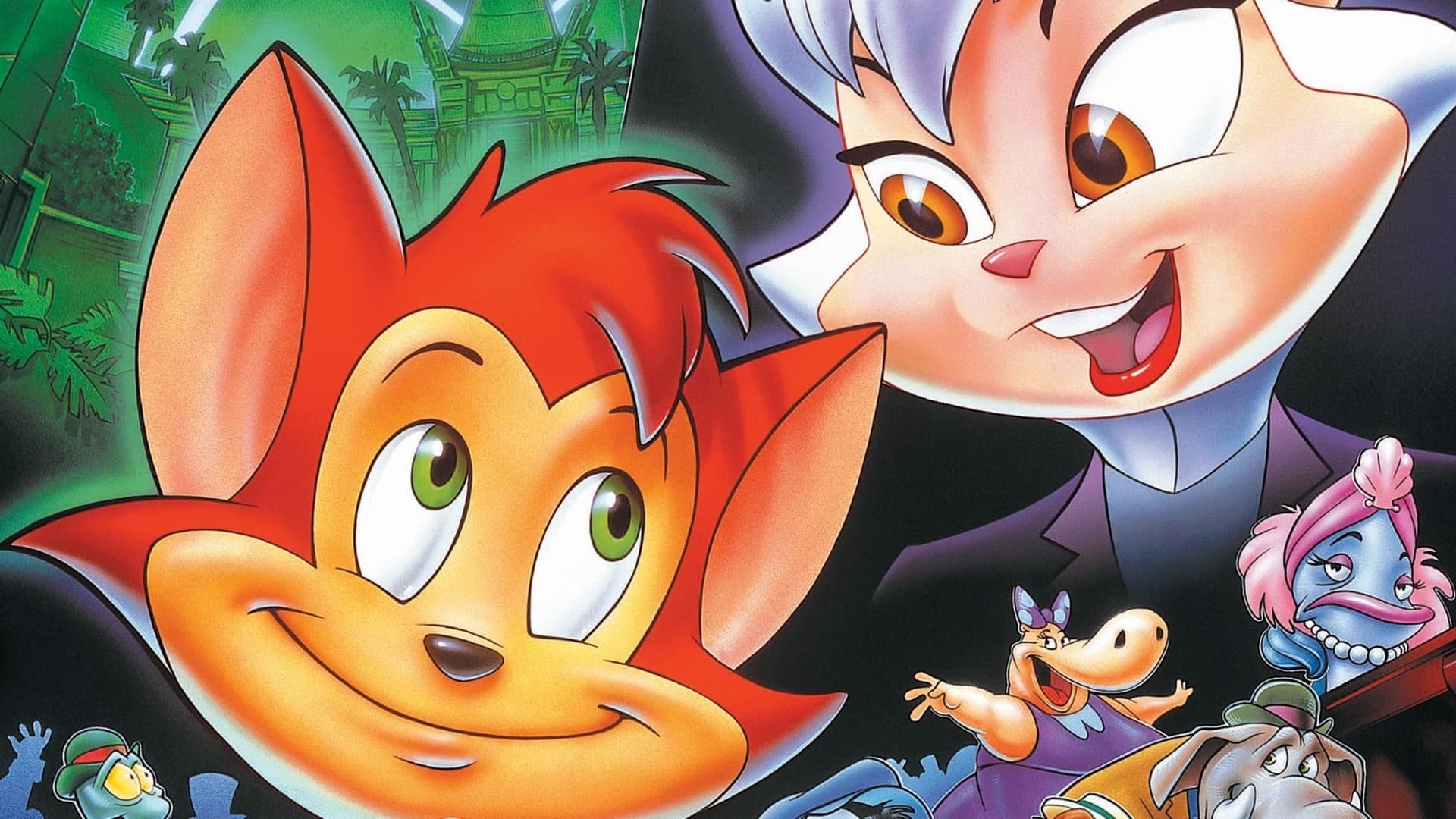
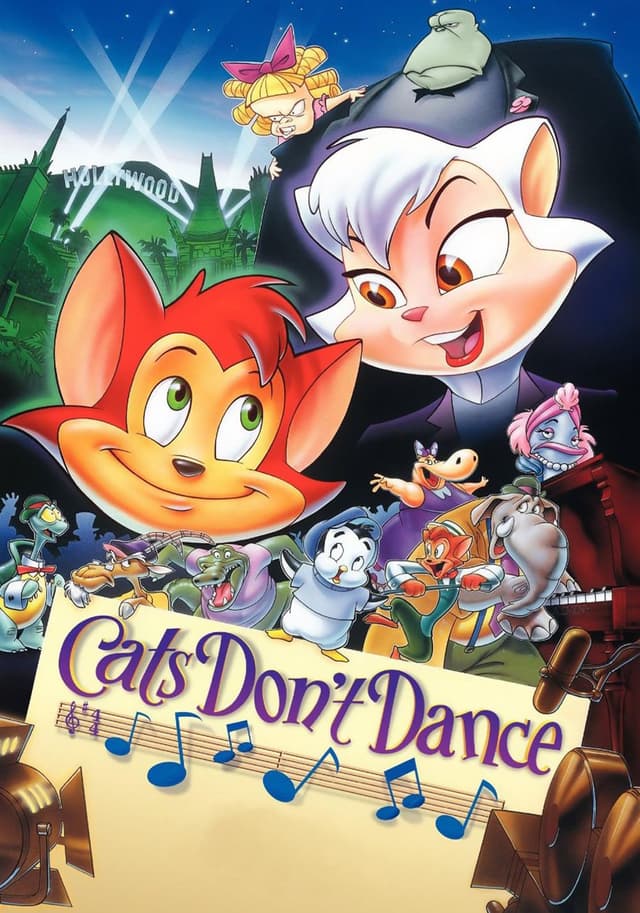
A young, optimistic cat named Danny arrives in Hollywood in 1939 hoping to break into the movies as a singer and dancer. Instead he discovers that talking animals are stuck playing dumb in mute background roles, until he and a small troupe of fellow animal performers conspire to take on a tyrannical child star and put on the biggest audition of their lives.
What Is the Budget of Cats Don't Dance (1997)?
Cats Don't Dance (1997), directed by Mark Dindal and distributed by Warner Bros. Pictures, was produced on a reported budget of $32,000,000. The film was developed at Turner Feature Animation in Sherman Oaks, California, the animation arm Ted Turner had established after the 1986 acquisition of the MGM/UA library, and shifted to Warner Bros. for distribution following the 1996 Time Warner acquisition of Turner Broadcasting System.
The budget reflected the production scale appropriate to a hand-drawn animated feature with original songs, an extensive voice cast, and the Turner Feature Animation pipeline's three-year development cycle. The math assumed a worldwide theatrical gross above $80,000,000 to break even after marketing, a target the film missed by a wide margin in one of the most notorious commercial collapses of 1990s American animation.
Key Budget Allocation Categories
Cats Don't Dance's reported $32,000,000 budget was distributed across several core production areas:
- Animation Production: The film used traditional 2D hand-drawn animation produced primarily at Turner Feature Animation's Sherman Oaks studio with additional work at international studios. The production employed roughly 250 animators and assistants over a three-year development and production cycle, with traditional pencil tests, ink-and-paint, and limited digital ink-and-paint work.
- Above-the-Line Talent: Director Mark Dindal, a Disney animation veteran whose subsequent work included The Emperor's New Groove and Chicken Little, made his feature-directing debut. Story credit went to Rick Schneider, Robert Lence, Mark Dindal, Brian McEntee, David Womersley, and Kelvin Yasuda. The voice cast included Scott Bakula as Danny, Jasmine Guy as Sawyer, Natalie Cole as the singing voice of Sawyer, John Rhys-Davies, Hal Holbrook, Don Knotts, Kathy Najimy, and child star Ashley Peldon as the antagonist Darla Dimple.
- Songs and Score: Composer Steve Goldstein delivered the score and Randy Newman wrote eight original songs for the film. Newman's involvement, coming on the heels of his Toy Story (1995) work, commanded a major above-the-line songwriting fee and represented one of the largest single line items in the music budget. Singer Natalie Cole provided the singing voice for Sawyer.
- Voice Recording: Voice recording sessions in Los Angeles absorbed studio time and casting fees for the ensemble, with separate sessions for dialogue and song performances. The Natalie Cole vocal recordings layered onto Jasmine Guy's dialogue performance required additional production work to align the two performances on screen.
- Cinematography and Layout: The Hollywood Golden Age visual setting required extensive period-appropriate background art, with art director Brian McEntee delivering caricatured 1939 Los Angeles environments. The layout and background work represented a major below-the-line investment consistent with art-style-driven traditional animation.
- Post-Production and Sound: Sound design, foley, and final mix at Warner Bros. and Skywalker Sound absorbed the post-production budget, with final delivery in time for the March 26, 1997 theatrical release.
How Does Cats Don't Dance's Budget Compare to Similar Films?
At $32,000,000, Cats Don't Dance sits at the lower end of major-studio American animated feature budgets of the late 1990s. The comparison set illustrates the budget tier:
- Hercules (1997): Budget $85,000,000 | Worldwide $252,712,101. Disney's contemporaneous animated release cost more than two and a half times what Cats Don't Dance spent and earned more than seventy times its worldwide gross.
- Anastasia (1997): Budget $53,000,000 | Worldwide $139,800,000. Fox Animation's Don Bluth-led contemporary cost roughly $20,000,000 more and earned dozens of times more worldwide, illustrating the marketing-and-release gulf that separated Cats Don't Dance from the leading Disney challengers.
- The Iron Giant (1999): Budget $50,000,000 | Worldwide $31,330,461. Brad Bird's Warner Bros. follow-up animated release cost $18,000,000 more, also flopped commercially, and has been similarly redeemed by critical reassessment.
- Quest for Camelot (1998): Budget $40,000,000 | Worldwide $38,200,000. Warner Feature Animation's subsequent original animated musical also disappointed commercially despite a higher budget, contributing to the studio's eventual closure of the animation unit.
Cats Don't Dance Box Office Performance
Cats Don't Dance opened on March 26, 1997 to $1,955,357 in its first weekend across 1,635 theaters, finishing eighth at the domestic box office in a frame dominated by Liar Liar and The Devil's Own. The film ultimately grossed only $3,566,637 domestically with negligible international receipts, for a worldwide total of approximately $3,600,000. Here is the financial breakdown:
Box Office Breakdown
Cats Don't Dance

Cats Don't Dance returned approximately $0.07 to $0.08 in worldwide gross for every $1 invested when measured against total estimated production and marketing spend, marking it among the most decisive animated-film bombs of the 1990s. The domestic share was nearly 100 percent of the worldwide gross, an unusually concentrated split that reflected the film's near-complete absence from international theatrical release.
The commercial collapse contributed directly to the dissolution of Turner Feature Animation following the Time Warner acquisition and helped lock in Warner Bros.' subsequent retreat from theatrical traditional animation. The Iron Giant (1999) and Quest for Camelot (1998) followed similar commercial trajectories, completing the brief Warner-era American 2D feature animation project. Home video, television syndication, and DVD revenue recovered an incremental portion of the loss over the following decade.
Cats Don't Dance Production History
Development began in 1993 at Turner Feature Animation, the unit Ted Turner had established as part of his MGM/UA library acquisition strategy. Story credit came from a writing team including Rick Schneider, Robert Lence, Mark Dindal, Brian McEntee, David Womersley, and Kelvin Yasuda. Dindal, a Disney animation veteran whose credits included background work on The Little Mermaid and Aladdin, was attached to direct his feature debut.
Randy Newman, fresh off his Oscar-nominated Toy Story (1995) work for Pixar, was hired to write the original songs. Casting Scott Bakula as Danny and Jasmine Guy as Sawyer (with Natalie Cole providing the singing voice) anchored the principal ensemble. Hal Holbrook, John Rhys-Davies, Don Knotts, Kathy Najimy, and child performer Ashley Peldon (as antagonist Darla Dimple) filled out the supporting voice cast.
Animation production unfolded across roughly three years in California at the Turner Feature Animation studio in Sherman Oaks, with additional work at international studios. The pipeline used traditional 2D pencil-and-paper animation augmented by limited digital ink-and-paint work, consistent with mid-1990s industry standards before full computer-assisted animation took hold.
The 1996 Time Warner acquisition of Turner Broadcasting System absorbed Turner Feature Animation into the Warner Bros. structure, shifting the film's release from a planned independent rollout to Warner Bros. Pictures distribution. The March 26, 1997 theatrical opening received limited marketing support relative to Warner Bros.' live-action slate, contributing to the soft launch. The film effectively closed Turner Feature Animation following release.
Awards and Recognition
Cats Don't Dance received recognition at the 1998 Annie Awards, winning the Annie for Outstanding Achievement in an Animated Feature, the field's leading industry honor at the time. Mark Dindal won the Annie for Outstanding Achievement in Directing in a Feature Production, and the film received additional Annie nominations in music, voice acting, and animation craft categories.
The film received no Academy Award attention (the Best Animated Feature category had not yet been established at the time of release) and no Golden Globe or BAFTA recognition. The Annie wins represented the only meaningful awards-circuit acknowledgment of the film's craft, and have contributed to the subsequent critical reassessment of the production despite its commercial collapse.
Critical Reception
Cats Don't Dance received broadly positive reviews from the critics who reviewed it at release, though the film's minimal theatrical exposure limited the total reviewer pool. The film holds a 73% approval rating on Rotten Tomatoes based on 22 critic reviews. No Metacritic score is recorded because of the platform's limited 1997 coverage. The film did not receive a CinemaScore in its limited release pattern.
Critics highlighted the energetic Randy Newman songs, the caricatured Hollywood Golden Age visual style, and the showcase voice performances. Roger Ebert awarded the film three stars and wrote that "the movie has a snappy energy that fights to break free of its limited budget and its cookie-cutter plot." The New York Times' Stephen Holden called it "a chipper, jazzy animated entertainment with a buoyant Randy Newman score."
Retrospective reassessment over the subsequent decades has been more enthusiastic. Animation historians have cited Cats Don't Dance as one of the most underrated 1990s American animated features and as a meaningful influence on subsequent animation directors. Mark Dindal's later Disney work on The Emperor's New Groove (2000) and Chicken Light (2005) drew on the showy choreography and self-aware Hollywood satire he developed on Cats Don't Dance. The film has become a frequently cited example of a high-quality animated production whose commercial fate was determined by marketing and release pattern rather than craft.
Frequently Asked Questions
How much did it cost to make Cats Don't Dance (1997)?
The reported production budget was $32,000,000. The film was developed at Turner Feature Animation in Sherman Oaks, California over roughly three years and shifted to Warner Bros. Pictures distribution following the 1996 Time Warner acquisition of Turner Broadcasting System.
How much did Cats Don't Dance earn at the box office?
The film grossed only $3,566,637 domestically with negligible international receipts, for a worldwide total of approximately $3,600,000. It opened to $1,955,357 across 1,635 theaters on March 26, 1997, finishing eighth in a frame dominated by Liar Liar and The Devil's Own.
Was Cats Don't Dance a box office bomb?
Yes. Against the $32,000,000 production budget and an estimated $15,000,000 to $20,000,000 marketing spend, the film returned approximately $0.07 to $0.08 in worldwide gross for every $1 invested. It is among the most decisive animated-film bombs of the 1990s and contributed to the dissolution of Turner Feature Animation.
Who directed Cats Don't Dance?
Mark Dindal directed the film as his feature debut. Dindal is a Disney animation veteran whose subsequent feature credits include The Emperor's New Groove (2000) and Chicken Little (2005). The story credit came from a writing team including Rick Schneider, Robert Lence, Mark Dindal, Brian McEntee, David Womersley, and Kelvin Yasuda.
Who wrote the songs in Cats Don't Dance?
Randy Newman wrote eight original songs for the film, his work coming on the heels of his Oscar-nominated Toy Story (1995) score for Pixar. Steve Goldstein composed the orchestral underscore. Natalie Cole provided the singing voice for Jasmine Guy's character Sawyer.
Did Cats Don't Dance win any awards?
Yes. The film won the 1998 Annie Award for Outstanding Achievement in an Animated Feature, the field's leading industry honor at the time. Mark Dindal won the Annie for Outstanding Achievement in Directing in a Feature Production, with additional Annie nominations in music, voice acting, and animation craft categories.
Why did Cats Don't Dance fail commercially?
Industry observers point to a combination of soft Warner Bros. marketing support following the Time Warner-Turner merger, an unfavorable late-March release window, and weak international distribution that limited the film to near-zero overseas receipts. The film's commercial failure followed a high-quality craft production rather than poor reviews.
Who voices the characters in Cats Don't Dance?
Scott Bakula voices Danny, Jasmine Guy voices Sawyer with Natalie Cole singing, John Rhys-Davies voices Woolie the Mammoth, Hal Holbrook voices Cranston Goat, Don Knotts voices T.W. Turtle, Kathy Najimy voices Tillie Hippo, and Ashley Peldon voices the antagonist child star Darla Dimple.
What did critics think of Cats Don't Dance?
Critics gave the film broadly positive reviews, with a 73% approval rating on Rotten Tomatoes based on 22 critics. Reviews highlighted the energetic Randy Newman songs, the caricatured Hollywood Golden Age visual style, and the showcase voice performances. Retrospective reassessment has been even more enthusiastic.
Is Cats Don't Dance based on a book or earlier film?
No. Cats Don't Dance is an original screenplay developed at Turner Feature Animation from a story credit attributed to Rick Schneider, Robert Lence, Mark Dindal, Brian McEntee, David Womersley, and Kelvin Yasuda. The premise is fictional, though it draws on the Hollywood Golden Age studio system as historical backdrop.
Filmmakers
Cats Don't Dance

Build budgets like this one in Saturation
Start from an industry-standard feature film template, import the schedule and rates you already have, and let the cost report keep itself current as you spend. Real-time collaboration, no spreadsheets.