Spice World Budget
 Comedy
Updated
Synopsis
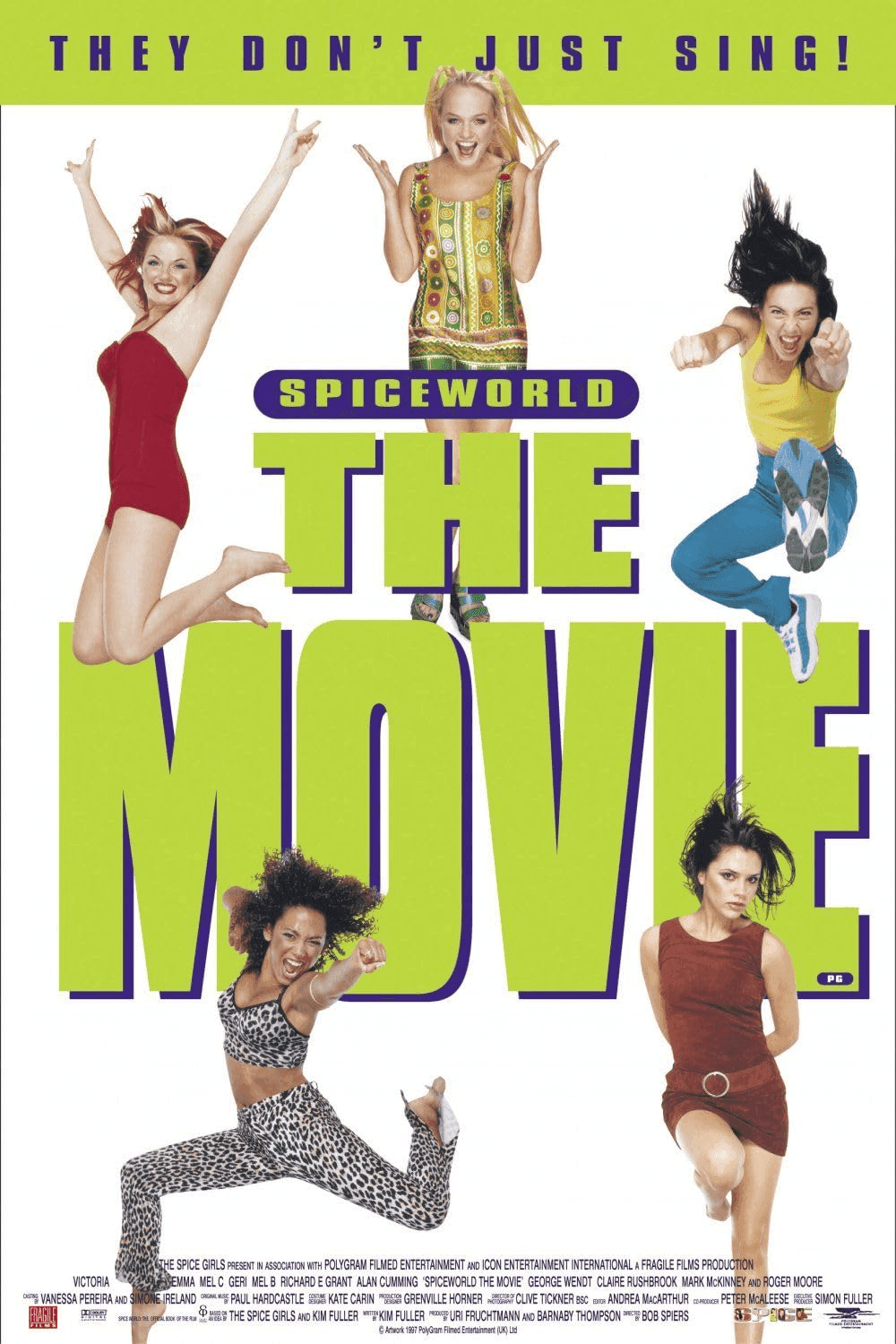
A week in the life of the Spice Girls as they prepare for a major concert at the Royal Albert Hall, navigating press intrusion, a documentary filmmaker, an alien encounter, and the demands of their overbearing manager. The film mixes mockumentary backstage chaos with cameo-heavy comic set pieces in a deliberate homage to A Hard Day's Night.
What Is the Budget of Spice World (1997)?
Spice World (1997), directed by Bob Spiers and distributed by Columbia Pictures in partnership with PolyGram Filmed Entertainment, was produced on a reported budget of $25,000,000. The film was financed and produced as a calculated brand extension while Spice Girls fever was at its commercial peak, with the script written largely to capitalize on the group's existing media presence and the global success of their debut album Spice (1996) and second album Spiceworld (1997).
Producer Uri Fruchtmann and the Fragile Films team structured the budget around a compressed shooting schedule, location-heavy London photography, and a sprawling cameo roster, with the rationale that a quick turnaround would let the film hit theaters while the group's chart dominance was still intact. Compared with the meager budgets of typical pop-group vehicles of the 1990s, $25,000,000 was a significant studio commitment, justified by the unprecedented commercial muscle the Spice Girls demonstrated in their first eighteen months as a recording act.
Key Budget Allocation Categories
Spice World's $25,000,000 budget broke down across these core production areas:
- Above-the-Line Talent: The five Spice Girls (Victoria, Mel B, Mel C, Emma, and Geri) received compensation reflecting their status as the most successful pop act of the moment, with profit participation built into the deal. Director Bob Spiers, a veteran of British television comedy including Fawlty Towers and Are You Being Served?, was hired at a feature rate.
- All-Star Cameos: The film recruited Roger Moore, Richard E. Grant, Alan Cumming, Claire Rushbrook, George Wendt, Mark McKinney, Barry Humphries, Stephen Fry, Bob Hoskins, Bob Geldof, Elton John, and Meat Loaf, with additional appearances by Hugh Laurie, Jennifer Saunders, Jools Holland, and Elvis Costello. Even at scale-rate one-day deals, the aggregate cost of clearing dozens of cameos was substantial.
- London Location Photography: Production filmed across central London including Tower Bridge, Albert Hall, Battersea Park, and the streets of Westminster. The iconic Union Jack double-decker bus required a custom build, extensive insurance, and traffic permits for the highly visible shoot days.
- Music Rights and Original Songs: The soundtrack featured Spice Girls hits including "Spice Up Your Life," "Too Much," and "Mama," plus dozens of needle drops. PolyGram, which owned the group via its Virgin Records subsidiary, kept the music-rights costs in-house but still allocated a major budget line for original recording, score by David Whitaker, and arrangements.
- Costumes and Wardrobe: Kate Carin's costume design built distinct, character-defining looks for each Spice Girl across nearly twenty wardrobe changes per member, mirroring the public persona branding that drove merchandise sales.
- Visual Effects and Set Pieces: A surreal alien encounter, a fantasy ballet sequence, and a UFO landing climax required practical effects, miniature work, and modest CG, plus an extended dream-musical sequence with elaborate choreography by Priscilla Samuels.
How Does Spice World's Budget Compare to Similar Films?
At $25,000,000, Spice World sits in the mid-range of pop-star vehicle films across decades. Comparable productions:
- A Hard Day's Night (1964): Budget $560,000 | Worldwide approximately $14,000,000. The Richard Lester Beatles film, Spice World's explicit inspiration, cost a fraction in absolute terms but, adjusted for inflation, represented a comparable bet on a chart-topping pop act.
- Help! (1965): Budget $1,500,000 | Worldwide approximately $12,000,000. The Beatles' second feature established the template Spice World adopted: zany set pieces, exotic locations, and self-aware celebrity casting.
- Crossroads (2002): Budget $12,000,000 | Worldwide $61,141,030. The Britney Spears road-trip drama spent half what Spice World did and earned roughly 60% of its worldwide gross, showing the genre's general profitability when timed to a singer's peak.
- Glitter (2001): Budget $22,000,000 | Worldwide $5,271,666. The Mariah Carey vehicle illustrates how the same budget tier can collapse when star momentum fades, contextualizing Spice World's success.
- From Justin to Kelly (2003): Budget $12,000,000 | Worldwide $5,021,592. Fox's American Idol cash-in cost less than half what Spice World did and grossed a tiny fraction.
Spice World Box Office Performance
Spice World opened in the United Kingdom on December 26, 1997, and in the United States on January 23, 1998. The UK release earned approximately £6.7 million in its first week, and the U.S. opening weekend pulled $10,527,222, finishing second behind Good Will Hunting. The film's worldwide gross ultimately exceeded $100,000,000.
Against a reported production budget of $25,000,000, the film needed approximately $60,000,000 worldwide to reach profitability after marketing and distribution costs. The financial breakdown:
Box Office Breakdown
Spice World

Spice World returned approximately $2.00 in worldwide theatrical revenue for every $1 invested, making it one of the most profitable pop-music films of the 1990s. The domestic gross of $29,330,576 against an international gross of approximately $70,669,424 reflected the group's stronger international footprint, particularly in the UK, continental Europe, and Australia.
PolyGram and Columbia leveraged the theatrical success into substantial home video, soundtrack, and merchandise revenue. The film's success contrasted sharply with the group's commercial trajectory immediately after release, with Geri Halliwell departing in May 1998, the group splitting after their 2000 album, and no Spice Girls feature film follow-up ever materializing despite numerous false starts.
Spice World Production History
Development of Spice World began in early 1997, when the Spice Girls' management team at 19 Entertainment, led by Simon Fuller until his March 1997 dismissal, began shopping a movie concept to studios. Producer Uri Fruchtmann and the Fragile Films team brought the project to PolyGram Filmed Entertainment, which paired the production with Columbia Pictures for international distribution. Screenwriter Kim Fuller (no relation to Simon) and Jamie Curtis crafted a script designed to capture the group's onscreen chemistry while delivering enough cameo set pieces to keep the running time at a brisk 93 minutes.
Principal photography ran from June through September 1997 in the United Kingdom, primarily across central London exteriors and stage work at Shepperton Studios. Director Bob Spiers, hired for his comedic timing developed across decades of British sitcom work, shot quickly to accommodate the group's concurrent recording sessions for the Spiceworld album and a heavy promotional touring schedule.
The custom Union Jack double-decker bus, painted by production designer Grenville Horner, became the film's most enduring visual icon and was eventually preserved as a museum piece. The film's surreal alien encounter sequence was designed by the same effects team that worked on the Doctor Who television revival of the era, and the climactic Royal Albert Hall concert was shot with full orchestra and live audience to capture authentic energy.
Editor Andrea MacArthur cut the film at a fast pace to mirror the group's music video aesthetic, and David Whitaker's score complemented the Spice Girls' existing songbook. The film premiered at the Empire Leicester Square on December 15, 1997, and went into wide UK release on Boxing Day, then to the U.S. and global markets through January.
Awards and Recognition
Spice World received largely tongue-in-cheek industry recognition rather than serious awards consideration. The film was nominated for seven Razzies at the 19th Golden Raspberry Awards in 1999, including Worst Picture, Worst Screen Couple (the Spice Girls collectively), Worst New Star (the Spice Girls), Worst Original Song ("Too Much"), and Worst Screenplay. It won Worst Actress, awarded jointly to all five Spice Girls.
The MTV Movie Awards 1998 nominated the Spice Girls for Best Musical Sequence for the "Move Over" Pepsi-themed bus number, and the film took home the Smash Hits Poll Winners Party award for Best Film. Despite the Razzie sweep, the film's cultural footprint and audience reception made it a sustained TV repeat staple and a touchstone for late-1990s British pop culture.
Critical Reception
Spice World received predominantly negative reviews from critics. The film holds a 35% approval rating on Rotten Tomatoes based on 51 critic reviews, with the critical consensus calling it a brand exercise that prioritizes the group's image over coherent storytelling. On Metacritic, the film scored 32 out of 100, indicating generally unfavorable reviews. Audiences were considerably warmer, with the film maintaining a 6.0 user rating on IMDb and a steady cult fanbase that continues to grow with each generation that rediscovers it.
Roger Ebert gave the film one and a half stars out of four, writing that the Spice Girls "occupy that uncertain ground between fame and infamy" and calling the film "obviously a ripoff of A Hard Day's Night, but it lacks Richard Lester's anarchic touch." The New York Times' Janet Maslin was similarly unimpressed, while Empire magazine in the UK was more forgiving, awarding the film three stars and praising its self-aware silliness.
In retrospect, critical reassessment has been kinder. Pitchfork, the Guardian, and the BBC have all published retrospectives recognizing the film as a knowingly camp time capsule that captured Cool Britannia at its commercial zenith. The film's legacy has solidified as a millennial cultural touchstone rather than the artistic embarrassment its initial reviews suggested.
Frequently Asked Questions
How much did Spice World (1997) cost to make?
The production budget was $25,000,000, financed by PolyGram Filmed Entertainment with international distribution through Columbia Pictures. The figure covered above-the-line compensation for all five Spice Girls, a sprawling cameo roster, London location photography, and a 93-day shooting schedule completed across summer 1997.
How much did Spice World earn at the box office?
Spice World grossed $29,330,576 domestically in the United States and approximately $70,669,424 internationally, for a worldwide total of approximately $100,000,000. The film opened to $10,527,222 in the U.S. on January 23, 1998, finishing second behind Good Will Hunting.
Was Spice World a profitable film?
Yes. Against a $25,000,000 production budget and an estimated $20,000,000 to $25,000,000 in marketing spend, the film returned approximately $2.00 in worldwide gross for every $1 invested, generating an estimated $50,000,000 to $55,000,000 in theatrical profit before home video and merchandise revenue.
Who directed Spice World?
Bob Spiers, a veteran British television director best known for Fawlty Towers and Are You Being Served?, directed Spice World. The film was his first major feature, hired for his comedic timing and ability to handle a large ensemble cast on a compressed shooting schedule.
Where was Spice World filmed?
Principal photography ran from June through September 1997 in the United Kingdom, with extensive London location work including Tower Bridge, Albert Hall, Battersea Park, and Westminster, plus stage work at Shepperton Studios. The Royal Albert Hall concert sequence was filmed with a live audience to capture authentic energy.
Who appears in Spice World besides the Spice Girls?
The film features an extensive cameo roster including Roger Moore as the Chief, Richard E. Grant as their manager, Alan Cumming as a documentary filmmaker, Claire Rushbrook, George Wendt, Mark McKinney, Barry Humphries, Stephen Fry, Bob Hoskins, Bob Geldof, Elton John, Meat Loaf, Hugh Laurie, Jennifer Saunders, Jools Holland, and Elvis Costello.
How does Spice World compare to A Hard Day's Night?
Spice World was explicitly modeled on Richard Lester's 1964 Beatles film A Hard Day's Night, adopting its mockumentary backstage structure, surreal interludes, and self-aware celebrity casting. While A Hard Day's Night cost $560,000 and grossed approximately $14,000,000, Spice World spent $25,000,000 and grossed approximately $100,000,000, reflecting decades of inflation and a much larger production scale.
What awards did Spice World win or get nominated for?
Spice World won Worst Actress (jointly awarded to all five Spice Girls) at the 19th Golden Raspberry Awards in 1999 and received seven total Razzie nominations including Worst Picture. The Spice Girls were nominated for Best Musical Sequence at the 1998 MTV Movie Awards, and the film won Best Film at the Smash Hits Poll Winners Party.
What did critics say about Spice World?
The film received predominantly negative reviews, with a 35% Rotten Tomatoes approval rating from 51 critics and a 32 out of 100 Metacritic score. Roger Ebert called it a ripoff of A Hard Day's Night lacking Richard Lester's anarchic touch. Retrospective coverage from Pitchfork, the Guardian, and the BBC has been considerably warmer.
Did the Spice Girls make a sequel to Spice World?
No. Despite the commercial success of Spice World, no Spice Girls feature sequel was ever produced. Geri Halliwell left the group in May 1998, and the group went on indefinite hiatus after their 2000 album Forever. Multiple sequel pitches, including an animated film in the late 2010s, never materialized.
Filmmakers
Spice World

Build budgets like this one in Saturation
Start from an industry-standard feature film template, import the schedule and rates you already have, and let the cost report keep itself current as you spend. Real-time collaboration, no spreadsheets.