Son of Saul Budget
 WarDramaThriller1h 47m
Updated
Synopsis
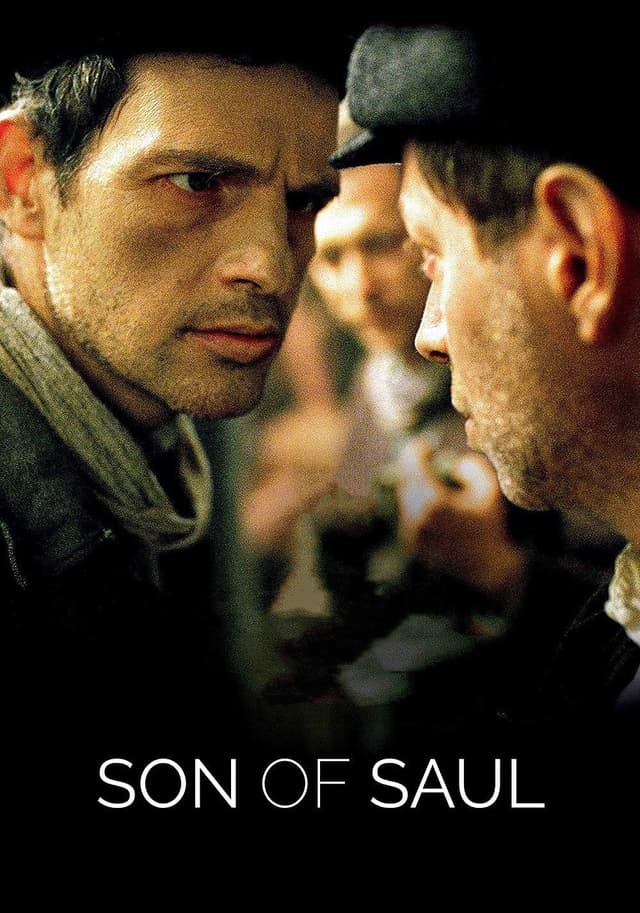
In the horror of 1944 Auschwitz, a prisoner forced to burn the corpses of his own people finds moral survival trying to save from the flames the body of a boy he takes for his son, seeking to give him a proper Jewish burial.
What is the budget of Son of Saul?
"Son of Saul," a war released in 2015, was directed by László Nemes and stars Géza Röhrig, Levente Molnár. The production budget was $1,000,000, placing it in the micro-budget range for war productions of its era.
Key Budget Allocation Categories
While specific budget breakdowns are not publicly available, typical cost drivers for a war production like this include:
- Above-the-Line Talent: Drama films live or die on the strength of their performances.
- Location Filming & Period Production Design: Authentic locations , whether contemporary or historical , require scouting, permits, travel, lodging, and often significant dressing to match the story's time period.
- Post-Production, Color Grading & Score: The editorial process for dramas is typically longer than genre films, with careful attention to pacing and tone.
- Casting: Nemes insisted on casting actors who spoke their characters' own languages.
What were the major cost factors in Son of Saul?
Several factors contributed to the overall production costs of "Son of Saul."
- Above-the-Line Talent: Above-the-Line Talent is one of the primary cost drivers in war productions of this scale.
- Location Filming: Location Filming & Period Production Design is one of the primary cost drivers in war productions of this scale.
- Post-Production: Post-Production, Color Grading & Score is one of the primary cost drivers in war productions of this scale.
How Does Son of Saul's Budget Compare to Similar Films?
At $1,000,000, Son of Saul sits in the micro-budget range. Here is how it compares to productions with a similar budget:
- Gone in 60 Seconds (1974): Budget $1,000,000, Worldwide Gross $40,000,000
- A Woman Under the Influence (1974): Budget $1,000,000, Worldwide Gross $12,200,000
- Rear Window (1954): Budget $1,000,000, Worldwide Gross $37,042,336
- How to Make Millions Before Grandma Dies (2024): Budget $1,000,000, Worldwide Gross $73,800,000
- Raise the Red Lantern (1991): Budget $1,000,000, Worldwide Gross $16,600,000
The median budget for wide-release war films in the 2010s ranges from $30 to 80M for mid-budget to $150M+ for tentpoles.
Son of Saul Box Office Performance
"Son of Saul" earned $1,777,043 worldwide at the box office. Against a production budget of $1,000,000, the film showed modest profitability in theatrical release.
A film typically needs to earn approximately twice its production budget to cover marketing and distribution costs. For "Son of Saul," that break-even threshold was roughly $2,000,000. With worldwide earnings of $1,777,043, the film fell short of that threshold but recouped its production costs in theatrical release.
Box Office Breakdown
Son of Saul

At 77.7%, "Son of Saul" returned its production investment but margin was tight after marketing and distribution costs.
Son of Saul Production History
Nemes insisted on casting actors who spoke their characters' own languages. New York City-based Hungarian poet Géza Röhrig, who had not acted in film since the 1980s, was cast as the main character, Saul, after being considered originally for a supporting role.
The film was shot on 35 mm film in 28 days in Budafok, Budapest. A 40 mm lens and the Academy aspect ratio of 1.375:1 were adopted to realise shallow focus and a portrait-like narrow field of vision. Architect and liberal activist László Rajk, who also worked on the permanent Hungarian exhibition at the Auschwitz-Birkenau State Museum, designed the re-creation of the crematoria.
Awards and Recognition
- Academy Award for Best International Feature Film (88th Academy Awards)
- François Chalais Prize
- Dallas-Fort Worth Film Critics Association Award for Best Foreign Language Film
- Cannes Film Festival Grand Prix
- Template: Washington D.C. Area Film Critics Association Award for Best Foreign Language Film
- National Board of Review Award for Best Foreign Language Film
- FIPRESCI Prize of the Festival de Cannes
- San Francisco Film Critics Circle Award for Best Foreign Language Film
Critical Reception
Upon its release at Cannes, the film was met with critical acclaim. On the review aggregation website Rotten Tomatoes, the film has an approval rating of 96% based on reviews from 233 critics, with an average rating of 8.90/10. The site's critical consensus reads, "Grimly intense yet thoroughly rewarding, Son of Saul offers an unforgettable viewing experience , and establishes director László Nemes as a talent to watch". On Metacritic, the film has a score of 91 out of 100, based on reviews from 49 critics, indicating "universal acclaim".
Frequently Asked Questions
How much did it cost to make Son of Saul (2015)?
The production budget was $1,000,000, covering principal photography, cast and crew salaries, locations, sets, post-production, and music. Marketing and distribution (P&A) costs are estimated at an additional $500,000 - $800,000, bringing the total studio investment to approximately $1,500,000 - $1,800,000.
How much did Son of Saul (2015) earn at the box office?
Son of Saul grossed $1,777,043 worldwide.
Was Son of Saul (2015) profitable?
The film did not break even theatrically, earning $1,777,043 against an estimated $2,500,000 needed. Ancillary revenue may have improved the picture.
What were the biggest costs in producing Son of Saul?
The primary cost drivers were above-the-line talent (Géza Röhrig, Levente Molnár, Urs Rechn); talent compensation, authentic period production design, and meticulous post-production.
How does Son of Saul's budget compare to similar war films?
At $1,000,000, Son of Saul is classified as a micro-budget production. The median budget for wide-release war films in the 2010s ranges from $30 - 80M for mid-budget to $150M+ for tentpoles. Comparable budgets: Gone in 60 Seconds (1974, $1,000,000); A Woman Under the Influence (1974, $1,000,000); Rear Window (1954, $1,000,000).
Did Son of Saul (2015) go over budget?
There are no widely reported accounts of significant budget overruns for this production. However, studios rarely disclose precise budget overrun figures publicly. The reported production budget reflects the final estimated cost.
What was the return on investment (ROI) for Son of Saul?
The theatrical ROI was 77.7%, calculated as ($1,777,043 − $1,000,000) ÷ $1,000,000 × 100. This measures gross revenue against production budget only - it does not account for P&A or exhibitor shares.
Who directed Son of Saul and who were the key crew members?
Directed by László Nemes, written by László Nemes, Clara Royer, shot by Mátyás Erdély, with music by László Melis, edited by Matthieu Taponier.
Where was Son of Saul filmed?
Son of Saul was filmed in Hungary. The film was shot on 35 mm film in 28 days in Budafok, Budapest. A 40 mm lens and the Academy aspect ratio of 1.375:1 were adopted to realise shallow focus and a portrait-like narrow field of vision.
Filmmakers
Son of Saul

Official Trailer
Build budgets like this one in Saturation
Start from an industry-standard feature film template, import the schedule and rates you already have, and let the cost report keep itself current as you spend. Real-time collaboration, no spreadsheets.