Smilla's Sense of Snow Budget
Updated
Synopsis
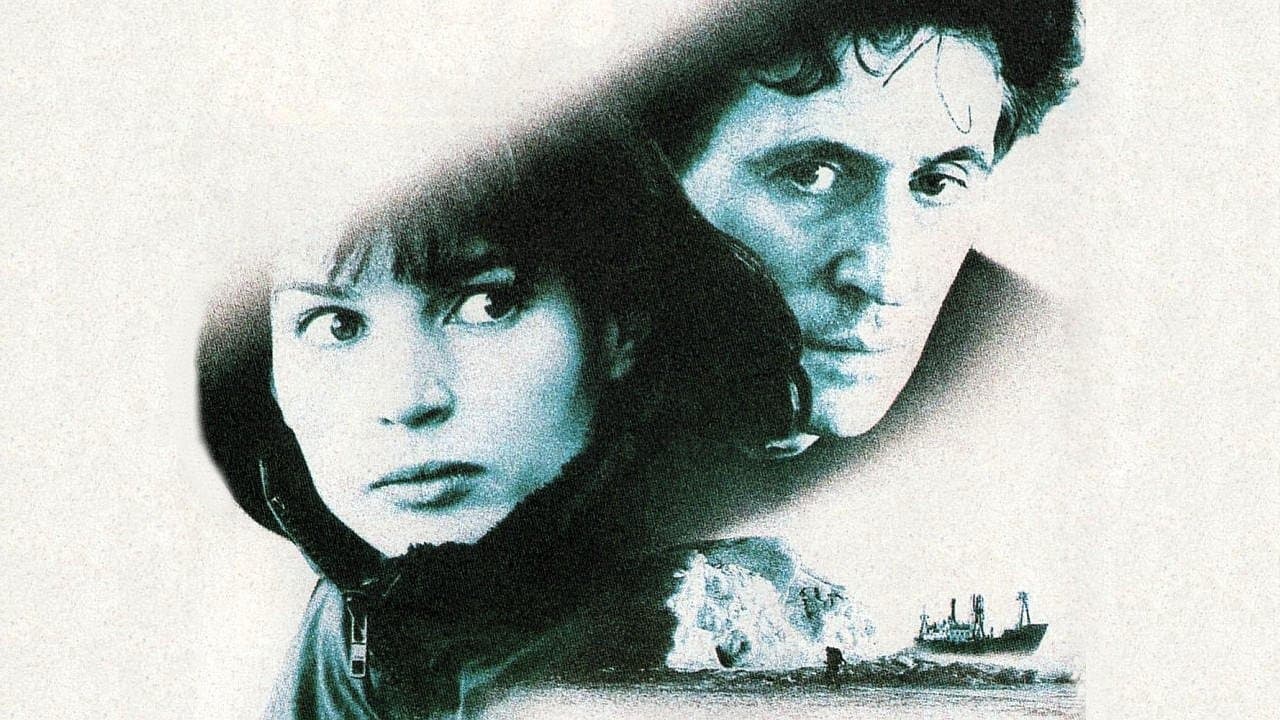
Smilla Jaspersen, a half-Inuit, half-Danish glaciologist living in Copenhagen, becomes convinced that the death of a young boy in her apartment building was not an accident. Her investigation leads her from the streets of Copenhagen to an icebreaker bound for Greenland, where she uncovers a corporate conspiracy tied to a mysterious object trapped beneath the ice.
What Is the Budget of Smilla's Sense of Snow (1997)?
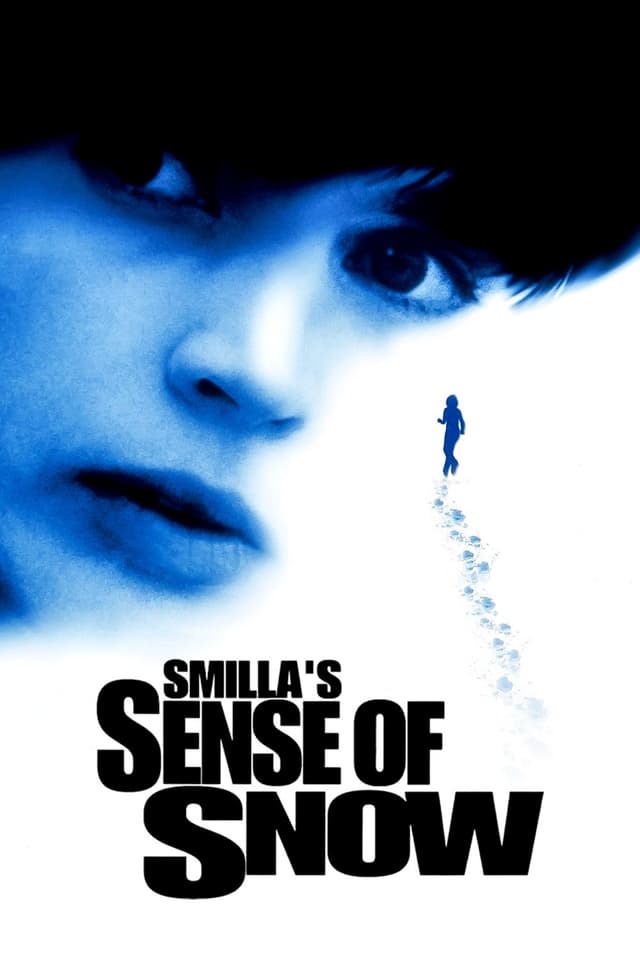
Smilla's Sense of Snow (1997), directed by Bille August and distributed in North America by Fox Searchlight Pictures, was produced on a reported budget of $35,000,000. The film was financed as a Danish-Swedish-German co-production by Constantin Film, Bavaria Film, Greenland Film Production, and several European partners, anchored by an English-language script designed for international theatrical release.
The budget reflected the production's combination of European art-cinema pedigree and Hollywood-scale logistics. Director Bille August was coming off back-to-back Cannes Palme d'Or wins for Pelle the Conqueror (1987) and The Best Intentions (1992), giving the production prestige access. Adapting Peter Høeg's international bestselling novel demanded an icebreaker voyage to Greenland, Copenhagen location shooting, and visual effects work that exceeded the typical Scandinavian feature scale.
Key Budget Allocation Categories
Smilla's reported $35,000,000 budget was distributed across several core production areas:
- Above-the-Line Talent: Director Bille August commanded a feature-director rate appropriate to a two-time Palme d'Or winner. Star Julia Ormond, fresh off Sabrina (1995) and Legends of the Fall (1994), led the cast at her late-1990s leading-lady quote. Supporting players Gabriel Byrne, Richard Harris, Vanessa Redgrave, Robert Loggia, and Jim Broadbent each commanded scale-appropriate fees that pushed above-the-line costs above the typical European range.
- Greenland Production: An extended shoot aboard a Russian icebreaker in the waters off Greenland required charter fees, ice-class crew accommodations, fuel costs, and extreme-cold camera and lighting packages. The arctic photography also extended principal photography by several weeks compared with a standard thriller schedule.
- Copenhagen Location Shooting: Significant principal photography took place in Copenhagen, with Danish location permits, local crew, and lighting for winter exteriors building substantial line items. The production used the city itself as a character, photographing the harbor, Christianshavn, and other locations recognizable from the novel.
- Visual Effects: The film required matte paintings and digital effects work for the final-act meteorite cavern sequence, ice-cave compositing, and aerial photography enhancements. Effects vendors in London and Copenhagen contributed to the work, which was advanced for a 1997 European production.
- Score and Music: Italian composer Hans Zimmer collaborator Harry Gregson-Williams delivered the score, blending orchestral textures with electronic elements. Recording sessions in London absorbed orchestra hire and studio time.
- Co-Production Overhead: The Danish-Swedish-German co-production structure imposed legal, accounting, and language-deliverable costs beyond a single-country production. The film qualified for German, Danish, and Swedish public funding support, each with compliance requirements.
How Does Smilla's Budget Compare to Similar Films?
At $35,000,000, Smilla's Sense of Snow sits in the mid-range of late-1990s literary-adaptation thrillers and well above the typical European art-house range. The comparison set illustrates the budgetary tier:
- The Bone Collector (1999): Budget $73,000,000 | Worldwide $151,491,151. Universal's Denzel Washington and Angelina Jolie literary-adaptation thriller spent more than twice what Smilla cost and earned more than six times its worldwide gross.
- Mystic River (2003): Budget $30,000,000 | Worldwide $156,838,367. Clint Eastwood's literary-adaptation crime drama operated on a comparable scale and benefited from a tighter domestic focus that drove its commercial outperformance.
- A Simple Plan (1998): Budget $17,000,000 | Worldwide $32,200,000. Sam Raimi's literary-thriller adaptation cost roughly half what Smilla spent and earned modestly better worldwide, illustrating the appetite for mid-budget thrillers in this period.
- The Ninth Gate (1999): Budget $38,000,000 | Worldwide $58,400,000. Roman Polanski's contemporaneous Johnny Depp literary-adaptation thriller offers the closest budget peer and provides the cleanest theatrical-performance comparison.
Smilla's Sense of Snow Box Office Performance
Smilla's Sense of Snow opened in the United States on February 28, 1997 through Fox Searchlight Pictures, debuting in 1,118 theaters with a $5,700,000 opening weekend. It ultimately grossed $12,000,000 domestically against $11,800,000 internationally for a worldwide total of approximately $23,800,000. Against the $35,000,000 production budget plus an estimated $15,000,000 to $20,000,000 in marketing and prints, the financial breakdown is as follows:
Box Office Breakdown
Smilla's Sense of Snow

Smilla returned approximately $0.45 in worldwide box office for every $1 invested when measured against total estimated production and marketing spend, marking it a significant theatrical loss. The domestic share of the gross was 50.4 percent, an unusually even split for a Scandinavian-set thriller that suggested limited European outperformance despite the source novel's regional popularity.
The commercial result cooled Hollywood interest in further Peter Høeg adaptations and contributed to a broader retreat from prestige European-led literary thrillers in the late 1990s. Bille August's subsequent English-language directing work moved toward smaller-scale period dramas rather than thrillers of similar scope.
Smilla's Sense of Snow Production History
Producer Bernd Eichinger of Constantin Film acquired the rights to Peter Høeg's 1992 novel Frøken Smillas fornemmelse for sne shortly after its English-language publication in 1993, betting that the international bestseller could anchor a prestige Hollywood-scale European production. Eichinger paired with screenwriter Ann Biderman, fresh off Copycat (1995), to deliver an English-language adaptation.
Bille August, the Danish two-time Palme d'Or winner, attached to direct in 1995. Julia Ormond was cast as Smilla in 1996, and the supporting ensemble of Gabriel Byrne, Richard Harris, Vanessa Redgrave, Robert Loggia, and Jim Broadbent assembled an Anglo-American-Irish prestige roster designed to anchor international distribution.
Principal photography ran from spring through summer 1996 across Denmark, Germany, and the waters off Greenland. The Copenhagen unit captured the city in autumn light, while a multi-week icebreaker shoot aboard a Russian vessel handled the third-act voyage and the climactic ice-cave sequences. Studio work and visual-effects compositing took place at Bavaria Film studios in Munich and on London stages.
The film premiered out of competition at the 47th Berlin International Film Festival in February 1997, with Fox Searchlight releasing it theatrically in the United States the same month. The simultaneous Berlin debut and U.S. opening was an unusual rollout pattern for the period and reflected the producers' confidence in cross-Atlantic awards appeal.
Awards and Recognition
Smilla's Sense of Snow received limited awards recognition. The film was nominated at the 1998 Bodil Awards (Denmark's national film prize) for Best Cinematography and received a Robert Award nomination (the Danish Academy prize) for Best Film. It also competed for the Golden Bear at the 47th Berlin International Film Festival in 1997, where it screened in competition.
The film did not receive Academy Award nominations or nominations at the BAFTAs, Golden Globes, or major American critics circles. Its mixed critical reception and modest commercial performance kept it outside the major awards conversation in a year dominated by Titanic, Good Will Hunting, and L.A. Confidential.
Critical Reception
Smilla's Sense of Snow received mixed reviews. The film holds a 39% approval rating on Rotten Tomatoes based on 31 critic reviews, with a critical consensus that praised the photography and lead performance but flagged a confused third act. On Metacritic, the film scored 46 out of 100, indicating mixed or average reviews. Audiences surveyed by CinemaScore gave the film a C+, suggesting tepid word of mouth.
Critics widely praised Julia Ormond's lead performance and Jørgen Persson's cinematography, particularly the Copenhagen winter exteriors and the icebreaker sequences. Roger Ebert awarded the film three stars and wrote that "the movie is wonderful for an hour and a half, and then it sort of falls apart," capturing the most common critical complaint that the final-act meteorite revelation undermined the careful atmospheric build of the first two acts.
Janet Maslin of The New York Times called the film "a stylish, atmospheric thriller with a remarkable central performance," while Variety's Todd McCarthy noted that "the final reel veers into territory better suited to a different film." The mixed reception, combined with the disappointing theatrical performance, has positioned Smilla's Sense of Snow as a frequently cited example of a strong European literary property whose Hollywood-scale adaptation failed to land its conclusion.
Frequently Asked Questions
How much did it cost to make Smilla's Sense of Snow (1997)?
The reported production budget was $35,000,000, financed as a Danish-Swedish-German co-production by Constantin Film, Bavaria Film, Greenland Film Production, and several European partners. Fox Searchlight Pictures handled North American theatrical distribution.
How much did Smilla's Sense of Snow earn at the box office?
The film grossed approximately $12,000,000 domestically and $11,800,000 internationally for a worldwide total of approximately $23,800,000. It opened on February 28, 1997 in the United States with a $5,700,000 weekend across 1,118 theaters.
Who directed Smilla's Sense of Snow?
Bille August directed the film. The Danish filmmaker had won the Palme d'Or twice, for Pelle the Conqueror (1987) and The Best Intentions (1992), making him the only director in the modern Cannes era to win the top prize back-to-back. Smilla was his first English-language thriller.
What is Smilla's Sense of Snow based on?
The film adapts the 1992 Danish novel Frøken Smillas fornemmelse for sne by Peter Høeg, an international bestseller after its 1993 English-language publication as Miss Smilla's Feeling for Snow (UK) and Smilla's Sense of Snow (US). Ann Biderman wrote the English-language screenplay.
Where was Smilla's Sense of Snow filmed?
Principal photography ran from spring through summer 1996 across Denmark, Germany, and the waters off Greenland. The Copenhagen unit captured the city in autumn light. A multi-week shoot aboard a Russian icebreaker handled the third-act voyage. Studio work took place at Bavaria Film in Munich and on London stages.
Who stars in Smilla's Sense of Snow?
Julia Ormond stars as Smilla Jaspersen, with Gabriel Byrne, Richard Harris, Vanessa Redgrave, Robert Loggia, Jim Broadbent, Mario Adorf, and Bob Peck in supporting roles. Ormond came to the project after Sabrina (1995) and Legends of the Fall (1994).
Did Smilla's Sense of Snow win any awards?
The film received limited awards recognition. It competed for the Golden Bear at the 1997 Berlin International Film Festival and was nominated at the Danish Bodil Awards for Best Cinematography and the Danish Robert Awards for Best Film. It did not receive Oscar, BAFTA, or Golden Globe nominations.
What did critics think of Smilla's Sense of Snow?
The film received mixed reviews, holding a 39% approval rating on Rotten Tomatoes based on 31 critics and a 46 out of 100 on Metacritic. Audiences gave it a C+ CinemaScore. Critics praised Julia Ormond's performance and Jørgen Persson's cinematography but objected to the third-act meteorite revelation.
Was Smilla's Sense of Snow a box office bomb?
Yes, by theatrical metrics. Against the $35,000,000 production budget and an estimated $15,000,000 to $20,000,000 in marketing spend, the film returned approximately $0.45 in worldwide gross for every $1 invested. The result cooled Hollywood interest in further Peter Høeg adaptations.
Is there a different ending to Smilla's Sense of Snow than the book?
The film follows the novel's plot closely, including the climactic meteorite-cavern revelation that critics widely identified as the source of the third-act issues. Director Bille August retained the book's narrative arc rather than restructuring it for a more conventional thriller resolution, a creative choice that divided reviewers.
Filmmakers
Smilla's Sense of Snow

Build budgets like this one in Saturation
Start from an industry-standard feature film template, import the schedule and rates you already have, and let the cost report keep itself current as you spend. Real-time collaboration, no spreadsheets.