Cinema Paradiso Budget
 DramaRomance2h 4m
Updated
Synopsis
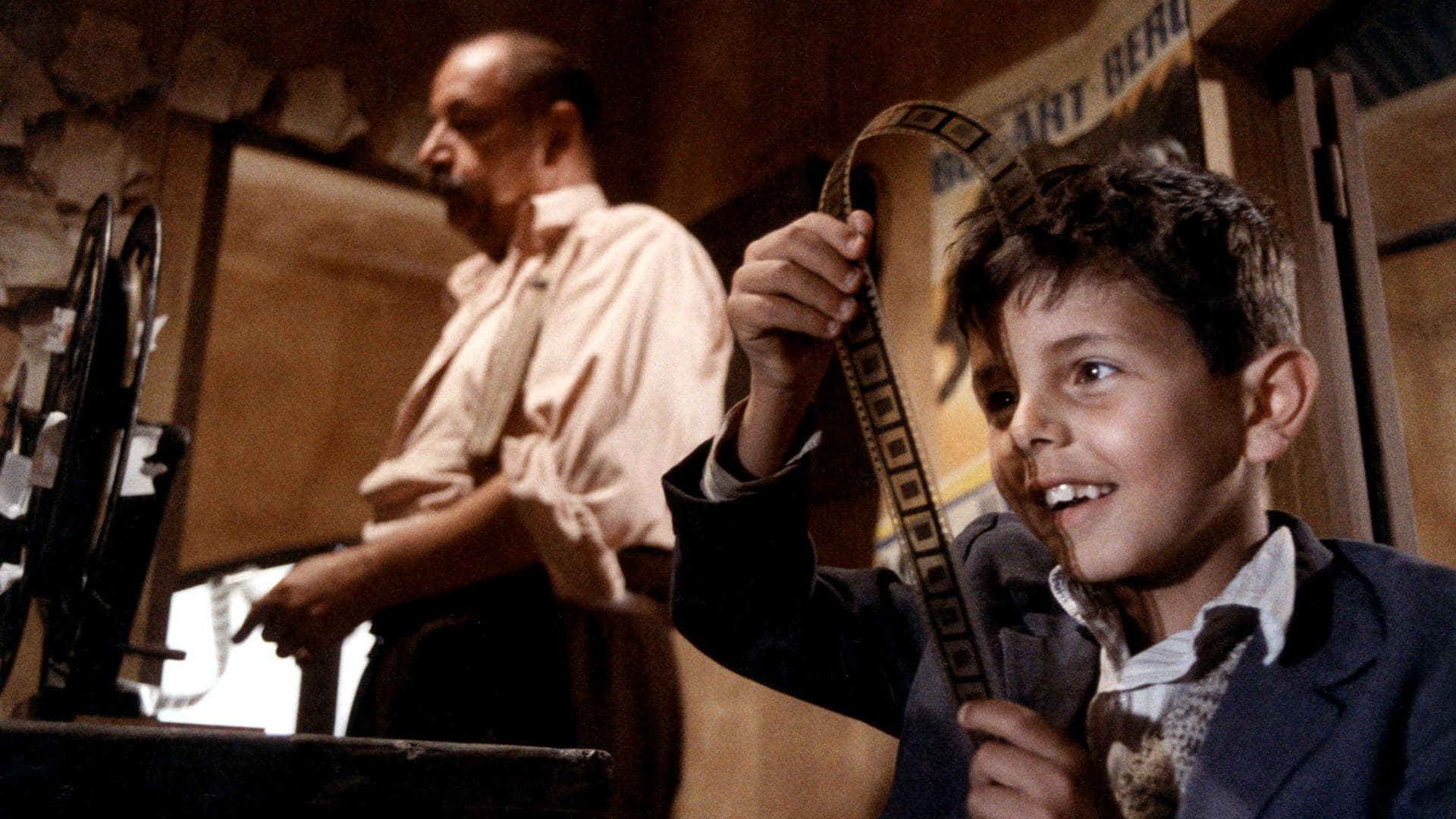
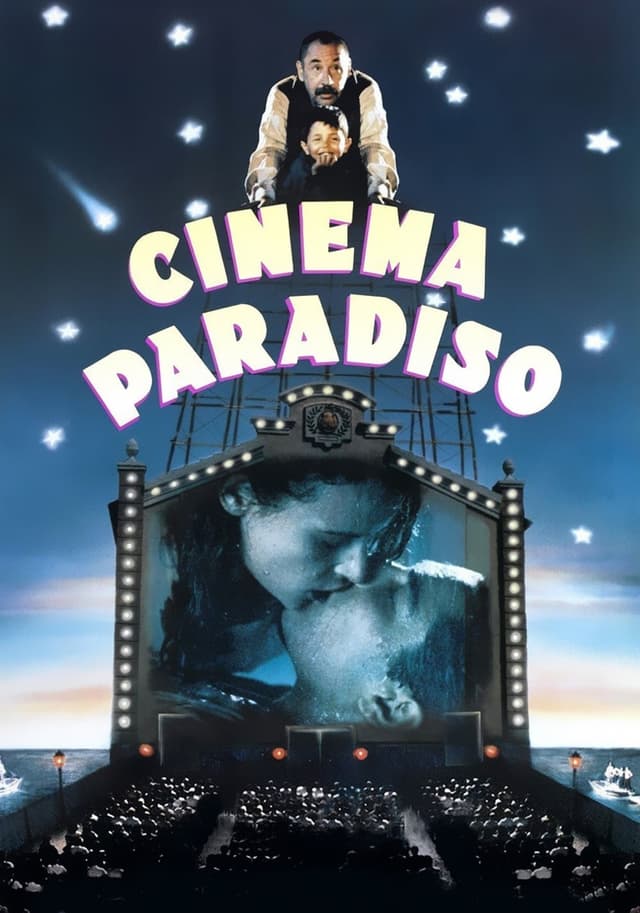
A successful Roman filmmaker, Salvatore, returns to his Sicilian village after thirty years to attend the funeral of Alfredo, the projectionist who taught him to love cinema as a boy in the 1940s and 1950s. Giuseppe Tornatore's semi-autobiographical Italian-French co-production weaves a coming-of-age village portrait with a melancholy meditation on cinephile memory, set to one of Ennio Morricone's most beloved scores. The film won the Best Foreign Language Film Oscar at the 62nd Academy Awards and the Grand Prix du Jury at the 1989 Cannes Film Festival.
What Is the Budget of Cinema Paradiso (1988)?
Cinema Paradiso (Nuovo Cinema Paradiso), Giuseppe Tornatore's 1988 Italian-French coming-of-age drama, was produced on a reported budget of approximately $5,000,000. The film was financed as an Italian-French co-production between Cristaldifilm (founded by veteran Italian producer Franco Cristaldi, the man behind Federico Fellini's Amarcord and Luchino Visconti's The Leopard) and Les Films Ariane in Paris, with additional backing from RAI (Radiotelevisione Italiana) and TF1 Films Production. The modest budget covered a Sicilian location shoot, a substantial period-piece reconstruction of 1940s and 1950s village life, and a score by Ennio Morricone composed with his son Andrea Morricone, whose Love Theme would become one of the most recognized pieces of film music of the late twentieth century.
The $5 million figure is consistent with the upper-middle tier of Italian art-house production in the late 1980s, well above the typical $1 to $2 million budget of a domestic Italian release but well below Hollywood mid-budget studio fare of the same year. Cristaldi structured the financing around the European co-production model that had sustained Italian cinema since the postwar period, pairing domestic state-television presale money from RAI with French distribution advances from Les Films Ariane to cover the production cost before a frame was shot. The arrangement allowed Tornatore, then a 32-year-old director making only his second feature, the resources to build the elaborate village set, hire experienced department heads, and afford Morricone's above-the-line composer fee.
Key Budget Allocation Categories
The reported $5 million budget was distributed across several major production areas characteristic of a late-1980s Italian-French co-production:
- Sicilian Location Shoot and Village Reconstruction: Principal photography took place in the village of Palazzo Adriano in the Province of Palermo, Sicily, standing in for the fictional town of Giancaldo. Production designer Andrea Crisanti rebuilt the village square as a working 1940s and 1950s period set, including the facade of the Cinema Paradiso theater itself, which was constructed from scratch as a freestanding set rather than an existing cinema. The Sicilian location work was the single largest line item, covering set construction, transportation, accommodation for the Roman crew, and several months of pre-production preparation.
- Period Costume and Set Decoration: The film spans roughly four decades of Italian postwar life, from the late 1940s through the 1980s, requiring period wardrobe, props, vehicles, and dressing for each era. Costume designer Beatrice Bordone assembled a wardrobe department capable of moving the village population through three distinct historical phases, with particular attention to the children's clothes worn by the young Salvatore (Toto) and the gradual aging of the supporting cast.
- Cast and Above-the-Line Talent: The film paired veteran French actor Philippe Noiret, an internationally bankable name fresh off Bertrand Tavernier's Round Midnight, with newcomer Salvatore Cascio, the six-year-old Sicilian non-professional Tornatore cast as the young Toto. Jacques Perrin played the adult Salvatore in the framing story, and Antonella Attili and Pupella Maggio rounded out the principal cast. Noiret and Perrin commanded standard European art-house lead fees, while the local Sicilian supporting cast worked at significantly lower scale, keeping above-the-line costs within the Italian art-house range.
- Ennio Morricone Score: Ennio Morricone, then at the absolute peak of his international fame following The Mission (1986) and The Untouchables (1987), composed the score with his son Andrea Morricone, who wrote the Love Theme that became the film's most enduring musical signature. Morricone's fee was a substantial single line item for a budget of this size, recorded in Rome with a full orchestra, and the rights to the score have generated decades of secondary revenue for the production.
- Cinematography and Camera Package: Director of photography Blasco Giurato shot the film in anamorphic widescreen on 35mm color stock, working closely with Tornatore to establish the warm golden palette that defines the film's memory of Sicilian village life. The camera package, lighting, and grip equipment were shipped from Rome to Sicily for the location shoot and represented a significant fixed cost across the multi-month production schedule.
- Editing and Post-Production: Mario Morra and Tornatore edited the film in Rome, initially assembling a 173-minute director's cut that played to a tepid Italian theatrical reception in late 1988. Post-production sound work, dubbing (standard practice for Italian productions of the era), and Morricone's score recording all took place in Roman post houses. The 124-minute international cut, re-edited after the Italian release underperformed, represented additional post-production spending borne by the producers.
- Festival Delivery and International Distribution Prep: After the 173-minute version flopped domestically, Cristaldi and Tornatore restructured the film for international audiences and prepared festival prints for the 1989 Cannes Film Festival, where the recut version would change the film's commercial trajectory. Striking festival prints, subtitling in multiple European languages, and submitting to Cannes and the Academy Awards Best Foreign Language Film process all fell within this final tranche of spending.
How Does Cinema Paradiso's Budget Compare to Similar Films?
At a reported $5 million, Cinema Paradiso sits in the upper-middle tier of late-1980s European art-house production. The most useful comparisons are to other Giuseppe Tornatore features, other Italian films of the same period, and other films-about-films from international cinema:
- Malèna (2000): Budget approximately $14,000,000 | Worldwide $14,700,000. Tornatore's later Sicilian coming-of-age drama, also scored by Ennio Morricone and shot in Sicily, cost nearly three times Cinema Paradiso's budget but earned far less internationally, demonstrating how singular Cinema Paradiso's commercial trajectory was within the director's own filmography.
- The Legend of 1900 (1998): Budget approximately $20,000,000 | Worldwide $20,300,000. Tornatore's English-language follow-up, again scored by Morricone, cost four times Cinema Paradiso and barely broke even worldwide, confirming that the original's budget-to-gross ratio was a once-in-a-career outlier rather than a repeatable formula.
- Life Is Beautiful (1997): Budget $20,000,000 | Worldwide $230,100,000. Roberto Benigni's Italian-language Holocaust comedy is the closest commercial peer, another Italian feature that broke through to global mainstream audiences and won the Best Foreign Language Film Oscar nine years after Cinema Paradiso. It cost four times as much and earned roughly five times more.
- Il Postino (1994): Budget approximately $3,000,000 | Worldwide $81,800,000. Michael Radford and Massimo Troisi's Italian art-house hit, also a Cristaldifilm production, cost less than Cinema Paradiso and matched its trajectory as an Italian export that crossed over into Best Picture Oscar nominations and global art-house success.
- 8½ (1963): Budget approximately $1,000,000 | Worldwide gross figures not publicly aggregated. Federico Fellini's definitive Italian film-about-filmmaking is the artistic ancestor for Cinema Paradiso's cinephile self-reflection, made for a fraction of Tornatore's budget in 1963 dollars and now one of the most acclaimed films in cinema history.
- Day for Night (1973): Budget approximately $1,500,000 | Worldwide gross not publicly aggregated. François Truffaut's Best Foreign Language Film Oscar winner about the making of a movie is the closest French-language peer to Cinema Paradiso's love letter to cinema, with the two films often programmed together in repertory cinephile retrospectives.
- The Artist (2011): Budget $15,000,000 | Worldwide $133,400,000. Michel Hazanavicius' Best Picture-winning silent black-and-white love letter to early Hollywood is the modern descendant of Cinema Paradiso's nostalgic-cinephile mode, costing three times as much and earning roughly twice the worldwide gross.
Cinema Paradiso Box Office Performance
Cinema Paradiso's commercial trajectory is one of the most unusual in modern cinema. The 173-minute original cut opened in Italy in November 1988 to weak business and was withdrawn from theaters after disappointing returns. Giuseppe Tornatore and producer Franco Cristaldi recut the film to 124 minutes, removing most of the adult-Salvatore framing story and tightening the village sequences. The new version premiered out of competition at the 1989 Cannes Film Festival, where it won the Grand Prix du Jury (the festival's second-highest honor), transforming the film's commercial prospects overnight. The recut version then opened internationally through Miramax in the United States in February 1990 and through European distributors across 1989 and 1990, eventually earning a reported $11,990,401 in the United States and Canada and an estimated worldwide gross north of $12,000,000 on its initial theatrical run, with sustained re-release revenue over the following three decades.
Box Office Breakdown
Cinema Paradiso

At approximately $2.40 for every $1 invested on initial theatrical alone, Cinema Paradiso's box office return looks modest on paper. The fuller picture is dramatically more favorable: the Morricone score has generated three decades of soundtrack album sales and licensing revenue, the film returned to theaters in a 2002 reissue of the longer 173-minute director's cut that played art-house cinemas worldwide, and home-video, broadcast, and streaming licensing have continued to generate revenue every year since 1990.
The trajectory also reset Tornatore's career and Cristaldifilm's commercial profile. The Best Foreign Language Film Oscar in March 1990 cemented the film as a permanent cultural reference point in the Italian export canon, alongside Life Is Beautiful and Il Postino, and its commercial endurance over thirty-plus years has made it one of the most consistently profitable Italian productions of the late twentieth century.
Cinema Paradiso Production History
Giuseppe Tornatore developed Cinema Paradiso as a semi-autobiographical project drawn from his own childhood in Bagheria, Sicily, where he had grown up in the 1960s watching films at the local parish cinema. The screenplay, which Tornatore wrote with collaboration from Vanna Paoli, structured the story around the relationship between a young boy, Salvatore (nicknamed Toto), and the projectionist Alfredo at the village cinema. Producer Franco Cristaldi, then in the late stage of a four-decade career that included producing Fellini's Amarcord and Visconti's The Leopard, committed Cristaldifilm to the project and arranged French co-production financing through Les Films Ariane and broadcast presale money through RAI.
Casting Philippe Noiret as Alfredo, the projectionist, brought an internationally bankable French star into a Sicilian-dialect production. Noiret had just completed Bertrand Tavernier's Round Midnight and was at the height of his European art-house standing. The casting of the young Toto proved more difficult: Tornatore interviewed hundreds of Sicilian children before selecting six-year-old Salvatore Cascio, a non-professional from Palazzo Adriano whose natural screen presence would carry the film's emotional center. Jacques Perrin, the French actor and producer best known internationally as the boy in Marcel Camus's Black Orpheus and as the unifying narrator-figure in Costa-Gavras films, took the role of the adult Salvatore in the framing story.
Principal photography took place in 1988 in the Sicilian village of Palazzo Adriano in the Province of Palermo, with additional sequences shot in Cefalù and Lascari. Production designer Andrea Crisanti rebuilt the village square as a 1940s and 1950s period set, with the facade of the Cinema Paradiso constructed from scratch as a freestanding set. The Sicilian shoot ran for several months across the spring and summer of 1988, with the production housing a Roman crew on location and bringing in local extras and supporting players from the surrounding villages. The shoot itself was logistically demanding but largely free of the kind of major production crises that often plague period pieces of this scope, a credit to Cristaldifilm's seasoned production team. Italian filming locations like this remain attractive partly through the country's evolving Italy film tax incentive programs, which today offer significant credits on Italian production spend, though the 1988 production predated the current incentive structure.
The first cut Tornatore assembled with editor Mario Morra ran 173 minutes and contained an extensive adult-Salvatore storyline involving his return to Sicily and a rediscovery of his lost adolescent love Elena. The 173-minute version opened in Italy in November 1988 and underperformed commercially, with Italian audiences and critics responding tepidly to its length and pacing. Cristaldi and Tornatore made the difficult decision to recut the film for international audiences, reducing the running time to 124 minutes by stripping most of the adult-Salvatore subplot and tightening the village sequences. The recut version premiered out of competition at the 1989 Cannes Film Festival, where it won the Grand Prix du Jury, and the festival win immediately transformed the film's international commercial profile.
Ennio Morricone and his son Andrea Morricone composed the score in Rome, with Andrea writing the Love Theme that became the film's most recognized musical motif. The score was recorded with a full orchestra in Roman recording studios and has gone on to be one of Morricone's most performed and licensed works. After the international success of the 124-minute cut, Tornatore returned to the longer version in 2002 and supervised a restored 173-minute director's cut release, which played art-house cinemas worldwide and added a further chapter to the film's already extraordinary commercial life.
Awards and Recognition
Cinema Paradiso won the Academy Award for Best Foreign Language Film at the 62nd Academy Awards in March 1990, the most prestigious recognition the film received and the prize that locked its place in the canon of late twentieth century Italian export cinema. The film was the official Italian submission for the category, and the win came in a year that included strong competition from Krzysztof Kieślowski's Camera Buff and Jiří Menzel's My Sweet Little Village.
At the 1989 Cannes Film Festival, the recut version won the Grand Prix du Jury (the festival's second-highest honor, awarded jointly with Bertrand Blier's Trop belle pour toi), the decisive prize that revived the film's commercial trajectory after the disappointing Italian theatrical opening. The film also won five BAFTA Awards in 1991, including Best Film Not in the English Language, Best Actor in a Leading Role for Philippe Noiret, Best Actor in a Supporting Role for Salvatore Cascio (a then-record win for a child actor in the supporting category), Best Original Film Score for Ennio and Andrea Morricone, and Best Screenplay (Original) for Tornatore.
Additional major recognition included the Golden Globe for Best Foreign Language Film, the David di Donatello (Italy's national film awards) for Best Producer and Best Music, and a César Award nomination for Best Foreign Film in France. The film appeared in the Vatican's 1995 list of important films in the "art" category, an unusual ecclesiastical recognition for a secular work, and has been included in numerous canonical surveys of the greatest Italian films of all time. The film does not appear in major directors' polls like Sight and Sound's decennial Greatest Films lists at the highest tier, but it occupies a durable position in popular cinephile canons and routinely appears in lists of the most beloved films of the late twentieth century.
Critical Reception
Cinema Paradiso holds a 90 percent positive score on Rotten Tomatoes based on 62 critic reviews with an average rating of 8.20 out of 10, and an 80 out of 100 on Metacritic based on 14 critic reviews, placing it in the upper tier of foreign-language releases of the 1990 US theatrical window. The audience score on Rotten Tomatoes sits at 95 percent based on more than 50,000 ratings, one of the highest audience scores ever recorded for a subtitled Italian feature. CinemaScore did not survey audiences for the film's art-house release, but the IMDb user rating of 8.5 based on more than 270,000 votes is among the highest of any Italian film and places Cinema Paradiso in the IMDb Top 250 at a sustained position above many Hollywood prestige titles.
Roger Ebert reviewed the film favorably for the Chicago Sun-Times and later included it in his Great Movies essay series, praising it as "a movie that loves movies" and singling out the closing montage of censored kisses as one of the most moving sequences in modern cinema. Vincent Canby of the New York Times wrote that the film "celebrates and laments the demise of small-town movie houses with extraordinary affection," while Janet Maslin highlighted Morricone's score as integral to the film's emotional reach. Time Out's review was more skeptical, criticizing the 124-minute version for sentimentality, a complaint that became a recurring critical objection to the film over the following decades.
Critical reassessment over the years has been mixed. Auteurist critics in the Cahiers du cinéma tradition have tended to view Cinema Paradiso as middlebrow and sentimental relative to canonical Italian art cinema (Fellini, Antonioni, Rossellini, Visconti, Pasolini), while a parallel popular-cinephile tradition has elevated it to canonical status as one of the most accessible and emotionally durable Italian films of the late twentieth century. The 2002 release of the 173-minute director's cut reignited the critical conversation, with some reviewers (including Roger Ebert) preferring the shorter international version and others arguing that the longer cut delivers a fuller, more melancholy portrait of cinephile loss. The film remains in active repertory and home-video circulation thirty-plus years after release, with the Morricone score continuing to attract new audiences through orchestral concert programming and licensing in film and television.
Frequently Asked Questions
How much did it cost to make Cinema Paradiso (1988)?
Cinema Paradiso was produced on a reported budget of approximately $5,000,000. The film was financed as an Italian-French co-production between Franco Cristaldi's Cristaldifilm and Paris-based Les Films Ariane, with additional broadcast presale money from RAI and TF1 Films Production. The budget covered a multi-month Sicilian location shoot in Palazzo Adriano, a substantial period-piece village reconstruction, and an Ennio Morricone score composed with his son Andrea Morricone.
How much did Cinema Paradiso (1988) earn at the box office?
Cinema Paradiso earned approximately $12,000,000 worldwide on its initial 1989 to 1990 theatrical run, with a reported $11,990,401 from the United States and Canada through Miramax. The 1988 original 173-minute Italian release underperformed and was withdrawn; the recut 124-minute version that won the Grand Prix du Jury at the 1989 Cannes Film Festival drove the international gross. The film has generated decades of additional re-release, home video, broadcast, and soundtrack revenue.
Was Cinema Paradiso (1988) profitable?
Yes. Against the reported $5,000,000 production budget, the film earned approximately $12,000,000 in initial worldwide theatrical, for an initial ROI of roughly 140 percent or about $2.40 for every $1 invested at the production-budget level. Including the 2002 director's cut theatrical reissue, three decades of home video, broadcast, and streaming licensing, and the continuing revenue from Morricone's score, the film is among the most consistently profitable Italian productions of the late twentieth century.
Who directed Cinema Paradiso (1988)?
Cinema Paradiso was directed by Giuseppe Tornatore, who also wrote the screenplay with Vanna Paoli. It was Tornatore's second feature, drawn from his own childhood in Bagheria, Sicily, where he had grown up watching films at the local parish cinema in the 1960s. The film made Tornatore one of the most recognized Italian directors of his generation and set the template for his later Sicilian-set features Malèna and Baarìa.
Where was Cinema Paradiso (1988) filmed?
Principal photography took place in 1988 in the Sicilian village of Palazzo Adriano in the Province of Palermo, standing in for the fictional village of Giancaldo, with additional sequences shot in Cefalù and Lascari. Production designer Andrea Crisanti rebuilt the village square as a 1940s and 1950s period set, including the facade of the Cinema Paradiso theater itself, constructed from scratch as a freestanding set. Post-production and Morricone's score recording were completed in Rome.
What awards did Cinema Paradiso (1988) win?
Cinema Paradiso won the Academy Award for Best Foreign Language Film at the 62nd Academy Awards in March 1990, the Grand Prix du Jury at the 1989 Cannes Film Festival (shared with Bertrand Blier's Trop belle pour toi), the Golden Globe for Best Foreign Language Film, and five BAFTA Awards in 1991, including Best Film Not in the English Language, Best Actor for Philippe Noiret, Best Actor in a Supporting Role for the young Salvatore Cascio, Best Original Film Score for the Morricones, and Best Original Screenplay for Tornatore.
Why are there two different cuts of Cinema Paradiso?
Tornatore's original 173-minute cut opened in Italy in November 1988 and underperformed commercially with Italian audiences. He and producer Franco Cristaldi recut the film to 124 minutes for international release, removing most of the adult-Salvatore framing story and tightening the village sequences. The shorter version won the Grand Prix du Jury at the 1989 Cannes Film Festival and became the canonical international cut. In 2002 Tornatore returned to the longer version and supervised a restored 173-minute director's cut release.
Who composed the score for Cinema Paradiso (1988)?
Ennio Morricone composed the main score with his son Andrea Morricone, who wrote the Love Theme that became the film's most recognized musical motif. Ennio Morricone was at the absolute peak of his international fame following The Mission (1986) and The Untouchables (1987), and the Cinema Paradiso score has gone on to be one of his most performed and licensed works, generating decades of soundtrack album, orchestral concert, and film and television licensing revenue.
Who starred in Cinema Paradiso (1988)?
The film starred veteran French actor Philippe Noiret as the projectionist Alfredo, six-year-old Sicilian non-professional Salvatore Cascio as the young Salvatore "Toto," and French actor Jacques Perrin as the adult Salvatore in the framing story. Marco Leonardi played the teenage Salvatore, with Agnese Nano as his lost love Elena, and Pupella Maggio, Antonella Attili, and Brigitte Fossey rounding out the supporting cast. Cascio's performance as Toto earned him a then-record BAFTA win for a child actor in the Best Actor in a Supporting Role category.
Where can you watch Cinema Paradiso (1988) today?
Cinema Paradiso is available to stream on multiple platforms including the Criterion Channel and MUBI during their Italian and Tornatore programming windows, and on rental and purchase through Amazon Prime Video, Apple TV, and Google Play. The 173-minute director's cut and the 124-minute international cut are both available on Blu-ray through Arrow Video and Criterion Collection releases, and the film remains in active repertory cinema circulation more than thirty-five years after its initial release.
Filmmakers
Cinema Paradiso

Official Trailer
Build budgets like this one in Saturation
Start from an industry-standard feature film template, import the schedule and rates you already have, and let the cost report keep itself current as you spend. Real-time collaboration, no spreadsheets.