Silenced Budget
Updated
Synopsis
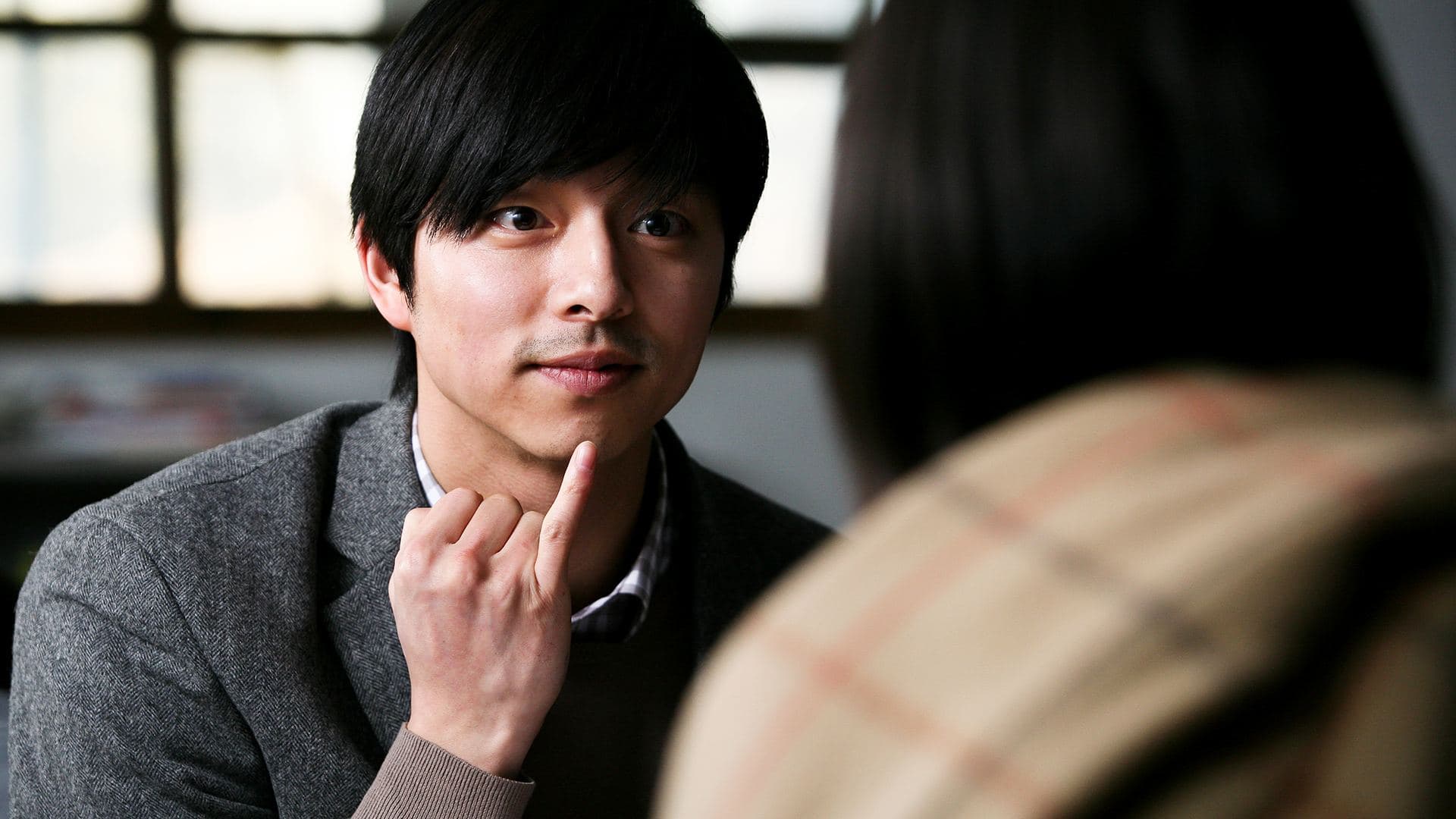
Kang In-ho, a newly hired art teacher at a school for hearing-impaired children in Gwangju, slowly realizes that the school's administrators and senior staff have been systematically sexually and physically abusing the students for years. Together with human-rights activist Seo Yoo-jin, he gathers evidence and pushes the police and prosecutors to bring charges, but the trial that follows becomes its own indictment of South Korea's legal and institutional protections for the powerful.
What Is the Budget of Silenced (2011)?
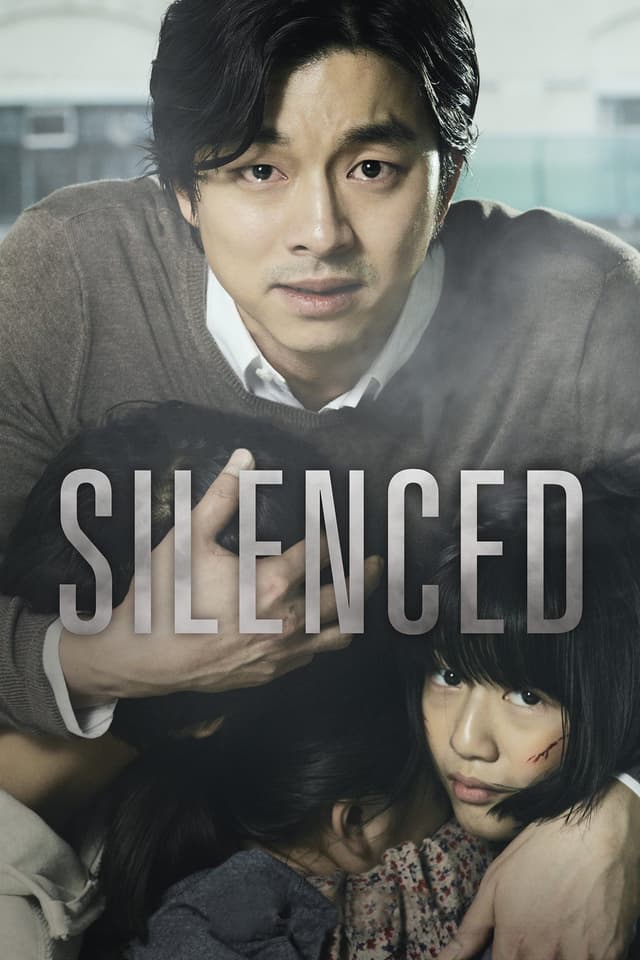
Silenced (2011), known in Korean as Dogani (도가니, "Crucible"), is a South Korean social-issue drama directed by Hwang Dong-hyuk and released by CJ Entertainment. The film was produced on a modest budget of approximately $2.2 million, a figure consistent with mid-budget Korean dramas of the early 2010s before the international expansion that would later inflate domestic production costs. Adapted from Gong Ji-young's 2009 novel of the same name, the film dramatizes the real sexual abuse of deaf children at the Gwangju Inhwa School, a scandal that had drawn limited public attention when the original news reports broke in 2005.
Hwang Dong-hyuk, more than a decade before becoming a global household name with Netflix's Squid Game, had completed only one prior feature, the 2007 comedy My Father. He took on Silenced after star Gong Yoo personally championed the source material, having read the novel during his military service and pushed for an adaptation. The film's low budget reflected the riskiness of the material to commercial financiers: a quiet, harrowing drama about institutional abuse of disabled minors offered none of the genre hooks (thrillers, melodramas, period epics) that typically attract South Korean theatrical investment. CJ Entertainment took the project on as a prestige play, with most of the budget going to a tight Gwangju shoot, child-actor coaching, and a restrained but precisely calibrated post-production.
Key Budget Allocation Categories
The $2.2 million budget was distributed across several focused production areas:
- Above-the-Line Talent: Gong Yoo, fresh off the hit drama Coffee Prince, took the lead role at a reduced fee, treating the project as a passion piece rather than a commercial vehicle. Co-star Jung Yu-mi (already a critically respected presence from Family Ties and later Train to Busan and Squid Game) and veteran character actor Jang Gwang, who played twin antagonists, anchored the cast. Director and screenwriter Hwang Dong-hyuk's combined fees were modest compared to his later franchise-era compensation.
- Casting and Coaching of Deaf Child Actors: The film required casting children to portray deaf-mute abuse victims, demanding sustained sign-language coaching, on-set translators, and trauma-aware acting workshops. Lead juvenile cast member Kim Hyun-soo, alongside Jung In-seo and Baek Seung-hwan, worked with sign-language consultants throughout pre-production and the shoot. The protection and pacing required around the young performers was a meaningful line item.
- Location Filming in Gwangju: Principal photography took place largely in Gwangju, the real city where the Inhwa School abuses occurred, with the production using existing institutional buildings, a converted schoolhouse interior set, and surrounding residential streets. Filming on-site rather than recreating Gwangju in Seoul gave the film documentary texture but required full crew travel, regional housing, and location fees with local authorities.
- Production Design and Period Texture: The film is set roughly contemporaneous with its 2011 release but designed for an oppressive, off-color institutional palette: muted greens, fluorescent corridor lighting, water-damaged classrooms. Production designer Lee Min-bok's work emphasized lived-in dilapidation rather than expensive recreation, but each interior was carefully dressed to support the film's claustrophobic register.
- Cinematography and Camera Package: Cinematographer Kim Ji-yong (a frequent collaborator on Korean dramas of this period) shot the film on a digital package using mostly natural and practical light. The handheld, observational style of many scenes kept lighting overhead lean, allowing the budget to focus on careful blocking with the child performers rather than elaborate camera infrastructure.
- Original Score and Sound Design: Composer Mowg (Mok Young-jin) wrote the score, which leans on minimal piano and string textures and silence rather than emotional underlining. The score went on to win Best Music at the 32nd Blue Dragon Film Awards. The sound mix, critical to a film whose subjects cannot speak, required careful design of ambient courtroom and classroom layers as well as the few sequences that move into the victims' perspective.
- Post-Production and Color: Editor Hahm Sung-won shaped the film into a tightly paced 125-minute drama, balancing the slow-burn abuse investigation with the explosive courtroom act. Color grading carried the institutional palette through to the final master. Post was completed at a Seoul facility and represented a meaningful but proportionate share of the budget.
- Marketing and CJ Theatrical Release: CJ Entertainment's domestic marketing emphasized the film's basis in real events, the involvement of Gong Yoo, and the journalistic credibility of the underlying novel. The campaign's tone, sober rather than salacious, helped position Silenced as a public-interest event film rather than a conventional drama, a positioning that proved crucial to its eventual political impact.
How Does Silenced's Budget Compare to Similar Films?
At $2.2 million, Silenced sits at the low end of mid-budget Korean theatrical production for its era. Comparing it with relevant Korean and director-aligned films:
- Memories of Murder (2003): Budget $2,800,000 | Worldwide $11,200,000. Bong Joon-ho's landmark serial-killer procedural cost roughly 27% more and is the canonical example of a Korean social-issue film built from real-life criminal record. Both films treat institutional failure (police in Memories, schools and courts in Silenced) as the true subject.
- The Attorney (2013): Budget $7,000,000 | Worldwide $87,000,000. Yang Woo-suk's courtroom drama, dramatizing the late President Roh Moo-hyun's defense of student activists, cost more than triple Silenced but followed an almost identical commercial playbook: a star (Song Kang-ho instead of Gong Yoo), an issue-based mandate, and a courtroom centerpiece. Its 11 million admissions show the ceiling of the social-message playbook Silenced helped establish.
- The Man from Nowhere (2010): Budget $7,000,000 | Worldwide $46,500,000. Released a year before Silenced, this action-thriller hit was made for roughly triple the budget and earned 50% more worldwide, illustrating how much cheaper drama-driven Korean films were relative to action genre work at the same moment.
- Train to Busan (2016): Budget $8,500,000 | Worldwide $98,500,000. Five years after Silenced, Korea's commercial filmmaking had scaled up: Train to Busan reunited Gong Yoo and Jung Yu-mi at almost four times Silenced's budget and earned more than three times its worldwide gross, reflecting the post-Parasite-era growth of Korean cinema's international market.
- Parasite (2019): Budget $11,400,000 | Worldwide $263,000,000. Bong Joon-ho's Oscar-winning class drama cost roughly five times Silenced and shares Silenced's DNA: a tightly budgeted Korean film about institutional and moral failure that traveled internationally on the strength of its writing rather than its production scale.
- Squid Game (2021): Budget $21,400,000 | Worldwide n/a (Netflix series). Hwang Dong-hyuk's subsequent project cost ten times Silenced for a nine-episode season and shares the earlier film's preoccupation with how institutions, here a death-game corporation rather than a school, exploit the powerless.
Silenced Box Office Performance
Silenced opened in South Korea on September 22, 2011 to immediate and unusually intense audience response. The film earned roughly ₩7.8 billion in its first week and ranked No. 1 at the Korean box office for three consecutive weeks, eventually drawing over 4.6 million domestic admissions in a release pattern more typical of a tentpole than a social-issue drama. The film's commercial success was tightly intertwined with the public outrage and reform campaign that broke out within days of its premiere.
The full financial breakdown:
Box Office Breakdown
Silenced

Against its $2.2 million production budget alone, Silenced returned approximately $14.32 for every $1 invested, a ratio that would be exceptional even before factoring in CJ's domestic distribution share. Even after estimated marketing of $1.5 million to $2.5 million and theatrical exhibitor splits, the film delivered one of the strongest ROI profiles of any 2011 Korean release.
The domestic Korean theatrical run accounted for the overwhelming majority of the gross, with the film grossing roughly $30 million in Korea and limited additional revenue from festival and territorial sales across Asia, the Udine Far East Film Festival exposure, and home-video releases. Unlike later Hwang Dong-hyuk projects, Silenced did not receive a wide Western theatrical rollout, and its international revenue trajectory was driven by streaming and home-video discovery in the years after release.
Silenced Production History
The project began with Gong Ji-young's 2009 novel Dogani, a fictionalized reconstruction of the 2005 Gwangju Inhwa School abuse case, in which administrators and teachers at a school for hearing-impaired children were credibly accused of years of sexual and physical abuse against students. The novel itself was a bestseller and provoked discussion, but the criminal verdicts at the time, brief suspended sentences and minor fines, had largely faded from public memory by the late 2000s. Actor Gong Yoo read the novel during his mandatory military service and, on returning to the industry, made adapting it a personal priority.
Hwang Dong-hyuk, then a relatively young director with only My Father (2007) on his feature résumé, was brought on to write and direct. Hwang had studied film at USC and brought a careful, almost procedural sensibility to the screenplay, structuring the film into a quiet first act of recognition, a middle act of disclosure and police inertia, and a final act centered on the courtroom and its compromised verdict. The screenplay refused tidy catharsis: the institutional villains were not defeated, only exposed, and the film's ending registered as moral indictment rather than victory.
Principal photography took place in South Korea, primarily in and around Gwangju, with additional unit work in Seoul. The production used a real institutional building as the school exterior and constructed dressed interiors for the classrooms, dormitories, and bathrooms where the abuse sequences occur. Hwang and cinematographer Kim Ji-yong staged the abuse scenes with extreme care: very young deaf and hearing-impaired actors were cast alongside hearing performers, with on-set sign-language interpreters and child psychologists present throughout filming. Sequences depicting violence were shot in fragments and edited with restraint, never lingering, and the child performers worked in shortened blocks with the trauma carefully contextualized.
The courtroom sequences, which form the film's climax, were shot on a dressed practical interior. Hwang has discussed how he calibrated the trial scenes to be deliberately procedural and demoralizing rather than cathartic, mirroring the actual outcome of the 2005 case, in which several defendants received suspended sentences or escaped substantive punishment. Composer Mowg's score was developed late in post and is notable for its restraint, often dropping out entirely during the abuse scenes to force audiences to register what is on screen without musical mediation. CJ Entertainment, mindful of the sensitivity of the material, scheduled the film for a late-September release and built a marketing campaign emphasizing the underlying real events.
Awards and Recognition
Silenced was nominated across most of the major South Korean ceremonies of its eligibility year and won several prestigious prizes. At the 32nd Blue Dragon Film Awards in November 2011, the film won Best Music for Mowg's score and the Popular Star Award for Gong Yoo, while also receiving nominations for Best Picture, Best Director (Hwang Dong-hyuk), Best Actor (Gong Yoo), and Best Supporting Actor (Jang Gwang). At the KOFRA Film Awards from the Korean Film Reporters Association, Silenced was named Best Film of the year.
Internationally, the film won the Audience Award and the Black Dragon Audience Award at the 14th Udine Far East Film Festival in Italy in 2012, where it played to a packed European audience and helped position Hwang Dong-hyuk and Gong Yoo for later global recognition. The film was also nominated at the 49th Grand Bell (Daejong) Awards and the 48th Baeksang Arts Awards across multiple categories including Best Film, Best Director, Best Actor, Best Supporting Actor, and Best New Actress for Kim Hyun-soo.
Beyond formal awards, Silenced's cultural impact was vastly more significant than its trophy count. The "Dogani Law" passed by the South Korean National Assembly in late 2011, which removed the statute of limitations for sexual assaults against children under 13 and persons with disabilities and stiffened sentencing in such cases, is widely cited as a direct legislative response to the public reaction the film provoked. Few films in Korean cinema history can credibly claim to have changed national law; Silenced is the canonical example.
Critical Reception
Silenced opened to extraordinary critical acclaim in South Korea and remains one of the most critically respected Korean films of the early 2010s. The film holds a 100% approval rating from professional critics on Rotten Tomatoes (based on a limited Western critics sample due to its modest international theatrical footprint). Korean trade reviewers and broadsheets praised the film's restraint, its refusal of melodramatic sensationalism, and the clarity with which it portrayed institutional complicity.
Critics singled out Gong Yoo's lead performance as Kang In-ho, the new art teacher who discovers and refuses to ignore the abuse, as a career-defining turn. His Coffee Prince image was deliberately stripped away, and the performance plays out in long quiet observations rather than explosive monologues. Jung Yu-mi, as the human-rights activist Seo Yoo-jin who joins Kang in pursuing the case, was widely praised for an unsentimental performance that grounds the activist character in exhaustion rather than righteousness. Veteran Jang Gwang's dual role as the school's administrator twins was singled out as one of the most chilling antagonist performances in recent Korean cinema.
Audience response in Korea was unprecedented for a drama of this scale. Theaters reported viewers leaving screenings in tears, online petitions calling for the case to be reopened circulated within days of the premiere, and major Korean newspapers published front-page coverage of the public response and the original Gwangju Inhwa School case. International critics writing later, including from the New York Times, Variety, and Sight & Sound, retroactively recognized Silenced as the foundational film in Hwang Dong-hyuk's career-long preoccupation with how institutions weaponize themselves against the weak. After Hwang's 2021 international breakthrough with Squid Game, Silenced was widely revisited and is now regularly cited as one of the most consequential Korean films of the 21st century.
Frequently Asked Questions
How much did it cost to make Silenced (2011)?
Silenced had a production budget of approximately $2.2 million. The costs were focused on the Gwangju shoot, careful casting and coaching of deaf and hearing-impaired child actors, modest above-the-line fees for Gong Yoo and Jung Yu-mi, and restrained post-production. The budget was typical of mid-budget Korean dramas of the early 2010s rather than action or period genre work.
How much did Silenced earn at the box office?
Silenced earned approximately $31.5 million worldwide, with the overwhelming majority coming from its South Korean theatrical release. The film ranked No. 1 at the Korean box office for three consecutive weeks and drew over 4.6 million domestic admissions, an exceptional result for a social-issue drama.
Was Silenced based on a true story?
Yes. Silenced is adapted from Gong Ji-young's 2009 novel Dogani, which fictionalized the real sexual and physical abuse of deaf children at the Gwangju Inhwa School. That case, which surfaced in 2005, resulted in suspended sentences and minor fines for several of the perpetrators before the film and subsequent public outrage forced legal reform.
Did Silenced change Korean law?
Yes. In late 2011, weeks after the film's release, the South Korean National Assembly passed what is popularly known as the Dogani Law. The legislation removed the statute of limitations for sexual assaults against children under 13 and persons with disabilities, and stiffened sentencing in such cases. Silenced is one of the very few films in any country credibly cited as a direct cause of national legislative reform.
Who directed Silenced?
Silenced was directed by Hwang Dong-hyuk, who also wrote the screenplay. Hwang would later become internationally famous as the creator of Netflix's Squid Game in 2021. Silenced was only his second feature film, following the 2007 comedy My Father, and is now widely seen as the foundation of his career-long focus on institutional cruelty.
Who stars in Silenced?
Gong Yoo stars as Kang In-ho, the new art teacher who uncovers the abuse, with Jung Yu-mi as human-rights activist Seo Yoo-jin and veteran character actor Jang Gwang in a dual role as the school's administrator twins. The child cast includes Kim Hyun-soo, Jung In-seo, and Baek Seung-hwan as the central abuse survivors.
Was Silenced profitable?
Yes, extremely so. Against its $2.2 million production budget, the film earned approximately $31.5 million worldwide. Even after estimated marketing costs of $1.5 million to $2.5 million and theatrical distribution splits, Silenced returned roughly $14 for every dollar of production investment, one of the strongest ROI profiles of any Korean release in 2011.
Where was Silenced filmed?
Silenced was filmed in South Korea, primarily in and around Gwangju, the city where the real Inhwa School abuses occurred. The production used real institutional buildings as exteriors and constructed dressed interiors for the classrooms, dormitories, and courtrooms, with additional unit work completed in Seoul.
What awards did Silenced win?
Silenced won Best Music (for Mowg's score) and the Popular Star Award (for Gong Yoo) at the 32nd Blue Dragon Film Awards in 2011, and was named Best Film of the year by the Korean Film Reporters Association. Internationally, it won the Audience Award and the Black Dragon Audience Award at the 14th Udine Far East Film Festival in 2012.
Why is Silenced considered an important Korean film?
Silenced is considered a landmark because it directly catalyzed the passage of the Dogani Law, a rare example of cinema producing immediate legislative change. It also stands as the early career masterwork of Hwang Dong-hyuk, who would go on to create Squid Game, and as one of the strongest examples of the Korean social-issue drama tradition that includes Memories of Murder, The Attorney, and Parasite.
Filmmakers
Silenced

Official Trailer
Build budgets like this one in Saturation
Start from an industry-standard feature film template, import the schedule and rates you already have, and let the cost report keep itself current as you spend. Real-time collaboration, no spreadsheets.