Sicko Budget
 DocumentaryComedyDrama123 minutes
Updated
Synopsis
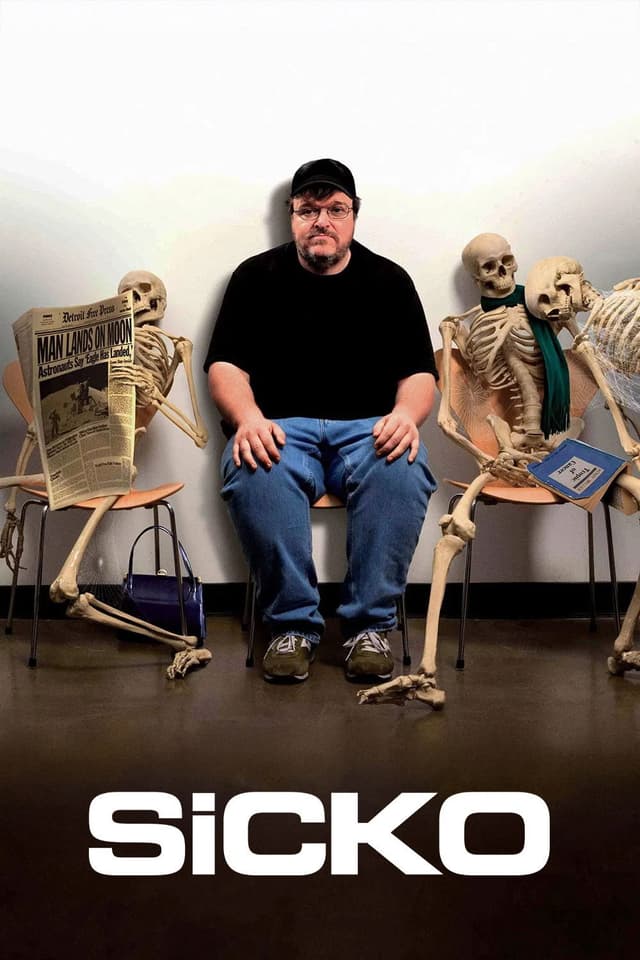
Documentary look at health care in the United States as provided by profit-oriented health maintenance organizations (HMOs) compared to free, universal care in Canada, the U.K., and France. Moore contrasts U.S. media reports on Canadian care with the experiences of Canadians in hospitals and clinics there. He interviews patients and doctors in the U.K. about cost, quality, and salaries. He examines why Nixon promoted HMOs in 1971, and why the Clintons' reform effort failed in the 1990s. He talks to U.S. ex-pats in Paris about French services, and he takes three 9/11 clean-up volunteers, who developed respiratory problems, to Cuba for care. He asks of Americans, "Who are we?"
What Is the Budget of Sicko?
Sicko was produced on an estimated budget of approximately $9 million by Dog Eat Dog Films, Michael Moore's production company, in partnership with the Weinstein Company. The film examined the American healthcare system by contrasting it with universal healthcare programs in Canada, the United Kingdom, France, and Cuba, following uninsured and underinsured Americans and interviewing healthcare workers on both sides of the Atlantic.
The $9 million budget was sufficient for Moore's documentary style, which relies primarily on interviews, archival footage, and Moore's own on-camera presence rather than expensive reconstructions or visual effects. The most costly logistical component was the Cuba sequence, in which Moore transported several sick 9/11 rescue workers, who had been denied government healthcare coverage, to Havana for treatment. That sequence triggered a federal investigation by the Bush administration's Treasury Department for potential violations of the U.S. trade embargo against Cuba.
Key Budget Allocation Categories
- Production and International Travel: The film required extensive international production, with crews traveling to Canada (Windsor, Ontario), the United Kingdom (London, NHS hospitals), France (Paris), and Cuba (Havana). The logistics of filming in Cuba under U.S. embargo restrictions, and later managing the Treasury Department inquiry, added unusual legal and production costs to the international travel budget.
- Director Michael Moore: Moore served as writer, director, and on-screen narrator. As the sole above-the-line creative element, his fee and the compensation for his core team at Dog Eat Dog Films were the primary above-the-line costs. Moore's profile following Bowling for Columbine and Fahrenheit 9/11 meant the film had guaranteed distribution interest before production began.
- Subject Access and Interview Production: The film interviews dozens of individuals, from uninsured American patients to NHS physicians in England to French professionals in Paris. Coordinating access, translators, location permissions, and interview setups across four countries required a production team capable of operating in multiple languages and regulatory environments.
- Archival Footage and Licensing: Sicko incorporates historical footage of American healthcare debates, HMO industry promotional materials, and Nixon-era recordings of conversations about the commercial potential of healthcare. Clearing archival material of this type, particularly presidential recordings, required legal review and licensing fees.
- Legal and Compliance: The Treasury Department investigation into the Cuba trip, which Moore had conducted without a travel license, required legal response costs. Moore ultimately submitted documentation to the Treasury and kept copies of all sensitive production materials with his lawyers, anticipating federal scrutiny of the Cuba sequence before the film was released.
How Does Sicko's Budget Compare to Similar Films?
Sicko sits within the tradition of politically engaged American documentary filmmaking, where budgets are determined by subject access and distribution deals rather than star fees or production infrastructure. Compared to Moore's own previous work and to contemporary political documentaries, the film represents a mid-range investment for the genre.
- Fahrenheit 9/11 (2004): Budget ~$6M | Worldwide $222.4M. Moore's preceding film, which attacked the Bush administration's response to 9/11 and the rationale for the Iraq War, is the highest-grossing documentary in cinema history. Sicko's $36 million worldwide cannot match it, though both films were made on comparable budgets.
- Bowling for Columbine (2002): Budget ~$4M | Worldwide $58.0M. Moore's documentary about gun violence was made on a smaller budget and found a larger audience than Sicko. Healthcare is a more diffuse subject than gun violence, and the film's international components raised production costs.
- An Inconvenient Truth (2006): Budget ~$1M | Worldwide $49.8M. Al Gore's climate documentary, released the year before Sicko, showed that politically engaged documentaries with a single authoritative protagonist could find substantial theatrical audiences on minimal budgets.
- Roger & Me (1989): Budget ~$160K | Worldwide $6.7M. Moore's debut film, made for almost nothing and focused on General Motors' impact on Flint, Michigan, established his template. Sicko represents how much Moore's production scale had grown over eighteen years.
Sicko Box Office Performance
Sicko opened June 22, 2007, in limited release following its world premiere at the 2007 Cannes Film Festival, where it screened in competition. The Weinstein Company expanded the film to wide release on June 29, 2007, across 441 theaters for its opening weekend, generating $4.5 million. The domestic run totaled $24.5 million, a solid result for a political documentary outside of Moore's own record-setting Fahrenheit 9/11. International markets added $11.5 million, bringing the worldwide total to $36.0 million.
Against a production budget of approximately $9 million and an estimated $8 million in prints and advertising, the Weinstein Company's total investment was approximately $17 million. With theaters retaining roughly 50 percent of gross, the studio's share of the worldwide theatrical gross was approximately $18 million, covering the total investment with a modest theatrical profit, before DVD, television, and digital revenue added to the return.
Box Office Breakdown
Sicko

For every dollar invested in production, Sicko returned approximately $4.01 at the worldwide box office. The film broke even on total costs at the theatrical stage and generated substantial additional revenue from DVD sales, cable licensing, and international broadcast rights. For the Weinstein Company, Sicko was a commercially viable acquisition at a period when the studio was aggressively pursuing prestige documentary content.
Sicko Production History
Michael Moore began developing Sicko shortly after the release of Fahrenheit 9/11 in 2004, having received thousands of letters and emails from viewers describing personal healthcare crises. The volume and desperation of the correspondence convinced Moore that American healthcare was his next subject. He spent three years gathering stories, conducting interviews, and building the comparative international framework that became the film's structure.
The Cuba sequence was the film's most logistically and legally complex component. Moore arranged for a group of sick 9/11 rescue workers, who had volunteered at Ground Zero but were not eligible for government healthcare programs covering first responders, to travel to Cuba for medical treatment unavailable or unaffordable to them in the United States. The group received treatment at the Centro Internacional de Salud La Pradera in Havana at a fraction of what comparable care would have cost in New York. Before the film was released, the Treasury Department sent Moore a letter notifying him that his Cuba trip may have violated the U.S. trade embargo. Moore responded by sending all sensitive documents to his lawyers in Canada.
The UK and French sequences contrasted sharply with the Cuban material in tone: British NHS physicians and French healthcare administrators were presented as matter-of-fact about providing care that would have been exceptional or unaffordable in the United States. Moore focused on practical details, such as a salaried NHS pharmacist in London who explained that no patient in England paid more than a fixed amount for any prescription, and a French couple who received weekly paid housecleaning services from the government as part of their maternity support package.
The film premiered at Cannes in May 2007, where it screened in competition and generated substantial international press coverage, particularly around the Cuba sequence and the Treasury Department inquiry. The Weinstein Company positioned the release as a summer event documentary, targeting the politically engaged audience that had turned out for Fahrenheit 9/11, with a wide domestic opening timed to coincide with congressional debates over healthcare reform.
Awards and Recognition
Sicko premiered in competition at the 2007 Cannes Film Festival, marking Moore's second time bringing a documentary to Cannes in competition, following Bowling for Columbine's Palme d'Or special prize in 2002. While Sicko did not win at Cannes, the premiere generated significant international media attention and helped establish the film's global profile ahead of its theatrical release.
The film received nominations from the Writers Guild of America for Documentary Screenplay and from the Directors Guild of America for Documentary Direction. It was submitted for Academy Award consideration in the Best Documentary Feature category but was not nominated, a surprise given Moore's prior Oscar win for Bowling for Columbine. The film's reception was shaped by the intense political polarization of the healthcare debate in the United States, which limited its crossover appeal compared to Moore's earlier work.
Critical Reception
Sicko holds a 93% approval rating on Rotten Tomatoes, making it one of the most critically praised documentaries of 2007. Critics consistently cited Moore's effectiveness as an interviewer, the clarity of the film's comparative framework, and the emotional power of individual patient stories. Metacritic scored it 74 out of 100. The IMDb rating of 8.2 out of 10 reflects strong audience approval, particularly among international viewers who found the film's critique of American healthcare resonant from the outside.
A.O. Scott in The New York Times called Sicko Moore's 'most focused and, in some ways, his most emotionally effective film,' praising the restraint with which Moore let individual stories speak without always requiring his own presence. Roger Ebert gave it three and a half out of four stars, writing that Moore 'is a demagogue, but so, one could argue, are his opponents on the other side.' The film's strongest reviews came from critics who separated Moore's argumentative methodology from the underlying facts of the healthcare disparity he documented.
Conservative critics and healthcare industry commentators disputed specific claims in the film, particularly the Cuban healthcare sequence and the framing of NHS and French healthcare as unambiguously superior to American alternatives. Moore responded to fact-checking criticisms in a detailed rebuttal published alongside the film's release. The political controversy did not significantly affect the film's critical standing; a 93% Rotten Tomatoes score places it among the most favorably reviewed documentaries of the decade.
Frequently Asked Questions
How much did Sicko (2007) cost to make?
The production budget was approximately $9,000,000. Michael Moore's Dog Eat Dog Films financed the documentary with The Weinstein Company, marking one of the largest budgets for a theatrical documentary at the time.
How much did Sicko earn at the box office?
Sicko grossed $24,540,948 domestically and $11,500,000 internationally, for a worldwide total of approximately $36,000,000. It opened to $4,532,000 across 441 theaters on June 22, 2007, then expanded nationwide to over 1,100 screens.
What is Sicko about?
Sicko investigates the American healthcare system, contrasting it with universal healthcare systems in Canada, the United Kingdom, France, and Cuba. The film focuses on Americans who are insured rather than uninsured, exposing how managed care companies deny claims and limit coverage to maintain profit margins.
Who directed Sicko?
Michael Moore wrote, directed, and produced the film, his fourth feature documentary following Bowling for Columbine (2002, $4,000,000 budget, $58,000,000 worldwide) and Fahrenheit 9/11 (2004, $6,000,000 budget, $222,400,000 worldwide).
Did Sicko win any awards?
The film was nominated for the Academy Award for Best Documentary Feature, losing to Taxi to the Dark Side. It won the Writers Guild of America Award for Best Documentary Screenplay and was nominated for a Golden Globe for Best Documentary.
Was the Cuba trip in Sicko real?
Yes. Moore took a group of September 11 first responders who had been denied healthcare in the United States to Cuba for treatment at a Havana hospital. The trip prompted a U.S. Treasury Department investigation into possible violations of the trade embargo, which was eventually closed without penalty.
Where was Sicko filmed?
Filming took place across the United States, Canada, the United Kingdom, France, and Cuba. The Canadian sequences were shot primarily in Toronto and London, Ontario, with British sequences in London and French sequences in Paris.
What did critics think of Sicko?
Sicko received strong reviews, with a 92% approval rating on Rotten Tomatoes and a 74 out of 100 score on Metacritic. Critics praised the film as Moore's most disciplined and least overtly polemical work, focusing on personal stories rather than confrontational stunts.
How does Sicko compare to other Michael Moore documentaries?
Sicko's $36,000,000 worldwide gross fell well below Fahrenheit 9/11 ($222,400,000) and Bowling for Columbine ($58,000,000) but outperformed Capitalism: A Love Story (2009, $20,000,000 worldwide) and Where to Invade Next (2015, $4,000,000 worldwide).
Did Sicko influence U.S. healthcare reform?
The film is widely credited with contributing to the public conversation that culminated in the Patient Protection and Affordable Care Act of 2010. Moore himself critiqued the eventual legislation as falling short of the single-payer system he advocated for in the film.
Official Trailer
Build budgets like this one in Saturation
Start from an industry-standard feature film template, import the schedule and rates you already have, and let the cost report keep itself current as you spend. Real-time collaboration, no spreadsheets.