Grizzly Man Budget
 Documentary103 minutes
Updated
Synopsis
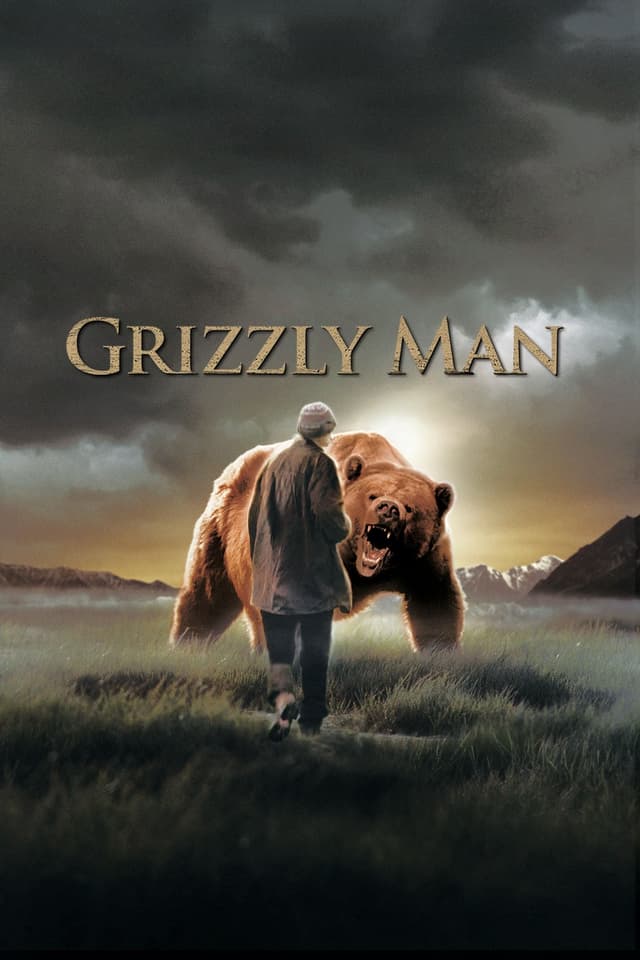
A docudrama that centers on amateur grizzly bear expert Timothy Treadwell. He periodically journeyed to Alaska to study and live with the bears. He was killed, along with his girlfriend, Amie Huguenard, by a rogue bear in October 2003. The films explores Treadwell's compassionate life as he found solace among these endangered animals.
What Is the Budget of Grizzly Man (2005)?
Werner Herzog's Grizzly Man was produced on a modest documentary budget that has not been publicly disclosed, though industry observers estimate the total production cost at between $1 million and $3 million. The film's economics were unusually favorable because Herzog obtained the rights to over 100 hours of footage that Timothy Treadwell himself had shot during his 13 summers living among grizzly bears in Katmai National Park, Alaska. That pre-existing footage formed the backbone of the film, dramatically reducing the need for new location photography and large crew costs.
The documentary was co-produced by Discovery Docs and Lions Gate Films, with Lions Gate handling North American theatrical distribution. Herzog conducted new interviews with Treadwell's friends, family, and the coroner who examined the bodies of Treadwell and girlfriend Amie Huguenard, who were killed by a bear in October 2003. Those interview shoots, along with Herzog's own on-camera narration segments, represent the primary new production expenses beyond licensing, editing, and sound design.
Key Budget Allocation Categories
- Footage Acquisition and Licensing: The single most unusual cost driver was securing the rights to Treadwell's archive of self-shot footage, estimated at over 100 hours of Hi-8 video. Discovery Docs negotiated access through Treadwell's estate and girlfriend Jewel Palovak, who co-owned the footage. Without this archive, a comparable expedition documentary would have required months of location shooting in remote Alaska at substantially higher cost.
- New Interview Production: Herzog and a small crew conducted fresh interviews in California and Alaska with Treadwell's friends, his ex-girlfriend Jewel Palovak, park rangers, pilots who knew Treadwell, and the Kodiak coroner who handled the autopsies. These shoots were lean by feature-film standards, reflecting Herzog's preference for small crews and handheld intimacy.
- Post-Production and Sound Design: Editors Joe Bini and Millie Moore spent considerable time assembling a coherent narrative from disparate Hi-8 tapes shot across multiple seasons. Richard Thompson and Calexico contributed original music, and sound designer Douglas Murray cleaned and reprocessed Treadwell's location audio, some of which was degraded. These post costs likely represent the largest single budget line.
- Alaska Location Logistics: Herzog's small crew traveled to Katmai National Park to shoot the framing sequences and supplementary landscape footage. Remote Alaska production requires chartered floatplane access and bear safety protocols, making even brief shoots significantly more expensive per day than standard domestic locations.
How Does Grizzly Man's Budget Compare to Similar Films?
Grizzly Man sits in the tradition of landmark, low-budget documentaries that punched far above their weight at the box office. Its combination of a found-footage archive, a charismatic subject, and a master director's shaping hand produced returns that few documentaries of any budget achieve.
- March of the Penguins (2005): Budget $8M | Worldwide $127.4M | The Warner Independent release of the French nature documentary dominated documentary box office the same year. Its theatrical success demonstrated that documentary audiences were larger than studios assumed, creating the environment in which Grizzly Man could find a real theatrical release rather than going straight to cable.
- Capturing the Friedmans (2003): Budget undisclosed, est. under $1M | Domestic $3.1M | The 2003 Sundance sensation built from home video footage, like Grizzly Man, proved the model that a documentary assembled primarily from pre-existing footage could reach a wide audience and earn critical acclaim. Grizzly Man premiered at the same festival two years later following this template.
- Fahrenheit 9/11 (2004): Budget $6M | Worldwide $222.4M | Michael Moore's record-breaking political documentary set box office expectations for the genre at an all-time high just one year before Grizzly Man's release. While politically driven documentaries and nature-themed films draw different audiences, Fahrenheit 9/11 convinced distributors that documentaries warranted real theatrical P&A investment.
- Encounters at the End of the World (2007): Budget undisclosed | Domestic $1.1M | Herzog's own follow-up Antarctica documentary earned an Academy Award nomination for Best Documentary Feature but achieved far smaller box office than Grizzly Man, illustrating how the unique personal drama of Timothy Treadwell's story drove Grizzly Man's commercial success beyond the director's typical documentary reach.
Grizzly Man Box Office Performance
Lions Gate released Grizzly Man theatrically in the United States on August 12, 2005, following its premiere at the Sundance Film Festival in January of that year, where it won the Cinematheque Prize. The film earned $3,178,403 domestically in a limited run, with international receipts bringing the estimated worldwide total to approximately $3.2 million. For a documentary on this scale, that figure represents a meaningful theatrical run, particularly given that many comparable films at the time went directly to cable distribution through channels like HBO Docs or the Discovery Channel itself.
With a production budget estimated at $1 million to $3 million and P&A costs for a limited documentary release estimated at $500,000 to $1 million, total investment likely ranged from $1.5 million to $4 million. The film's worldwide theatrical gross of approximately $3.2 million, combined with robust DVD sales, television licensing through Discovery, and international rights, gave the film a strong overall return on investment when all windows are counted. On theatrical alone, the picture broke even at the low end of the budget estimate, and turned a clear profit once home video and cable revenues are included.
Box Office Breakdown
Grizzly Man

Grizzly Man's box office numbers alone do not capture its full commercial life. The film became a consistent seller on DVD and a staple of Herzog's catalog, with Lion's Gate packaging it for home video distribution and Discovery airing it repeatedly on television. By any measure that includes all revenue windows, Grizzly Man was a financially successful documentary.
Grizzly Man Production History
Timothy Treadwell spent every summer from 1990 through 2003 living among the grizzly bears of Katmai National Park on the Alaska Peninsula, a practice he documented compulsively on video. He founded the nonprofit Grizzly People to advocate for bear conservation, and began shooting footage that he hoped would educate the public about bear behavior and habitat preservation. In October 2003, Treadwell and girlfriend Amie Huguenard were killed and partially consumed by a bear near Kaflia Bay, in what the National Park Service identified as a predatory attack. A pilot arriving to pick them up discovered the scene.
Werner Herzog became involved through his own longstanding interest in figures who push beyond rational limits into nature. After securing access to Treadwell's archive from the estate and Jewel Palovak, Herzog and editor Joe Bini spent months reviewing over 100 hours of footage, selecting sequences that revealed both the beauty of Treadwell's connection with the bears and what Herzog saw as a fundamental misreading of nature as benevolent. Herzog conducted original interviews in 2004 and shot his own framing footage in Alaska and California.
The film premiered at the Sundance Film Festival in January 2005 and won the Cinematheque Prize. Lions Gate acquired North American distribution rights and opened the film theatrically in August 2005. Herzog made the deliberate choice to place himself on camera as narrator and commentator, a stylistic decision that brought his own philosophical worldview into direct dialogue with Treadwell's, creating a documentary that is as much about conflicting ideas of nature as it is a portrait of a specific man.
One of the film's most discussed sequences involves an audio recording made on the day Treadwell and Huguenard were killed. The recording exists because a camera was running with the lens cap on. Herzog listened to the tape privately on camera, then advised Treadwell's friend Jewel Palovak to destroy it and never listen to it herself. That scene became one of the most analyzed moments in documentary filmmaking of the decade.
Awards and Recognition
Grizzly Man received extensive critical recognition across the 2005 awards cycle. Roger Ebert named it the best film of the year, writing that it was "a great documentary" and that Treadwell's footage gave Herzog "astonishing material." The National Society of Film Critics awarded it Best Documentary Feature. At Sundance it received the Cinematheque Prize. The film earned 22 wins and 17 nominations across critics' circles and film societies, including the Online Film Critics Society Award for Best Documentary and recognition from the Los Angeles Film Critics Association. It was not submitted for Academy Award consideration in the documentary category.
Critical Reception
Grizzly Man holds a 96% approval rating on Rotten Tomatoes and an 87 out of 100 on Metacritic, placing it among the most acclaimed documentaries of the decade. IMDb users rate it 7.8 out of 10. A. O. Scott of The New York Times called it "a brilliant and disturbing documentary" and praised Herzog's narration as "philosophical and personal." The Guardian's Peter Bradshaw awarded it five stars, writing that the film was "at once elegy, tragedy, meditation and mystery story." Critics consistently pointed to the tension between Treadwell's love for the bears and Herzog's darker interpretation of nature as the film's central, irreducible energy. The film is now taught in film schools as an example of the documentary essayist tradition, and Treadwell's footage has been analyzed in academic literature on ecocriticism, masculinity, and the ethics of wildlife filmmaking.
Frequently Asked Questions
How much did Grizzly Man cost to make?
The production budget was approximately $1,000,000. Lions Gate Entertainment financed the documentary through its specialty division, with director Werner Herzog working with a small crew alongside extensive archival footage shot by Treadwell himself.
How much did Grizzly Man earn at the box office?
The film grossed $3,178,070 domestically and $1,890,000 internationally, for a worldwide total of approximately $5,100,000. The performance was exceptional for a niche documentary on a specialty release pattern, particularly given the limited theater count at peak release.
Who is Timothy Treadwell?
Timothy Treadwell was an American bear enthusiast and amateur filmmaker who spent 13 summers living among grizzly bears in Katmai National Park, Alaska. On October 5, 2003, Treadwell and his girlfriend Amie Huguenard were killed and partially eaten by a grizzly bear at their campsite at the Grizzly Maze area of the park.
Who directed Grizzly Man?
Werner Herzog directed the film. Herzog is one of the most prolific directors in cinema history, with credits including Aguirre, the Wrath of God (1972), Fitzcarraldo (1982), and the documentaries Cave of Forgotten Dreams (2010) and Encounters at the End of the World (2007).
Is there real audio of Timothy Treadwell's death?
Yes. The video camera recovered from the campsite contained audio, but no video, of the fatal attack. Herzog listens to the audio on camera in Grizzly Man but refuses to allow the audience to hear it, instead instructing Treadwell's former girlfriend Jewel Palovak to destroy the tape.
How much of Grizzly Man uses Treadwell's own footage?
Approximately 100 hours of video footage shot by Treadwell himself over his final five summers in Alaska form the core of the film. Herzog interviews family, friends, and park officials to provide contextual framing, while Treadwell's own footage carries the central character study.
What did critics think of Grizzly Man?
The film received nearly universal acclaim, with a 92% approval rating on Rotten Tomatoes and a 87 out of 100 score on Metacritic. Critics praised Herzog's philosophical engagement with Treadwell's death and the directness of his confrontations with the boundary between nature documentary and tragedy.
Did Grizzly Man win any awards?
The film won the Alfred P. Sloan Prize at the Sundance Film Festival and received the Directors Guild of America Award for Outstanding Directorial Achievement in Documentary. It was widely considered an Academy Award shortlist contender but did not receive a Best Documentary Feature nomination, prompting industry discussion of the documentary branch's voting practices.
Where was Grizzly Man filmed?
Treadwell's archival footage was shot in Katmai National Park and Preserve in southwestern Alaska. Herzog's interview sequences were filmed at the homes and offices of Treadwell's contacts across California, Colorado, and Alaska.
How does Grizzly Man compare to other Werner Herzog documentaries?
Grizzly Man is widely cited as Herzog's commercially most successful documentary, grossing $5,100,000 worldwide against later entries including Encounters at the End of the World (2007, $1,200,000 worldwide), Cave of Forgotten Dreams (2010, $7,200,000 worldwide), and Into the Inferno (2016, Netflix original).
Official Trailer
Build budgets like this one in Saturation
Start from an industry-standard feature film template, import the schedule and rates you already have, and let the cost report keep itself current as you spend. Real-time collaboration, no spreadsheets.