Shrek Forever After Budget
 ComedyAdventureFantasyAnimationFamily1h 33m
Updated
Synopsis
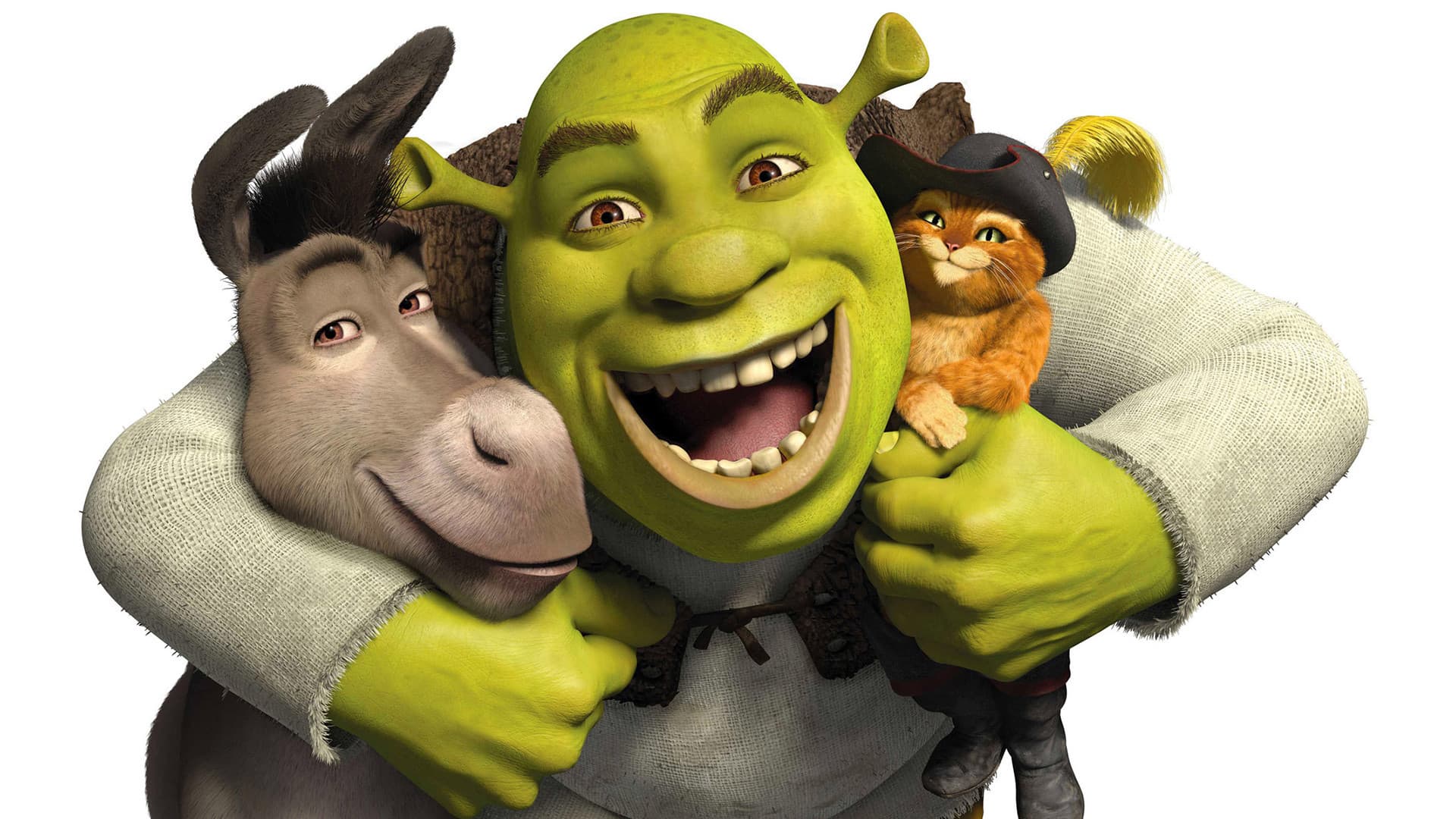
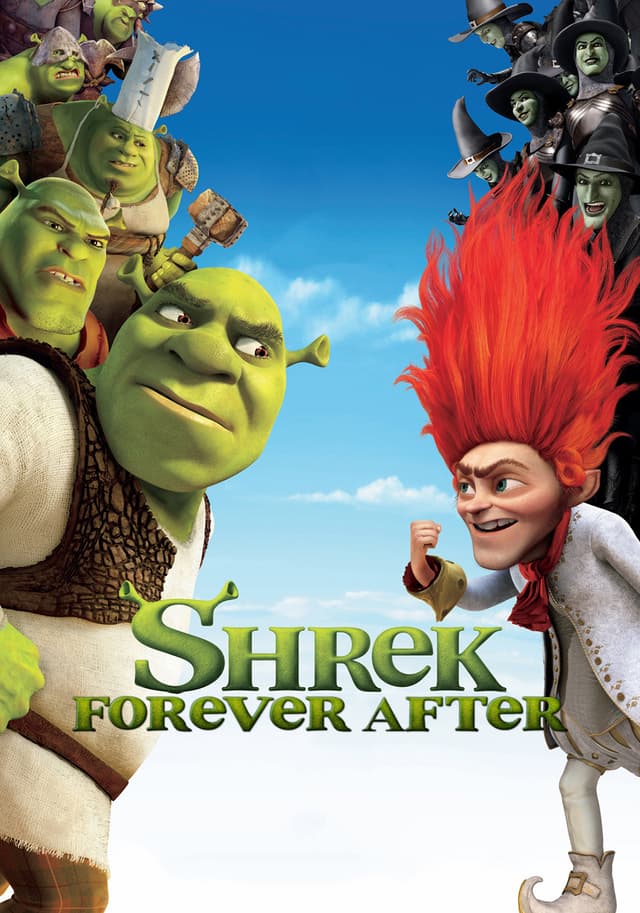
In "Shrek Forever After," the beloved ogre Shrek finds himself grappling with the challenges of domestic life and the responsibilities of fatherhood. Feeling overwhelmed and nostalgic for his carefree days, he makes a fateful deal with the cunning Rumpelstiltskin. This pact catapults Shrek into an alternate reality where he never existed, leading to a world ruled by Rumpelstiltskin himself. As Shrek navigates this twisted version of his life, he must team up with his friends, including Donkey and Fiona, to reclaim his true identity and restore the balance of his world. The film explores themes of self-discovery, the importance of family, and the consequences of wishing for a different life. With humor, heart, and stunning animation, "Shrek Forever After" delivers a poignant conclusion to the beloved franchise.
What is the budget of Shrek Forever After?
"Shrek Forever After," a comedy released in 2010, was directed by Mike Mitchell and stars Mike Myers, Eddie Murphy. The production budget was $165,000,000, placing it in the blockbuster range for comedy productions of its era.
Key Budget Allocation Categories
While specific budget breakdowns are not publicly available, typical cost drivers for a comedy production like this include:
- Talent Salaries & Producing Deals: Established comedic talent can command $15 to 20 million per film, with top-tier stars earning even more through producing credits and backend deals.
- Production & Location Filming: While comedies generally avoid the VFX costs of action films, location shooting in recognizable cities or exotic locales adds meaningful production expense.
- Marketing & P&A (Prints & Advertising): Comedies rely heavily on marketing to build opening-weekend momentum.
- Production: After the success of Shrek 2 in May 2004, DreamWorks Animation (DWA) CEO Jeffrey Katzenberg planned a five-film arc that began with Shrek (2001) and would conclude with a fifth installment.
What were the major cost factors in Shrek Forever After?
Several factors contributed to the overall production costs of "Shrek Forever After."
- Talent Salaries: Talent Salaries & Producing Deals is one of the primary cost drivers in comedy productions of this scale.
- Production: Production & Location Filming is one of the primary cost drivers in comedy productions of this scale.
- Marketing: Marketing & P&A (Prints & Advertising) is one of the primary cost drivers in comedy productions of this scale.
How Does Shrek Forever After's Budget Compare to Similar Films?
At $165,000,000, Shrek Forever After sits in the blockbuster range. Here is how it compares to productions with a similar budget:
- Big Hero 6 (2014): Budget $165,000,000, Worldwide Gross $657,870,525
- Dune (2021): Budget $165,000,000, Worldwide Gross $410,668,500
- Independence Day: Resurgence (2016): Budget $165,000,000 , Gross $389,681,935
- Interstellar (2014): Budget $165,000,000, Worldwide Gross $746,606,706
- Napoleon (2023): Budget $165,000,000, Worldwide Gross $222,435,664
The median budget for wide-release comedy films in the 2010s ranges from $30 to 80M for mid-budget to $150M+ for tentpoles.
Shrek Forever After Box Office Performance
"Shrek Forever After" earned $238,736,787 domestically and $752,600,867 worldwide at the box office. Against a production budget of $165,000,000, the film performed strongly at the box office.
A film typically needs to earn approximately twice its production budget to cover marketing and distribution costs. For "Shrek Forever After," that break-even threshold was roughly $330,000,000. With worldwide earnings of $752,600,867, the film cleared that threshold comfortably.
Box Office Breakdown
Shrek Forever After

At 356.1%, "Shrek Forever After" earned roughly $4.56 for every $1 invested in production.
Shrek Forever After Production History
Like the other Shrek films, the film's original score was composed by British composer Harry Gregson-Williams.
Awards and Recognition
1 win & 13 nominations total
Critical Reception
On review aggregation website Rotten Tomatoes, Shrek Forever After had an approval rating of based on reviews and an average rating of . The site's critical consensus read, "While not without its moments, Shrek Forever After too often feels like a rote rehashing of the franchise's earlier entries." On Metacritic, the film had a weighted average score of 58 out of 100, based on 35 critics, indicating "mixed or average reviews".
Frequently Asked Questions
How much did it cost to make Shrek Forever After (2010)?
The production budget was $165,000,000, covering principal photography, cast and crew salaries, locations, sets, post-production, and music. Marketing and distribution (P&A) costs are estimated at an additional $82,500,000 - $132,000,000, bringing the total studio investment to approximately $247,500,000 - $297,000,000.
How much did Shrek Forever After (2010) earn at the box office?
Shrek Forever After grossed $238,736,787 domestic, $513,864,080 international, totaling $752,600,867 worldwide.
Was Shrek Forever After (2010) profitable?
Yes. Against a production budget of $165,000,000 and estimated total costs of ~$412,500,000, the film earned $752,600,867 theatrically - a 356% ROI on production costs alone.
What were the biggest costs in producing Shrek Forever After?
The primary cost drivers were above-the-line talent (Mike Myers, Eddie Murphy, Cameron Diaz); star comedian salaries, location filming, and aggressive marketing campaigns.
How does Shrek Forever After's budget compare to similar comedy films?
At $165,000,000, Shrek Forever After is classified as a big-budget production. The median budget for wide-release comedy films in the 2010s ranges from $30 - 80M for mid-budget to $150M+ for tentpoles. Comparable budgets: Big Hero 6 (2014, $165,000,000); Dune (2021, $165,000,000); Independence Day: Resurgence (2016, $165,000,000).
Did Shrek Forever After (2010) go over budget?
There are no widely reported accounts of significant budget overruns for this production. However, studios rarely disclose precise budget overrun figures publicly. The reported production budget reflects the final estimated cost.
What was the return on investment (ROI) for Shrek Forever After?
The theatrical ROI was 356.1%, calculated as ($752,600,867 − $165,000,000) ÷ $165,000,000 × 100. This measures gross revenue against production budget only - it does not account for P&A or exhibitor shares.
What awards did Shrek Forever After (2010) win?
1 win & 13 nominations total.
Who directed Shrek Forever After and who were the key crew members?
Directed by Mike Mitchell, written by Josh Klausner, Darren Lemke, with music by Harry Gregson-Williams, edited by Nick Fletcher.
Where was Shrek Forever After filmed?
Shrek Forever After was filmed in United States of America.
Filmmakers
Shrek Forever After

Build budgets like this one in Saturation
Start from an industry-standard feature film template, import the schedule and rates you already have, and let the cost report keep itself current as you spend. Real-time collaboration, no spreadsheets.