Salem's Lot Budget
Updated
Synopsis
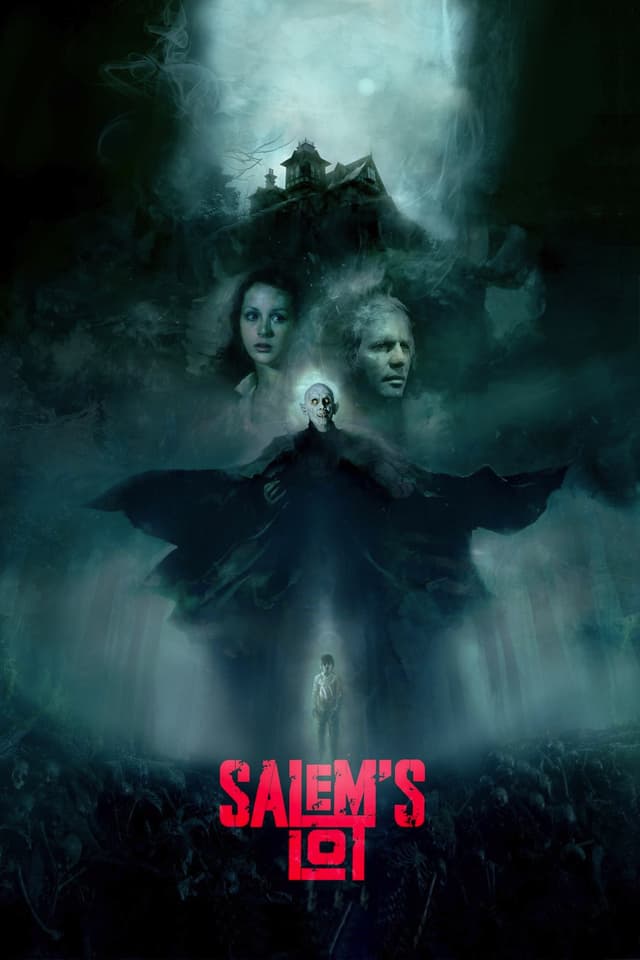
Salem's Lot follows novelist Ben Mears (David Soul), who returns to his Maine hometown of Jerusalem's Lot to write a book about the supposedly haunted Marsten House, only to discover that antiques dealer Richard Straker (James Mason) has installed an actual vampire, Kurt Barlow, in the property and is methodically converting the town's residents. The two-part 1979 CBS miniseries adapts Stephen King's 1975 second novel.
What Is the Budget of Salem's Lot (1979)?
Salem's Lot (1979), directed by Tobe Hooper and broadcast on CBS as a two-part miniseries on November 17 and 24, 1979, was produced on a reported budget of approximately $4,000,000. The figure represents an unusually large investment for a network television event in the late 1970s, where typical movies of the week ran between $1,000,000 and $2,000,000. Warner Bros. Television produced the four-hour adaptation of Stephen King's 1975 novel for Paul Monash Productions, with Richard Kobritz as producer.
The budget covered a 35-day shoot across late 1978 and early 1979 in Northern California, where production designer Mort Rabinowitz built the central Marsten House on a hilltop above the town of Ferndale, Humboldt County. CBS commissioned the project as a prestige horror event timed to capitalize on Stephen King's rapidly rising literary profile, with the network coming off the major ratings success of NBC's Salem's Lot competitor Saturday Night Live and looking for a tentpole sweeps-period draw.
Key Budget Allocation Categories
The $4,000,000 budget was distributed across:
- Cast: David Soul, fresh from Starsky & Hutch, in the lead role of Ben Mears, with James Mason (in his final television role) as antiques dealer Richard Straker. Lance Kerwin, Bonnie Bedelia, Lew Ayres, Ed Flanders, and Reggie Nalder filled out the ensemble. Mason's fee was the single largest cast line item.
- Marsten House Construction: Production designer Mort Rabinowitz built the Marsten House as a full-scale practical exterior on a hilltop above Ferndale, California. The structure became the visual anchor of the film and remains the most iconic single piece of King-adaptation production design from the era.
- Tobe Hooper Director Fee: Hooper, coming off The Texas Chain Saw Massacre and Eaten Alive, was hired by producer Richard Kobritz on the strength of his independent horror credentials. The director's fee reflected an A-list horror credit at television rates rather than the feature-film tier he would later reach.
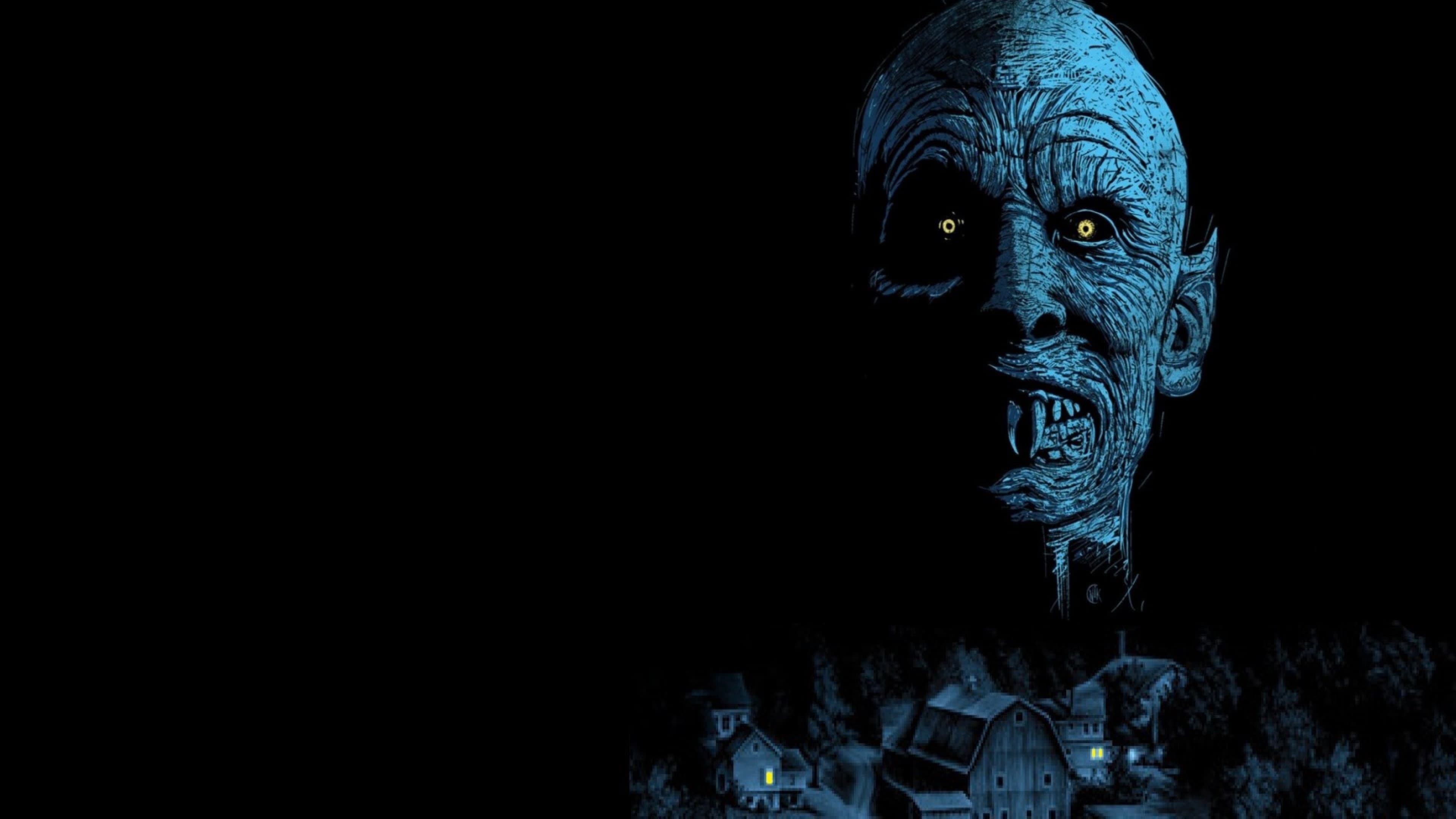
- Vampire Makeup and Practical Effects: Makeup artist Jack Young designed the iconic Kurt Barlow (Reggie Nalder) makeup, modeled on the Nosferatu silhouette, with prosthetic and practical-effects work supervised by Cinema Research Corporation. The full-body makeup process required multiple hours per shooting day.
- Northern California Location Work: Ferndale and surrounding Humboldt County standing in for the fictional Maine town of Jerusalem's Lot, with additional location work in Sonoma County and at Warner Bros. Burbank stages for interiors.
- Music and Post: Composer Harry Sukman wrote the original score, his final feature credit before his 1984 death. Editor Tom Pryor and Carroll Sax assembled the four-hour cut to be aired in two two-hour parts a week apart.
How Does Salem's Lot's Budget Compare to Similar Films?
At approximately $4,000,000 in 1979, Salem's Lot sits at the high end of late-1970s television event films:
- The Shining (1980): Budget approximately $19,000,000 | Worldwide $44,000,000. Stanley Kubrick's King adaptation released eighteen months after Salem's Lot cost roughly five times as much for a theatrical feature rather than a television miniseries.
- Carrie (1976): Budget approximately $1,800,000 | Worldwide $33,800,000. Brian De Palma's earlier King adaptation, released theatrically by United Artists, cost less than half of Salem's Lot.
- The Amityville Horror (1979): Budget approximately $4,700,000 | Worldwide $86,400,000. Stuart Rosenberg's American International Pictures release ran at a comparable cost for a theatrical horror feature in the same release year.
- Roots (1977): Budget approximately $6,600,000 | ABC miniseries. The eight-part Alex Haley adaptation set the modern miniseries budget ceiling two years before Salem's Lot.
Salem's Lot Box Office Performance
Salem's Lot aired on CBS in two parts on November 17 and 24, 1979 during the Sweeps period. The miniseries did not have a theatrical release in North America. CBS reported strong ratings for both nights, with Part One reaching an estimated 33,000,000 to 35,000,000 American households and Part Two retaining comparable audience share. Warner Bros. subsequently released a theatrical cut of approximately 112 minutes internationally, primarily across Europe, beginning in 1979 and continuing through 1980.
Box Office Breakdown
Salem's Lot

The miniseries became a long-tail revenue driver for Warner Bros. through subsequent VHS, DVD, Blu-ray, and streaming releases. The 2004 DVD restoration and the 2016 Warner Archive Blu-ray each generated incremental revenue more than two decades after the original broadcast.
In international markets, the theatrical edit ran in the United Kingdom, France, Germany, Italy, and across the European continent through 1980, often double-billed with other horror titles or paired with the studio's catalogue. The estimated international theatrical gross is not separately reported in Warner Bros. historical figures.
Salem's Lot Production History
Warner Bros. acquired the film rights to Stephen King's 1975 novel in 1976, initially pursuing it as a theatrical feature with several directors and writers attached over the next two years. The project moved to CBS as a four-hour miniseries in 1978 after the network ordered the project as a sweeps-period event. Producer Richard Kobritz hired Tobe Hooper to direct on the strength of The Texas Chain Saw Massacre and Eaten Alive.
Principal photography began in November 1978 in Northern California, with the production basing in Ferndale, Humboldt County. The town's well-preserved Victorian architecture provided the period-appropriate New England feel that producers wanted for the fictional Maine setting. The Marsten House was built as a full-scale practical exterior on a nearby hilltop and dismantled after the shoot wrapped.
James Mason was cast as Richard Straker after early offers to other actors fell through, and his presence elevated the production from television event to prestige horror. The casting also brought additional cost, as Mason was paid at a near-feature rate. David Soul was cast as Ben Mears with the production scheduled around his Starsky & Hutch commitments.
Tobe Hooper made the key creative decision to model the master vampire Kurt Barlow on Max Schreck's Nosferatu silhouette rather than the suaver Bela Lugosi Dracula tradition. The choice was a departure from the novel, where Barlow is more verbal and Hutter-like, and it became the single most-cited visual moment in the production. Makeup artist Jack Young executed the prosthetic design across multiple hour-long sessions per shooting day.
The miniseries premiered on CBS on November 17, 1979, with Part Two airing the following Saturday on November 24. Warner Bros. simultaneously prepared a 112-minute theatrical cut for international release, which began rolling out across Europe in late 1979 and continued through 1980.
Awards and Recognition
Salem's Lot received three Primetime Emmy nominations at the 32nd ceremony in 1980, for Outstanding Achievement in Music Composition (Harry Sukman), Outstanding Achievement in Makeup (Jack Young), and Outstanding Art Direction for a Limited Series. The miniseries did not win in any of the three categories but the nominations established it as a critically respected television event.
The Marsten House design and the Barlow makeup have become foundational reference points in subsequent horror production design. The miniseries is regularly cited in retrospectives of 1970s horror, of television-event filmmaking, and of Stephen King adaptations. The American Film Institute has not formally listed the production in its major rankings, but Time magazine and Empire have both included Salem's Lot in surveys of the era's most influential horror.
Critical Reception
Salem's Lot received broadly positive reviews on its 1979 broadcast and has been reappraised even more favorably in subsequent decades. The miniseries holds an 89% approval rating on Rotten Tomatoes based on aggregated reviews and a Metacritic score is not formally listed for pre-2000 broadcast television. Television-only premieres do not carry a CinemaScore grade.
Variety praised the production design and James Mason's performance, with the trade noting that 'television rarely delivers a horror evening this confidently built.' The New York Times' John J. O'Connor called the miniseries 'a four-hour Halloween treat that overstays its welcome but delivers genuine chills.' Stephen King himself has repeatedly cited the production as one of the strongest adaptations of his work despite changes from the novel, particularly endorsing the Barlow-as-Nosferatu reinvention.
Frequently Asked Questions
How much did Salem's Lot (1979) cost to make?
Salem's Lot was produced for approximately $4,000,000, an unusually large figure for a late-1970s American television miniseries where typical movies of the week ran between $1,000,000 and $2,000,000. Warner Bros. Television financed the project for CBS as a sweeps-period event.
Was Salem's Lot a theatrical film or a TV miniseries?
Salem's Lot was primarily a two-part CBS miniseries that aired on November 17 and 24, 1979. Warner Bros. also prepared a 112-minute theatrical cut for international markets, which played across Europe beginning in late 1979 and continuing through 1980.
Who directed Salem's Lot (1979)?
Tobe Hooper directed the miniseries. Hooper, coming off The Texas Chain Saw Massacre and Eaten Alive, was hired by producer Richard Kobritz on the strength of his independent horror credentials. The project predated his later Steven Spielberg collaboration on Poltergeist by three years.
Where was Salem's Lot filmed?
Principal photography took place in Northern California, with the production based in Ferndale, Humboldt County. The town's preserved Victorian architecture provided the period-appropriate New England feel. The Marsten House was built as a full-scale practical exterior on a hilltop above Ferndale and dismantled after the shoot.
How did the miniseries rate on CBS?
CBS reported strong ratings for both nights, with Part One reaching an estimated 33,000,000 to 35,000,000 American households and Part Two retaining comparable audience share. The two-night run was one of the highest-rated horror events on American network television in the late 1970s.
Did Salem's Lot win any awards?
No. Salem's Lot received three Primetime Emmy nominations in 1980 for Outstanding Music Composition (Harry Sukman), Outstanding Makeup (Jack Young), and Outstanding Art Direction for a Limited Series, but did not win in any of the three categories. It has since become a foundational reference point for subsequent horror production design.
Why does the vampire look like Nosferatu?
Director Tobe Hooper made the deliberate creative decision to model master vampire Kurt Barlow on Max Schreck's Nosferatu silhouette rather than the suaver Bela Lugosi Dracula tradition. Makeup artist Jack Young executed the prosthetic design across multiple hour-long sessions per shooting day. The choice has become one of the production's most iconic visual choices.
What did critics think of Salem's Lot?
The miniseries received broadly positive reviews on its 1979 broadcast and has been reappraised more favorably in subsequent decades, holding an 89% approval rating on Rotten Tomatoes. Variety praised the production design and James Mason's performance. Stephen King has cited the production as one of the strongest adaptations of his work despite changes from the novel.
Is the 1979 Salem's Lot available to stream?
Yes. The miniseries has been released on VHS, DVD, and Blu-ray over the decades, including a 2016 Warner Archive Blu-ray of the full four-hour broadcast cut. It periodically appears on streaming platforms in either the broadcast version or the shorter international theatrical edit.
How is the 1979 version different from the 2024 remake?
Gary Dauberman's 2024 theatrical Salem's Lot adaptation, released by Warner Bros. on Max, is a 113-minute feature rather than a four-hour miniseries, and condenses the novel's plot significantly. The 1979 Tobe Hooper version remains the longer, more faithful adaptation, while the 2024 film places greater emphasis on action sequences.
Filmmakers
Salem's Lot

Build budgets like this one in Saturation
Start from an industry-standard feature film template, import the schedule and rates you already have, and let the cost report keep itself current as you spend. Real-time collaboration, no spreadsheets.