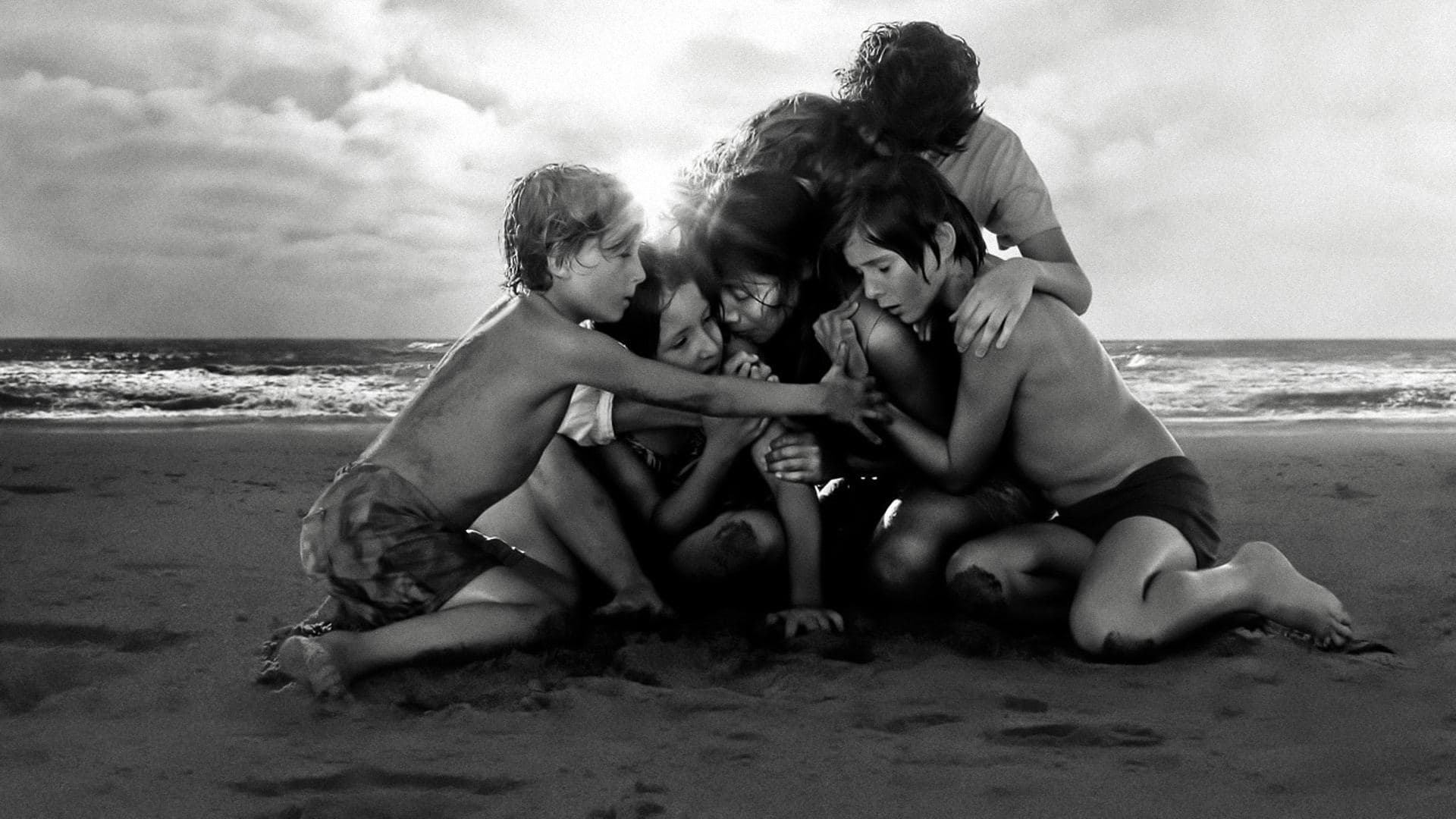

Roma Budget
 Drama2h 15m
Updated
Synopsis
Set in the Colonia Roma neighborhood of Mexico City in 1970 and 1971, Roma follows Cleo, a young Mixtec woman from Oaxaca who works as a live-in domestic for a middle-class family of four children. As Mexico's political turmoil culminates in the Corpus Christi student massacre and the family's parents separate, Cleo navigates her own crisis of pregnancy and abandonment, grounding the film's sweep of historical violence in the rhythms of laundry, childcare, and quiet endurance.
What Is the Budget of Roma (2018)?
Roma (2018), written and directed by Alfonso Cuarón, was produced on a reported budget of approximately $15,000,000. Financed and distributed by Netflix after Participant Media set up the project, the black-and-white Spanish and Mixtec-language drama was an unusually large outlay for an auteur-driven foreign-language film, reflecting Cuarón's stature following Gravity and Netflix's willingness to fund prestige cinema as part of its theatrical-window push. The figure has been cited by Variety, IndieWire, and The Hollywood Reporter and matches Participant's own production accounting, though Netflix has never released a line-item breakdown.
The budget covered an unusually long 108-day shoot in Mexico City and the Mexican coast, an entirely Mexican crew, custom 65mm digital cinematography by Cuarón himself (after his frequent collaborator Emmanuel Lubezki dropped out due to scheduling), period-recreation of 1970s Colonia Roma down to the storefront signage, and a Dolby Atmos sound mix that became one of the most ambitious of the decade. Cuarón shot the film chronologically and withheld the script from actors day by day, a method that extended the schedule but produced the lived-in performances that defined the finished work.
Key Budget Allocation Categories
Based on Mexico-shot production data and contemporary reporting, the $15 million budget broke down across these areas:
- Period Recreation of 1970s Mexico City: The largest single line was rebuilding the Colonia Roma neighborhood of 1970-71. Production designer Eugenio Caballero, who won an Oscar for Pan's Labyrinth, sourced period vehicles, vintage signage, and era-appropriate storefronts. Cuarón's own childhood home at 21 Tepeji Street was redressed for principal photography, and entire blocks of Mexico City were closed and revised for street scenes including the Corpus Christi Massacre sequence.
- Long Schedule and Mexican Crew: Principal photography ran 108 days from October 2016 to March 2017, far longer than a comparable indie. Cuarón insisted on an entirely Mexican below-the-line crew and shot the film chronologically, giving actors only the day's pages each morning. The extended schedule and union-rate Mexican labor consumed a significant portion of the budget.
- Custom 65mm Digital Cinematography: Cuarón served as his own cinematographer after Emmanuel Lubezki withdrew due to schedule conflicts. The film was shot on Alexa 65 cameras at full resolution in black and white, with Steadicam operator Charles Akers handling the signature long takes. Specialty rigs were built for the wave rescue sequence at the beach and the slow pan across the rooftop laundry, both of which required weeks of rehearsal and multiple takes.
- First-Time Lead and Workshopped Ensemble: Lead actress Yalitza Aparicio had never acted before and was discovered in a casting call in Tlaxiaco, Oaxaca. Marina de Tavira, an established Mexican stage actress, played the family matriarch. Cuarón ran an unusually long workshop period and paid the cast through the protracted shoot, with Aparicio later receiving an Oscar nomination that fundamentally altered her career trajectory.
- Dolby Atmos Sound Design: Roma's sound mix, supervised by Sergio Diaz and Skip Lievsay, became one of the most discussed technical achievements of 2018. The film used Dolby Atmos to place ambient Mexico City sound, vendor calls, dog barks, distant gunfire, and aircraft in precise three-dimensional space. Months of post-production sound work, including dialogue replacement in both Spanish and Mixtec, drove costs higher than a typical foreign-language drama.
- Visual Effects and Earthquake Sequence: MPC Mexico City handled invisible effects including the famous earthquake hospital sequence, period-correct sky replacements, removal of modern Mexico City elements from wide shots, and digital extensions of streets that could not be fully restored practically. The forest fire sequence on the family country trip combined practical pyrotechnics with digital flame extension.
- Netflix Awards and Theatrical Marketing: Netflix mounted an aggressive awards campaign and broke its own policy by giving Roma a three-week exclusive theatrical run starting November 21, 2018, in select theaters in Los Angeles, New York, and London before the December 14 global streaming launch. The campaign included a 70mm theatrical print roadshow, FYC screenings throughout Hollywood, and an estimated awards spend that some trade reports placed at $25 million to $30 million, well above the production budget itself.
- Composer-Free Score and Music Licensing: Roma famously does not use a traditional musical score. The soundtrack consists entirely of source music: period radio hits, mariachi at family gatherings, and Mexican popular songs of the early 1970s. Music supervision and clearance fees for tracks by Leo Dan, Juan Gabriel, and other artists of the period contributed a modest but real cost line.
How Does Roma's Budget Compare to Similar Films?
Roma sits in a useful comparison set of auteur dramas, Cuarón's own filmography, and streaming-era awards contenders:
- Gravity (2013): Budget $100,000,000 | Worldwide $773,200,000. Cuarón's previous film, the space thriller that won him his first Best Director Oscar, cost nearly seven times what Roma did and grossed in three weeks what Roma never approached theatrically. The pivot from blockbuster spectacle to intimate black-and-white memoir is the central story of Cuarón's mid-career arc.
- Children of Men (2006): Budget $76,000,000 | Worldwide $70,300,000. Cuarón's dystopian thriller for Universal underperformed at release but became a defining work of the 2000s. At a fifth of that budget, Roma demonstrated that Cuarón could deliver his signature long takes and humanist scope at a fraction of the studio cost when paired with the right financier.
- Y Tu Mamá También (2001): Budget $5,000,000 | Worldwide $33,600,000. Cuarón's Mexican breakthrough about two teenage boys and an older woman on a road trip cost a third of Roma but established the visual language (long Steadicam takes, off-screen historical commentary, fixed observational distance) that Roma refined two decades later.
- The Irishman (2019): Budget $159,000,000 | Worldwide $8,000,000. Released the year after Roma, Martin Scorsese's Netflix epic spent more than ten times the Roma budget on de-aging effects and a sprawling three-and-a-half-hour structure. The Irishman lost the Best Picture race the same way Roma did, but at vastly higher cost.
- Mank (2020): Budget $25,000,000 | Worldwide $1,500,000. David Fincher's black-and-white Old Hollywood drama, released two years after Roma, used the same Netflix prestige-and-theatrical-window template Roma pioneered. Both films competed for technical Oscars and both demonstrated Netflix's appetite for monochrome director-driven projects.
- Marriage Story (2019): Budget $18,000,000 | Worldwide $2,300,000. Noah Baumbach's Netflix divorce drama, released the year after Roma, used a comparable mid-range Netflix budget for an awards-targeted character drama and earned six Oscar nominations of its own, validating the template Roma set.
- The Shape of Water (2017): Budget $19,500,000 | Worldwide $195,200,000. Guillermo del Toro's Best Picture winner from the year prior cost a comparable amount, swept the same technical categories Roma would later contend for, and showed that Mexican-directed period dramas could win the top prize. Roma's Best Picture loss to Green Book the following year remains one of the era's most-discussed Oscar outcomes.
Roma Box Office Performance
Roma had an unusual release pattern. Netflix gave the film a three-week exclusive theatrical window beginning November 21, 2018, in select cities including Los Angeles, New York, London, and Mexico City. The streaming launch followed on December 14, 2018, with the theatrical run continuing in expanded markets through the awards season into early 2019. Because Netflix declined to share box office figures and most major chains, including AMC, Regal, and Cinemark in the US, refused to play the film due to the truncated window, theatrical revenue was reported only by independent theaters and select international territories.
The reported financial breakdown reflects the limited theatrical play:
Box Office Breakdown
Roma

On reported theatrical receipts of $1.1 million, Roma returned roughly $0.07 for every $1 invested. That number is misleading. Netflix did not finance the film for ticket sales; it financed Roma for streaming subscribers, awards prestige, and the precedent of an auteur-driven black-and-white foreign-language film as a top-tier platform offering.
Industry analysts estimated Netflix recouped its investment many times over through new subscribers, particularly in Latin America, where the film was a major cultural event. The three Oscars, ten total nominations, and the Best Picture nomination, the first ever for a streaming-financed film, contributed to a reputational shift that reshaped how Hollywood understood streaming as a destination for serious cinema rather than a dumping ground.
Roma Production History
The project began as a deeply personal undertaking for Cuarón. He had been developing what he described as an autobiographical memory film for nearly a decade, drawn from his childhood in the Colonia Roma neighborhood of Mexico City in 1970-71 and the indigenous domestic worker, Liboria Rodríguez (called Libo), who raised him and his siblings. Cuarón wrote the screenplay himself and refused to share complete scripts with cast or crew, instead releasing each day's pages on the morning of the shoot.
Participant Media originally set up the project and brought in Netflix as the financier in 2016 after multiple traditional studios declined to fund a black-and-white Spanish-language film at the proposed scale. Cuarón's longtime producer Gabriela Rodríguez (no relation to Libo) and Nicolás Celis of Mexico's Pimienta Films served as producers, with David Linde of Participant attached as executive producer.
Principal photography began October 1, 2016, in Mexico City and ran 108 days through March 2017, an unusually long schedule for a $15 million production. The shoot took place primarily in Cuarón's childhood neighborhood, with Tepeji 21, his actual family home, redressed as the central residence. Major sequences were filmed in Veracruz on the Gulf Coast, with the climactic beach rescue shot at Tuxpan over multiple weeks. Cuarón shot the film entirely on Alexa 65 digital cameras after Emmanuel Lubezki, his frequent collaborator and three-time Oscar-winning cinematographer, had to drop out due to scheduling. Cuarón then operated the camera himself, sharing the cinematography credit and winning his first Oscar in that category for the film. Production benefitted from the Mexican federal incentive program EFICINE and from cooperation with the Mexico City government, which closed entire blocks for the period reconstruction.
Yalitza Aparicio was cast in the lead role of Cleo through an open call that took casting director Luis Rosales to Oaxaca, where Aparicio, a 24-year-old preschool teacher from Tlaxiaco with no acting experience, auditioned on a friend's encouragement. Marina de Tavira, an established Mexican theater actress, was cast as Sofía, the mother. Cuarón's casting workshop emphasized building chemistry over rehearsing scenes, and many supporting roles were filled by non-professional actors from the neighborhoods where filming took place.
Post-production lasted nearly a year. The Dolby Atmos sound mix, supervised by Sergio Diaz and Skip Lievsay, was completed at Skywalker Sound. The visual effects pass through MPC Mexico City removed modern signage, extended period storefronts, and crafted the earthquake hospital sequence. Cuarón also served as editor alongside Adam Gough. The film premiered in competition at the 75th Venice International Film Festival on August 30, 2018, where it won the Golden Lion, the festival's top prize. Netflix's theatrical-window controversy followed almost immediately, with major US chains boycotting the limited release and the Academy ultimately upholding eligibility under existing rules.
Awards and Recognition
Roma was the most-awarded film of the 2018-19 season and reshaped the conversation about streaming and the Oscars. At the 91st Academy Awards, it received ten nominations, including Best Picture, the first ever for a streaming-financed film, and won three: Best Director (Alfonso Cuarón, his second after Gravity), Best Foreign Language Film, and Best Cinematography (Cuarón, his first in that category). It lost Best Picture to Green Book in a result widely viewed as a setback for streaming cinema's awards legitimacy.
At the Venice International Film Festival, Roma won the Golden Lion, the top prize, on September 8, 2018. It then swept the BAFTAs with four wins out of seven nominations, including Best Film Not in the English Language, Best Director, Best Cinematography, and the rare BAFTA Best Film nomination for a foreign-language work. At the Golden Globes, Cuarón won Best Director and the film won Best Foreign Language Film. The film also won the Critics' Choice Best Picture, becoming one of only a handful of foreign-language titles ever to do so, along with Best Director and Best Foreign Language Film at that ceremony.
Yalitza Aparicio earned a Best Actress Oscar nomination, becoming the first indigenous Mexican woman ever nominated in the category and only the fourth Latin American woman in Oscar history to receive a Best Actress nomination. Marina de Tavira received a Best Supporting Actress nomination, an outcome few predicted. Roma also received nominations for Best Original Screenplay, Best Production Design, Best Sound Editing, and Best Sound Mixing, and won the Independent Spirit Award for Best International Film. By the end of the season, the film had won more than 200 critics' association and festival prizes globally, an unprecedented haul for a Spanish-language drama.
Critical Reception
Roma received some of the most uniform critical acclaim of the decade. The film holds a 96% approval rating on Rotten Tomatoes based on 432 reviews, with the critical consensus calling it a visually breathtaking and emotionally rich personal saga from director Alfonso Cuarón. On Metacritic, the film scored 96 out of 100 based on 56 reviews, indicating universal acclaim and earning it a position on the site's all-time-best-reviewed list. Audience response was strong though more divided: the film drew an A- CinemaScore in its limited theatrical play, while social-media response showed some viewers, particularly those new to slow art cinema, found the deliberate pace and lack of conventional plot demanding.
Top critics treated the film as a major event. A.O. Scott of The New York Times called it an expansive, emotional portrait of life buffeted by violent forces and a masterpiece, while Manohla Dargis described it as a movie that takes possession of you. Peter Bradshaw of The Guardian awarded five stars and called Cuarón's direction operatic in scale yet intimate in feeling. Justin Chang of the Los Angeles Times wrote that the film achieved something close to perfect immersion in a world it both honors and interrogates. Critics broadly singled out Yalitza Aparicio's debut performance as one of the year's most remarkable, with The New Yorker's Anthony Lane calling it a quiet act of resistance against decades of erasure.
Dissenting voices were rare but pointed. Some critics, particularly in Mexico, raised concerns about the film's perspective: writing from the point of view of the upper-middle-class family rather than its indigenous domestic worker, the film could be read as an act of memorial without restitution. Charles Bramesco of The Guardian and several Mexican writers including Sergio de Régules questioned whether Cuarón had earned the right to tell Libo's story without further centering her interiority. Even those dissenting reviews acknowledged the technical mastery and emotional sincerity of the work, and the broader critical consensus placed Roma among the strongest films of the 2010s, with multiple year-end and decade-end polls ranking it in or near the top spot.
Frequently Asked Questions
How much did it cost to make Roma (2018)?
Roma was produced on a budget of approximately $15 million, financed by Netflix after Participant Media set up the project. The figure has been cited by Variety, IndieWire, and The Hollywood Reporter. It is an unusually large outlay for a black-and-white Spanish and Mixtec-language drama, reflecting Alfonso Cuarón's stature after Gravity and Netflix's investment in awards-tier original cinema.
How much did Roma earn at the box office?
Roma earned approximately $1.1 million in reported worldwide theatrical box office during its limited Netflix theatrical window beginning November 21, 2018. Major US chains AMC, Regal, and Cinemark refused to play the film because Netflix gave it only a three-week theatrical exclusivity window before the December 14 streaming launch. Most of the gross came from independent theaters and select international territories.
Who directed Roma?
Alfonso Cuarón directed Roma. The film also marked his work as writer, cinematographer, co-editor, and co-producer, making him responsible for nearly every creative department. Roma earned him his second Best Director Oscar after Gravity, plus his first Best Cinematography Oscar, becoming the first Mexican filmmaker to win the directing prize twice.
Is Roma based on a true story?
Yes. Roma is a fictionalized memoir drawn from Cuarón's childhood in the Colonia Roma neighborhood of Mexico City in 1970-71. The character of Cleo is based on Liboria Rodríguez, called Libo, the indigenous domestic worker who raised Cuarón and his siblings. The Corpus Christi Massacre on June 10, 1971, and other historical events depicted in the film are real.
Where was Roma filmed?
Principal photography took place primarily in Mexico City, including in the Colonia Roma neighborhood where Cuarón grew up. Cuarón's actual childhood home at Tepeji 21 was redressed for filming. Additional sequences were shot on the Gulf Coast in Veracruz, with the beach rescue scene filmed at Tuxpan. The 108-day shoot ran from October 2016 through March 2017.
Who stars in Roma?
Yalitza Aparicio stars as Cleo, the young Mixtec domestic worker, in her acting debut. Marina de Tavira plays Sofía, the family matriarch. Both received Oscar nominations, with Aparicio becoming the first indigenous Mexican woman ever nominated for Best Actress. The supporting cast includes Nancy García García, Jorge Antonio Guerrero, and Verónica García, with the four children played by non-professional young actors.
How many Oscars did Roma win?
Roma won three Academy Awards out of ten nominations at the 91st Academy Awards: Best Director (Alfonso Cuarón), Best Foreign Language Film, and Best Cinematography (also Cuarón). It became the first streaming film ever nominated for Best Picture, losing that category to Green Book in one of the most-debated Oscar results of the decade.
What did critics think of Roma?
Roma received near-universal acclaim. It holds a 96% approval rating on Rotten Tomatoes based on 432 reviews and a 96 out of 100 score on Metacritic based on 56 reviews, placing it among the best-reviewed films of the decade. Critics including A.O. Scott of The New York Times and Peter Bradshaw of The Guardian called it a masterpiece.
When was Roma released?
Roma premiered at the Venice International Film Festival on August 30, 2018, winning the Golden Lion. It received a limited theatrical run starting November 21, 2018, in select theaters in Los Angeles, New York, London, and Mexico City, before launching globally on Netflix on December 14, 2018.
Why did major theater chains refuse to show Roma?
AMC, Regal, and Cinemark refused to play Roma because Netflix gave the film only a three-week theatrical exclusivity window before its global streaming debut, breaking the traditional 90-day theatrical window. The boycott limited the film's reported box office to about $1.1 million, almost entirely from independent theaters and international territories. The dispute became a defining moment in the streaming-versus-theatrical debate of the late 2010s.
Filmmakers
Roma

Official Trailer
Build budgets like this one in Saturation
Start from an industry-standard feature film template, import the schedule and rates you already have, and let the cost report keep itself current as you spend. Real-time collaboration, no spreadsheets.