Won't You Be My Neighbor Budget
 Documentary1h 35m
Updated
Synopsis
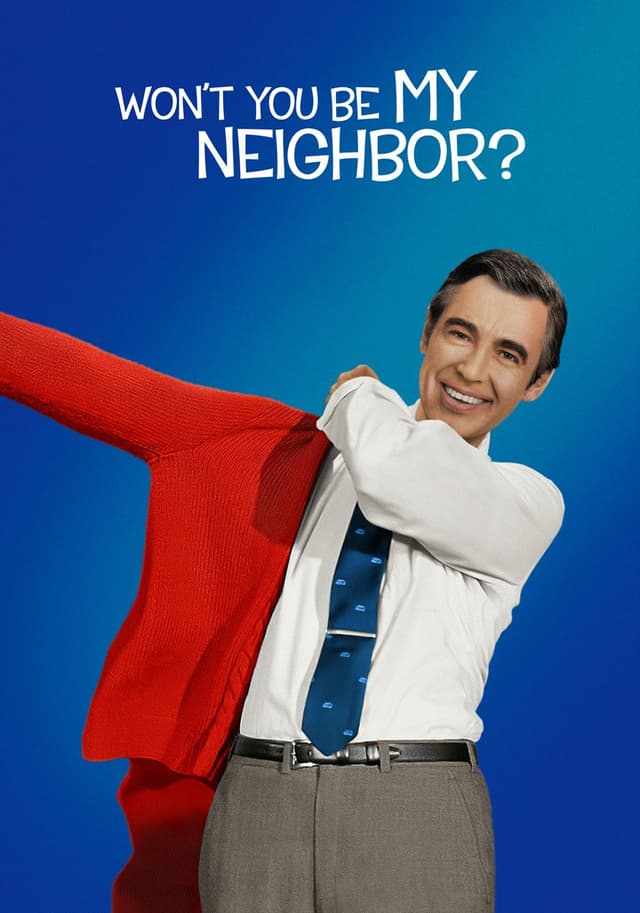
For more than thirty years, and through his television program, Fred Rogers (1928-2003), host, producer, writer and pianist, accompanied by his puppets and his many friends, spoke directly to young children about some of life's most important issues.
What Is the Budget of Won’t You Be My Neighbor?
Won’t You Be My Neighbor? was produced on an estimated budget of approximately $1 million, placing it firmly within the range of a lean, archive-driven biographical documentary. Director Morgan Neville and producer Caryn Capotosto financed the film through Focus Features, which acquired distribution rights ahead of its theatrical release. The production did not require elaborate sets, international location shoots, or a large crew, keeping above-the-line and below-the-line costs low.
The most significant cost driver was licensing archival footage from the PBS series Mister Rogers' Neighborhood, which aired from 1968 to 2001 and produced 895 episodes. Rights for that volume of broadcast-quality archival material, held primarily by WQED Pittsburgh and the Fred Rogers Company, required careful negotiation and represented a meaningful share of the overall production budget.
Key Budget Allocation Categories
- Archival Licensing: The single largest line item was securing rights to decades of Mister Rogers' Neighborhood footage from WQED Pittsburgh and the Fred Rogers Company. Licensing broadcast-quality archival clips at this volume for a commercial theatrical release typically runs well into the six-figure range, and likely consumed $300,000 to $500,000 of the estimated $1 million budget.
- Director and Above-the-Line: Morgan Neville brought Academy Award-winning credentials to the project, having won the Oscar for 20 Feet from Stardom in 2014. His and Caryn Capotosto's fees as director and producer through Tremolo Productions represent the primary above-the-line expense alongside development costs.
- Interview Production: Neville conducted new interviews with members of the Rogers family, cast from the original series including Francois Clemmons and Joanne Rogers, and child development experts across multiple U.S. locations. Travel, crew, and equipment costs for this interview production phase would have added $100,000 to $200,000.
- Composer and Score: Jonathan Kirkscey composed the film's original score, which blends delicate orchestral writing with melodic themes that echo the warmth of the original show's music by Johnny Costa. A composed score for a feature documentary represents a modest but meaningful expense compared to an all-licensed soundtrack.
- Post-Production and Color: Combining archival footage spanning 1968 through 2001 with modern interview material required careful color grading and audio restoration. Managing that range of source quality in post is labor-intensive, and a film premiering at Sundance needed to meet the technical delivery specifications of both festival and theatrical exhibition.
How Does Won’t You Be My Neighbor?’s Budget Compare to Similar Films?
Won’t You Be My Neighbor? sits in the company of a handful of documentary films that dramatically outperformed their modest production costs at the box office. Its approximately $1 million budget yielded an extraordinary $22.6 million domestic gross, a return ratio that rivals the best-performing theatrical documentaries ever made. The films below offer meaningful context for how this film compares to similarly structured biographical and cultural documentaries.
- 20 Feet from Stardom (2013): Budget approx. $1M | Worldwide $4.9M. Morgan Neville's Oscar-winning music documentary is the most direct predecessor: same director, same production company, similar archival and interview-driven structure. Won't You Be My Neighbor? earned nearly five times as much at the domestic box office alone, reflecting how deeply Fred Rogers resonated as a cultural touchstone versus a music industry story.
- An Inconvenient Truth (2006): Budget approx. $1M | Worldwide $49.8M. The gold standard for documentary cultural impact at the box office. Both films demonstrate that when a documentary connects with a broad social concern or deep nostalgia, theatrical demand far exceeds what studios would normally project for non-fiction features.
- Becoming (2020): Netflix release, no theatrical box office. Michelle Obama's documentary companion to her memoir followed a similar biographical format but bypassed theatrical entirely. Won't You Be My Neighbor? illustrates the ceiling that remained possible for theatrical biographical documentaries before the streaming era fully absorbed this genre.
- Joan Didion: The Center Will Not Hold (2017): Netflix release, no theatrical gross. A direct Netflix original biographical documentary about a revered cultural figure, released just one year earlier. The contrast underscores how Focus Features' decision to give Won't You Be My Neighbor? a full theatrical run rather than a streaming premiere unlocked significantly more cultural impact and commercial return.
Won’t You Be My Neighbor? Box Office Performance
Focus Features released Won’t You Be My Neighbor? in limited release on June 8, 2018, expanding to wide release in subsequent weeks. The film earned $22,616,583 domestically, all of it in North American theaters, making it the highest-grossing biographical documentary in U.S. box office history at the time of its release. Its theatrical run extended well past the initial summer release window, with the film drawing audiences through late 2018 on word-of-mouth and sustained critical enthusiasm.
With an estimated production budget of $1 million and a modest P&A spend of approximately $2 to $3 million for a limited-to-wide theatrical release from Focus Features, the total investment in the film was in the range of $3 to $4 million. Theaters typically retain approximately 50 percent of box office gross, meaning Focus Features' studio share from the domestic gross was roughly $11.3 million. That figure comfortably exceeded the total investment, making Won’t You Be My Neighbor? one of the most profitable documentary theatrical releases of the decade on a percentage basis.
Box Office Breakdown
Won't You Be My Neighbor

On a pure production-budget basis, Won’t You Be My Neighbor? earned roughly $22 for every $1 invested in production. Even accounting for theatrical distribution costs and the studio’s share of the box office split, the film returned a substantial multiple of its total investment, making it a landmark commercial success for Focus Features and for the documentary genre as a whole.
Won’t You Be My Neighbor? Production History
Morgan Neville began developing Won’t You Be My Neighbor? after noticing that Fred Rogers had never been the subject of a serious feature documentary despite his enormous cultural footprint. Neville had spent years making music-focused documentaries, including 20 Feet from Stardom, and was drawn to Rogers as a subject who embodied radical emotional honesty in a medium that was otherwise rarely willing to take feelings seriously. Neville partnered with producer Caryn Capotosto at Tremolo Productions and secured backing from Focus Features early in development.
The production team worked closely with the Fred Rogers Company and the Rogers family, gaining access to personal home movies, correspondence, and unpublished materials alongside the publicly available PBS archive. Key interview subjects included Joanne Rogers, Fred Rogers' wife of 51 years; Francois Clemmons, the actor who played Officer Clemmons and one of the show's most significant cast members; and François S. Clemmons' fellow cast members, as well as child development scholars Daniel Tiger puppeteer David Newell and longtime collaborators. The interviews were conducted across multiple U.S. locations over a production period spanning 2016 to 2017.
A major logistical challenge was sourcing, cataloguing, and clearing rights for archival footage from the 895 episodes of Mister Rogers' Neighborhood, held primarily at WQED in Pittsburgh. The show's archive spans videotape formats across three decades, requiring digitization and technical restoration work before usable clips could be assembled in the edit. Composer Jonathan Kirkscey wrote an original orchestral score that would evoke the warmth and intimacy of Johnny Costa's piano-led arrangements from the series without directly reproducing the original music.
The film premiered at the Sundance Film Festival in January 2018 and received immediate acclaim. Focus Features acquired worldwide distribution rights and planned a platform release for summer 2018, opening in limited theaters on June 8. Audience response drove a rapid expansion, and the film eventually played in more than 700 theaters at its wide-release peak. The run continued through late 2018, with the film's emotional resonance proving especially strong as audiences sought comfort and connection during a politically divisive year. The documentary's success directly contributed to the development of A Beautiful Day in the Neighborhood (2019), the narrative feature starring Tom Hanks as Fred Rogers.
Awards and Recognition
Won’t You Be My Neighbor? received the Academy Award nomination for Best Documentary Feature at the 91st Academy Awards in 2019, competing against Free Solo, RBG, Hale County This Morning, This Evening, and Minding the Gap. While it did not win the Oscar, the nomination validated the film's standing as one of the most significant documentaries of the year alongside an unusually strong field.
The film won the Critics Choice Documentary Award for Best Documentary Film and received an Emmy Award, among a wide range of other honors from critics associations and documentary-focused organizations. At Sundance, it won the Audience Award in the U.S. Documentary competition, signaling its broad popular appeal from its very first public screenings. The Rotten Tomatoes score settled at 99 percent, reflecting near-universal critical consensus.
Critical Reception
Won’t You Be My Neighbor? was praised not only as an exceptional documentary but as a cultural event in its own right. Critics from the New York Times, The Guardian, and the Los Angeles Times described it as deeply moving, with several noting that it achieved something rare for a biographical documentary: it functioned as a genuine emotional experience rather than a mere biographical record. The film's 99 percent score on Rotten Tomatoes reflects consensus across more than 250 reviews.
Reviewers frequently noted how Morgan Neville structured the film not as a straightforward biography but as an investigation into whether Fred Rogers' fundamental beliefs about kindness and emotional life were still possible in contemporary America. That framing gave the film a sense of urgency that extended well beyond nostalgia. The performance and material from Francois Clemmons, particularly the famous 1969 wading pool scene, received specific critical attention as moments where Rogers' values were tested and proven in practice rather than simply stated.
The film performed exceptionally well with general audiences, earning an A+ CinemaScore, which is exceedingly rare for a documentary. That score, combined with its sustained run and strong word-of-mouth, confirmed that Won’t You Be My Neighbor? had crossed from documentary event into mainstream cultural moment, a distinction very few non-fiction theatrical films achieve.
Frequently Asked Questions
How much did Won't You Be My Neighbor? cost to make?
The production budget was approximately $1,000,000. Tremolo Productions and Independent Lens financed the documentary, with Focus Features acquiring U.S. distribution rights at the 2018 Sundance Film Festival.
How much did Won't You Be My Neighbor? earn at the box office?
The film grossed $22,816,991 domestically, becoming the highest-grossing biographical documentary in U.S. history at the time of its release. International distribution added approximately $1,000,000, for a worldwide total of approximately $23,800,000.
Who directed Won't You Be My Neighbor?
Morgan Neville directed the documentary, following his Academy Award win for 20 Feet from Stardom (2013). Neville went on to direct Roadrunner: A Film About Anthony Bourdain (2021).
When did Won't You Be My Neighbor? premiere?
The film premiered at the Sundance Film Festival on January 19, 2018, in the U.S. Documentary Competition. Focus Features acquired distribution rights immediately after the premiere and gave the film a wide theatrical release beginning June 8, 2018.
What is Won't You Be My Neighbor? about?
The documentary chronicles the life and work of Fred Rogers, host of the PBS children's program Mister Rogers' Neighborhood from 1968 to 2001. The film explores Rogers' philosophy, his Presbyterian ministry background, and his testimony before the U.S. Senate that saved public broadcasting funding in 1969.
Did Won't You Be My Neighbor? win any awards?
The film won the Critics' Choice Documentary Award for Best Documentary Feature and was widely considered a frontrunner for the Academy Award for Best Documentary Feature, but it was not nominated, in one of the most discussed omissions in Oscar documentary history.
What did critics think of Won't You Be My Neighbor?
The film received nearly unanimous praise, with a 99% approval rating on Rotten Tomatoes and an 85 out of 100 score on Metacritic. It was named the best documentary of 2018 by the National Board of Review and the Producers Guild.
Where was Won't You Be My Neighbor? filmed?
Production combined archival WQED footage from Pittsburgh with contemporary interview shoots in Pittsburgh, Latrobe, and Nantucket. The film made extensive use of the Fred Rogers Archive at Saint Vincent College in Latrobe, Pennsylvania.
How does Won't You Be My Neighbor? compare to A Beautiful Day in the Neighborhood?
The documentary preceded the Tom Hanks-led narrative film A Beautiful Day in the Neighborhood (2019, $25,000,000 budget, $68,000,000 worldwide). The two films are widely viewed as complementary, with the documentary providing context for the dramatization.
Was Won't You Be My Neighbor? profitable?
Yes. Against the approximately $1,000,000 budget and an estimated $5,000,000 to $7,000,000 in marketing spend, the worldwide gross of $23,800,000 produced an exceptional theatrical return. The film is among the most profitable documentaries on a budget multiple basis in modern history.
Build budgets like this one in Saturation
Start from an industry-standard feature film template, import the schedule and rates you already have, and let the cost report keep itself current as you spend. Real-time collaboration, no spreadsheets.