Renaissance Budget
 ActionAnimationScience Fiction1h 45m
Updated
Synopsis
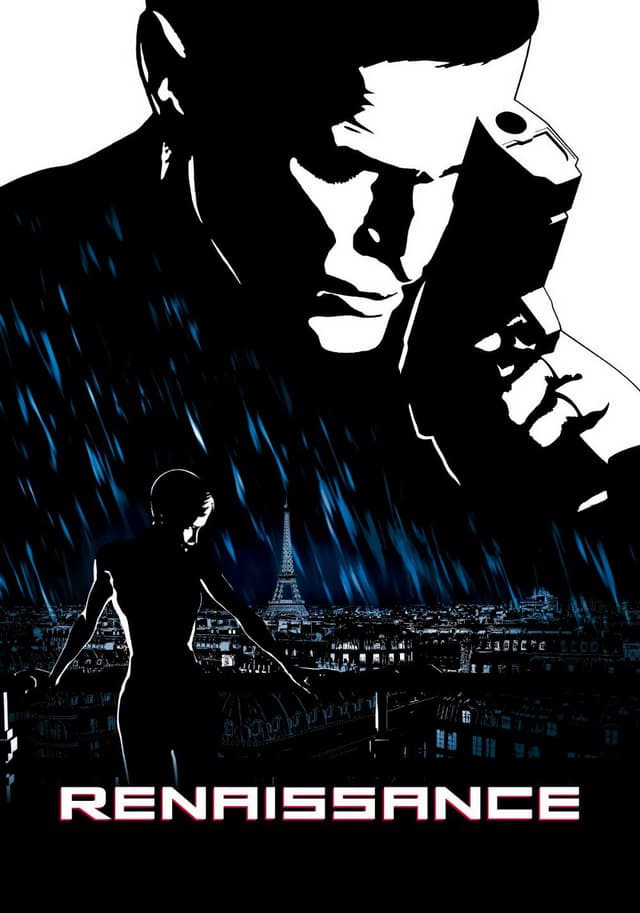
"Renaissance" (2006) is a visually striking animated film set in a dystopian future where Paris is shrouded in perpetual darkness. The story follows a determined detective named Barthélémy Karas, who is on a quest to uncover the truth behind the mysterious disappearance of a young scientist named Ilona Tasuiev. As he delves deeper into the underbelly of the city, Karas encounters a web of intrigue involving corporate corruption, genetic manipulation, and a powerful organization known as the "Elysium." The film's unique black-and-white animation style, combined with its noir-inspired narrative, creates a haunting atmosphere that reflects the themes of surveillance and the loss of individuality. As Karas races against time, he must confront his own demons and navigate a world where nothing is as it seems, ultimately leading to a shocking revelation that could change everything.
What is the budget of Renaissance?
"Renaissance," an action released in 2006, was directed by Christian Volckman and stars Patrick Floersheim, Virginie Mery. The production budget was $18,000,000, placing it in the low-budget range for action productions of its era.
Key Budget Allocation Categories
While specific budget breakdowns are not publicly available, typical cost drivers for an action production like this include:
- Stunts, Action Sequences & Visual Effects: Action films allocate a substantial portion of their budget to choreographing and executing practical stunts, pyrotechnics, and CGI-heavy sequences.
- Above-the-Line Talent (Cast & Director): A-list talent commands significant upfront fees plus backend participation.
- Production Design, Sets & Locations: Action films frequently require multiple international shooting locations, large-scale set construction, vehicle acquisitions and modifications, and specialized equipment , all of which drive production costs well above those of dialogue-driven genres.
- Production: right| The film's visual concept was based on film noir aesthetics, as well as works like Sin City.
What were the major cost factors in Renaissance?
Several factors contributed to the overall production costs of "Renaissance."
- Stunts: Stunts, Action Sequences & Visual Effects is one of the primary cost drivers in action productions of this scale.
- Above-the-Line Talent (Cast: Above-the-Line Talent (Cast & Director) is one of the primary cost drivers in action productions of this scale.
- Production Design: Production Design, Sets & Locations is one of the primary cost drivers in action productions of this scale.
How Does Renaissance's Budget Compare to Similar Films?
At $18,000,000, Renaissance sits in the low-budget range. Here is how it compares to productions with a similar budget:
- 127 Hours (2010): Budget $18,000,000, Worldwide Gross $35,700,000
- A Dog's Way Home (2019): Budget $18,000,000, Worldwide Gross $17,643,857
- Amadeus (1984): Budget $18,000,000, Worldwide Gross $90,007,557
- And So It Goes (2014): Budget $18,000,000, Worldwide Gross $25,312,387
- Barbershop 2: Back in Business (2004): Budget $18,000,000 , Gross $65,070,412
The median budget for wide-release action films in the 2000s ranges from $30 to 80M for mid-budget to $150M+ for tentpoles.
Renaissance Box Office Performance
"Renaissance" earned $70,644 domestically and $1,831,348 worldwide at the box office. Against a production budget of $18,000,000, the film faced challenges in theatrical release. Home video, streaming, and ancillary revenue may have contributed to its overall performance.
A film typically needs to earn approximately twice its production budget to cover marketing and distribution costs. For "Renaissance," that break-even threshold was roughly $36,000,000. With worldwide earnings of $1,831,348, the film did not reach break-even in theatrical release.
Box Office Breakdown
Renaissance

At -89.8%, "Renaissance" did not recoup its production budget through theatrical release alone.
Awards and Recognition
2 wins & 1 nomination total
- Annecy Cristal for a Feature Film
Critical Reception
The film received mixed reviews from critics. The review aggregator Rotten Tomatoes reported that of critics gave the film positive reviews, based on 77 reviews with an average of . The site's consensus reads, "Renaissance attempts to blend sci-fi wonder with stark noir animation, but is often more fun to look at than to watch." Metacritic reported the film had an average score of 57 out of 100, based on 17 reviews.
Frequently Asked Questions
How much did it cost to make Renaissance (2006)?
The production budget was $18,000,000, covering principal photography, visual effects, cast and crew salaries, locations, sets, post-production, and music. Marketing and distribution (P&A) costs are estimated at an additional $9,000,000 - $14,400,000, bringing the total studio investment to approximately $27,000,000 - $32,400,000.
How much did Renaissance (2006) earn at the box office?
Renaissance grossed $70,644 domestic, $1,760,704 international, totaling $1,831,348 worldwide.
Was Renaissance (2006) profitable?
The film did not break even theatrically, earning $1,831,348 against an estimated $45,000,000 needed. Ancillary revenue may have improved the picture.
What were the biggest costs in producing Renaissance?
The primary cost drivers were above-the-line talent (Patrick Floersheim, Virginie Mery, Laura Blanc); visual effects, practical stunts, and A-list talent compensation; international production across France, United Kingdom, Luxembourg.
How does Renaissance's budget compare to similar action films?
At $18,000,000, Renaissance is classified as a low-budget production. The median budget for wide-release action films in the 2000s ranges from $30 - 80M for mid-budget to $150M+ for tentpoles. Comparable budgets: 127 Hours (2010, $18,000,000); A Dog's Way Home (2019, $18,000,000); Amadeus (1984, $18,000,000).
Did Renaissance (2006) go over budget?
There are no widely reported accounts of significant budget overruns for this production. However, studios rarely disclose precise budget overrun figures publicly. The reported production budget reflects the final estimated cost.
What was the return on investment (ROI) for Renaissance?
The theatrical ROI was -89.8%, calculated as ($1,831,348 − $18,000,000) ÷ $18,000,000 × 100. This measures gross revenue against production budget only - it does not account for P&A or exhibitor shares.
What awards did Renaissance (2006) win?
2 wins & 1 nomination total.
Who directed Renaissance and who were the key crew members?
Directed by Christian Volckman, written by Alexandre de La Patellière, Matthieu Delaporte, with music by Nicholas Dodd, edited by Pascal Tosi.
Where was Renaissance filmed?
Renaissance was filmed in France, United Kingdom, Luxembourg.
Filmmakers
Renaissance

Official Trailer
Build budgets like this one in Saturation
Start from an industry-standard feature film template, import the schedule and rates you already have, and let the cost report keep itself current as you spend. Real-time collaboration, no spreadsheets.