Rebecca Budget
Updated
Synopsis
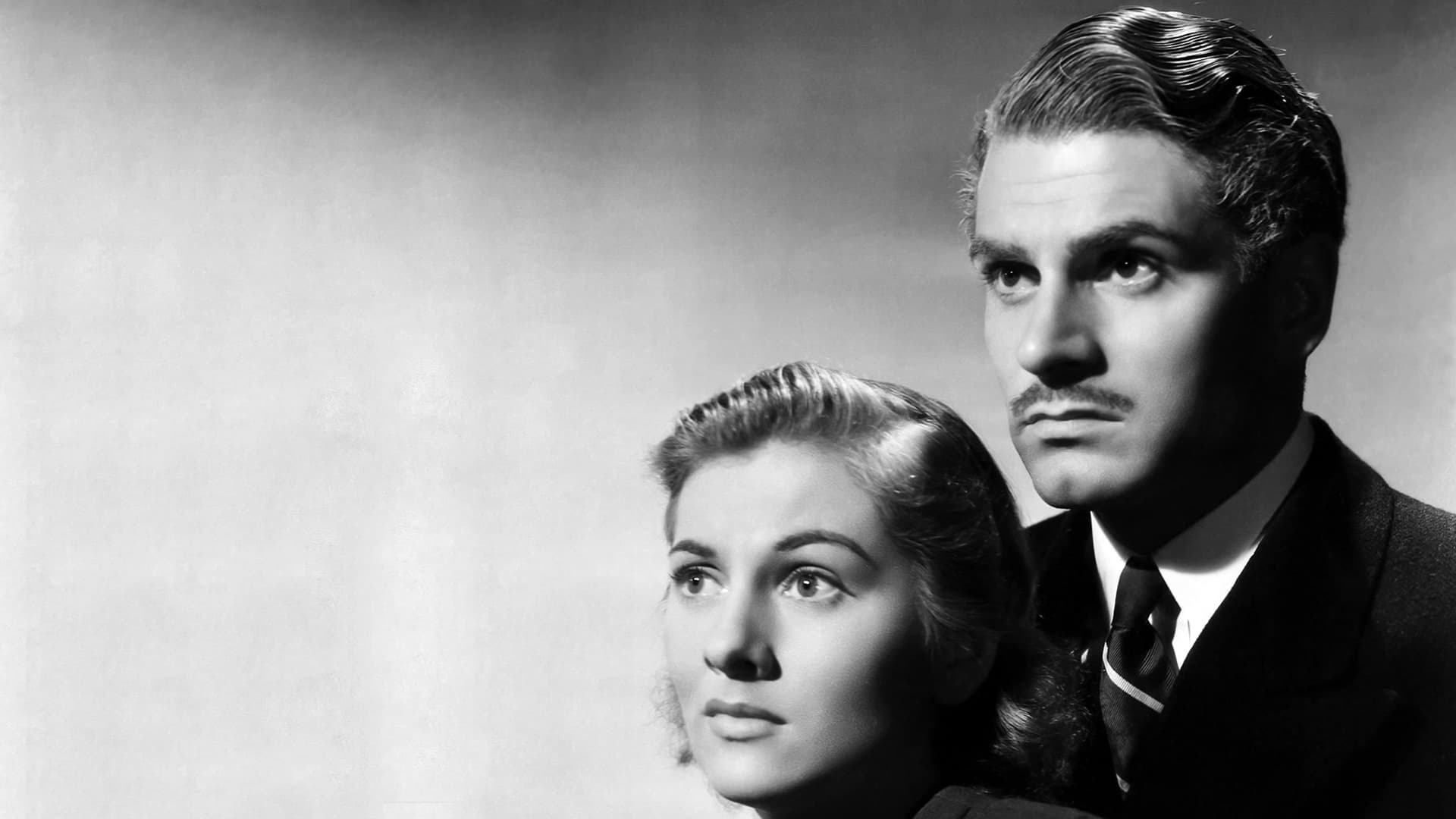
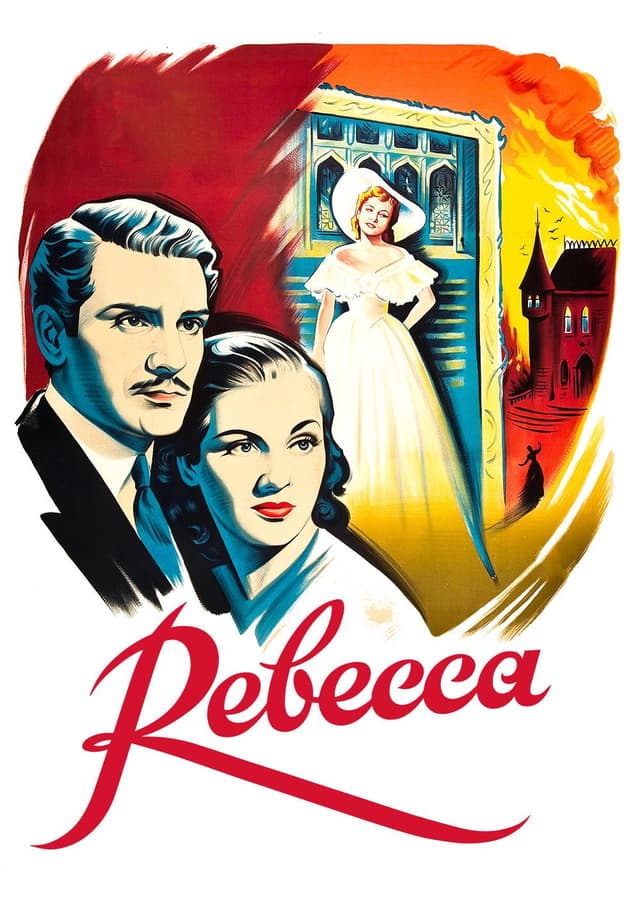
A shy lady's companion, staying in Monte Carlo with her stuffy employer, meets the wealthy Maxim de Winter (Sir Laurence Olivier). She and Max fall in love, marry, and return to Manderley, his large country estate in Cornwall. Max is still troubled by the death of his first wife, Rebecca, in a boating accident the year before. The second Mrs. de Winter (Joan Fontaine) clashes with the housekeeper, Mrs. Danvers (Dame Judith Anderson), and discovers that Rebecca still has a strange hold on everyone at Manderley.
What Is the Budget of Rebecca?
Rebecca (1940) was produced on an estimated budget of approximately $1.28 million, a substantial sum for a Hollywood production of the era. Producer David O. Selznick, fresh off the record-breaking success of Gone with the Wind (1939), invested heavily in the project to maintain his reputation for prestige filmmaking. The budget covered an expansive studio-bound production at Selznick International Pictures in Culver City, California, with elaborate sets designed to evoke the brooding grandeur of Manderley, the fictional Cornish estate at the heart of the story.
Selznick had paid $50,000 for the rights to Daphne du Maurier's bestselling 1938 novel, a considerable acquisition cost folded into the overall production spend. Above-the-line costs were driven by the signing of Laurence Olivier, one of the most celebrated stage actors of his generation, and Joan Fontaine, whose performance would earn her first Academy Award nomination. Hiring Alfred Hitchcock away from British studios also represented a significant investment: Selznick contracted Hitchcock for a seven-year deal, with Rebecca serving as his American debut.
The film's reported domestic rental earnings of approximately $1.5 million in 1940 represented a solid return on that investment. Adjusted for inflation, that figure translates to more than $32 million in 2024 dollars, a performance that cemented Rebecca as a commercial and critical triumph for Selznick International Pictures.
Key Budget Allocation Categories
- Above-the-Line Talent: Laurence Olivier commanded one of the higher actor salaries of the period, while Joan Fontaine was a rising contract player whose fee was more modest. Director Alfred Hitchcock, newly signed from Britain to a seven-year Selznick contract, brought significant above-the-line overhead. The combined talent package for director, leads, and supporting cast, including George Sanders and Judith Anderson, likely consumed $300,000 to $400,000 of the budget.
- Novel Rights and Screenplay: Selznick paid $50,000 for the rights to Daphne du Maurier's novel, one of the larger literary acquisitions of the era. Screenwriters Robert E. Sherwood and Joan Harrison then adapted the material, with Selznick himself heavily involved in script revisions. The development costs, including multiple screenplay drafts, added meaningfully to pre-production overhead.
- Production Design and Sets: Filming took place almost entirely on Selznick International's Culver City soundstages, where production designer Lyle Wheeler constructed a full-scale recreation of Manderley's grand hall and west wing. The set construction and dressing, including period-accurate furniture, tapestries, and practical fireplaces, represented a major portion of below-the-line costs. The climactic fire sequence required extensive practical effects and pyrotechnic coordination.
- Cinematography: George Barnes, the Oscar-winning director of photography, used deep-focus techniques and low-key chiaroscuro lighting to create the film's signature atmospheric look. The photographic approach was technically demanding, requiring specialized lens and lighting equipment. Barnes won the Academy Award for Best Cinematography (Black-and-White) for his work on the film.
- Score: Composer Franz Waxman delivered a sweeping original score that became one of the most celebrated in Golden Age Hollywood history. Waxman's brooding main theme for the unseen Rebecca and the romantic countermelody for the second Mrs. de Winter required a full studio orchestra recording over several sessions, contributing meaningfully to post-production costs.
How Does Rebecca's Budget Compare to Similar Films?
Rebecca sits at the upper range of Hollywood prestige productions from the late 1930s and early 1940s. Selznick's own Gone with the Wind (1939) dwarfed it at a reported $3.9 million, but that was the most expensive American film ever made at the time. Rebecca's $1.28 million placed it firmly among the major studio prestige releases of its era, comparable to other landmark thrillers and dramas that defined Hollywood's so-called Golden Age.
- Gone with the Wind (1939): Budget $3.9M | Domestic Rentals $31.4M. Selznick's prior production established the extreme end of prestige spending. Rebecca was a deliberately more contained follow-up, demonstrating Selznick's ability to deliver critical prestige at a fraction of the cost.
- Citizen Kane (1941): Budget $839,000 | Domestic Rentals $1.6M. Orson Welles's debut feature came in under Rebecca's budget but is now considered equally foundational to classical Hollywood. Both films demonstrate how directorial vision, not budget scale, drove lasting artistic achievement in the era.
- Suspicion (1941): Budget approximately $1.1M | Domestic Rentals $2M. Hitchcock's follow-up thriller for RKO starring Joan Fontaine, made the year after Rebecca, illustrates how Hitchcock's market value rose following his American debut. Suspicion earned Fontaine the Oscar she had narrowly missed for Rebecca.
- Shadow of a Doubt (1943): Budget approximately $800,000 | Domestic Rentals $2.5M. Hitchcock's own personal favorite among his films came in well below Rebecca's budget and outperformed it at the domestic box office, underscoring how Hitchcock's commercial instincts sharpened across his early American productions.
Rebecca Box Office Performance
Rebecca was released on April 12, 1940, by United Artists and proved to be a substantial commercial success for Selznick International Pictures. The film earned approximately $1.5 million in domestic rentals during its initial 1940 theatrical run. Rentals represent the distributor's share of ticket sales, typically around 50 percent of gross box office, meaning Rebecca's actual ticket revenue was closer to $3 million domestically. The film also performed well internationally, particularly in the United Kingdom, where Daphne du Maurier's novel was enormously popular.
Against a production budget of approximately $1.28 million, the domestic rentals alone returned the investment, and international revenue pushed the overall return well into profitable territory. Adjusted for inflation, Rebecca's combined box office performance would represent more than $50 million in 2024 equivalent gross, a significant commercial achievement for a studio-bound psychological thriller with no action sequences or spectacle outside the climactic fire.
- Production Budget: $1,280,000
- Estimated P&A (1940): $200,000
- Total Investment: approximately $1,480,000
- Domestic Rentals (1940): approximately $1,500,000
- International Revenue: significant, primarily UK market, exact figures not publicly disclosed
- ROI (on production budget): approximately 17% on domestic rentals alone, substantially higher including international
Rebecca's financial performance earned roughly $1.17 for every $1 invested in production on the domestic market alone. Including international revenue, the return was considerably higher. The film's sustained theatrical longevity, through repertory screenings and later television and home video, has made its lifetime commercial value incalculable by conventional studio metrics.
Rebecca Production History
The road to Rebecca began with David O. Selznick's acquisition of Daphne du Maurier's gothic novel in 1938, even before the book became an international bestseller. Selznick paid $50,000 for the rights and immediately recognized the story's cinematic potential: a nameless heroine, a brooding widower hiding a dark secret, and a grand estate haunted by the memory of a dead woman who never appears on screen. The challenge was translating du Maurier's deeply interior, first-person narrative voice into visual storytelling.
Selznick's first instinct was to hire a European director with a feel for gothic atmosphere, and Alfred Hitchcock, then the most celebrated British filmmaker working, was the natural choice. Selznick signed Hitchcock to a seven-year contract in 1938, with Rebecca as his American debut. The two men immediately clashed over the screenplay: Selznick insisted on fidelity to the novel, while Hitchcock pushed for looser adaptations. The script went through numerous drafts by Philip MacDonald, Michael Hogan, Joan Harrison, and finally Robert E. Sherwood before Selznick approved a shooting script. Selznick's memos to Hitchcock, preserved in the Selznick archive, document one of the most contentious producer-director relationships in Hollywood history.
Casting proved equally fraught. Selznick initially favored Ronald Colman or William Powell for Maxim de Winter before settling on Laurence Olivier, who had achieved major Hollywood visibility with Wuthering Heights (1939). For the unnamed second Mrs. de Winter, Selznick conducted a widely publicized search reminiscent of the Scarlett O'Hara hunt for Gone with the Wind. Anne Baxter and Loretta Young were among the candidates considered before Joan Fontaine was cast. Principal photography began in September 1939 at Selznick International Pictures' Culver City studio and wrapped in November 1939.
Post-production moved quickly, with Franz Waxman completing the score and editor Hal Kern assembling a final cut under Selznick's close supervision. The film had its world premiere on March 27, 1940, in New York, and opened nationwide on April 12, 1940. Its release came amid the early months of World War II, and the film's themes of menace, entrapment, and a world obscured by dangerous secrets resonated powerfully with wartime audiences on both sides of the Atlantic.
Awards and Recognition
Rebecca received 11 Academy Award nominations at the 13th Academy Awards ceremony, held on February 27, 1941, and won two: Best Picture and Best Cinematography (Black-and-White). It remains the only Alfred Hitchcock film to win the Academy Award for Best Picture, a fact that has been much remarked upon given Hitchcock's reputation as one of the greatest directors in cinema history. The Best Picture win was a vindication for David O. Selznick, who had produced the previous year's winner, Gone with the Wind, and became the first producer to win consecutive Best Picture Oscars.
The film's other nominations included Best Director for Alfred Hitchcock, Best Actress for Joan Fontaine, Best Actor for Laurence Olivier, Best Supporting Actress for Judith Anderson, Best Screenplay for Robert E. Sherwood and Joan Harrison, Best Original Score for Franz Waxman, Best Film Editing for Hal Kern, Best Art Direction for Lyle Wheeler, and Best Special Effects. Hitchcock's loss in the Best Director category to John Ford (The Grapes of Wrath) has been cited as one of the most controversial Oscar outcomes of the classical Hollywood era. George Barnes took home the cinematography prize for his atmospheric, chiaroscuro-inflected black-and-white photography.
Beyond the Oscars, Rebecca was recognized by the National Board of Review as one of the top ten films of 1940, and it has appeared on virtually every major retrospective list of the greatest films ever made. The American Film Institute ranked it 54th on its 100 Years...100 Movies list and included it in the top 10 of its 100 Thrills list. In 2018, Rebecca was selected for preservation in the United States National Film Registry by the Library of Congress as being 'culturally, historically, or aesthetically significant.'
Critical Reception
Rebecca opened to near-unanimous critical acclaim in 1940, establishing Alfred Hitchcock immediately as a major American filmmaker. The New York Times's Bosley Crowther called it 'a superior psychological melodrama,' praising Hitchcock's control of atmosphere and suspense. Variety described it as 'an outstanding motion picture' and commended the performances of Fontaine and Judith Anderson in particular. Critical attention focused on the film's distinctive approach to horror, building dread through implication and psychology rather than explicit threat, a technique that would define Hitchcock's American work for the next two decades.
Joan Fontaine's performance as the timid, unnamed narrator drew widespread praise for its psychological nuance, though Fontaine would not win the Oscar for Rebecca (she lost to Ginger Rogers for Kitty Foyle). She would win the following year for Suspicion, with many critics and industry observers treating the 1942 win as a retroactive recognition of her work in Rebecca. Judith Anderson's portrayal of the sinister housekeeper Mrs. Danvers has been described by critics as one of the most chilling supporting performances in Hollywood history, a depiction of obsessive devotion that influenced subsequent cinematic portrayals of menace and possessiveness.
Eighty-five years after its release, Rebecca holds a 99 percent approval rating on Rotten Tomatoes, placing it among the most critically durable films in the canon. Scholars of Hitchcock have long debated whether Rebecca or Vertigo (1958) represents his supreme achievement, with auteur critics often favoring Vertigo's more personal themes while genre critics point to Rebecca's formal perfection as a gothic thriller. Hitchcock himself was characteristically ambivalent about the film, reportedly chafing at Selznick's tight control throughout production, but the public and critical record has delivered an unambiguous verdict: Rebecca is a masterwork of classical Hollywood cinema and the definitive adaptation of du Maurier's novel.
Frequently Asked Questions
How much did it cost to make Rebecca (1940)?
The production budget has not been publicly disclosed.
How much did Rebecca (1940) earn at the box office?
Box office figures are not publicly available.
Was Rebecca (1940) profitable?
Insufficient data for a profitability assessment.
What were the biggest costs in producing Rebecca?
Specific cost breakdowns are not publicly available.
How does Rebecca's budget compare to similar mystery films?
Without a confirmed budget, comparison is not possible.
Did Rebecca (1940) go over budget?
There are no widely reported accounts of significant budget overruns for this production. However, studios rarely disclose precise budget overrun figures publicly. The reported production budget reflects the final estimated cost.
What awards did Rebecca (1940) win?
Won 2 Oscars. 10 wins & 10 nominations total.
Who directed Rebecca and who were the key crew members?
Directed by Alfred Hitchcock, written by Joan Harrison, Robert E. Sherwood, shot by George Barnes, with music by Franz Waxman, edited by W. Donn Hayes.
Where was Rebecca filmed?
Rebecca was filmed in United States of America.
Filmmakers
Rebecca

Official Trailer
Build budgets like this one in Saturation
Start from an industry-standard feature film template, import the schedule and rates you already have, and let the cost report keep itself current as you spend. Real-time collaboration, no spreadsheets.