Saturation
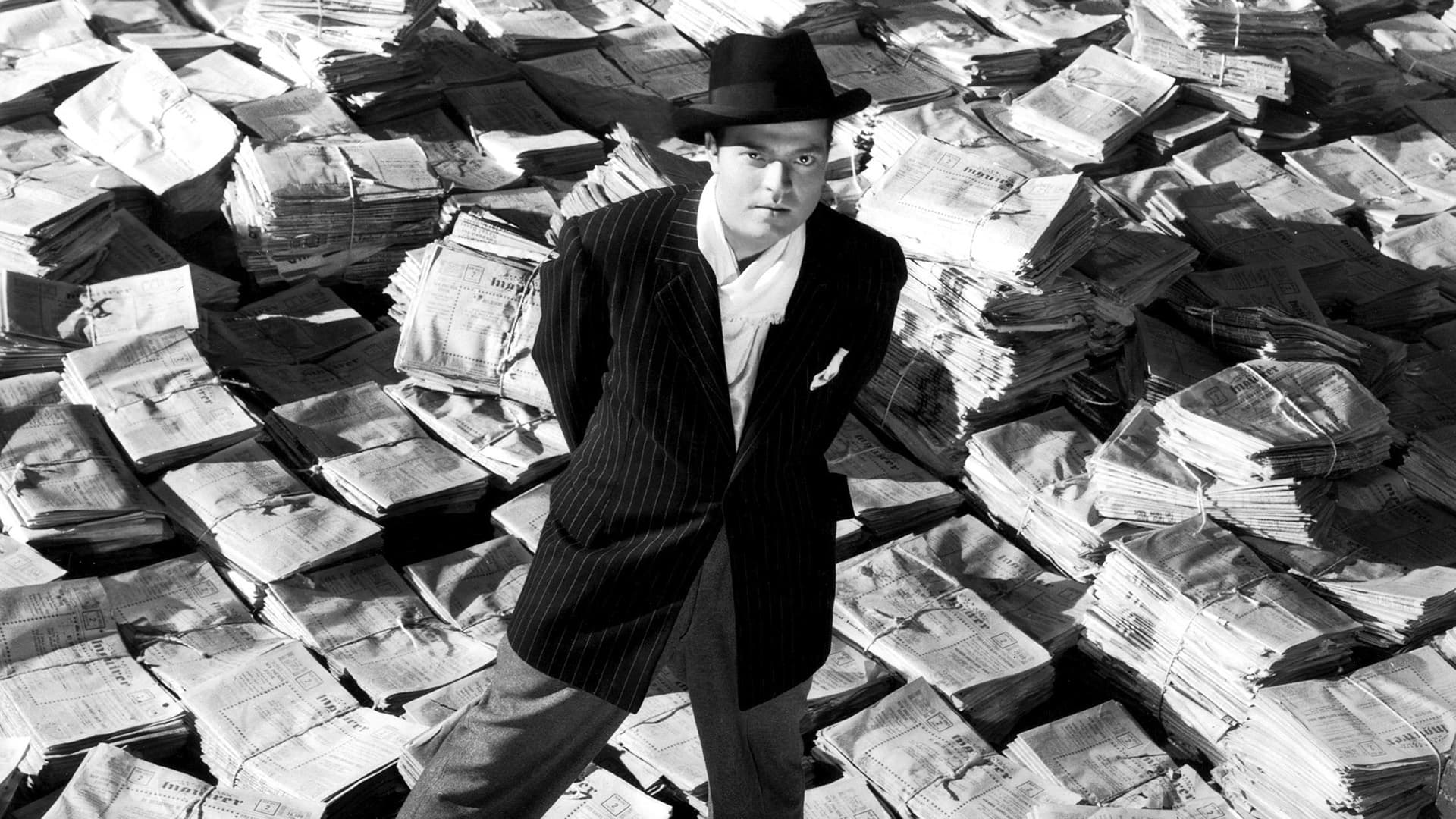
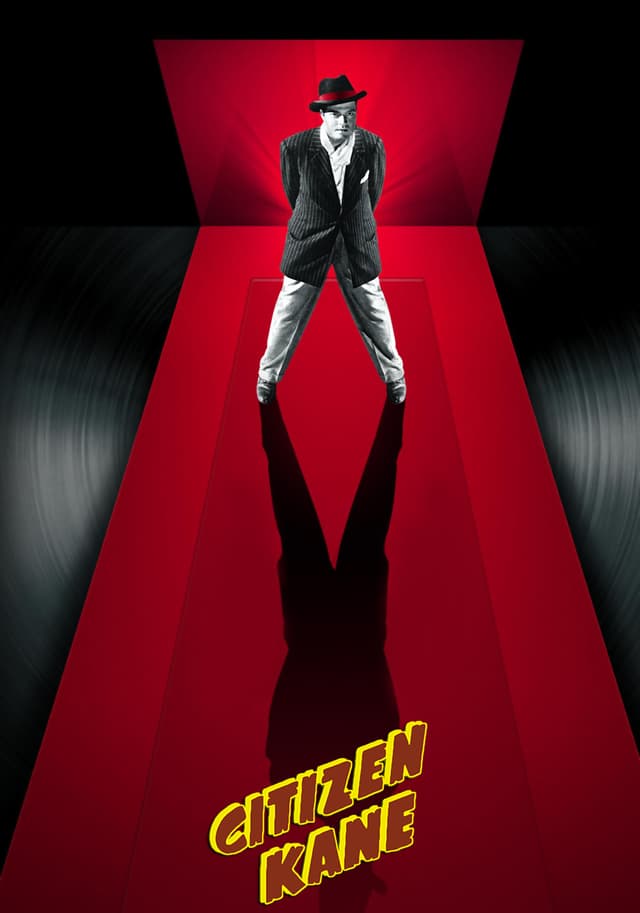
Citizen Kane movie poster

Citizen Kane

NRMystery, Drama
Budget$839.7K
Domestic Box Office$1.6M
Worldwide Box Office$23.2M

Synopsis

A group of reporters are trying to decipher the last word ever spoken by Charles Foster Kane, the millionaire newspaper tycoon: "Rosebud". The film begins with a news reel detailing Kane's life for the masses, and then from there, we are shown flashbacks from Kane's life. As the reporters investigate further, the viewers see a display of a fascinating man's rise to fame, and how he eventually fell off the top of the world.

Production Budget Analysis

What was the production budget for Citizen Kane?

Directed by Orson Welles, with Orson Welles, Joseph Cotten, Dorothy Comingore leading the cast, Citizen Kane was produced by Mercury Productions with a confirmed budget of $839,727, placing it in the ultra-low-budget category for mystery films.

At $839,727, Citizen Kane was produced on a lean budget. Lower-budget films benefit from reduced break-even thresholds, with profitability achievable at approximately $2,099,317.

Budget Comparison — Similar Productions

• Woman of the Hour (2024): Budget $836,057 | Gross N/A • Touch of Evil (1958): Budget $829,000 | Gross $2,247,500 → ROI: 171% • 4 Months, 3 Weeks and 2 Days (2007): Budget $852,510 | Gross $1,185,783 → ROI: 39% • Mirror (1975): Budget $825,000 | Gross $124,367 → ROI: -85% • Dumbo (1941): Budget $812,000 | Gross $1,600,000 → ROI: 97%

Key Budget Allocation Categories

▸ Talent & Director Compensation Thrillers depend on compelling lead performances to sustain tension, making cast compensation a primary budget concern. Directors with proven thriller credentials command premium fees.

▸ Cinematography & Location Photography Thriller aesthetics demand specific visual languages — surveillance-style photography, claustrophobic framing, or expansive location work across multiple cities or countries.

▸ Editorial & Sound Post-Production Precision editing — controlling information flow, building suspense through pacing, and orchestrating reveals — requires extended post-production schedules.

Key Production Personnel

CAST: Orson Welles, Joseph Cotten, Dorothy Comingore, Ray Collins, George Coulouris Key roles: Orson Welles as Charles Foster Kane; Joseph Cotten as Jedediah Leland; Dorothy Comingore as Susan Alexander Kane; Ray Collins as Jim W. Gettys

DIRECTOR: Orson Welles CINEMATOGRAPHY: Gregg Toland MUSIC: Bernard Herrmann EDITING: Robert Wise PRODUCTION: Mercury Productions, RKO Radio Pictures FILMED IN: United States of America

Box Office Performance

Citizen Kane earned $1,627,530 domestically and $21,590,470 internationally, for a worldwide total of $23,218,000. International markets drove the majority of revenue (93%), indicating strong global appeal.

Break-Even Analysis

Using the industry-standard 2.5x multiplier (P&A + exhibitor shares of 40–50% + distribution fees), Citizen Kane needed approximately $2,099,317 to break even. The film surpassed this threshold by $21,118,683.

Return on Investment (ROI)

Revenue: $23,218,000 Budget: $839,727 Net: $22,378,273 ROI: 2664.9%

Profitability Assessment

VERDICT: Highly Profitable

Citizen Kane was a clear financial success, generating $23,218,000 worldwide against a $839,727 production budget — a 2665% ROI. After estimated marketing costs, the film still delivered substantial profit to Mercury Productions.

INDUSTRY IMPACT

The outsized success of Citizen Kane likely influenced studio greenlight decisions for similar mystery projects.

Citizen Kane was the only film made under Welles's original contract with RKO Pictures, which gave him complete creative control. Welles reluctantly signed a new and less favorable deal with RKO and lost the right to final cut, which later allowed RKO to modify and re-cut The Magnificent Ambersons over his objections.

In the U.S., the film was initially neglected until it began appearing on television in the 1950s and was re-released in theaters. American film critic Andrew Sarris was significant in reviving its reputation, describing it as a profoundly influential American film. Over the decades, Citizen Kane has been consistently ranked highly in critical surveys and polls, often cited as the greatest film ever made.'

Roger Ebert wrote,

PRODUCTION NOTES

▸ Casting

right|Citizen Kane was a rare film in that its principal roles were played by actors new to motion pictures. Ten were billed as Mercury Actors, members of the skilled repertory company assembled by Welles for the stage and radio performances of the Mercury Theatre, an independent theater company he founded with Houseman in 1937. "He loved to use the Mercury players," wrote biographer Charles Higham, "and consequently he launched several of them on movie careers."

The film represents the feature film debuts of William Alland, Ray Collins, Joseph Cotten, Agnes Moorehead, Erskine Sanford, Everett Sloane, Paul Stewart and Welles himself. as Susan Alexander Kane. A discovery of Charlie Chaplin, Comingore was recommended to Welles by Chaplin, who then met Comingore at a party in Los Angeles and immediately cast her.

Welles had met stage actress Ruth Warrick while visiting New York on a break from Hollywood and remembered her as a good fit for Emily Norton Kane,

"He trained us for films at the same time that he was training himself," recalled Agnes Moorehead. "Orson believed in good acting, and he realized that rehearsals were needed to get the most from his actors. That was something new in Hollywood: nobody seemed interested in bringing in a group to rehearse before scenes were shot. But Orson knew it was necessary, and we rehearsed every sequence before it was shot."

When The March of Time narrator Westbrook Van Voorhis asked for $25,000 to narrate the News on the March sequence, Alland demonstrated his ability to imitate Van Voorhis, and Welles cast him.

Welles later said that casting character actor Gino Corrado in the small part of the waiter at the El Rancho broke his heart. Corrado had appeared in many Hollywood films, often as a waiter, and Welles wanted all of the actors to be new to films. Other uncredited roles went to Thomas A.

▸ Filming & Locations

Production advisor Miriam Geiger quickly compiled a handmade film textbook for Welles, a practical reference book of film techniques that he studied carefully. He then taught himself filmmaking by matching its visual vocabulary to The Cabinet of Dr. Caligari, which he ordered from the Museum of Modern Art, and Jean Renoir. "As it turned out, the first day I ever walked onto a set was my first day as a director," Welles said. "I'd learned whatever I knew in the projection room—from Ford. After dinner every night for about a month, I'd run Stagecoach, often with some different technician or department head from the studio, and ask questions. 'How was this done?' 'Why was this done?' It was like going to school."]] On June 29, 1940—a Saturday morning when few inquisitive studio executives would be around—Welles began filming Citizen Kane.

During production, the film was referred to as RKO 281. Most of the filming took place in what is now Stage 19 on the Paramount Pictures lot in Hollywood. There was some location filming at Balboa Park in San Diego and the San Diego Zoo. Photographs of German-Jewish investment banker Otto Hermann Kahn's real-life estate Oheka Castle were used to portray the fictional Xanadu.

In the end of July, RKO approved the film and Welles was allowed to officially begin shooting, despite having already been filming "tests" for several weeks. Welles leaked stories to newspaper reporters that the "tests" had been so good that there was no need to re-shoot them. The first "official" scene to be shot was the breakfast montage sequence between Kane and his first wife Emily.

▸ Post-Production

Citizen Kane was edited by Robert Wise and assistant editor Mark Robson. Both would become successful film directors. Wise was hired after Welles finished shooting the "camera tests" and began officially making the film. Wise said that Welles "had an older editor assigned to him for those tests and evidently he was not too happy and asked to have somebody else. I was roughly Orson's age and had several good credits." Wise and Robson began editing the film while it was still shooting and said that they "could tell certainly that we were getting something very special. It was outstanding film day in and day out."

Welles gave Wise detailed instructions and was usually not present during the film's editing. The film was very well planned out and intentionally shot for such post-production techniques as slow dissolves. The lack of coverage made editing easy since Welles and Toland edited the film "in camera" by leaving few options of how it could be put together. Wise said the breakfast table sequence took weeks to edit and get the correct "timing" and "rhythm" for the whip pans and overlapping dialogue. The News on the March sequence was edited by RKO's newsreel division to give it authenticity. They used stock footage from Pathé News and the General Film Library.

During post-production Welles and special effects artist Linwood G. Dunn experimented with an optical printer to improve certain scenes that Welles found unsatisfactory from the footage. Whereas Welles was often immediately pleased with Wise's work, he would require Dunn and post-production audio engineer James G. Stewart to re-do their work several times until he was satisfied.

Welles hired Bernard Herrmann to compose the film's score. Where most Hollywood film scores were written quickly, in as few as two or three weeks after filming was completed, Herrmann was given 12 weeks to write the music.

▸ Visual Effects & Design

The film's special effects were supervised by RKO department head Vernon L. Walker.

Some shots included rear screen projection in the background, such as Thompson's interview of Leland and some of the ocean backgrounds at Xanadu. The optical printer improved some of the deep focus shots. One problem with the optical printer was that it sometimes created excessive graininess, such as the optical zoom out of the snow globe. Welles decided to superimpose snow falling to mask the graininess in these shots. Toland said that he disliked the results of the optical printer, but acknowledged that "RKO special effects expert Vernon Walker, ASC, and his staff handled their part of the production—a by no means inconsiderable assignment—with ability and fine understanding."

Any time deep focus was impossible—as in the scene in which Kane finishes a negative review of Susan's opera while at the same time firing the person who began writing the review—an optical printer was used to make the whole screen appear in focus, visually layering one piece of film onto another. However, some apparently deep-focus shots were the result of in-camera effects, as in the famous scene in which Kane breaks into Susan's room after her suicide attempt. In the background, Kane and another man break into the room, while simultaneously the medicine bottle and a glass with a spoon in it are in closeup in the foreground. The shot was an in-camera matte shot. The foreground was shot first, with the background dark. Then the background was lit, the foreground darkened, the film rewound, and the scene re-shot with the background action.

▸ Music & Score

Kane was the first film scored by Bernard Herrmann, who had composed for Welles's Mercury Theatre on the Air. and eschewed the typical Hollywood practice of scoring a film with virtually non-stop music. Instead Herrmann used what he later described as "radio scoring", musical cues typically 5–15 seconds in length that bridge the action or suggest a different emotional response.

Herrmann realized that musicians slated to play his music were hired for individual unique sessions; there was no need to write for existing ensembles. This meant that he was free to score for unusual combinations of instruments, even instruments that are not commonly heard. In the opening sequence, for example, the tour of Kane's estate Xanadu, Herrmann introduces a recurring leitmotif played by low woodwinds, including a quartet of alto flutes.

For Susan Alexander Kane's operatic sequence, Welles suggested that Herrmann compose a witty parody of a Mary Garden vehicle, an aria from Salammbô.

Some incidental music came from other sources. Welles heard the tune used for the publisher's theme, "Oh, Mr. Kane", in Mexico. "In a Mizz", a 1939 jazz song by Charlie Barnet and Haven Johnson, bookends Thompson's second interview of Susan Alexander Kane. All of the music used in the newsreel came from the RKO music library, edited at Welles's request by the newsreel department to achieve what Herrmann called "their own crazy way of cutting". The News on the March theme that accompanies the newsreel titles is "Belgian March" by Anthony Collins, from the film Nurse Edith Cavell.

AWARDS & RECOGNITION

Summary: Won 1 Oscar. 16 wins & 13 nominations total

Awards Won: ★ National Board of Review: Top Ten Films ★ Academy Award for Best Writing, Original Screenplay — Orson Welles (14th Academy Awards) ★ Academy Award for Best Writing, Original Screenplay — Herman J. Mankiewicz (14th Academy Awards) ★ National Board of Review Award for Best Film

Nominations: ○ Academy Award for Best Cinematography, Black-and-White (14th Academy Awards) ○ Academy Award for Best Director (14th Academy Awards) ○ Academy Award for Best Original Dramatic Score (14th Academy Awards) ○ Academy Award for Best Film Editing (14th Academy Awards) ○ Academy Award for Best Actor (14th Academy Awards) ○ Academy Award for Best Writing, Original Screenplay (14th Academy Awards) ○ Academy Award for Best Art Direction, Black and White (14th Academy Awards) ○ Academy Award for Best Sound (14th Academy Awards) ○ Academy Award for Best Picture (14th Academy Awards)

Additional Recognition: ! Award ! Category ! Nominee(s) ! Result

It was widely believed the film would win most of its Academy Award nominations, but it received only the award for Best Original Screenplay. Variety reported that block voting by screen extras deprived Citizen Kane of Best Picture and Best Actor, and similar prejudices were likely to have been responsible for the film receiving no technical awards. In 2006, the Writers Guild of America ranked its screenplay 4th in WGA’s list of 101 Greatest Screenplays.

CRITICAL RECEPTION

The film did well in cities and larger towns, but it fared poorly in more remote areas. RKO still had problems getting exhibitors to show the film. For example, one chain controlling more than 500 theaters got Welles's film as part of a package but refused to play it, reportedly out of fear of Hearst. The film earned $23,878 during its first week in New York. By the ninth week it only made $7,279. Overall it lost money in New York, Boston, Chicago, Los Angeles, San Francisco and Washington, D.C., but made a profit in Seattle. A college-town exhibitor reported, "I thought it was fine, as did the majority of people who attended the performances. However, there were some who either did not like it or did not get it. Business was just average." "Don't try to tell me Orson Welles isn't a genius; herein he has produced a mighty fine picture, and herewith he has established for me the lowest gross that I have ever, ever experienced. I would have sworn that such ridiculous receipts were utterly impossible. If you cater to film connoisseurs, this picture is made for you. But me, I hurt all over." Others were more blunt: "Nobody liked this and said so. We took in just enough to pay for it so considered ourselves very lucky." "One day after showing this we still feel hesitant about walking abroad without an escort. Half of the few dozen that paid to see this masterpiece walked out, and the other half remained only to think up new dirty cracks to cast in our direction on the way out." "High priced picture. But I made a little money on my help. They took off three days because they were afraid of being all alone in the theatre." "You can stand in front of a mirror and call yourself 'sucker' when you play this one. It does not have one redeeming feature. It will not draw; those that do come will not know what it is all about." A Minnesota exhibitor summed up the situation for rural areas: "My patrons still don't know what it was all about. Too long and too deep.

SAG Feature Film template
AFI template
Amazon template
Podcast template
Digital Content template
BET template
Commercial Bid template
Disney Films template
New Jersey Tax Credit template
Short Film template
Malta Film Incentive template
BBC Television template
New York Tax Credit template
Marvel Studios template
Feature Film template
Photography template
Netflix Productions template
hotdocs template
Paramount template
HBO Series template
UK Channel 4 template
Georgia Film Tax Credit template
Unscripted template
California Tax Credit template
Documentary template
CBS Television template
Music Video template
Events template
Post Production template
Canada Productions Telefilm template
Screen Australia template
Dreamworks template
Discovery Networks template
SAG Feature Film template
AFI template
Amazon template
Podcast template
Digital Content template
BET template
Commercial Bid template
Disney Films template
New Jersey Tax Credit template
Short Film template
Malta Film Incentive template
BBC Television template
New York Tax Credit template
Marvel Studios template
Feature Film template
Photography template
Netflix Productions template
hotdocs template
Paramount template
HBO Series template
UK Channel 4 template
Georgia Film Tax Credit template
Unscripted template
California Tax Credit template
Documentary template
CBS Television template
Music Video template
Events template
Post Production template
Canada Productions Telefilm template
Screen Australia template
Dreamworks template
Discovery Networks template
SAG Feature Film template
AFI template
Amazon template
Podcast template
Digital Content template
BET template
Commercial Bid template
Disney Films template
New Jersey Tax Credit template
Short Film template
Malta Film Incentive template
BBC Television template
New York Tax Credit template
Marvel Studios template
Feature Film template
Photography template
Netflix Productions template
hotdocs template
Paramount template
HBO Series template
UK Channel 4 template
Georgia Film Tax Credit template
Unscripted template
California Tax Credit template
Documentary template
CBS Television template
Music Video template
Events template
Post Production template
Canada Productions Telefilm template
Screen Australia template
Dreamworks template
Discovery Networks template
UK Channel 4 template
Amazon template
BET template
Canada Productions Telefilm template
BBC Television template
California Tax Credit template
Documentary template
Dreamworks template
Commercial Bid template
HBO Series template
Photography template
Short Film template
Discovery Networks template
Netflix Productions template
Disney Films template
Georgia Film Tax Credit template
Screen Australia template
Digital Content template
New York Tax Credit template
New Jersey Tax Credit template
Feature Film template
hotdocs template
Podcast template
SAG Feature Film template
Music Video template
AFI template
Malta Film Incentive template
Paramount template
Unscripted template
CBS Television template
Marvel Studios template
Post Production template
Events template
UK Channel 4 template
Amazon template
BET template
Canada Productions Telefilm template
BBC Television template
California Tax Credit template
Documentary template
Dreamworks template
Commercial Bid template
HBO Series template
Photography template
Short Film template
Discovery Networks template
Netflix Productions template
Disney Films template
Georgia Film Tax Credit template
Screen Australia template
Digital Content template
New York Tax Credit template
New Jersey Tax Credit template
Feature Film template
hotdocs template
Podcast template
SAG Feature Film template
Music Video template
AFI template
Malta Film Incentive template
Paramount template
Unscripted template
CBS Television template
Marvel Studios template
Post Production template
Events template
UK Channel 4 template
Amazon template
BET template
Canada Productions Telefilm template
BBC Television template
California Tax Credit template
Documentary template
Dreamworks template
Commercial Bid template
HBO Series template
Photography template
Short Film template
Discovery Networks template
Netflix Productions template
Disney Films template
Georgia Film Tax Credit template
Screen Australia template
Digital Content template
New York Tax Credit template
New Jersey Tax Credit template
Feature Film template
hotdocs template
Podcast template
SAG Feature Film template
Music Video template
AFI template
Malta Film Incentive template
Paramount template
Unscripted template
CBS Television template
Marvel Studios template
Post Production template
Events template
Discovery Networks template
AFI template
Events template
BBC Television template
Unscripted template
Paramount template
BET template
Music Video template
Digital Content template
Short Film template
California Tax Credit template
Screen Australia template
Feature Film template
CBS Television template
Canada Productions Telefilm template
Podcast template
Commercial Bid template
Marvel Studios template
Amazon template
Malta Film Incentive template
Georgia Film Tax Credit template
Netflix Productions template
hotdocs template
Photography template
UK Channel 4 template
Post Production template
Disney Films template
New Jersey Tax Credit template
HBO Series template
Dreamworks template
New York Tax Credit template
SAG Feature Film template
Documentary template
Discovery Networks template
AFI template
Events template
BBC Television template
Unscripted template
Paramount template
BET template
Music Video template
Digital Content template
Short Film template
California Tax Credit template
Screen Australia template
Feature Film template
CBS Television template
Canada Productions Telefilm template
Podcast template
Commercial Bid template
Marvel Studios template
Amazon template
Malta Film Incentive template
Georgia Film Tax Credit template
Netflix Productions template
hotdocs template
Photography template
UK Channel 4 template
Post Production template
Disney Films template
New Jersey Tax Credit template
HBO Series template
Dreamworks template
New York Tax Credit template
SAG Feature Film template
Documentary template
Discovery Networks template
AFI template
Events template
BBC Television template
Unscripted template
Paramount template
BET template
Music Video template
Digital Content template
Short Film template
California Tax Credit template
Screen Australia template
Feature Film template
CBS Television template
Canada Productions Telefilm template
Podcast template
Commercial Bid template
Marvel Studios template
Amazon template
Malta Film Incentive template
Georgia Film Tax Credit template
Netflix Productions template
hotdocs template
Photography template
UK Channel 4 template
Post Production template
Disney Films template
New Jersey Tax Credit template
HBO Series template
Dreamworks template
New York Tax Credit template
SAG Feature Film template
Documentary template

Budget Templates

Build your own production budget

Create professional budgets with industry-standard feature film templates. Real-time collaboration, no spreadsheets.

Start Budgeting Free