Poetry Budget
Updated
Synopsis
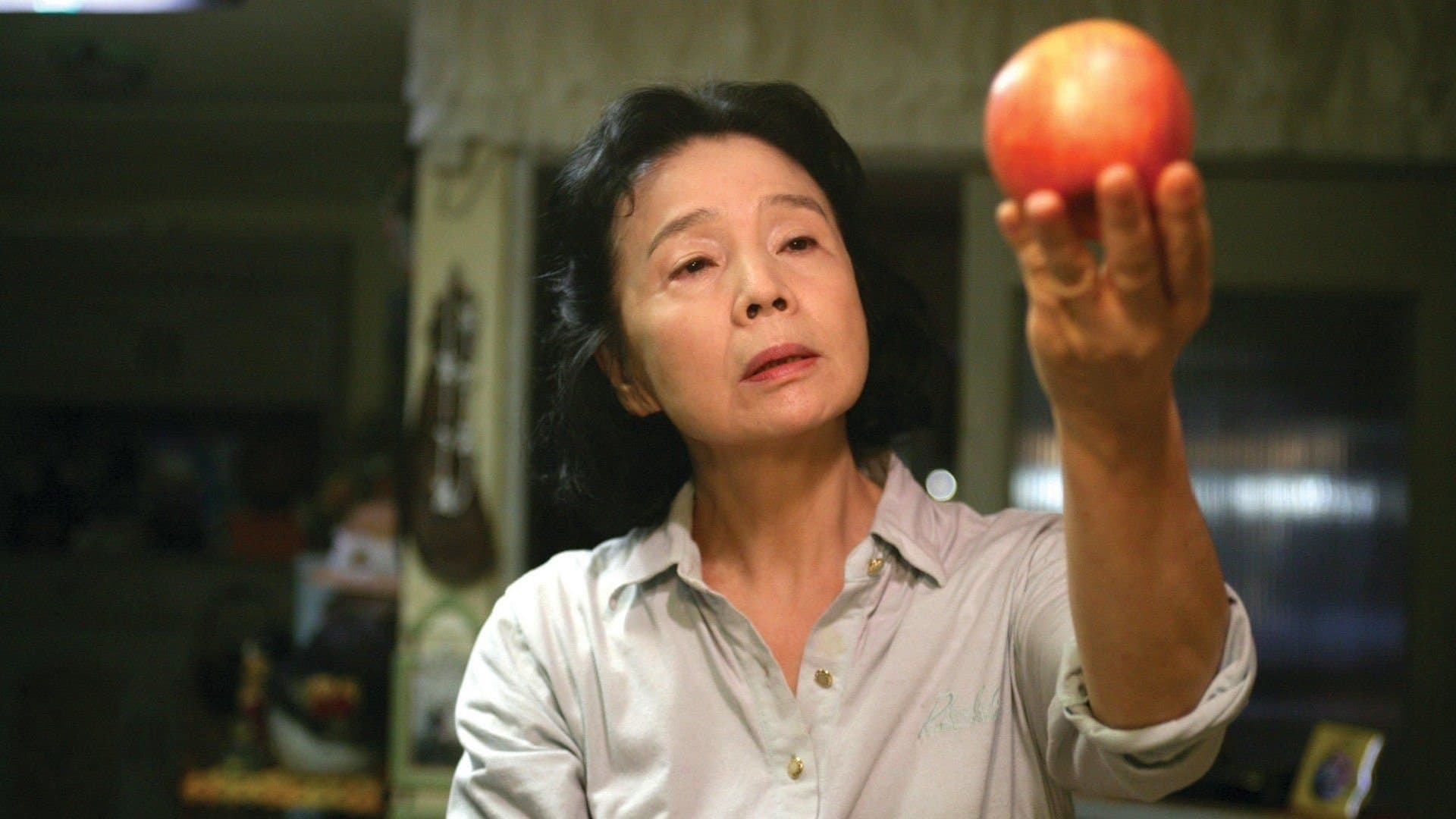
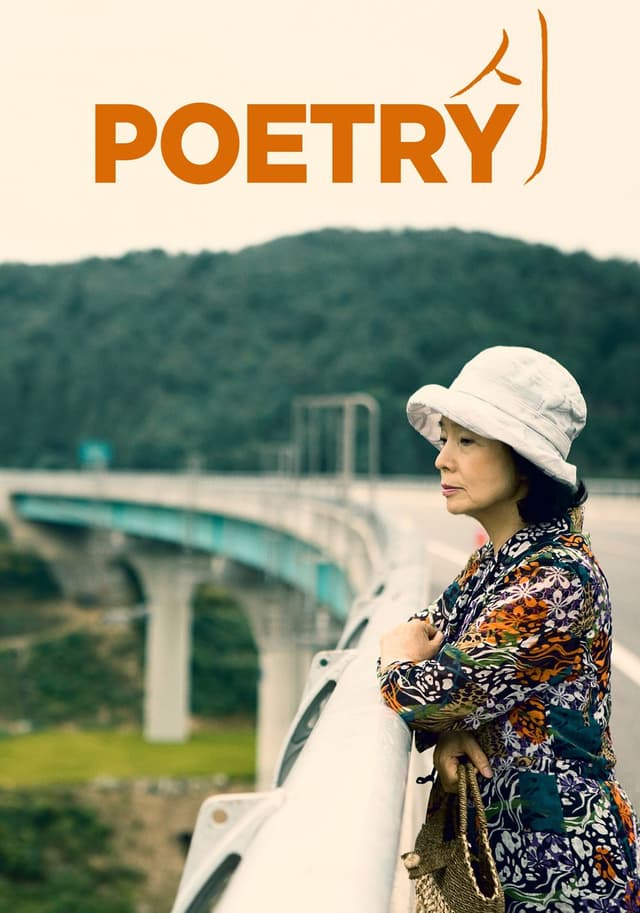
A sixty-six-year-old grandmother in a small Korean town enrolls in a poetry class as she grapples with a recent Alzheimer's diagnosis and the discovery of a terrible secret about her grandson. As she searches for the right images and words to write her first poem, she must reckon with what poetry can and cannot redeem.
What Is the Budget of Poetry (2010)?
Poetry (Si, 2010), directed by Lee Chang-dong and produced by UniKorea Pictures and Pinehouse Film, did not publicly disclose a production budget. The Korean-language literary drama operated within the modest budget bracket characteristic of Lee Chang-dong's authorship-driven Korean theatrical features. Industry observers estimate the negative cost in the $2,000,000 to $4,000,000 range based on the contained cast, the small-town location shoot, and the dialogue-and-observation-driven directorial approach that has defined Lee's post-Peppermint Candy career.
Lee Chang-dong, the former South Korean Minister of Culture and Tourism turned filmmaker, financed the project through his established Korean independent-production relationships. UniKorea Pictures and Pinehouse Film, both Korean independents with prior Lee Chang-dong collaboration credits, anchored the production budget alongside contributions from the Korean Film Council and supporting Korean film-industry funding mechanisms. The lean budget structure is consistent with Lee's established practice of producing literary-art-cinema features at production scales well below mainstream Korean industry norms.
Key Budget Allocation Categories
The Poetry budget broke down across these primary line items:
- Above-the-Line Talent: Yoon Jeong-hee, returning to Korean cinema after a 16-year hiatus from acting, headlined as Mija, a grandmother diagnosed with early-stage Alzheimer's. Yoon was one of the most prominent Korean theatrical leads of the 1960s and 1970s who had retired from acting in 1994, and her return to screen for Poetry was a culturally significant Korean-industry event. Supporting cast included David Lee, Kim Hee-ra, Ahn Nae-sang, and Kim Yong-taek (a celebrated Korean poet who appeared as the poetry-class instructor). Lee Chang-dong served as his own writer-director, which removes one of the most expensive single line items.
- Location Shoot: Principal photography took place in the rural Gyeonggi Province and along the Han River, with the small-town setting requiring detailed location scouting and modest set-dressing work. The film's observational visual approach leans on existing exteriors and natural light rather than stage construction.
- Cinematography: Cinematographer Kim Hyun-seok shot the film in an observational, naturalistic register characteristic of Lee Chang-dong's authorial signature. The visual approach uses long takes, static compositions, and minimal camera movement, a stylistic choice that reduces equipment-rental and crew-size requirements compared with action-or-period genre productions.
- Editing: Editor Kim Hyun worked closely with Lee Chang-dong on the assembly. Lee's observational style and long-take preference produces a film that requires careful pacing-driven editing rather than coverage-cut assembly, a labor-intensive editing approach that contributes meaningful spend to post-production.
- Sound Design: The film has no original musical score, a Lee Chang-dong signature characteristic of his post-Secret Sunshine work. Sound design relies on natural ambient sound, with selected diegetic music cues integrated through the poetry-class and community scenes. The score-free approach saves a meaningful music-budget line while contributing to the film's distinctive observational register.
- Festival Submission and International Sales: UniKorea Pictures and Pinehouse Film budgeted for submission to the 2010 Cannes Film Festival main competition, where the film premiered in May 2010. Subsequent international-sales activity through specialized distributors including Diaphana Films (France) and Kino Lorber (US) was managed through Korean-feature international-sales networks.
How Does Poetry's Budget Compare to Similar Films?
Poetry sits at the modest end of Korean prestige-festival features. The comparison set:
- Burning (2018): Budget approximately $5,000,000 | Worldwide $5,800,000. Lee Chang-dong's subsequent Korean theatrical feature, his first since Poetry, operated at a higher budget level while remaining within the modest-art-cinema bracket and earned major international festival recognition at Cannes.
- Memories of Murder (2003): Budget $2,800,000 | Worldwide $9,000,000. Bong Joon-ho's breakthrough Korean thriller from a few years prior demonstrates the budget tier Korean prestige genre features of the period operated within and shares the Korean-film-industry production infrastructure Poetry drew on.
- Mother (2009): Budget undisclosed | Worldwide $14,800,000. Bong Joon-ho's contemporaneous Korean mother-figure-anchored drama operated in a comparable critical and festival space, with stronger commercial performance reflecting Bong's wider international reach at the time.
- The Handmaiden (2016): Budget $8,575,000 | Worldwide $38,000,000. Park Chan-wook's later Korean prestige-festival feature demonstrates the upper bracket Korean art-cinema productions reach when supported by the director's established global brand, useful context for Poetry's more modest scale.
Poetry Box Office Performance
Poetry premiered in competition at the 2010 Cannes Film Festival on May 19, 2010 and received its South Korean theatrical release on May 13, 2010. The film grossed approximately $215,000 across approximately 220,000 Korean domestic admissions, a modest commercial result reflecting the art-cinema register and the slow-pace literary-drama genre. International theatrical release in France, Japan, the United States, and selected European territories contributed approximately $134,899, for a worldwide theatrical total of approximately $349,899.
The financial breakdown:
Box Office Breakdown
Poetry

Poetry's theatrical commercial outcome was a recoupment shortfall, characteristic of Korean prestige art-cinema features that depend on long-tail home video, SVOD, and television revenue for recoupment. The film's Cannes Best Screenplay win and Yoon Jeong-hee's critical acclaim drove substantial long-term cultural footprint that translates into ongoing licensing revenue even as the original theatrical window did not return the production investment.
Poetry Production History
Development began at UniKorea Pictures and Pinehouse Film around 2008 with Lee Chang-dong's screenplay. The script drew on Lee's longstanding engagement with Korean literary tradition (Lee had earlier written novels before his transition to filmmaking in the late 1990s) and centered on a 66-year-old woman discovering poetry while grappling with early-stage Alzheimer's and a moral crisis involving her grandson. Casting Yoon Jeong-hee in the lead role was a substantial industry event given her 16-year absence from acting; she accepted the role specifically because of Lee Chang-dong's authorship. Principal photography ran in South Korea across late 2009, primarily in rural Gyeonggi Province and along the Han River.
Lee Chang-dong's production approach combined a tight 10-week shooting schedule with extensive pre-production preparation that allowed for the long-take, minimal-coverage shooting style. The Han River setting and the rural-town location work required detailed weather-dependent scheduling, with the production navigating Korean autumn-and-early-winter conditions across the shoot.
Post-production was completed in early 2010. The 2010 Cannes Film Festival main-competition premiere on May 19, 2010 generated widespread international critical acclaim and the festival's Best Screenplay award, anchoring the film's subsequent international festival circuit and arthouse-theatrical distribution. Yoon Jeong-hee's Best Actress recognition at the Asian Film Awards and Los Angeles Film Critics Association further amplified the film's international footprint.
Awards and Recognition
Poetry received one of the strongest awards records of any Korean theatrical feature of its era. The film won the Best Screenplay award at the 2010 Cannes Film Festival, awarded directly to Lee Chang-dong. Yoon Jeong-hee won Best Actress at the Asian Film Awards, the Los Angeles Film Critics Association Awards, and the Grand Bell Awards (Korea's national film prize), among multiple international critics-association recognitions.
The film also won Best Film at the Grand Bell Awards, Best Screenplay at the Asia Pacific Screen Awards, and was selected as South Korea's submission for the Academy Award for Best Foreign Language Film at the 84th Academy Awards (though it did not advance to the final five nominees). The international critical recognition cemented Lee Chang-dong's standing as one of the most prominent Korean authorship-driven filmmakers internationally, alongside Park Chan-wook, Bong Joon-ho, and Hong Sang-soo.
Critical Reception
Poetry received overwhelmingly positive reviews. The film holds a 100% approval rating on Rotten Tomatoes based on 87 critic reviews, with a critical consensus calling it "a beautifully observed character study that earns its emotional moments through patient, observational filmmaking." On Metacritic, the film scored 87 out of 100 based on 26 critics, indicating universal acclaim. IMDb user ratings average 7.8 out of 10 based on approximately 18,000 user ratings.
A.O. Scott of The New York Times called the film "a profound and patient meditation on the moral imagination" and named it among his Top 10 films of 2011. The New Yorker's Anthony Lane praised Yoon Jeong-hee's performance as "one of the finest screen performances of recent memory." Cahiers du Cinéma included the film in its annual Top 10 list, the magazine's most-prestigious annual recognition.
Korean critical reception was equally strong. Cine21, Hankyoreh, and the Korean Film Council's annual retrospective lists all placed Poetry among the most important Korean theatrical releases of 2010 and the broader 2010s decade. The film has since been canonized as one of Lee Chang-dong's most accomplished works alongside Peppermint Candy, Oasis, and Burning, and is widely cited in Korean-cinema and global art-cinema academic and trade-press writing about the post-2000s Korean New Wave.
Frequently Asked Questions
How much did it cost to make Poetry (2010)?
The production budget was not publicly disclosed. Industry observers estimate the negative cost in the $2,000,000 to $4,000,000 range based on the contained cast, the small-town location shoot, and the dialogue-and-observation-driven directorial approach that defines Lee Chang-dong's career.
How much did Poetry earn at the box office?
The film grossed approximately $215,000 across approximately 220,000 Korean domestic admissions, with international theatrical release in France, Japan, the United States, and selected European territories contributing approximately $134,899, for a worldwide theatrical total of approximately $349,899.
Who directed Poetry (2010)?
Lee Chang-dong directed the film and wrote the screenplay. Lee, a former South Korean Minister of Culture and Tourism turned filmmaker, has also directed Peppermint Candy (1999), Oasis (2002), Secret Sunshine (2007), and Burning (2018).
Who stars in Poetry?
Yoon Jeong-hee stars as Mija, the 66-year-old grandmother at the center of the story. Yoon was one of the most prominent Korean theatrical leads of the 1960s and 1970s who had retired from acting in 1994; she returned to screen for Poetry after a 16-year absence specifically because of Lee Chang-dong's authorship. Supporting cast includes David Lee, Kim Hee-ra, and the celebrated Korean poet Kim Yong-taek as the poetry-class instructor.
What is Poetry (2010) about?
A sixty-six-year-old grandmother in a small Korean town enrolls in a poetry class as she grapples with a recent Alzheimer's diagnosis and the discovery of a terrible secret about her grandson. As she searches for the right images and words to write her first poem, she must reckon with what poetry can and cannot redeem.
Did Poetry win at Cannes?
Yes. Poetry won the Best Screenplay award at the 2010 Cannes Film Festival, awarded directly to Lee Chang-dong. The film premiered in the festival's main competition section on May 19, 2010.
Where was Poetry filmed?
Principal photography took place in South Korea across late 2009, primarily in rural Gyeonggi Province and along the Han River. The film's observational visual approach leans on existing exteriors and natural light rather than stage construction.
Did Poetry win other awards?
Yoon Jeong-hee won Best Actress at the Asian Film Awards, the Los Angeles Film Critics Association Awards, and the Grand Bell Awards (Korea's national film prize). The film also won Best Film at the Grand Bell Awards, Best Screenplay at the Asia Pacific Screen Awards, and was South Korea's submission for the Academy Award for Best Foreign Language Film at the 84th Academy Awards.
What did critics think of Poetry?
Reviews were overwhelmingly positive. The film holds a 100% approval rating on Rotten Tomatoes from 87 critics and a Metacritic score of 87 out of 100. The New York Times called it "a profound and patient meditation on the moral imagination," while The New Yorker praised Yoon Jeong-hee's performance as "one of the finest screen performances of recent memory."
Does Poetry have a musical score?
No. The film has no original musical score, a Lee Chang-dong signature characteristic of his post-Secret Sunshine work. Sound design relies on natural ambient sound, with selected diegetic music cues integrated through the poetry-class and community scenes.
Filmmakers
Poetry

Official Trailer
Build budgets like this one in Saturation
Start from an industry-standard feature film template, import the schedule and rates you already have, and let the cost report keep itself current as you spend. Real-time collaboration, no spreadsheets.