Passchendaele Budget
Updated
Synopsis
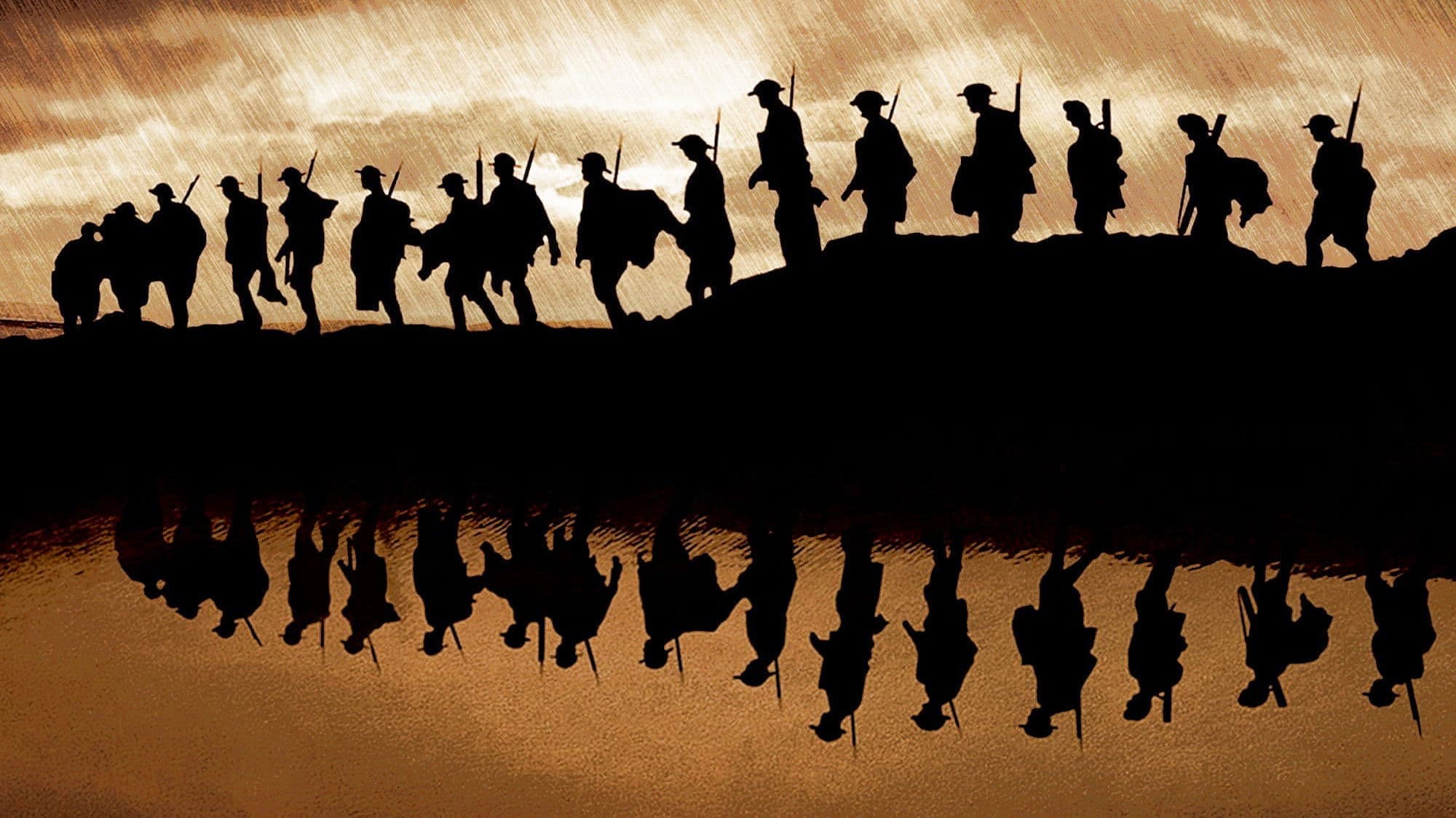
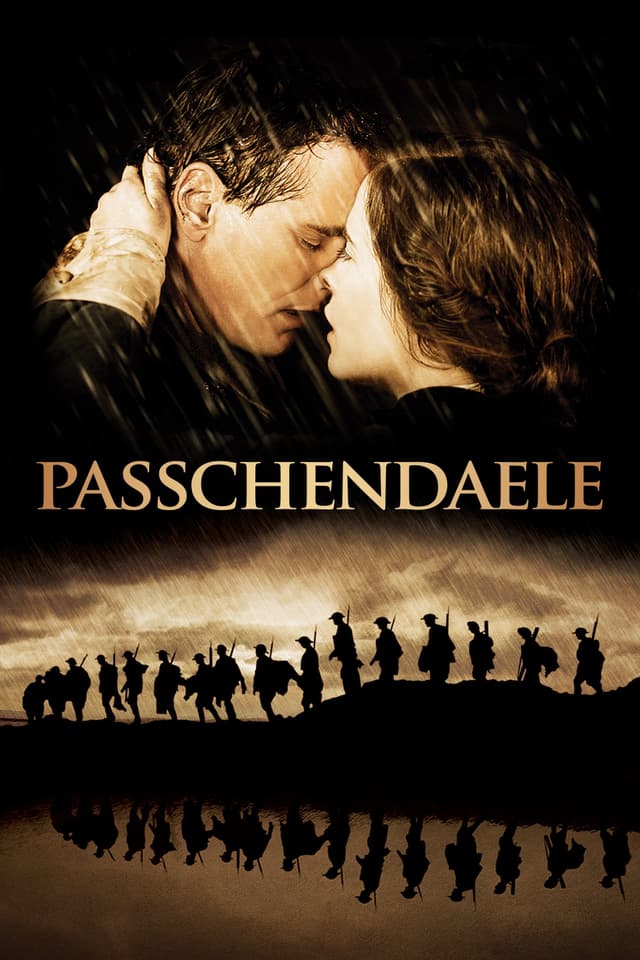
Sergeant Michael Dunne of the 10th Battalion, Canadian Expeditionary Force, returns from the Battle of Vimy Ridge to Calgary, Alberta with neurasthenia and falls in love with nurse Sarah Mann while recovering. When Sarah's asthmatic younger brother David enlists, Dunne reenlists under a false name to protect him, and all three are drawn into the mud, blood, and slaughter of the Third Battle of Ypres at Passchendaele in October and November 1917.
What Is the Budget of Passchendaele (2008)?
Passchendaele (2008), written, directed by, and starring Paul Gross, was produced on a reported budget of $20,000,000 CAD, making it the largest-ever Canadian-financed feature film at the time of its release. The figure was widely cited as falling between $16,000,000 and $20,000,000 across pre-release coverage, with the higher number reflecting the final all-in cost once Belgian location work, period military hardware, and a 200-plus actor World War I battle reconstruction were factored in. Alliance Films handled Canadian theatrical distribution, while production was led by Damberger Film & Cattle, Rhombus Media, and Whizbang Films.
The investment was assembled almost entirely from Canadian public and private sources. The Government of Alberta announced a $5,500,000 grant in November 2005 as part of the province's centennial commemoration, anchoring the financing stack alongside Telefilm Canada equity, Alberta Film Development Program funds, broadcaster pre-sales, and private equity from the production companies. The scale was unprecedented for a domestic Canadian feature outside the Quebec-financed historical epic tradition, and the entire project was pitched as a Canadian story told with Canadian money for a Canadian audience first.
Key Budget Allocation Categories
Passchendaele's $20,000,000 CAD budget was distributed across the following core production areas:
- Battle Reconstruction and Extras: The Third Battle of Ypres sequences required more than 200 actors, many of them serving Canadian Forces soldiers with combat experience in Afghanistan recruited to bring authenticity to the trench and over-the-top sequences. Period uniforms, rifles, machine guns, artillery effects, mud and water effects for the destroyed Flanders landscape, and a multi-week battlefield build on the Tsuu T'ina Nation reserve outside Calgary absorbed the single largest line item.
- Above-the-Line Talent: Paul Gross served simultaneously as writer, director, lead actor, and producer, with his fees deferred against backend participation to keep cash budget down. Co-stars Caroline Dhavernas (Wonderfalls, Hannibal), Gil Bellows (Ally McBeal, The Shawshank Redemption), Joe Dinicol, and Michael Greyeyes carried recognizable Canadian and North American television profiles, with compensation set at Canadian feature scale rather than US tentpole rates.
- Belgium Location Shoot: A secondary unit shot establishing material and exterior reference in Belgium near the actual Passchendaele battlefield in Flanders, adding international travel, lodging, local crew, and location permit costs that domestic-only Canadian productions typically avoid.
- Period Military Hardware and Wardrobe: Authentic 1917-spec Canadian Expeditionary Force uniforms, Lee-Enfield rifles, German Mauser rifles, Maxim and Vickers machine guns, period medical equipment for the dressing station sequences, and several hundred custom-tailored costumes were sourced from international military prop houses and Canadian wardrobe builds.
- Visual Effects and Pyrotechnics: Practical pyrotechnics for the artillery sequences were combined with digital effects work for crowd extensions, smoke and atmosphere, and the climactic crucifixion-on-duckboards image. Spin VFX and other Canadian post houses contributed shots over a roughly nine-month post-production window.
- Score and Music: Polish composer Jan A. P. Kaczmarek, an Academy Award winner for Finding Neverland, scored the film with a full orchestra. The music budget covered original composition, orchestra recording, and licensing of period material used in the Calgary home-front sequences.
- Post-Production and Editing: Editor David Wharnsby cut the film over an extended post-production schedule that included multiple test screenings and trims to reach the final 114-minute running time. Sound editing and mixing, color timing, and a high-end DCP master for theatrical release added meaningful cost relative to the typical Canadian indie post pipeline.
How Does Passchendaele's Budget Compare to Similar Films?
At a reported $20,000,000 CAD, Passchendaele sits well below the budgets of comparable World War I and large-scale international war films, while ranking at the very top of Canadian-financed feature productions of its era. The comparison set illustrates where the film stood on both axes:
- 1917 (2019): Budget $95,000,000 | Worldwide $384,994,857. Sam Mendes' single-take WWI epic spent nearly five times Passchendaele's budget and grossed roughly 86 times its worldwide haul, illustrating the scale gap between major-studio WWI filmmaking and even the largest Canadian-financed production.
- War Horse (2011): Budget $66,000,000 | Worldwide $177,584,879. Steven Spielberg's WWI cavalry drama for DreamWorks and Disney spent more than triple Passchendaele's budget on a similar Western Front setting, with Academy attention and worldwide release that Passchendaele's domestic-first strategy was not designed to chase.
- They Shall Not Grow Old (2018): Budget $2,500,000 | Worldwide $19,200,000. Peter Jackson's restored-archive WWI documentary cost roughly one eighth of Passchendaele but earned more than four times the gross, a reminder that hybrid theatrical-event releases of historical material can outperform conventional dramatic features at the box office.
- All Quiet on the Western Front (2022): Budget $20,000,000 | Worldwide $7,000,000 (limited theatrical, Netflix global). Edward Berger's German-language WWI Oscar winner matched Passchendaele's budget almost exactly but reached its audience through Netflix streaming, a distribution model unavailable in 2008.
- Paths of Glory (1957): Budget $935,000 | Worldwide unreported in modern accounting. Stanley Kubrick's WWI court-martial drama remains the genre benchmark, illustrating that scale of production is not the same as scale of legacy.
Passchendaele Box Office Performance
Passchendaele opened the 2008 Toronto International Film Festival on September 4, 2008, the first Canadian film to be granted the opening-night slot, before a wide Canadian theatrical release on October 17, 2008 through Alliance Films. The film led the Canadian box office on its opening weekend with roughly $1,100,000 across 254 screens, a strong domestic per-screen average for a homegrown release of its era. International theatrical pickups were limited.
Against a $20,000,000 CAD production budget, the film needed approximately $50,000,000 worldwide to reach profitability once Alliance's Canadian marketing spend and international distributor splits were accounted for. The financial breakdown looks like this:
Box Office Breakdown
Passchendaele

Passchendaele returned approximately $0.18 in theatrical revenue for every $1 invested when measured against total estimated production and marketing spend, a steep loss in pure commercial terms. The Canadian theatrical share was dominant: domestic Canadian box office accounted for the substantial majority of the worldwide gross, with very limited US arthouse and UK release adding only marginal revenue.
Despite the commercial result, Passchendaele received the Golden Reel Award as the top-grossing Canadian film of 2008, an annual prize given to the highest-grossing domestic title in Canada. The recoupment math was always going to be challenging for a Canadian-language WWI epic competing against US studio releases in the fall corridor, and the producers had structured the financing stack with provincial and federal cultural support precisely because the commercial ceiling for the subject matter was understood to be modest.
Passchendaele Production History
Development on Passchendaele began with Paul Gross in the late 1990s, inspired by his maternal grandfather Michael Joseph Dunne, who served in the 56th, 5th, 14th, and 23rd Reserve Battalions of the Canadian Expeditionary Force. Dunne had been reticent about his war experiences but in a rare fishing-trip conversation told Gross the story of bayonetting a young German soldier through the head, an act for which he later asked forgiveness in the last days of his life. That single story formed the spine of what would become a decade-long writing process during which Gross was simultaneously starring in Due South and Slings & Arrows for Canadian television.
Financing came together in stages. In November 2005 the Government of Alberta announced a $5,500,000 centennial grant for the project at a news conference at the Museum of the Regiments in Calgary, with Premier Ralph Klein framing the film as a tribute to Alberta's military heritage. Telefilm Canada equity, Alberta Film Development Program credits, Canadian broadcaster pre-sales, and private equity from Damberger Film & Cattle, Niv Fichman's Rhombus Media, and Whizbang Films completed the stack. The total Canadian-only financing was unprecedented in scale for an English-language feature, with the budget reported variously between $16,000,000 and $20,000,000 in pre-production coverage.
Principal photography began on August 20, 2007 in Calgary, Alberta, and ran for forty-five days through October 2007. Battle sequences were filmed on the Tsuu T'ina Nation reserve immediately southwest of Calgary, where the production constructed a multi-acre Western Front trench system, no-man's-land with shell craters, and a destroyed-landscape mud and water effects build for the climactic Passchendaele assault. More than 200 actors filled out the battle, including a sizeable contingent of serving Canadian Forces soldiers with recent combat experience in Afghanistan whose movement, drill, and weapons handling brought a documentary authenticity that civilian extras could not have replicated.
Calgary home-front sequences were shot at heritage locations across the city, while period exteriors for the rural prairie sections were captured in Fort Macleod, Alberta. A secondary unit traveled to Belgium for plate photography near the actual Passchendaele battlefield in Flanders, used for establishing material and atmospheric reference. Cinematographer Gregory Middleton (50/50, Watchmen TV series) shot anamorphic to give the film a widescreen historical-epic scope, and Jan A. P. Kaczmarek delivered the orchestral score over a roughly nine-month post-production cycle that included multiple test screenings before locking the 114-minute theatrical cut.
Awards and Recognition
Passchendaele won five awards at the 29th Genie Awards in April 2009, the Canadian film industry's top honors: Best Motion Picture, Achievement in Art Direction/Production Design, Achievement in Costume Design, Achievement in Overall Sound, and Achievement in Sound Editing. The Best Picture win confirmed the film's standing as the consensus Canadian film of 2008 within the domestic industry, despite the mixed critical reception.
On March 2, 2009, Paul Gross was honoured with the National Arts Centre Award at the Governor General's Performing Arts Awards for achievement over the past performance year, with Passchendaele cited as the centerpiece accomplishment. The film also received the Golden Reel Award as Canada's top-grossing domestic film of 2008, an annual prize administered by the Academy of Canadian Cinema and Television. Beyond Canadian industry recognition, the Toronto International Film Festival opening-night slot itself functioned as a major endorsement, the first time TIFF had granted that honor to a Canadian feature film.
Critical Reception
Passchendaele received mixed reviews. The film holds a 40% approval rating on Rotten Tomatoes based on 15 critic reviews, with an average score of 5 out of 10. The aggregator's consensus pointed to a film that delivered convincing battle sequences and earnest historical reconstruction but struggled with the conventional romantic plot bridging the Calgary home-front material and the Western Front climax. Canadian critics were generally more positive than international ones, reading the project as a national-memory exercise as much as a conventional war drama.
Roger Ebert in the Chicago Sun-Times awarded the film three out of four stars and called the Passchendaele battle sequence "harrowing in the way the best war films are harrowing." Liam Lacey at The Globe and Mail wrote that Gross had delivered a "handsome and heartfelt" film whose battlefield scenes ranked with anything in the international WWI canon, while criticizing the romantic Calgary subplot as melodramatic. The Toronto Star's Peter Howell was more reserved, praising the production scale but questioning whether the script's scope had been earned by its dramatic structure.
International reception was cooler. Variety called the film "respectful but stiff," and US arthouse coverage was limited because the domestic-first release strategy never positioned Passchendaele as an international awards contender. The mixed reception combined with the limited international footprint has cemented the film's reputation as a landmark of Canadian production scale and national-memory filmmaking rather than as a globally recognized war picture, a distinction that aligns with the producers' original intent to make a Canadian story told with Canadian money for a Canadian audience first.
Frequently Asked Questions
How much did it cost to make Passchendaele (2008)?
The reported production budget was $20,000,000 CAD, making it the largest-ever Canadian-financed feature film at the time of its release. The Government of Alberta contributed a $5,500,000 centennial grant in November 2005, with the balance assembled from Telefilm Canada equity, Alberta Film Development Program funds, broadcaster pre-sales, and private equity from Damberger Film & Cattle, Rhombus Media, and Whizbang Films.
How much did Passchendaele earn at the box office?
The film grossed $4,452,423 worldwide, the substantial majority of which came from Canadian theatrical release through Alliance Films. It led the Canadian box office on its October 17, 2008 opening weekend with roughly $1,100,000 across 254 screens. Despite finishing well below its $20,000,000 CAD budget, it was the top-grossing Canadian film of 2008.
Was Passchendaele a box office bomb?
In pure commercial terms, yes. Against a $20,000,000 CAD production budget plus an estimated $5,000,000 to $7,000,000 CAD in marketing spend, the film returned approximately $0.18 in worldwide gross for every $1 invested. However, the financing stack was structured with provincial and federal cultural support precisely because the commercial ceiling for a Canadian WWI epic was understood to be modest from the outset.
Who directed Passchendaele?
Paul Gross wrote, directed, co-produced, and starred in the film. Gross had been developing the project since the late 1990s, inspired by stories his maternal grandfather Michael Joseph Dunne told him about serving in the Canadian Expeditionary Force during the First World War. The project was Gross's feature directorial debut.
Where was Passchendaele filmed?
Principal photography ran for forty-five days from August 20, 2007 through October 2007, primarily in Calgary, Alberta and Fort Macleod, Alberta. The large-scale battle sequences were filmed on the Tsuu T'ina Nation reserve just southwest of Calgary, where the production constructed a multi-acre Western Front trench system. A secondary unit traveled to Belgium for plate photography near the actual Passchendaele battlefield in Flanders.
How does Passchendaele compare to other World War I films?
At $20,000,000 CAD, Passchendaele cost roughly one fifth of Sam Mendes' 1917 (2019, $95M budget, $385M worldwide) and one third of Steven Spielberg's War Horse (2011, $66M budget, $178M worldwide). It matched the budget of Edward Berger's All Quiet on the Western Front (2022) almost exactly but reached its audience through traditional Canadian theatrical release rather than Netflix streaming.
Why was Passchendaele made?
Paul Gross wrote and directed the film as a tribute to his maternal grandfather Michael Joseph Dunne, who served in the Canadian Expeditionary Force in the First World War. Dunne had told Gross the story of bayonetting a young German soldier through the head, an act for which he later asked forgiveness on his deathbed. That single account formed the spine of a decade-long writing process aimed at telling a specifically Canadian WWI story.
What awards did Passchendaele win?
The film won five awards at the 29th Genie Awards in April 2009: Best Motion Picture, Achievement in Art Direction/Production Design, Achievement in Costume Design, Achievement in Overall Sound, and Achievement in Sound Editing. Paul Gross was also honoured with the National Arts Centre Award at the Governor General's Performing Arts Awards in March 2009, and the film received the Golden Reel Award as Canada's top-grossing domestic film of 2008.
Did Passchendaele open the Toronto International Film Festival?
Yes. Passchendaele premiered at the 2008 Toronto International Film Festival on September 4, 2008 as the festival's opening-night gala, the first time TIFF had granted the opening-night slot to a Canadian feature film. The selection was widely interpreted as a national-cinema endorsement of the project's ambition and scale.
What did critics think of Passchendaele?
The film received mixed reviews. Rotten Tomatoes shows a 40% approval rating from 15 critics with an average score of 5 out of 10. Roger Ebert awarded three out of four stars and called the battle sequence "harrowing in the way the best war films are harrowing." Canadian critics including The Globe and Mail's Liam Lacey were broadly positive on the battlefield material but more critical of the Calgary romantic subplot. International reception, including Variety, was cooler.
Filmmakers
Passchendaele

Official Trailer
Build budgets like this one in Saturation
Start from an industry-standard feature film template, import the schedule and rates you already have, and let the cost report keep itself current as you spend. Real-time collaboration, no spreadsheets.