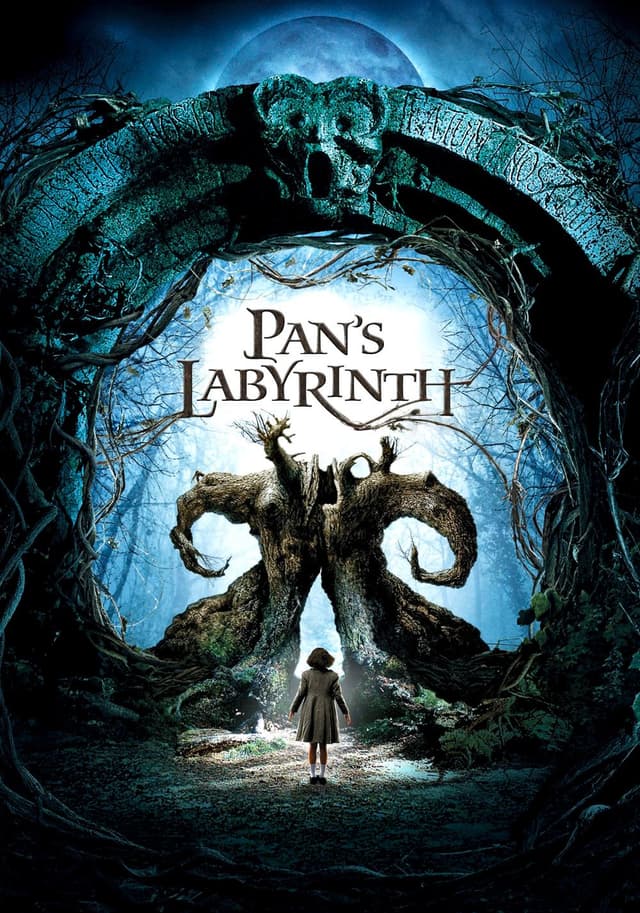
Pan's Labyrinth Budget
 FantasyDramaWar1h 58m
Updated
Synopsis
In 1944 Falangist Spain, a girl, fascinated with fairy-tales, is sent along with her pregnant mother to live with her new stepfather, a ruthless captain of the Spanish army. During the night, she meets a fairy who takes her to an old faun in the center of the labyrinth. He tells her she's a princess, but must prove her royalty by surviving three gruesome tasks. If she fails, she will never prove herself to be the true princess and will never see her real father, the king, again.
What Is the Budget of Pan's Labyrinth?
Pan's Labyrinth was produced on a budget of approximately $19 million, equivalent to 16 million euros at the 2005 exchange rate. At the time of production, it was the most expensive Spanish-language film Guillermo del Toro had directed, and one of the largest productions in Spanish film history financed primarily by Spanish companies.
The financing came together through a combination of Spanish production companies Estudios Picasso and Tequila Gang, with Sententia Entertainment as a co-producer. Picturehouse acquired US distribution rights, while Warner Bros. International handled the film in most other territories. Studio interest from Universal was explored and passed on. Alfonso Cuarón, who had just completed Harry Potter and the Prisoner of Azkaban, joined as a producer after del Toro shared his detailed production notebooks.
To make the budget work, del Toro deferred most of his own directing fee, betting on the film's eventual success. That gamble paid off: the film grossed $83 million worldwide on its $19 million production cost, and has since earned far more through home video, cable, streaming, and continuing theatrical re-releases.
Key Budget Allocation Categories
- Above-the-Line Talent: Sergi López, a veteran of French and Spanish cinema known for With a Friend Like Harry, anchored the film as the brutal Captain Vidal. Maribel Verdú had just come off Y Tu Mamá También (2001) and brought significant Spanish-language cachet to her role as Mercedes. Ivana Baquero was 11 years old at casting, selected from hundreds of young Spanish actresses after an extensive search. Del Toro's deferred fee helped limit above-the-line costs to a manageable share of the total budget.
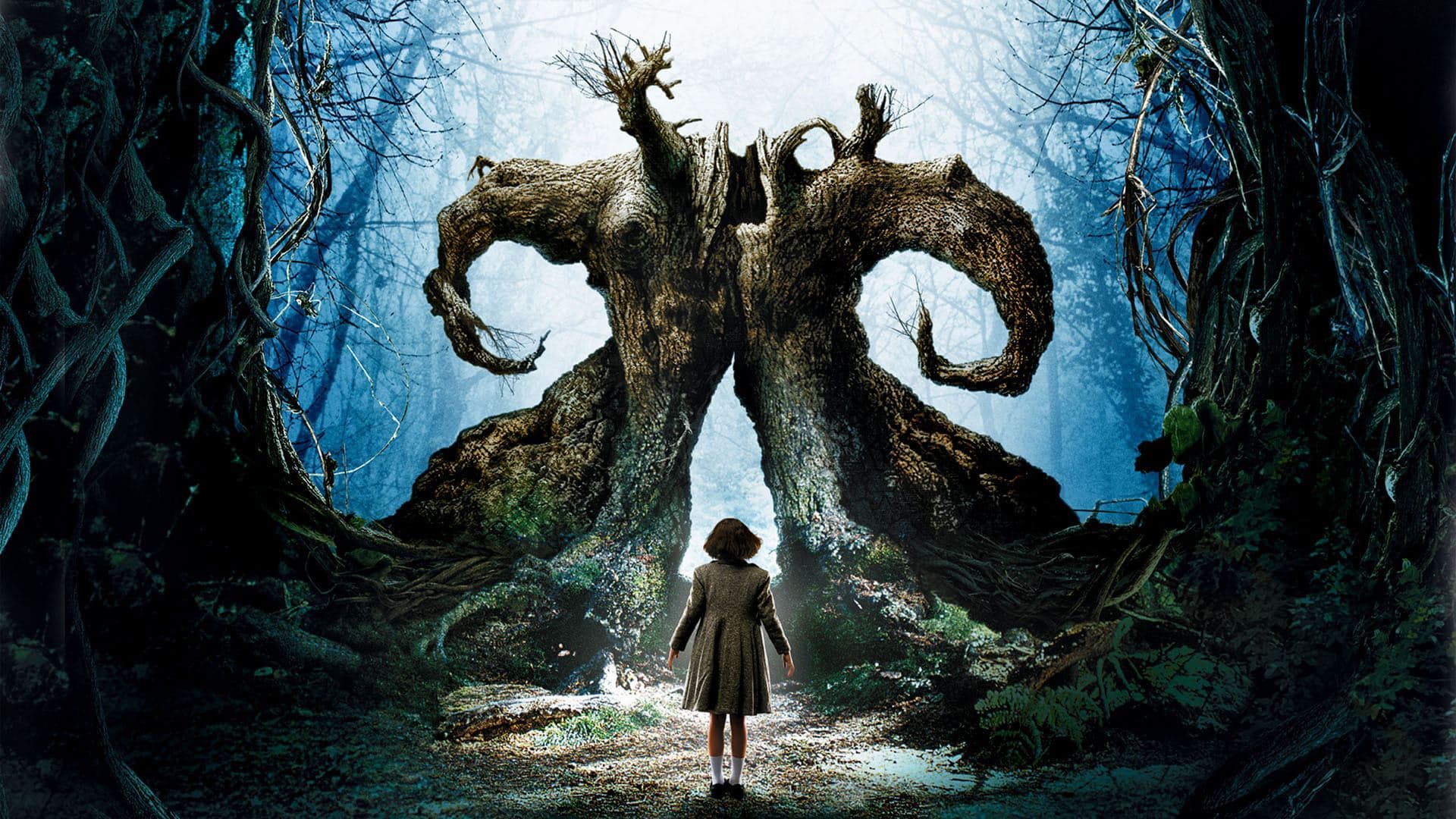
- Creature Design and Practical Effects: The Faun required approximately 5.5 hours of makeup and prosthetic application each day before filming could begin. The Pale Man, with its eyeless face and hands that hold its own eyeballs, required 6 hours. Both suits were built by del Toro's creature effects company DDT in collaboration with Spectral Motion, the US effects house that had worked with him on Hellboy. Del Toro insisted on practical effects over CGI for both creatures, believing physical costumes would give them weight and presence that digital effects could not replicate on the budget available.
- Cinematography and Visual Design: Cinematographer Guillermo Navarro, del Toro's longtime collaborator since Cronos (1993), devised a dual color palette that became central to the film's language. The real world was shot in desaturated greens and cold grays, while the fantasy world used warm amber and gold tones. This systematic color separation required careful lighting design on every setup. Navarro won the Academy Award for Best Cinematography for his work, validating the investment in the film's rigorous visual approach.
- Spain Location Work and Set Construction: Principal photography took place across multiple Spanish locations, including El Escorial near Madrid (serving as the rural mill exterior), dense forest locations in Guadalajara province (used for the labyrinth sequences), and additional locations in Navarra and Catalonia. The production also built a purpose-built 40-foot-tall labyrinth set for close-up and interior work. Production designer Eugenio Caballero, who won the Academy Award for Best Art Direction alongside set decorator Pilar Revuelta, oversaw the creation of both the grim wartime environments and the elaborate fantasy spaces.
- Score and Sound Design: Composer Javier Navarrete built the film's score around a recurring lullaby theme that appears in both the real and fantasy worlds, functioning as a musical bridge between the two realms. The score earned an Academy Award nomination for Best Original Score. Sound design similarly distinguished the two worlds through entirely different ambient palettes: the real world carried the sounds of war, machinery, and rain, while the fantasy world used ethereal tones and silence to signal Ofelia's psychological escape.
How Does Pan's Labyrinth's Budget Compare to Similar Films?
Pan's Labyrinth occupies an unusual position in film economics: a mid-budget Spanish-language fantasy that outperformed most Hollywood studio productions in critical reception and awards impact. Comparing it to del Toro's other work and to peer films in fantasy and foreign-language cinema reveals how efficiently the $19 million was deployed.
- The Devil's Backbone (2001): Budget $4.5M | Worldwide $7.3M. Del Toro's thematic predecessor, also set in Civil War Spain, was made for less than a quarter of Pan's Labyrinth's budget. The four-fold increase in cost for Pan's Labyrinth reflects the scale of the creature work and set construction that the later film required, while the thematic and narrative connection between the two films makes them natural companions in terms of ambition versus resources.
- Labyrinth (1986): Budget $25M | Domestic $12.7M. Jim Henson and George Lucas's fantasy creature production spent more in absolute terms on its elaborate Muppet and puppet creatures, yet earned less at the domestic box office than Pan's Labyrinth. Del Toro's film, made two decades later for $6 million less, achieved significantly greater critical recognition and awards success, demonstrating that the DDT and Spectral Motion creature work was both cost-efficient and artistically superior to what $25 million bought in 1986.
- Hellboy (2004): Budget $66M | Worldwide $99M. Del Toro's studio-financed superhero film cost more than three times Pan's Labyrinth and used far more digital effects alongside its practical work. Both films performed similarly in terms of worldwide gross relative to budget, but Pan's Labyrinth generated far more critical recognition and awards attention per dollar spent, illustrating the trade-off between studio-scale production and the focused creative vision possible on a tighter budget.
- Life Is Beautiful (1997): Budget $20M | Worldwide $229M. Roberto Benigni's Italian-language wartime film, which also used a child's perspective to approach historical horror, was made at nearly the same budget tier as Pan's Labyrinth and dramatically outperformed it at the box office on its way to winning the Academy Award for Best Foreign Language Film. The comparison underlines both the ceiling and the floor for foreign-language prestige films: Pan's Labyrinth earned solidly, but Life Is Beautiful's $229 million worldwide represented the exceptional rather than the expected outcome for films in that category.
Pan's Labyrinth Box Office Performance
Pan's Labyrinth opened in limited US release on December 29, 2006, on just 4 screens through Picturehouse, the specialty distributor at the time. The film expanded steadily through January 2007, reaching a peak of 1,143 screens on January 26, 2007, as Oscar nominations drove mainstream awareness. The Spanish premiere had occurred earlier in October 2006 through Warner Bros. International. The film earned $37,634,615 domestically and $45,623,611 internationally for a worldwide total of $83,258,226.
Against a $19 million production budget and an estimated $15 million in prints and advertising, the total investment was approximately $34 million. Theaters typically retain around 50% of gross ticket revenue, meaning the studio's share of the $83.3 million worldwide gross was roughly $41.6 million. The film cleared its total investment theatrically, and home video, cable, and streaming rights turned it into a significantly more profitable asset over the following years.
Box Office Breakdown
Pan's Labyrinth

Pan's Labyrinth earned roughly $4.38 for every $1 invested in production, though the actual net profitability at the theatrical stage was closer to breakeven once P&A and the theatrical split are factored in. The film's true financial legacy is in ancillary markets: it became one of the best-selling foreign-language DVDs of the decade, and its critical reputation has only grown since release, making it a perennial catalog title for streaming platforms.
Pan's Labyrinth Production History
Guillermo del Toro began developing Pan's Labyrinth in 2001, immediately after completing The Devil's Backbone. Both films shared a setting in post-Civil War Spain and a child protagonist navigating violence through fantasy, but del Toro envisioned Pan's Labyrinth as a more expansive and visually elaborate companion piece. He spent years filling over 500 pages of notebooks with creature designs, color theory, world-building notes, and story ideas before writing the screenplay. Producer Alfonso Cuarón came aboard after del Toro shared these notebooks, recognizing the ambition and coherence of the vision. Cuarón had just finished Harry Potter and the Prisoner of Azkaban and brought both creative credibility and producer relationships that helped secure the European financing.
Casting took considerable time, particularly the search for Ofelia. Del Toro and his casting directors auditioned hundreds of young Spanish actresses before finding Ivana Baquero, then 11 years old, whose combination of technical precision and natural expressiveness matched exactly what the role required. Sergi López and Maribel Verdú were cast for their established screen presences in Spanish and French-language cinema, while Doug Jones was brought in from the US to play both creature roles, continuing his collaboration with del Toro that had begun on Hellboy.
Principal photography began in the spring of 2005 and took place across Spain over approximately three months. The production used El Escorial near Madrid for the mill exteriors, dense forests in Guadalajara province for the labyrinth sequences, and purpose-built sets for the Faun's underground lair. Del Toro directed six days a week in Spain and then flew back to Los Angeles on weekends to supervise pre-production work on Hellboy II: The Golden Army, which he had already committed to direct. The simultaneous obligations strained his schedule but did not visibly affect the on-set work.
Post-production was completed in time for the film to premiere at the Cannes Film Festival in May 2006, where it screened out of competition and received a 22-minute standing ovation. The Spanish theatrical release followed in October 2006, with the US release arriving in December 2006 through Picturehouse. The film's six Academy Award nominations, announced in January 2007, drove its US box office expansion beyond what a purely specialty-circuit release would typically achieve.
Awards and Recognition
Pan's Labyrinth received six Academy Award nominations at the 79th Academy Awards ceremony in 2007, winning three. Guillermo Navarro won Best Cinematography, Eugenio Caballero and Pilar Revuelta won Best Art Direction, and David Martí and Montse Ribé won Best Makeup. The film lost Best Foreign Language Film to the German film The Lives of Others (Das Leben der Anderen), a decision widely considered one of the most contested in that category's recent history. Javier Navarrete's score was nominated for Best Original Score, and del Toro's screenplay was nominated for Best Original Screenplay.
At the BAFTA Awards, the film won two prizes: Best Film Not in the English Language and Best Costume Design. In Spain, it was a dominant force at the 21st Goya Awards, winning 7 prizes including Best Film, Best Director (del Toro), Best Original Screenplay, Best Photography, Best New Actress (Ivana Baquero), Best Supporting Actress (Maribel Verdú), and Best Production Design. The Cannes Film Festival screening in May 2006, where the film played out of competition, produced a 22-minute standing ovation that generated significant international press coverage months ahead of its theatrical release.
Critical Reception
Pan's Labyrinth holds a 95% approval rating on Rotten Tomatoes based on over 230 reviews, with an average rating of 8.7/10. Roger Ebert awarded it 4 stars and included it in his Great Movies series, writing that del Toro had created a film of "breathtaking imagery" while also delivering a story with genuine emotional weight. It appeared on numerous best films of 2006 lists, with many critics placing it at or near the top of the year.
Time magazine named it one of the 100 greatest films ever made, and Empire ranked it among the best films of the 2000s. Sight and Sound, the British Film Institute's publication that conducts the most respected poll in film criticism, included it in its 2012 and 2022 greatest films lists. The American Film Institute and the Directors Guild of America both cited it in retrospective recognition of del Toro's career.
Critical discussion of the film has often centered on the ambiguity of Ofelia's fantasy: whether the magical world she inhabits is objectively real within the story's reality, or a psychological refuge constructed by a traumatized child. Del Toro has said the fantasy is real, and has embedded specific visual evidence in the film to support that reading, but critics and scholars have continued to debate the question, which has made Pan's Labyrinth a recurring subject in film studies courses and critical literature on fairy tale, fascism, and narrative ambiguity.
Frequently Asked Questions
How much did it cost to make Pan's Labyrinth (2006)?
The production budget was $19,000,000, covering principal photography, visual effects, cast and crew salaries, locations, sets, post-production, and music. Marketing and distribution (P&A) costs are estimated at an additional $9,500,000 - $15,200,000, bringing the total studio investment to approximately $28,500,000 - $34,200,000.
How much did Pan's Labyrinth (2006) earn at the box office?
Pan's Labyrinth grossed $37,646,380 domestic, $45,611,846 international, totaling $83,258,226 worldwide.
Was Pan's Labyrinth (2006) profitable?
Yes. Against a production budget of $19,000,000 and estimated total costs of ~$47,500,000, the film earned $83,258,226 theatrically - a 338% ROI on production costs alone.
What were the biggest costs in producing Pan's Labyrinth?
The primary cost drivers were above-the-line talent (Ivana Baquero, Sergi López, Maribel Verdú); VFX creature work, elaborate costume and prosthetic design, and orchestral scoring; international production across Mexico, Spain, United States of America.
How does Pan's Labyrinth's budget compare to similar fantasy films?
At $19,000,000, Pan's Labyrinth is classified as a low-budget production. The median budget for wide-release fantasy films in the 2000s ranges from $30 - 80M for mid-budget to $150M+ for tentpoles. Comparable budgets: A Cinderella Story (2004, $19,000,000); A Very Harold & Kumar Christmas (2011, $19,000,000); Action Point (2018, $19,000,000).
Did Pan's Labyrinth (2006) go over budget?
There are no widely reported accounts of significant budget overruns for this production. However, studios rarely disclose precise budget overrun figures publicly. The reported production budget reflects the final estimated cost.
What was the return on investment (ROI) for Pan's Labyrinth?
The theatrical ROI was 338.2%, calculated as ($83,258,226 − $19,000,000) ÷ $19,000,000 × 100. This measures gross revenue against production budget only - it does not account for P&A or exhibitor shares.
What awards did Pan's Labyrinth (2006) win?
Won 3 Oscars. 109 wins & 115 nominations total.
Who directed Pan's Labyrinth and who were the key crew members?
Directed by Guillermo del Toro, written by Guillermo del Toro, shot by Guillermo Navarro, with music by Javier Navarrete, edited by Bernat Vilaplana.
Where was Pan's Labyrinth filmed?
Pan's Labyrinth was filmed in Mexico, Spain, United States of America.
Filmmakers
Pan's Labyrinth

Build budgets like this one in Saturation
Start from an industry-standard feature film template, import the schedule and rates you already have, and let the cost report keep itself current as you spend. Real-time collaboration, no spreadsheets.