Nancy Drew Budget
Updated
Synopsis
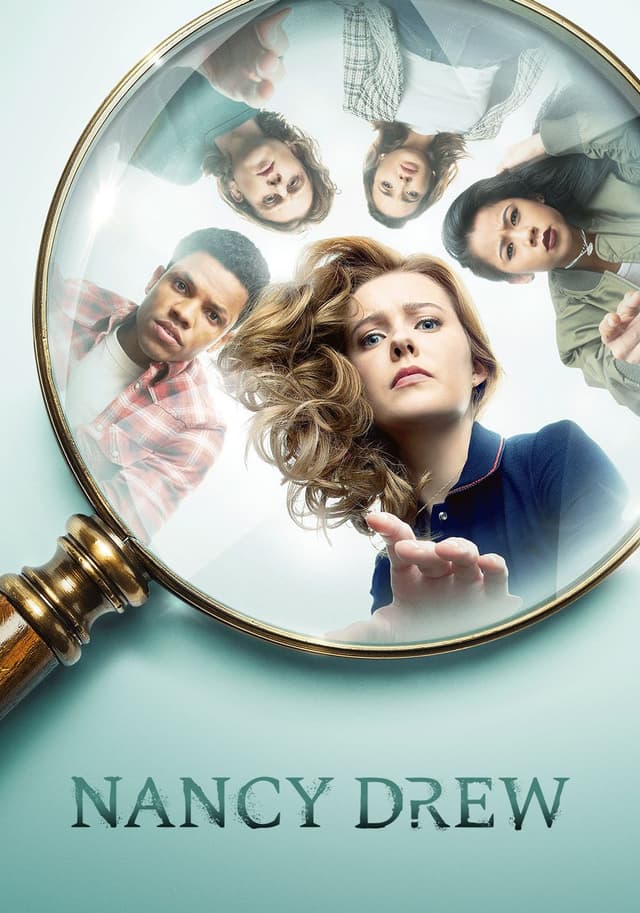
When her widowed father relocates them to Los Angeles for a business assignment, teenaged amateur detective Nancy Drew moves into the rented Dehlia Draycott estate and uncovers an unsolved Hollywood mystery surrounding the late actress who once lived there. Determined to crack the case despite her father's ban on sleuthing, Nancy navigates contemporary high school and a stalker who wants the truth buried.
What Is the Budget of Nancy Drew (2007)?
Nancy Drew, the Andrew Fleming-directed live-action adaptation of the Stratemeyer Syndicate mystery franchise, was produced on a reported budget of $20,000,000. Warner Bros. Pictures financed and distributed the film as a family-targeted summer release, with John Davis (Predator, I, Robot) producing through Davis Entertainment.
The budget reflected a conservative tween-girl programming play. Comparable studio productions in the same demographic, such as Aquamarine (2006) at $12,000,000 and Bridge to Terabithia (2007) at $19,000,000, ran in roughly the same range. Warner Bros. positioned Nancy Drew as a counter-program to the summer's tentpole male-skewing releases, releasing it on June 15, 2007 against the second weekend of Fantastic Four: Rise of the Silver Surfer.
Key Budget Allocation Categories
Nancy Drew's reported $20,000,000 budget was distributed across several core production areas:
- Above-the-Line Cast: Emma Roberts, then sixteen and known for the Nickelodeon series Unfabulous, headlined as the title sleuth. Her supporting ensemble of Josh Flitter, Max Thieriot, Tate Donovan, and Rachael Leigh Cook commanded mid-range studio rates appropriate to a family-targeted summer release.
- Los Angeles Location Shoot: Principal photography took place primarily in Los Angeles and Pasadena, with the Greystone Mansion in Beverly Hills standing in for the Dehlia Draycott estate that anchors the central mystery. The River Heights small-town scenes were filmed in Santa Monica and on Warner Bros. backlot.
- Production Design: Tony Fanning (Almost Famous, Minority Report) designed the deliberate visual contrast between Nancy's wholesome River Heights and the noir Los Angeles she investigates. The 1940s-styled wardrobe and props in modern Los Angeles drove a higher-than-typical art-department spend for the budget tier.
- Costume Design: Jeffrey Kurland (Ocean's Eleven) dressed Emma Roberts in deliberately anachronistic outfits, blending mid-century Americana with contemporary California. The costume choice became a defining visual element of the film and required custom tailoring across multiple wardrobe changes.
- Score and Music: Ralph Sall produced the soundtrack, which leaned on contemporary pop placements from artists including Joanna, Skye Sweetnam, and Aly & AJ to position the film for the tween-girl demographic. Composer James L. Venable wrote the underscore.
- Marketing Tie-Ins: Warner Bros. invested heavily in cross-promotion with Simon & Schuster, the contemporary owner of the Nancy Drew book rights, releasing a film tie-in novelization and re-cover edition of the original Carolyn Keene mysteries. Promotional partners included Macy's and HarperCollins.
How Does Nancy Drew's Budget Compare to Similar Films?
At $20,000,000, Nancy Drew sat in the mid-range of mid-2000s tween-girl studio releases:
- Bridge to Terabithia (2007): Budget $19,000,000 | Worldwide $137,610,983. Disney's Katherine Paterson adaptation cost roughly the same as Nancy Drew and grossed more than four times as much, demonstrating the commercial ceiling for the family-fantasy demographic when paired with stronger source-material recognition.
- Freedom Writers (2007): Budget $21,000,000 | Worldwide $43,924,627. The Hilary Swank inspirational teaching drama cost roughly the same as Nancy Drew and earned almost forty percent more worldwide, illustrating how an adult-skewing companion film outperformed despite a narrower demographic target.
- Casper (1995): Budget $55,000,000 | Worldwide $287,928,194. The Christina Ricci family ghost feature cost nearly three times Nancy Drew but illustrates how a family-targeted release with broader four-quadrant appeal could deliver outsized returns relative to the tween-girl-only positioning of Nancy Drew.
- Aquamarine (2006): Budget $12,000,000 | Worldwide $19,121,418. The Fox tween-mermaid release cost roughly half of Nancy Drew and earned only about a third of its theatrical gross, a comparable demographic-narrow result that justified Warner Bros. expectations for Nancy Drew's ceiling.
Nancy Drew Box Office Performance
Nancy Drew opened on June 15, 2007 in 2,612 United States theaters, finishing seventh on its opening weekend with $7,128,000. The film fell quickly in subsequent weekends against stronger summer competition and closed its domestic run with $25,762,099. International performance was modest at approximately $4,500,000, for a worldwide total of $30,300,000.
Against a reported production budget of $20,000,000, the film required roughly $40,000,000 in worldwide gross to break even after marketing. Here is the financial breakdown:
Box Office Breakdown
Nancy Drew

Nancy Drew returned approximately $0.65 in worldwide theatrical revenue for every $1 invested when measured against total estimated production and marketing spend, placing it among the softer summer 2007 family releases. The domestic share of the gross was $25.8 million against an international share of just $4.5 million, an 85/15 split heavily weighted toward North America and a clear signal that the property did not translate beyond the United States.
The performance ended Warner Bros. plans for a Nancy Drew sequel that had been informally discussed during production. The Hardy Boys/Nancy Drew shared-universe pitch that Davis Entertainment had floated also went dormant. Warner Bros. ultimately licensed the property to CBS Films and later The CW, where a Nancy Drew television series began in 2019.
Nancy Drew Production History
Development on a Nancy Drew live-action revival began at Warner Bros. in 2005, with John Davis attaching as producer and Tiffany Paulsen delivering the first draft screenplay. The Stratemeyer Syndicate, which had managed the Nancy Drew literary franchise since the 1930 launch, was acquired by Simon & Schuster in 1984, and the studio negotiated film rights through Simon & Schuster's film division.
Andrew Fleming (The Craft, Hamlet 2) was attached to direct in 2006 on the strength of his ability to balance teen-skewing material with broader audience appeal. The screenplay was rewritten by Fleming and Tiffany Paulsen to relocate Nancy from her original Midwest setting to contemporary Los Angeles, framing her as a fish-out-of-water investigating a Hollywood mystery.
Principal photography took place from October to December 2006 in Los Angeles, with location work at Greystone Mansion, on the Warner Bros. backlot, and in Santa Monica and Pasadena. The production used California state tax credits to anchor the financing, with the in-state spend qualifying for the available production incentive.
Post-production ran through early 2007 to accommodate the June release window. The film premiered on June 9, 2007 at the El Capitan Theatre in Hollywood ahead of its wide opening on June 15.
Awards and Recognition
Nancy Drew received limited awards attention. Emma Roberts won the Hollywood Movie Award for Breakthrough Actress at the 2007 ceremony and was nominated for a Teen Choice Award for Choice Movie Actress: Comedy. The film itself was nominated for Choice Movie: Comedy at the same ceremony.
The recognition reflected the film's positioning as a youth-targeted vehicle rather than an awards-circuit play. Nancy Drew received no Academy Award, Golden Globe, or BAFTA nominations and was not recognized at the major critics' associations.
Critical Reception
Nancy Drew received mixed reviews. The film holds a 53% approval rating on Rotten Tomatoes based on 117 critic reviews, with a critical consensus that called it "a charming but slight throwback to old-fashioned mystery storytelling." On Metacritic, the film scored 56 out of 100, indicating mixed or average reviews. Audiences surveyed by CinemaScore gave the film a B+, a respectable mark for the family demographic.
Critics broadly praised Emma Roberts' performance and Andrew Fleming's tongue-in-cheek deployment of the Nancy Drew iconography but criticized the lightweight central mystery and the underdeveloped supporting cast. The New York Times' Stephen Holden wrote that the film "treats its heroine with affection but stops short of giving her a story worthy of the character," while Variety's Justin Chang called it "a pleasant, undemanding summer programmer."
Roger Ebert gave the film three stars and singled out Emma Roberts as "the best teenaged actress now working in mainstream studio film." The reception largely framed Nancy Drew as a missed opportunity rather than a failure, with multiple critics noting that the central character deserved a more ambitious vehicle.
Frequently Asked Questions
How much did it cost to make Nancy Drew (2007)?
The reported production budget was $20,000,000. Warner Bros. Pictures financed and distributed the film, with Jerry Weintraub producing through Jerry Weintraub Productions and Virtual Studios providing additional financing.
How much did Nancy Drew earn at the box office?
The film grossed $25,762,099 domestically in the United States and approximately $4,500,000 internationally, for a worldwide total of $30,300,000. It opened to $7,128,000 in 2,612 United States theaters on June 15, 2007.
Who plays Nancy Drew in the 2007 film?
Emma Roberts plays Nancy Drew. The film was Roberts' first major studio lead following her work on the Nickelodeon series Unfabulous. The supporting cast includes Josh Flitter as Corky Veinshtein, Max Thieriot as Ned Nickerson, Tate Donovan as Carson Drew, and Rachael Leigh Cook as Jane Brighton.
Who directed Nancy Drew (2007)?
Andrew Fleming directed the film, working from a screenplay he co-wrote with Tiffany Paulsen. Fleming had previously directed The Craft (1996) and Dick (1999) and would go on to direct Hamlet 2 (2008) the following year.
Was Nancy Drew a box office success?
No. Against a $20,000,000 production budget and an estimated $25,000,000 to $30,000,000 in marketing spend, the film returned approximately $0.65 in worldwide gross for every $1 invested, making it a modest theatrical disappointment that ended Warner Bros. plans for a sequel.
Where was Nancy Drew filmed?
Principal photography took place from October to December 2006 primarily in Los Angeles and Pasadena, with the Greystone Mansion in Beverly Hills standing in for the Dehlia Draycott estate that anchors the central mystery. The River Heights small-town scenes were filmed in Santa Monica and on the Warner Bros. backlot. The production used California state tax credits to anchor the financing.
How does Nancy Drew compare to other tween films of its era?
Nancy Drew cost $20M, similar to Bridge to Terabithia (2007, $19M budget, $137M worldwide) and Freedom Writers (2007, $21M budget, $44M worldwide), but earned less than both. Its closest commercial parallel is Aquamarine (2006, $12M budget, $19M worldwide), another demographic-narrow tween-girl release.
Was there a Nancy Drew sequel?
No theatrical sequel was produced. The disappointing 2007 box office ended Warner Bros. plans for a follow-up that had been informally discussed during production. The Nancy Drew property was later revived for The CW television network in 2019.
Did Nancy Drew win any awards?
Emma Roberts won the Hollywood Movie Award for Breakthrough Actress and was nominated for a Teen Choice Award. The film itself was nominated for Choice Movie: Comedy at the Teen Choice Awards. It received no Academy Award, Golden Globe, or BAFTA nominations.
What did critics think of Nancy Drew (2007)?
The film received mixed reviews, with a 53% approval rating on Rotten Tomatoes based on 117 critic reviews and a 56 out of 100 score on Metacritic. Critics praised Emma Roberts' performance but criticized the lightweight central mystery. Roger Ebert gave it three stars and singled out Roberts as the best teenaged actress in mainstream studio film at the time.
Filmmakers
Nancy Drew

Official Trailer
Build budgets like this one in Saturation
Start from an industry-standard feature film template, import the schedule and rates you already have, and let the cost report keep itself current as you spend. Real-time collaboration, no spreadsheets.