Freedom Writers Budget
 CrimeDrama2h 3m
Updated
Synopsis
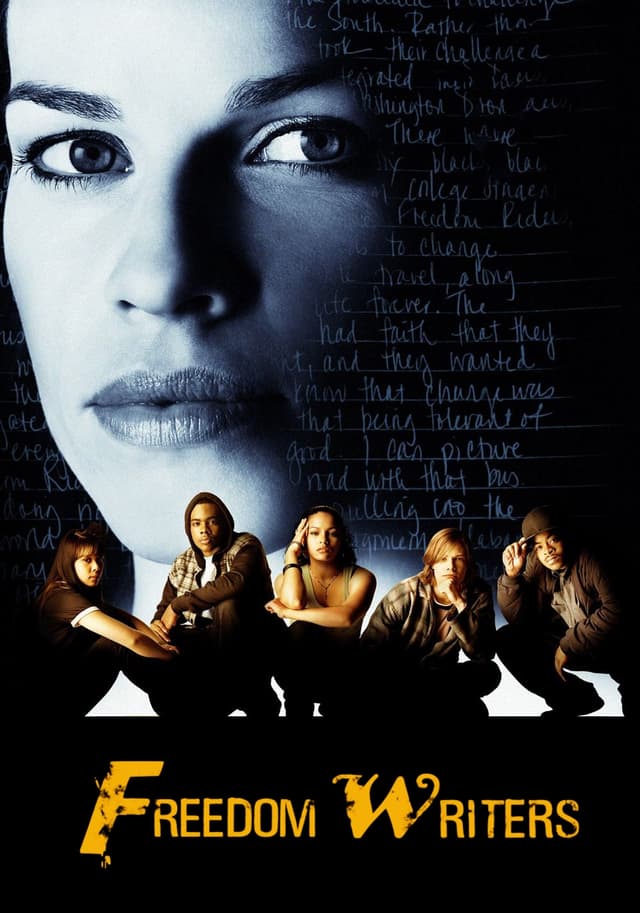
"Freedom Writers" (2007) tells the inspiring true story of Erin Gruwell, a passionate and determined teacher who takes on the challenge of educating a group of at-risk students at Wilson High School in Long Beach, California. Faced with a diverse classroom filled with racial tensions and personal struggles, Gruwell employs innovative teaching methods to connect with her students. She introduces them to the power of writing, encouraging them to share their life experiences and perspectives through journals. As the students begin to open up, they form a bond that transcends their differences, ultimately leading them to confront their pasts and envision a brighter future. The film highlights themes of resilience, empathy, and the transformative power of education, showcasing how one teacher can make a profound impact on the lives of her students.
What Is the Budget of Freedom Writers (2007)?
Freedom Writers was produced on a budget of $21 million by Paramount Pictures, MTV Films, Jersey Films, and Double Feature Films. For a drama built around classroom scenes and character work rather than action or special effects, $21 million was a reasonable allocation, though it placed the film in a mid-budget tier where strong critical support and audience word-of-mouth were essential for profitability.
The film opened on January 5, 2007, and earned $36,605,602 domestically and $6,489,573 internationally for a worldwide total of approximately $43.1 million. That figure fell short of breaking even on production budget alone, a result that reflected the challenges of launching a serious drama about urban education in the competitive January marketplace.
Despite modest box office returns, the film performed well on home video and cable, and its cultural legacy grew substantially in the years that followed. The Freedom Writers Foundation, launched in part by the film's visibility, has since trained thousands of teachers using the methodology Erin Gruwell developed at Woodrow Wilson High School in Long Beach, California.
Key Budget Allocation Categories
- Above-the-Line Talent: Hilary Swank, coming off back-to-back Academy Awards for Boys Don't Cry (1999) and Million Dollar Baby (2004), was the film's marquee name and its primary box office draw. Her fee as a two-time Oscar winner was likely the single largest line item in the $21 million budget, estimated at $5 to $7 million. Patrick Dempsey, Imelda Staunton, and Scott Glenn filled supporting roles, while musician Mario made his acting debut in a significant student role.
- Long Beach Location Production: Rather than building sets, the production shot on location in Long Beach, California, the actual community where Erin Gruwell taught at Woodrow Wilson Classical High School following the 1992 Los Angeles riots. Shooting in real neighborhoods, classrooms, and community spaces added authenticity but required extensive coordination with local authorities and schools. The logistical demands of working in an active urban environment added cost that a studio production would have offset through backlot efficiency.
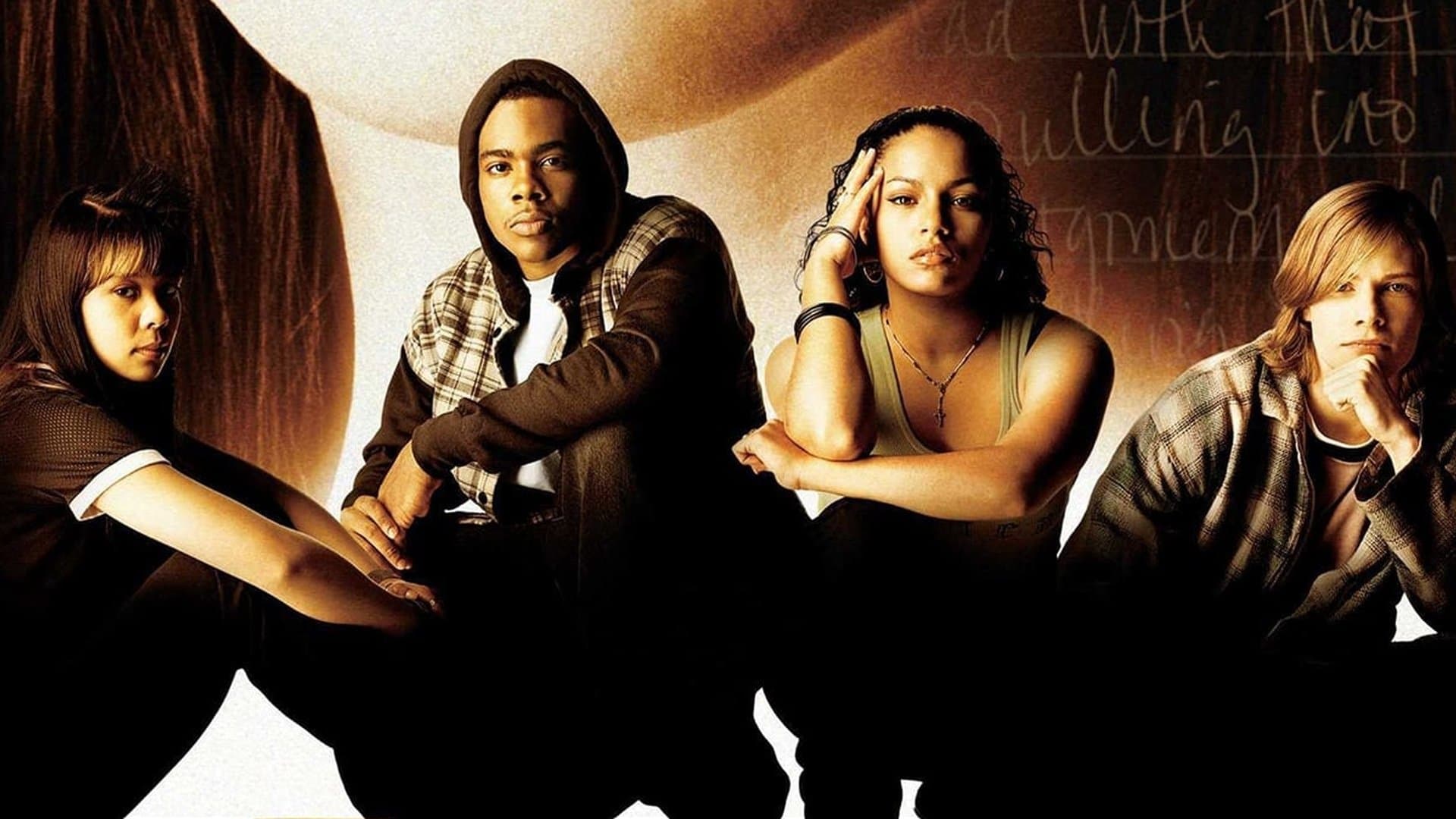
- Ensemble Student Cast: One of the film's most significant production challenges was casting and working with a large ensemble of young, largely inexperienced actors playing Gruwell's students. Director Richard LaGravenese and casting director Heidi Levitt assembled a diverse group that included Kristin Herrera, Gabriel Chavarria, and Hunter Parrish. Training and rehearsing a sizeable ensemble of student actors required additional production time and resources beyond what a smaller cast would have demanded.
- Music and Score: The film employed two composers working in different registers: Mark Isham, a veteran film composer, handled the dramatic orchestral score, while will.i.am of the Black Eyed Peas contributed hip-hop and R&B music reflective of the Long Beach student community depicted in the film. Licensing costs for will.i.am's contributions and any additional clearances for music used to represent the students' cultural environment added to the post-production budget.
- Development and Rights: The film was adapted from The Freedom Writers Diary (1999), the collaborative book written by Erin Gruwell and her students documenting their experiences in Room 203. Richard LaGravenese both wrote the screenplay and directed the film. The project originated partly from a Primetime Live documentary produced by journalist Tracey Durning, who also served as co-executive producer on the film. Acquiring rights to the book and aligning the various producing entities -- Jersey Films (Danny DeVito, Michael Shamberg, Stacey Sher), MTV Films, and Double Feature Films -- represented a meaningful portion of the budget before a camera rolled.
How Does Freedom Writers' Budget Compare to Similar Films?
Freedom Writers belongs to a durable genre of inspirational teacher dramas, films where a dedicated educator transforms the lives of at-risk students against institutional resistance. The genre has a strong box office track record relative to its typical production costs, though the films vary widely in their level of commercial success.
- Dangerous Minds (1995): Budget $30M | Worldwide $179.3M -- the closest predecessor, starring Michelle Pfeiffer as a Marine-turned-teacher in a Compton high school, grossed more than four times its budget and launched the genre's commercial peak. Freedom Writers aimed for similar territory but attracted a narrower audience.
- Stand and Deliver (1988): Budget $1.4M | Worldwide $14.4M -- Edward James Olmos as Jaime Escalante teaching calculus at Garfield High School in East Los Angeles demonstrated the genre could work at minimal cost. The film grossed more than ten times its budget on a fraction of Freedom Writers' investment.
- The Ron Clark Story (2006): Budget undisclosed (TV movie) | Aired TNT -- released as a cable television film one year before Freedom Writers, this Matthew Perry vehicle illustrated that the inspirational-teacher format could draw substantial viewership outside the theatrical marketplace.
- Half Nelson (2006): Budget $700K | Worldwide $2.6M -- released the same year as production on Freedom Writers was underway, Ryan Gosling's critically acclaimed portrayal of a drug-addicted inner-city teacher took an indie approach to similar subject matter at a fraction of the cost, demonstrating the range of viable budgets for the genre.
Freedom Writers Box Office Performance
Freedom Writers opened on January 5, 2007, earning $9,405,582 in its opening weekend, placing fourth for the frame. The domestic run totaled $36,605,602, with international markets contributing $6,489,573 for a worldwide gross of approximately $43,095,175. Paramount Pictures distributed the film nationwide.
The film's total investment, combining the $21 million production budget with an estimated P&A spend of $20 to $25 million for a platform-to-wide release in January, came to approximately $41 to $46 million. With theaters retaining roughly 50% of gross revenue, the studio's share from the $43.1 million worldwide total was approximately $21.5 million. Against all-in costs, the film did not recoup its investment through theatrical release alone. The film's fortunes improved meaningfully through home video, cable broadcast, and educational licensing, where a film about a teacher who uses books and journals to reach students found a natural and loyal secondary audience.
Box Office Breakdown
Freedom Writers

Measured on production budget alone, the film returned approximately $2.05 for every $1 invested in production -- a figure that understates total costs once P&A is included. Theatrical release generated enough revenue to cover approximately half of the all-in investment, with secondary markets responsible for the rest. For Paramount, the film was a modest commercial disappointment relative to the cost of a Hilary Swank vehicle, but its long-tail performance through educational channels and streaming has kept it commercially relevant well past its theatrical window.
Freedom Writers Production History
The origin of Freedom Writers traces back not to a studio development deal but to a news story. Journalist Tracey Durning produced a segment about Erin Gruwell and her Room 203 students at Woodrow Wilson Classical High School in Long Beach for ABC News' Primetime Live. The segment drew national attention to Gruwell's approach, which used diary writing, The Diary of a Young Girl by Anne Frank, and Zlata's Diary as tools to help students from rival gang communities recognize their shared humanity in the aftermath of the 1992 Los Angeles riots.
The 1999 publication of The Freedom Writers Diary, co-written by Gruwell and 150 of her students, brought further visibility to the story and attracted film interest. Richard LaGravenese, the screenwriter behind The Fisher King, The Bridges of Madison County, and The Ref, was attached to both write and direct the adaptation. Producers Danny DeVito, Michael Shamberg, and Stacey Sher brought the project to Jersey Films, their Paramount-affiliated production company. MTV Films and Double Feature Films co-produced, with Durning serving as co-executive producer.
Production took place in Long Beach, California, with the filmmakers committed to shooting in the actual community where the events occurred. Casting director Heidi Levitt assembled the student ensemble, which included musician Mario in his first significant acting role alongside relatively unknown young actors including Kristin Herrera, Gabriel Chavarria, Hunter Parrish, and April Lee Hernandez. Hilary Swank, fresh off her second Oscar win for Million Dollar Baby (2004), was the clear choice to play Gruwell throughout the development process.
The film premiered on January 4, 2007, at the Westwood Village Theatre in Los Angeles, with wide release the following day. Tragically, the production was touched by loss before release: Armand Jones, a young actor who appeared in the film, was shot and killed in Anaheim at the age of 18. The film was dedicated to his memory.
Awards and Recognition
Freedom Writers did not receive major awards nominations from bodies such as the Academy Awards or Screen Actors Guild, a result that reflected the mixed critical reception rather than a lack of craft in the performances. The film was largely seen as an earnest but formulaic entry in the inspirational-teacher genre, a perception that worked against its awards campaign despite Hilary Swank's engaged central performance.
The most meaningful recognition came from audiences rather than award bodies. CinemaScore polling of opening-weekend audiences gave the film an 'A' grade on its A+ to F scale, a strong signal that the film connected emotionally with viewers who came to it. The Popcornmeter audience score on Rotten Tomatoes reached 87%, substantially above the 69% critical approval rating, illustrating the gap between professional critical response and general audience reception.
The film's most durable legacy is institutional rather than cinematic. The Freedom Writers Foundation, founded by Erin Gruwell partly in response to the film's visibility, has trained more than 1,000 educators using the Writing for Life methodology. That ongoing real-world impact has given the film a kind of recognition that traditional awards cannot capture, as its influence continues to be felt in classrooms across the United States.
Critical Reception
Freedom Writers received a 69% approval rating on Rotten Tomatoes from 124 critics, with an average rating of 6.3 out of 10. Metacritic calculated a score of 64 out of 100 from 29 reviews, indicating generally favorable notices. The site's critical consensus describes the film as 'a frank, formulaic entry in the inspirational inner-city teacher genre, with an energetic Hilary Swank leading the appealing cast of unknowns.'
The critical divide centered on the tension between the film's strong performances and its adherence to genre conventions. Empire Magazine gave the film two out of five stars, concluding it offered 'nothing new' beyond familiar territory. The BBC awarded three out of five stars, praising 'inspiring moments and tension' while noting 'speedy montages of confusing gang action.' Cynthia Fuchs gave the film three out of five stars, noting 'the plot is predictable, the actors too old to play high school students' while acknowledging that the film 'argues for listening to teenagers. That in itself makes it a rare and close-to-wonderful thing.' The Post NZ gave it 3.5 out of 5, crediting it with injecting 'fresh ideas into a stale genre.'
The sharpest criticism targeted the film's framing of Gruwell's story as a narrative of white rescue in a community of color, with reviewers noting that promotional materials centered Swank's character over the students whose diaries formed the source material. Despite these reservations, the film maintains an 87% audience approval rating on Rotten Tomatoes, reflecting the significant emotional response it continues to generate among general viewers who respond to its core message about the power of education and shared storytelling.
Frequently Asked Questions
How much did it cost to make Freedom Writers (2007)?
The production budget was $21,000,000, covering principal photography, cast and crew salaries, locations, sets, post-production, and music. Marketing and distribution (P&A) costs are estimated at an additional $10,500,000 - $16,800,000, bringing the total studio investment to approximately $31,500,000 - $37,800,000.
How much did Freedom Writers (2007) earn at the box office?
Freedom Writers grossed $36,605,602 domestic, $6,489,573 international, totaling $43,095,175 worldwide.
Was Freedom Writers (2007) profitable?
The film did not break even theatrically, earning $43,095,175 against an estimated $52,500,000 needed. Ancillary revenue may have improved the picture.
What were the biggest costs in producing Freedom Writers?
The primary cost drivers were above-the-line talent (Hilary Swank, Patrick Dempsey, Scott Glenn); talent compensation, location cinematography, and tension-driven editorial; international production across Germany, United States of America.
How does Freedom Writers's budget compare to similar crime films?
At $21,000,000, Freedom Writers is classified as a low-budget production. The median budget for wide-release crime films in the 2000s ranges from $30 - 80M for mid-budget to $150M+ for tentpoles. Comparable budgets: Blockers (2018, $21,000,000); Death at a Funeral (2010, $21,000,000); Everybody's Fine (2009, $21,000,000).
Did Freedom Writers (2007) go over budget?
There are no widely reported accounts of significant budget overruns for this production. However, studios rarely disclose precise budget overrun figures publicly. The reported production budget reflects the final estimated cost.
What was the return on investment (ROI) for Freedom Writers?
The theatrical ROI was 105.2%, calculated as ($43,095,175 − $21,000,000) ÷ $21,000,000 × 100. This measures gross revenue against production budget only - it does not account for P&A or exhibitor shares.
What awards did Freedom Writers (2007) win?
2 wins & 1 nomination total.
Who directed Freedom Writers and who were the key crew members?
Directed by Richard LaGravenese, written by Richard LaGravenese, shot by Jim Denault, with music by Mark Isham, will.i.am, edited by David Moritz.
Where was Freedom Writers filmed?
Freedom Writers was filmed in Germany, United States of America.
Filmmakers
Freedom Writers

Official Trailer
Build budgets like this one in Saturation
Start from an industry-standard feature film template, import the schedule and rates you already have, and let the cost report keep itself current as you spend. Real-time collaboration, no spreadsheets.