Multiplicity Budget
 ComedyFantasyScience FictionRomance1h 57m
Updated
Synopsis
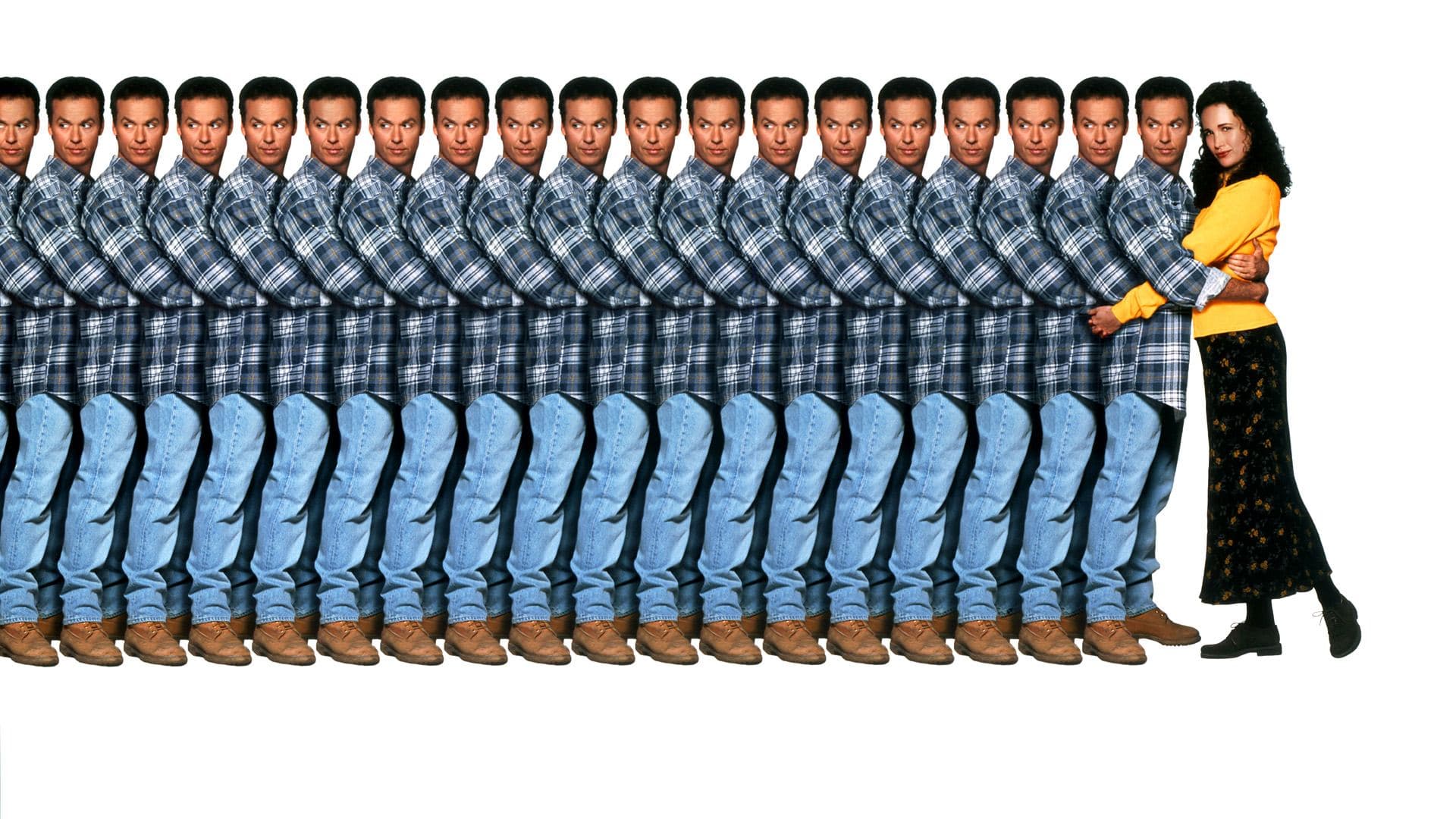
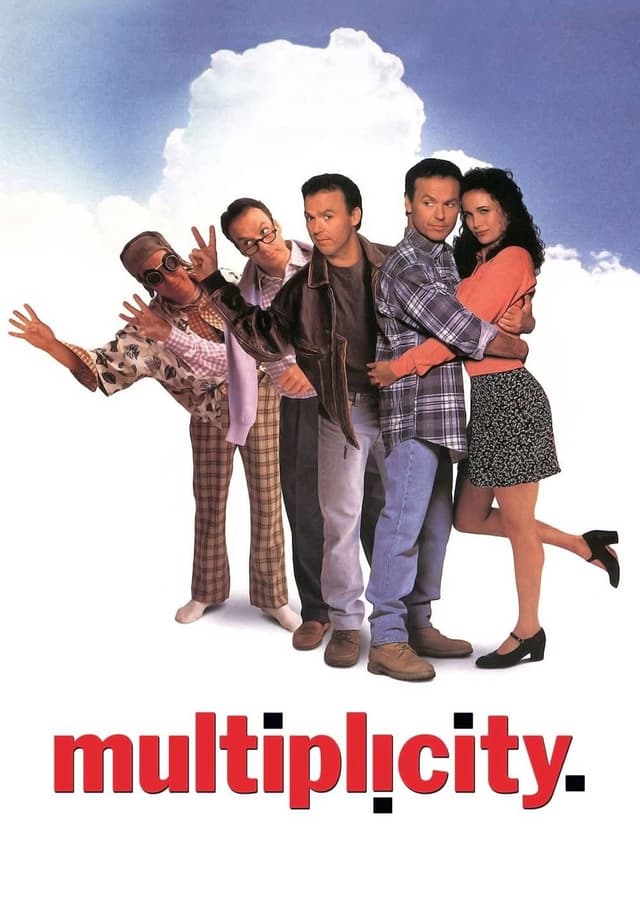
"Multiplicity" is a 1996 comedy film directed by Harold Ramis, featuring Michael Keaton in a dual role. The story revolves around Doug Kinney, a harried family man struggling to balance his demanding job and the responsibilities of fatherhood. Overwhelmed by the pressures of life, Doug discovers a scientific experiment that allows him to clone himself. Initially, this seems like the perfect solution to his problems, as each clone takes on specific tasks, allowing him to juggle his commitments more effectively.
However, as the clones begin to develop their own personalities and quirks, chaos ensues. Each version of Doug brings unique challenges, leading to humorous and unexpected situations. The film explores themes of identity, family dynamics, and the consequences of trying to escape one's responsibilities. Ultimately, Doug learns that while cloning may offer a temporary fix, embracing his true self and facing life's challenges head-on is the key to happiness.
What is the budget of Multiplicity?
"Multiplicity," a comedy released in 1996, was directed by Harold Ramis and stars Michael Keaton, Andie MacDowell. The production budget was $45,000,000, placing it in the mid-budget range for comedy productions of the 1990s.
Key Budget Allocation Categories
While specific budget breakdowns are not publicly available, typical cost drivers for a comedy production like this include:
- Talent Salaries & Producing Deals: Established comedic talent can command $15 to 20 million per film, with top-tier stars earning even more through producing credits and backend deals.
- Production & Location Filming: While comedies generally avoid the VFX costs of action films, location shooting in recognizable cities or exotic locales adds meaningful production expense.
- Marketing & P&A (Prints & Advertising): Comedies rely heavily on marketing to build opening-weekend momentum.
- Production: In January 1993, it was reported Columbia Pictures was in the process of acquiring Multiplicity, a script from husband and wife writing team Chris Miller and Mary Hale and based on a short story by Miller published in National Lampoon.
What were the major cost factors in Multiplicity?
Several factors contributed to the overall production costs of "Multiplicity."
- Talent Salaries: Talent Salaries & Producing Deals is one of the primary cost drivers in comedy productions of this scale.
- Production: Production & Location Filming is one of the primary cost drivers in comedy productions of this scale.
- Marketing: Marketing & P&A (Prints & Advertising) is one of the primary cost drivers in comedy productions of this scale.
How Does Multiplicity's Budget Compare to Similar Films?
At $45,000,000, Multiplicity sits in the mid-budget range. Here is how it compares to productions with a similar budget:
- 65 (2023): Budget $45,000,000, Worldwide Gross $60,730,568
- Across the Universe (2007): Budget $45,000,000, Worldwide Gross $29,625,761
- Aliens in the Attic (2009): Budget $45,000,000, Worldwide Gross $57,881,056
- Bangkok Dangerous (2008): Budget $45,000,000, Worldwide Gross $42,487,390
- Chicken Run (2000): Budget $45,000,000, Worldwide Gross $224,834,564
The median budget for wide-release comedy films in the era ranges from $30 to 80M for mid-budget to $150M+ for tentpoles.
Multiplicity Box Office Performance
"Multiplicity" earned $21,075,014 worldwide at the box office. Against a production budget of $45,000,000, the film faced challenges in theatrical release. Home video, streaming, and ancillary revenue may have contributed to its overall performance.
A film typically needs to earn approximately twice its production budget to cover marketing and distribution costs. For "Multiplicity," that break-even threshold was roughly $90,000,000. With worldwide earnings of $21,075,014, the film did not reach break-even in theatrical release.
Box Office Breakdown
Multiplicity

At -53.2%, "Multiplicity" did not recoup its production budget through theatrical release alone.
Awards and Recognition
N/A
Critical Reception
Multiplicity received mixed reviews from critics. On Rotten Tomatoes, it has an approval rating of 45% based on 47 reviews, with an average rating of 5.5/10. The site's critical consensus reads: "This high-concept experiment only proves that a comedy actually can have too much Michael Keaton." Audiences surveyed by CinemaScore gave the film a grade B on scale of A to F.
Frequently Asked Questions
How much did it cost to make Multiplicity (1996)?
Multiplicity was produced on a budget of $45,000,000. Columbia Pictures financed the high-concept cloning comedy, with director Harold Ramis and Trevor Albert producing through their banner. The cost was driven heavily by the visual effects required to put multiple Michael Keatons on screen together.
How much did Multiplicity earn at the box office?
The film grossed $21,102,635 domestically against limited international release for a worldwide total of approximately $21,100,000. It opened to $7,000,000 in the United States during the weekend of July 19, 1996, finishing fifth behind Independence Day, which dominated that summer.
Was Multiplicity a box office bomb?
Yes. Against a $45,000,000 production budget and an estimated $20,000,000 marketing spend, the film returned approximately $0.32 in worldwide gross for every $1 invested. It is among the most notable comedy bombs of 1996 and effectively ended Michael Keaton's run as a comedic leading man in the 1990s.
Who directed Multiplicity?
Harold Ramis directed Multiplicity from a screenplay by Chris Miller, Mary Hale, Lowell Ganz, and Babaloo Mandel, based on a short story by Chris Miller. Ramis was coming off Groundhog Day (1993) and Stuart Saves His Family (1995) and had hoped Multiplicity would extend his streak of high-concept comedies.
How were the multiple Michael Keatons created?
The visual effects team used motion control photography, body doubles, and digital compositing to put up to four Michael Keatons in the same frame. The work was supervised by Boss Film Studios, the effects house behind Ghostbusters II and Cliffhanger. The technique was groundbreaking for 1996 but added millions to the production cost.
What did critics think of Multiplicity?
The film received mixed reviews, holding a 47% approval rating on Rotten Tomatoes based on 38 critics and a 49 out of 100 score on Metacritic. Roger Ebert praised Michael Keaton's comedic discipline in playing four distinct versions of the same character but found the screenplay's middle act draggy.
Where was Multiplicity filmed?
Principal photography took place in Los Angeles County, with most exteriors shot in the suburban beach communities of Manhattan Beach and Hermosa Beach, California. The construction-site scenes were filmed at active commercial developments arranged through the Los Angeles Film Office.
Did Multiplicity get a sequel?
No. Columbia Pictures had no appetite for a follow-up after the disappointing box office, and Harold Ramis moved on to direct Analyze This (1999) and Bedazzled (2000). The 2005 animated television pilot Replicants, inspired by the film's premise, was never picked up to series.
Why did Multiplicity fail at the box office?
Industry analysts have pointed to release-date competition (Independence Day dominated July 1996), the high-concept premise being a hard sell to general audiences, and the marketing's inability to convey the comedic stakes of the cloning gimmick. Michael Keaton himself said in 2008 that the film was "ahead of its audience" without the high-concept comedy template that emerged in the 2000s.
Is Multiplicity available on streaming?
The film is available for digital rental and purchase through Amazon Prime Video, Apple TV, and Vudu, and rotates onto Sony Pictures Television-affiliated cable channels. It is not currently on any major SVOD service as a perpetual title.
Official Trailer
Build budgets like this one in Saturation
Start from an industry-standard feature film template, import the schedule and rates you already have, and let the cost report keep itself current as you spend. Real-time collaboration, no spreadsheets.