Mortal Kombat II Budget
 ActionFantasyAdventure116 minutes
Updated
Synopsis
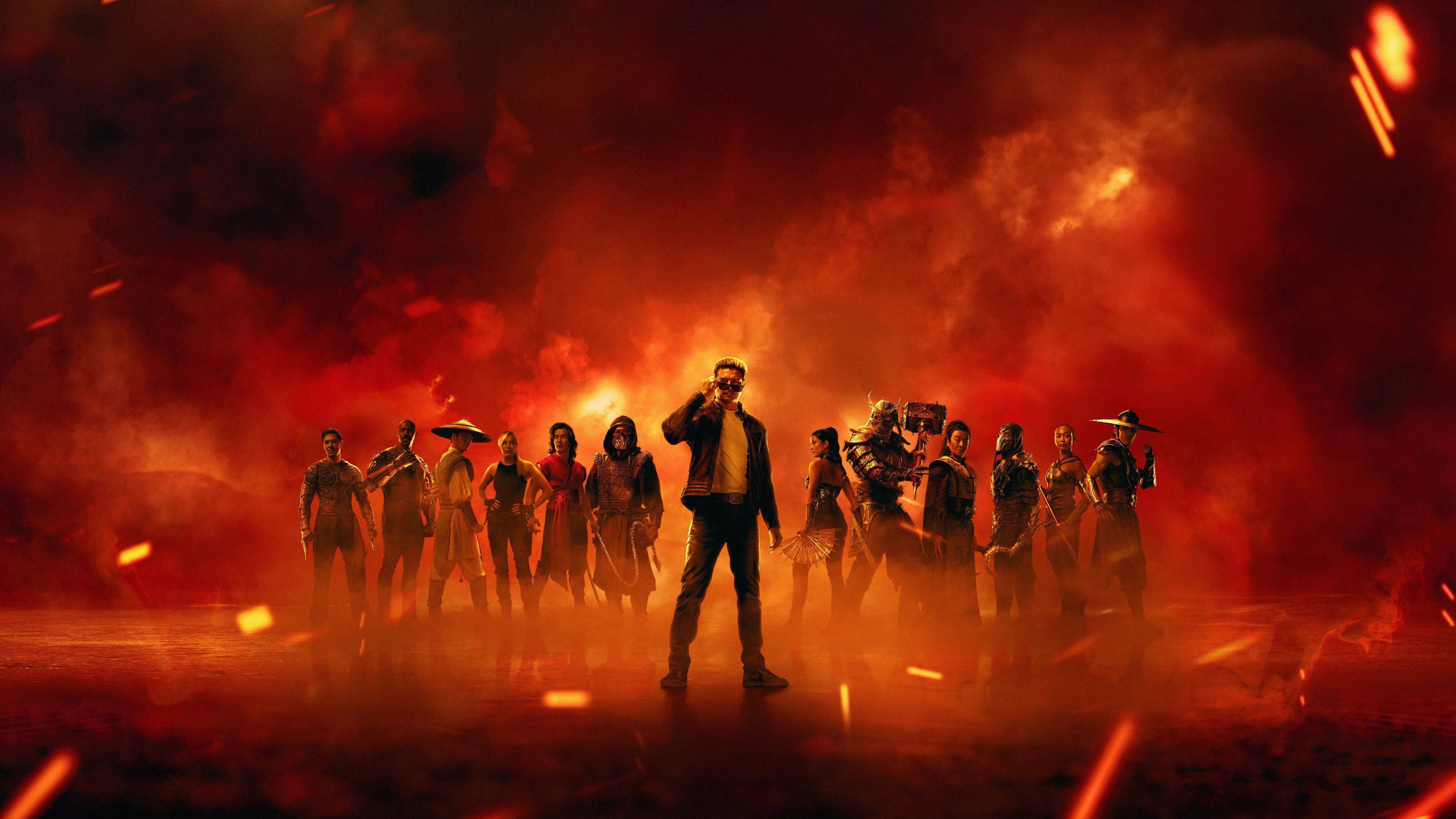
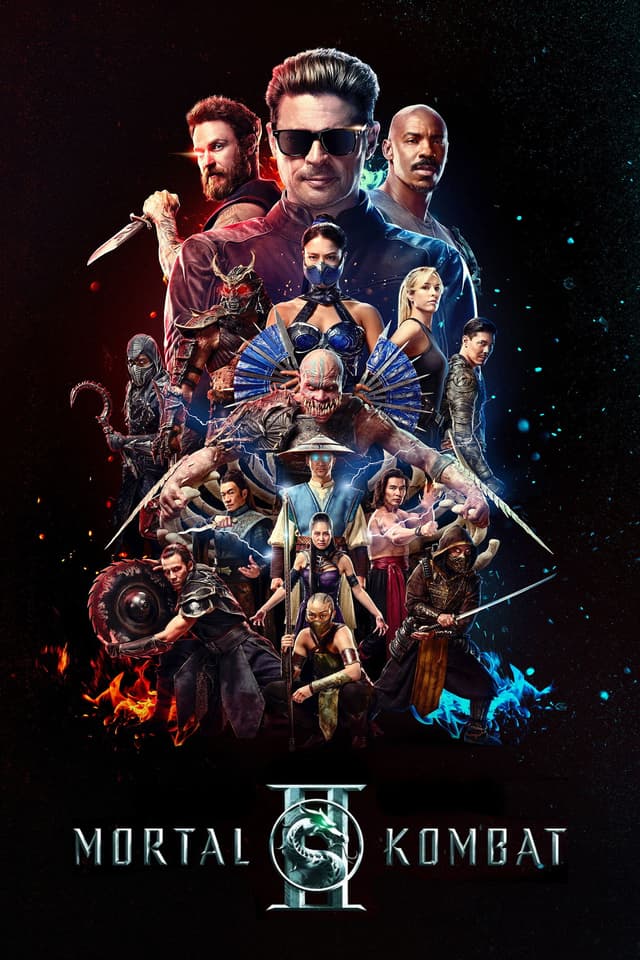
The fan favorite champions—now joined by Johnny Cage himself—are pitted against one another in the ultimate, no-holds barred, gory battle to defeat the dark rule of Shao Kahn that threatens the very existence of the Earthrealm and its defenders.
What Is the Budget of Mortal Kombat II?
Mortal Kombat II (2026) was produced on a reported budget of $80,000,000, representing a significant step up from the $55 million allocated to the 2021 reboot. Distributed by New Line Cinema and produced through James Wan's Atomic Monster banner alongside Broken Road Productions, the sequel benefits from the franchise infrastructure built by the first film. The $25 million increase reflects a deliberate push into larger set pieces, an expanded roster of game-accurate characters, and the kind of elaborate fatality sequences that fans of the games have demanded since the franchise's 1992 debut.
Director Simon McQuoid returned to helm the sequel, and the elevated budget gave his team the resources to realize more of the Mortal Kombat universe's iconic fighters, realms, and tournament drama. New Line and Warner Bros. Discovery greenlit the sequel on the strength of the first film's performance, and the studio invested accordingly in both visual effects and a marquee cast addition in Karl Urban.
Key Budget Allocation Categories
- Visual Effects and Fatalities — The signature "fatality" kill sequences and creature-based characters like Reptile demand frame-by-frame VFX work. The expanded roster of fighters from the game's source material, including Shao Kahn, Kitana, and Jade, required extensive digital doubles, creature design, and physics-based blood simulation work from multiple VFX vendors.
- Principal Cast Salaries — Karl Urban's addition as Johnny Cage represents the film's single biggest casting investment. Returning stars Jessica McNamee, Josh Lawson, Ludi Lin, and Max Huang alongside newcomers Adeline Rudolph, Tati Gabrielle, and Martyn Ford account for a competitive ensemble budget befitting a sequel of this scale.
- Production and Practical Effects — Filming at Village Roadshow Studios on Queensland's Gold Coast provided access to purpose-built stages for the film's elaborate tournament arenas and Outworld environments. Practical wire work, stunt choreography, and fighting rigs for the martial arts sequences formed a core production expense throughout the principal photography period.
- Creature and Costume Design — Martyn Ford's towering Shao Kahn required extensive prosthetics and armor construction. The film's range of fighters spans human warriors, sorcerers, and supernatural beings, each demanding distinct costume and makeup builds that combine practical fabrication with digital augmentation.
- Production Delays and SAG-AFTRA Strike — Filming began June 22, 2023, but was suspended in July 2023 when the SAG-AFTRA strike halted production across Hollywood. The cast-and-crew suspension added carrying costs, idle facility fees, and eventual restart expenses when production resumed in November 2023, with the shoot wrapping in late January 2024.
- Cinematography and Location Facilities — Cinematographer Stephen F. Windon, known for his work on the Fast and Furious franchise, brought a kinetic visual grammar to the film. The Queensland Gold Coast production hub provided stages large enough to construct Outworld sets at full scale, with location fees and facility costs built into the overall production budget.
How Does Mortal Kombat II's Budget Compare to Similar Films?
Video game adaptations have a complicated financial history, and Mortal Kombat II sits at the upper end of the genre's recent production range. Comparing it to key peers illustrates both how much the market has evolved and where the sequel stands in franchise economics.
- Mortal Kombat (2021) — Budget $55M | Worldwide Gross $83M. The reboot that greenlit this sequel turned a modest profit through a combination of theatrical and HBO Max simultaneous release. The sequel's $80M budget reflects studio confidence that the first film's fanbase can support higher production ambitions.
- Street Fighter (1994) — Budget $35M | Worldwide Gross $99M. The Jean-Claude Van Damme and Raul Julia game adaptation generated solid box office on a smaller budget, though it earned a reputation as campy entertainment rather than faithful adaptation. Mortal Kombat II aims for the more grounded tone the 2021 reboot established.
- Tekken (2010) — Budget $30M | Worldwide Gross $14M. The competing Namco franchise adaptation was a cautionary tale for video game films. Its low budget was not enough to save it from poor reception, and the $14M worldwide gross underscored how difficult it is to translate fighting games into compelling cinema without significant production investment.
- The Scorpion King (2002) — Budget $60M | Worldwide Gross $165M. The Dwayne Johnson-led spinoff from The Mummy Returns demonstrated that action fantasy films built on licensed or franchise IP can punch well above their budget. Its $165M worldwide return on a $60M outlay remains a benchmark for what a mid-tier action fantasy can achieve when star power and spectacle align.
Mortal Kombat II's $80M budget places it above most video game adaptations but well below the $150M-plus tier of superhero tentpoles. The sequel was positioned as a proven-IP action film rather than a full-scale blockbuster gamble, and New Line's investment reflects that calculus.
Mortal Kombat II Box Office Performance
Mortal Kombat II opened in the United States on May 8, 2026, following a premiere at the TCL Chinese Theater in Hollywood on April 27. The film earned $38,501,177 domestically over its opening weekend, finishing second behind Devil Wears Prada 2 at the domestic box office. It has since accumulated $77,767,462 domestically and $50,191,405 internationally for a worldwide total of $127,958,867, clearing the first film's $83,000,000 worldwide total and establishing the sequel as the highest-grossing entry in the franchise's film history.
Box Office Breakdown
Mortal Kombat II (2026)

At standard industry accounting, studios typically need a film to earn roughly 2.5 times its production budget in theatrical revenue to break even after marketing and distribution costs. Against a $140,000,000 total investment, Mortal Kombat II would need approximately $280,000,000 worldwide to reach profitability from theatrical alone. The current $127,958,867 worldwide gross represents approximately $0.46 for every $1 invested after exhibitor splits, leaving the sequel in the red from a pure theatrical standpoint with its run still ongoing.
Whether a third film moves forward will depend heavily on ancillary performance. Streaming revenue through Max, international video-on-demand, and home video sales will factor into Warner Bros. Discovery's full accounting. The franchise has genuine global recognition and a built-in gaming fanbase, and the $127,958,867 worldwide total represents meaningful improvement over the first film. If streaming numbers are strong, the case for Mortal Kombat III remains plausible, particularly given the 2021 film's success in a hybrid theatrical and streaming release model.
Mortal Kombat II Production History
The sequel was formally set in motion following the 2021 reboot's strong performance on both screens and HBO Max. New Line Cinema moved quickly to secure director Simon McQuoid and brought in writer Jeremy Slater, whose work on Moon Knight demonstrated a talent for balancing action spectacle with mythology-heavy source material. Slater's script expanded the roster of fighters and deepened the Outworld storyline that the first film had only begun to sketch.
The most consequential casting announcement came in May 2023 when Karl Urban joined the film as Johnny Cage, the brash Hollywood action star who is one of the original Mortal Kombat characters. Urban's profile as a proven genre lead, known from The Boys, Thor: Ragnarok, and the Judge Dredd film Dredd, immediately elevated the sequel's commercial profile. Tati Gabrielle was cast as Jade and Adeline Rudolph, known for Chilling Adventures of Sabrina, joined as Kitana. Martyn Ford, the 6'8" British bodybuilder and actor, was cast as the imposing emperor Shao Kahn. Returning cast members included Desmond Chiam, Ana Thu Nguyen, Damon Herriman, and Max Huang, who reprised his role as Kung Lao.
Principal photography began June 22, 2023, at Village Roadshow Studios on Queensland's Gold Coast in Australia. The production had been underway for only weeks when the SAG-AFTRA strike began in July 2023, forcing a suspension of filming. The strike lasted until November 2023, when a new contract agreement was reached between SAG-AFTRA and the major studios. Production resumed and the cast and crew returned to Queensland to complete the shoot, wrapping principal photography in late January 2024.
Cinematographer Stephen F. Windon, a regular collaborator on the Fast and Furious franchise, joined McQuoid to give the sequel its visual language. The Gold Coast production facilities allowed the team to construct large-scale arena and Outworld sets that could not have been achieved on location. Mortal Kombat co-creator Ed Boon, who has been with the franchise since its 1992 arcade debut, received a cameo in the film, a detail revealed in April 2026 ahead of the premiere. The film screened at the TCL Chinese Theater in Hollywood on April 27, 2026, before its wide US release on May 8, 2026.
Awards and Recognition
Video game adaptations occupy a complicated space in awards culture. Mortal Kombat II, as a franchise action sequel built around fighting game mythology and R-rated combat, was not positioned as an awards contender in traditional categories. The film received no major nominations from the Academy Awards, BAFTA, or the major critics circles.
The franchise's cultural footprint, however, is undeniable. The Mortal Kombat video game series launched in 1992 and became one of the most recognized properties in gaming history. Its role in the congressional hearings that led to the creation of the ESRB ratings system in 1994 gave the franchise a genuine cultural significance beyond entertainment. The 2021 reboot was noted at the time for reviving a dormant film franchise and proving that R-rated video game adaptations could find a modern audience.
Should the film receive recognition, it would most likely come through genre-specific awards, including the Saturn Awards from the Academy of Science Fiction, Fantasy, and Horror Films, where action fantasy sequels are regularly acknowledged. Karl Urban's performance as Johnny Cage was cited by multiple reviewers as a genuine standout, and any genre recognition would likely center on that performance and the film's stunt and action design work.
Critical Reception
Mortal Kombat II opened to mixed reviews from critics. On Rotten Tomatoes, the film holds a 64% approval rating from 185 reviews, with an average score of 5.7 out of 10. The Metacritic score is 46 out of 100 based on 35 critics, indicating generally mixed or average reviews. Audiences were somewhat warmer: the film earned a CinemaScore of B, down from the first film's B+, and a PostTrak definite recommend rate of 72%.
The critical divide fell largely along predictable lines. Reviewers who approached the film as genre entertainment for an existing fanbase found things to appreciate. The Hollywood Reporter's Frank Scheck acknowledged that the film has "rewards" and that the "fight sequences come fast and furious," characterizing it as a "tacky sequel that's strictly for the fans." The New York Times' Glenn Kenny pointed to the film's "eardrum-shattering, eye-popping pyrotechnics" as delivering on the core promise of the franchise.
Critics less sympathetic to the source material were harsher. The New York Post's Johnny Oleksinski gave the film one star and called it "a migraine of nonstop fights and idiot characters." The Guardian's Benjamin Lee awarded two stars and remarked that the premium format "does not do a film like Mortal Kombat II any favours." Variety's Owen Gleiberman described the film as an "old-school video-game trash extravaganza" with a "sludgy excuse for a story."
Karl Urban's portrayal of Johnny Cage was broadly praised as the sequel's most significant creative addition. Cage's character, a self-aware action movie star who brings irreverence and wit to the otherwise grim tournament proceedings, gave Urban room to play against type from his more stoic genre roles. Critics who found little else to recommend in the film frequently singled out Urban's performance as a genuine asset. The action choreography also drew approval from reviewers who covered the genre regularly, with the expanded roster of fighters and the more elaborate fatality sequences satisfying the specific expectations of the franchise's fanbase.
Filmmakers
Mortal Kombat II (2026)

Official Trailer
Build budgets like this one in Saturation
Start from an industry-standard feature film template, import the schedule and rates you already have, and let the cost report keep itself current as you spend. Real-time collaboration, no spreadsheets.