Central Intelligence Budget
 ActionComedy1h 47m
Updated
Synopsis
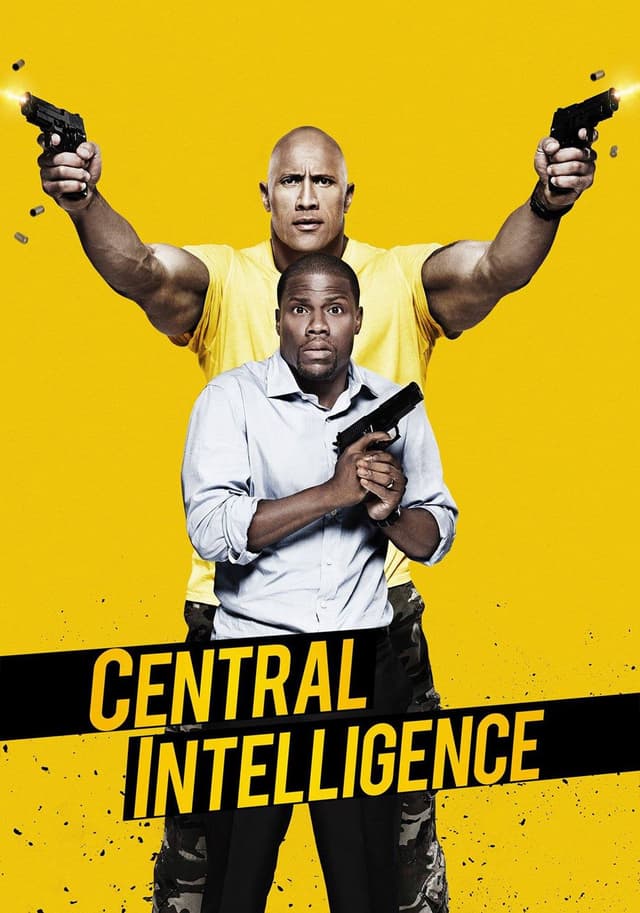
Calvin Joyner, a mild-mannered accountant whose high school glory days are long behind him, reconnects with an awkward pal from high school through Facebook. After meeting up, Calvin’s mundane life takes an unexpectedly thrilling turn when he's thrust into the world of international espionage.
What Is the Budget of Central Intelligence?
Central Intelligence was produced on a budget of $50,000,000, placing it firmly in the mid-range for studio action comedies in 2016. The figure reflects the cost of pairing two of Hollywood's most bankable stars, Dwayne Johnson and Kevin Hart, for the first time on screen together. Warner Bros. and New Line Cinema greenlit the project betting that the Johnson-Hart chemistry would translate into broad commercial appeal, and that calculated wager paid off in a significant way.
The film was distributed by Warner Bros. Pictures through its New Line Cinema label, with financing support from Bluegrass Films, RatPac Entertainment, Principato-Young Entertainment, and Perfect World Pictures. Principal photography took place in Atlanta, Georgia and the greater Boston, Massachusetts area, both of which offer substantial production tax incentive programs that helped offset costs.
Key Budget Allocation Categories
- Above-the-Line Talent: Dwayne Johnson and Kevin Hart were each among the highest-paid performers in Hollywood by 2016. Their combined fees are estimated at $20 to 30 million, representing the single largest line item in the budget and a reflection of the film's marquee-driven commercial strategy.
- Action Sequences and Stunt Work: As a CIA thriller, the film required a substantive stunt department to execute car chases, hand-to-hand combat sequences, and pyrotechnic work. Johnson's physical performance particularly demanded extensive stunt coordination and preparation.
- Location Filming: Production shot across Atlanta, Georgia and multiple Massachusetts locations including Boston, Burlington, Lynn, Middleton, and Quincy. Both states offer competitive tax incentive programs that reduced the effective production cost, making dual-state shooting financially practical.
- Production Design: The film required a range of purpose-built sets including CIA headquarters interiors, a convincingly period-authentic 1996 high school gymnasium, and various suburban domestic environments. The flashback sequences depicting a heavyset teenager also demanded specialized practical prosthetics and costuming.
- Scoring: The film employed two composers working in tandem: Ludwig Göransson, who would later score Black Panther and Oppenheimer, and Theodore Shapiro, known for his work on broad comedies and thrillers. Dual composers working on a single project reflects a division of tonal responsibilities between the film's comedic and action-thriller registers.
- Marketing and P&A: A wide-release summer comedy starring two A-list performers requires substantial prints and advertising investment. Estimated marketing spend for Central Intelligence was in the range of $50 to 60 million, nearly matching the production budget itself and reflecting the competitive summer 2016 marketplace.
How Does Central Intelligence's Budget Compare to Similar Films?
Central Intelligence sits in a productive middle zone for studio comedies, spending less than prestige action films while benefiting from legitimate A-list star power.
- Ride Along (2014): Budget $25,000,000 | Worldwide $154,000,000. Kevin Hart's breakout comedy hit cost half as much as Central Intelligence but demonstrated his audience pull before studios were willing to pay his full premium.
- Ride Along 2 (2016): Budget $40,000,000 | Worldwide $126,000,000. Released the same year as Central Intelligence, the Ride Along sequel underperformed by comparison, suggesting that pairing Hart with Johnson rather than Ice Cube was the more commercially potent combination.
- The Other Guys (2010): Budget $100,000,000 | Worldwide $170,000,000. The Will Ferrell and Mark Wahlberg buddy-cop comedy spent twice as much to earn a similar proportional return, illustrating that Central Intelligence achieved comparable commercial efficiency at a significantly lower price point.
- Spy (2015): Budget $65,000,000 | Worldwide $235,000,000. The Melissa McCarthy action-comedy parody outgrossed Central Intelligence on a larger budget, demonstrating strong appetite in the marketplace for genre-blending comedies around this period.
- Neighbors (2014): Budget $18,000,000 | Worldwide $270,000,000. Seth Rogen and Zac Efron's comedy wildly outperformed its modest budget, establishing the ceiling for returns when comedies connect with audiences without requiring star-level above-the-line costs.
Central Intelligence Box Office Performance
Central Intelligence opened on June 17, 2016 in 3,508 theaters, earning $35,522,678 in its opening weekend. That figure placed the film second for the weekend behind Finding Dory, which was in its second week and still earning a massive $73.7 million. Despite finishing behind the Pixar sequel, a $35.5 million opening for a mid-budget action comedy with no franchise pedigree represented a strong commercial debut and immediately validated the Johnson-Hart pairing.
Box Office Breakdown
Central Intelligence

For every $1 invested in production and marketing, Central Intelligence returned roughly $2.07 at the worldwide box office before home video, streaming, and ancillary revenues. The theatrical run alone effectively doubled the total investment, placing the film comfortably in profitable territory by studio accounting standards.
The domestic-to-international split of approximately 59% domestic and 41% international reflects the particular appeal of Kevin Hart's comedic style to North American audiences at that stage of his career, while Dwayne Johnson's global brand helped maintain meaningful international performance. The film's success without a sequel is somewhat unusual; both stars publicly expressed interest in a follow-up, and Warner Bros. had discussions about development, but no production has moved forward as of 2026.
Central Intelligence Production History
Principal photography on Central Intelligence ran from May 2015 through July 2015, with location work split between Atlanta, Georgia and greater Boston, Massachusetts. Atlanta served as the primary production hub, capitalizing on Georgia's 30% transferable tax credit. Massachusetts locations including Burlington (which doubled as the film's suburban high school setting), Lynn, Middleton, and Quincy provided authentic New England environments for the present-day sequences.
The project was directed by Rawson Marshall Thurber, who had previously directed Dodgeball: A True Underdog Story (2004) and We're the Millers (2013), establishing him as a reliable studio comedy filmmaker with a track record of commercial success. The screenplay was developed from a story by David Stassen, with Stassen co-writing the script alongside Ike Barinholtz and Thurber. The collaboration gave the film a voice that balanced Johnson's action instincts with Hart's improvisational comedy style.
One distinctive production element was Johnson and Hart's heavy use of social media during filming. The two stars maintained a playful public Instagram rivalry throughout the shoot, teasing footage and stoking audience anticipation months before the film's marketing campaign officially launched. This organic social presence became an informal part of the film's marketing infrastructure and helped establish the duo's chemistry with audiences before any trailer had been released.
The score was composed by Ludwig Göransson and Theodore Shapiro in collaboration, with Göransson handling the more grounded, emotionally resonant material and Shapiro contributing to the comedic sequences. Göransson would go on to win the Academy Award for Original Score for Black Panther in 2019, making his Central Intelligence credit a notable early entry in his major studio career. The film was released by Warner Bros. Pictures on June 17, 2016.
Awards and Recognition
Central Intelligence received nominations at the MTV Movie and TV Awards in 2017, with Dwayne Johnson and Kevin Hart earning a nomination for Best On-Screen Duo. The nomination acknowledged the chemistry between the two leads that critics and audiences had consistently cited as the film's strongest asset, even if the broader critical assessment of the screenplay was mixed.
The film also received Teen Choice Award nominations in 2016, reflecting its strong performance with younger demographic audiences. In the Choice Movie categories, Johnson and Hart each received individual attention for their comedic performances, consistent with the film's core audience skewing toward the 13-to-34 demographic.
By the standards of studio action comedies, the awards attention Central Intelligence received was appropriate. Genre comedies of this type rarely contend for major awards consideration, and the film's commercial success and strong audience reception scores ultimately matter more to its legacy than its awards footprint. An A-minus CinemaScore and a 75% PostTrak positive audience rating indicate genuine crowd-pleasing value, even in the absence of formal recognition.
Critical Reception
Central Intelligence holds a 71% approval rating on Rotten Tomatoes based on 184 reviews, with a Metacritic score of 52 out of 100 based on 35 critical assessments. The CinemaScore was A-minus and the PostTrak audience score was 75% positive, indicating a meaningful gap between critical and audience response that is common for broad studio comedies relying on star chemistry over conceptual originality.
The Rotten Tomatoes critical consensus reads: "Kevin Hart and Dwayne Johnson make for well-matched comic foils, helping Central Intelligence overcome a script that coasts on their considerable chemistry." That summary captures the dominant critical position precisely. Reviewers across the spectrum acknowledged that the film's screenplay offers little that is genuinely surprising or structurally inventive, but that Johnson and Hart consistently elevate the material through timing, physical presence, and an apparent genuine affection between them.
Keith Phipps, writing for Uproxx, was representative of the more generous critical position: "The movie is funny in the way that hanging out with charming, gifted people who know how to make each other laugh is funny. It's not a great movie, but it is a pretty fun one." Ignatiy Vishnevetsky at The A.V. Club offered a more critical reading, arguing that the film's comedic construction is largely reactive rather than active, relying on Johnson's physical incongruity and Hart's flustered reactions rather than building situations with their own comic logic.
The critical divide essentially maps onto the question of whether star chemistry constitutes sufficient cinematic value on its own terms. For audiences who turned out in substantial numbers, it did. Central Intelligence delivered a recognizable and satisfying version of the buddy-comedy formula with two performers who appeared to be genuinely enjoying themselves, and that proved commercially effective regardless of the script's limitations.
Frequently Asked Questions
How much did Central Intelligence cost to make?
{"root":{"type":"root","format":"","indent":0,"version":1,"direction":"ltr","children":[{"type":"paragraph","version":1,"format":"","indent":0,"direction":"ltr","textFormat":0,"textStyle":"","children":[{"type":"text","version":1,"format":0,"style":"","mode":"normal","detail":0,"text":"Central Intelligence was produced on a budget of $50,000,000. The figure is largely driven by the above-the-line costs associated with casting Dwayne Johnson and Kevin Hart together for the first time, with their combined fees estimated at $20 to 30 million. Production also required a substantive stunt department for the film's CIA action sequences and was shot across two states, Atlanta, Georgia and greater Boston, Massachusetts, both of which offered tax incentive programs that helped offset the overall production expenditure."}]}]}}
How much did Central Intelligence earn at the box office?
{"root":{"type":"root","format":"","indent":0,"version":1,"direction":"ltr","children":[{"type":"paragraph","version":1,"format":"","indent":0,"direction":"ltr","textFormat":0,"textStyle":"","children":[{"type":"text","version":1,"format":0,"style":"","mode":"normal","detail":0,"text":"Central Intelligence earned $216,972,543 worldwide across its theatrical run, with $127,385,748 coming from domestic markets and approximately $89.6 million from international territories. The film opened on June 17, 2016 in 3,508 theaters and earned $35,522,678 in its opening weekend, finishing second behind Finding Dory. The domestic performance was particularly strong, representing roughly 59% of total worldwide gross and reflecting Kevin Hart's especially strong connection with North American audiences at that stage of his career."}]}]}}
Was Central Intelligence profitable?
{"root":{"type":"root","format":"","indent":0,"version":1,"direction":"ltr","children":[{"type":"paragraph","version":1,"format":"","indent":0,"direction":"ltr","textFormat":0,"textStyle":"","children":[{"type":"text","version":1,"format":0,"style":"","mode":"normal","detail":0,"text":"Yes, Central Intelligence was profitable by standard theatrical measures. Against a combined production and estimated marketing investment of approximately $105 million, the film earned nearly $217 million in worldwide box office receipts, delivering approximately 106% return on total investment from theatrical alone. Home video, digital rental, and cable licensing revenues added further to the film's profitability. New Line Cinema and Warner Bros. considered the production a commercial success, and the Johnson-Hart pairing was viewed as a validated franchise asset even though no sequel has been produced as of 2026."}]}]}}
How was Central Intelligence received by critics?
{"root":{"type":"root","format":"","indent":0,"version":1,"direction":"ltr","children":[{"type":"paragraph","version":1,"format":"","indent":0,"direction":"ltr","textFormat":0,"textStyle":"","children":[{"type":"text","version":1,"format":0,"style":"","mode":"normal","detail":0,"text":"Critical reception was modestly positive overall. The film holds a 71% approval rating on Rotten Tomatoes based on 184 reviews and a score of 52 out of 100 on Metacritic based on 35 critic assessments. Audience scores were considerably stronger, with a CinemaScore of A-minus and a 75% positive PostTrak rating. The prevailing critical view acknowledged that Dwayne Johnson and Kevin Hart generated genuine comedic chemistry and that their performances elevated a screenplay critics found formulaic and structurally thin."}]}]}}
Did Dwayne Johnson wear a fat suit in Central Intelligence?
{"root":{"type":"root","format":"","indent":0,"version":1,"direction":"ltr","children":[{"type":"paragraph","version":1,"format":"","indent":0,"direction":"ltr","textFormat":0,"textStyle":"","children":[{"type":"text","version":1,"format":0,"style":"","mode":"normal","detail":0,"text":"Yes. The film's premise involves Bob Stone, the character played by Dwayne Johnson, being an overweight and socially isolated teenager in 1996 who transformed himself into a physically imposing CIA operative by the time of the film's present-day story. To depict the younger version of the character, Johnson wore a prosthetic fat suit in the high school flashback sequences. The contrast between that image and Johnson's actual physique is central to the film's comedic premise and was used extensively in its marketing campaign."}]}]}}
Is there a sequel to Central Intelligence?
{"root":{"type":"root","format":"","indent":0,"version":1,"direction":"ltr","children":[{"type":"paragraph","version":1,"format":"","indent":0,"direction":"ltr","textFormat":0,"textStyle":"","children":[{"type":"text","version":1,"format":0,"style":"","mode":"normal","detail":0,"text":"No sequel to Central Intelligence had been produced or officially greenlit as of 2026. Both Dwayne Johnson and Kevin Hart publicly expressed interest in returning to the characters in interviews following the film's release, and Warner Bros. had development conversations about a follow-up given the film's strong box office performance. However, scheduling conflicts related to both stars' extensive individual project commitments prevented the project from advancing to production. Johnson and Hart continued their working relationship through other collaborations in the years that followed."}]}]}}
Filmmakers
Central Intelligence

Official Trailer
Build budgets like this one in Saturation
Start from an industry-standard feature film template, import the schedule and rates you already have, and let the cost report keep itself current as you spend. Real-time collaboration, no spreadsheets.