Monster Trucks Budget
 ActionComedyScience Fiction1h 44m
Updated
Synopsis
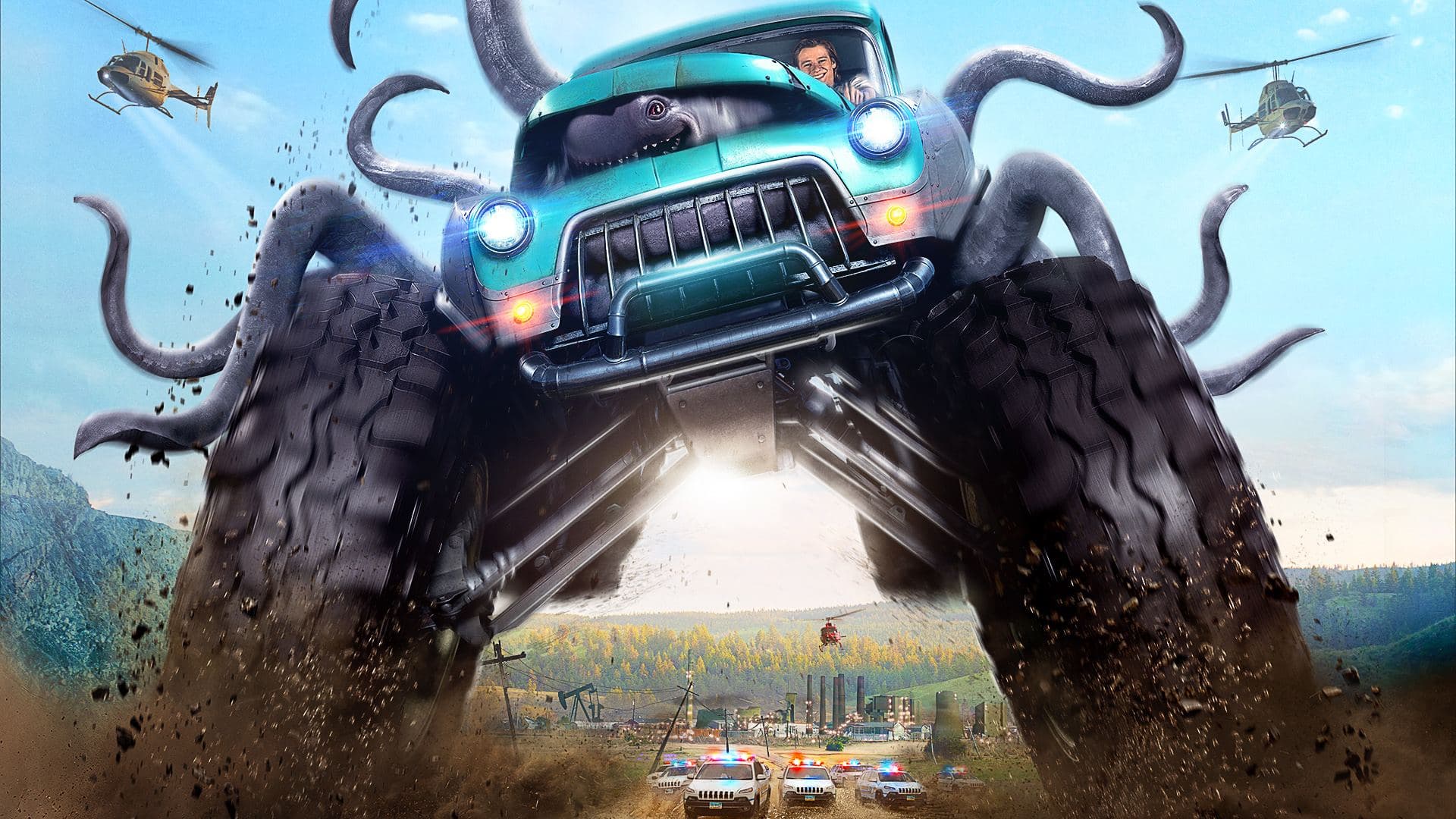
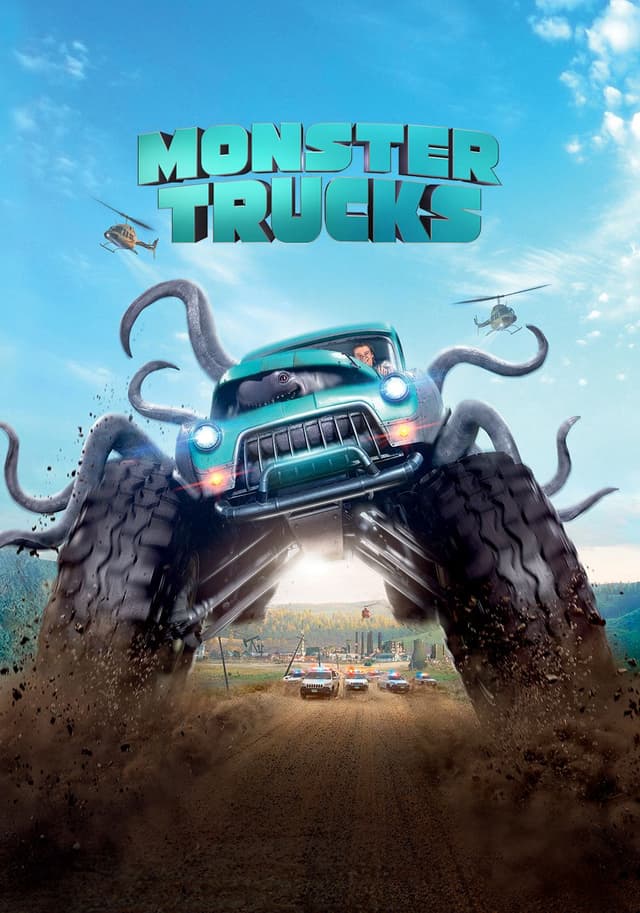
Looking for any way to get away from the life and town he was born into, Tripp, a high school senior, builds a Monster Truck from bits and pieces of scrapped cars. After an accident at a nearby oil-drilling site displaces a strange and subterranean creature with a taste and a talent for speed, Tripp may have just found the key to getting out of town and a most unlikely friend. Melding cutting edge visual effects and state-of-the-art CGI, Monster Trucks is an action filled adventure for the whole family that will keep you on the edge of your seat and ultimately touch your heart.
What Is the Budget of Monster Trucks?
Monster Trucks was produced by Paramount Pictures with a reported production budget of $125 million. The film is one of Hollywood's most documented financial disasters: Paramount's parent company Viacom took a $115 million write-down on the film in October 2016, roughly three months before it even opened in theaters. That pre-release impairment charge acknowledged what the studio's internal projections had already concluded: the film could not recover its investment under any realistic theatrical scenario.
The film went on to earn just $64.5 million worldwide against a total investment estimated at well over $185 million when print and advertising costs are included. Deadline Hollywood estimated the total loss at approximately $123.1 million after accounting for all revenue streams. Monster Trucks stands as one of the most significant write-downs in modern Hollywood history, notable both for its scale and for occurring before the film had played a single domestic screening.
Key Budget Allocation Categories
- Visual Effects for Creech: The film's central character, Creech, is a subterranean creature who bonds with Tripp and powers his truck from inside the engine bay. Designing, animating, and rendering a photorealistic creature capable of integrating convincingly with practical vehicles and real locations represented the film's largest single technical challenge. The VFX workload was the primary driver of four successive release date delays, pushing the film from a May 2015 original target all the way to January 2017. Each delay added post-production costs and interest on sunk production capital.
- Director and Above-the-Line: Chris Wedge, who spent 20 years at Blue Sky Studios directing Ice Age (2002) and Robots (2005), made his live-action directorial debut on Monster Trucks. Screenwriter Derek Connolly (Jurassic World, Kong: Skull Island) worked from a story by Matthew Robinson, Jonathan Aibel, and Glenn Berger. Producers Mary Parent and Denis L. Stewart rounded out an above-the-line package appropriate for a major studio tentpole.
- Cast: Lucas Till (X-Men franchise) led the film as Tripp Coley, supported by Jane Levy, Amy Ryan, Rob Lowe, Danny Glover, Barry Pepper, Thomas Lennon, and Holt McCallany. The ensemble is character-actor heavy rather than star-driven, a cost structure that kept the cast line below what a star-led tentpole of this budget would typically carry.
- Filming in British Columbia: Principal photography began April 4, 2014, in Kamloops, British Columbia, with additional work in Chilliwack and at Vancouver Film Studios. Production wrapped in mid-July 2014. British Columbia's production tax credits and USD-favorable exchange rate are standard reasons for routing US studio productions through the province, though the extended post-production period meant BC crew costs were a relatively small proportion of the total.
- Carrying Costs from Delay: A production that wraps in July 2014 and releases in January 2017 carries nearly two and a half years of overhead, interest, and storage costs before earning a dollar of theatrical revenue. The four successive delays compounded the financial exposure on a film that was already expensive at greenlight.
How Does Monster Trucks Compare to Similar Films?
Monster Trucks belongs to a specific category of studio tentpoles: high-concept family films with significant VFX budgets that underperformed catastrophically. The comparison set includes some of the most-analyzed write-offs in modern Hollywood.
- Mars Needs Moms (2011): Budget $150M | Worldwide $39.2M | Disney. The motion-capture family film from ImageMovers Digital is the closest structural parallel to Monster Trucks: similar budget tier, similar family-targeted high concept, similar catastrophic theatrical result. Disney absorbed a loss estimated at over $100 million and shut down ImageMovers Digital shortly after. Mars Needs Moms remains the benchmark against which failed family tentpoles are measured.
- The Good Dinosaur (2015): Budget $175-200M | Worldwide $332.2M | Pixar/Disney. Pixar's first theatrical loss demonstrates that even prestige animation brands are not immune to high-concept misfires at elevated budgets. The Good Dinosaur grossed five times Monster Trucks' worldwide total and still lost money, illustrating how budget scale transforms the theatrical break-even calculus.
- Jupiter Ascending (2015): Budget $176M | Worldwide $184M | Warner Bros. The Wachowski siblings' space opera was pushed from a summer 2014 release to February 2015 after VFX were deemed unfinished, a pattern that mirrors Monster Trucks' repeated delays. Jupiter Ascending earned nearly three times Monster Trucks' worldwide gross and still failed to break even, a useful illustration of how $125M-plus budgets require dominant theatrical performance to work.
Monster Trucks Box Office Performance
Monster Trucks earned $64,493,915 worldwide: $33,370,166 domestically and $31,123,749 internationally. The film opened January 13, 2017, in 3,119 US theaters to a $10,950,705 opening weekend, finishing seventh at the domestic box office. The four-day MLK weekend gross was $15,611,554. Holdover performance was soft: the film dropped 46% in its second weekend and continued declining at a standard rate through week five.
Against a $125 million production budget and an estimated $60 million in print and advertising costs, total investment was approximately $185 million. With theaters retaining roughly 50% of gross, Paramount's share of the worldwide theatrical run was approximately $32 million. The film recovered less than 18% of its total investment from theatrical. Deadline Hollywood estimated the all-in loss at $123.1 million after accounting for home video and other downstream revenue. Viacom had already recognized $115 million of this exposure in an October 2016 write-down, three months before the film opened.
Box Office Breakdown
Monster Trucks

For every $1 invested in production, Monster Trucks earned approximately $0.52 in worldwide theatrical gross. The ROI on production budget alone was approximately negative 48%. The film stands as one of the largest theatrical losses in Paramount's history and is frequently cited alongside Mars Needs Moms and John Carter as a defining case study in studio tentpole risk.
Monster Trucks Production History
Monster Trucks has one of the most frequently told origin stories in modern Hollywood. Paramount Animation president Adam Goodman developed the concept after his four-year-old son wondered aloud what it would look like if a monster lived inside a truck. Goodman brought the idea into formal development, attaching writers Jonathan Aibel and Glenn Berger, who had written Kung Fu Panda (2008) and its sequels, to develop the concept. Matthew Robinson and Derek Connolly later contributed to the screenplay. The project was announced publicly in July 2013 as a live-action and animated hybrid targeting family audiences.
Chris Wedge was hired to direct. Wedge had co-founded Blue Sky Studios in 1987 and directed Ice Age (2002) and Robots (2005), but Monster Trucks would be his first live-action project after two decades in animation. The challenge of integrating a fully digital creature character into practical vehicle photography, with cameras tracking inside and around working trucks at speed, was the kind of hybrid production that had broken other directors; Wedge's animation background was seen as an asset for supervising the creature pipeline.
Principal photography began April 4, 2014, in Kamloops, British Columbia. The production used Kamloops' surrounding landscape as its stand-in for the film's fictional rural North Dakota setting and shot additional sequences in Chilliwack before moving to Vancouver Film Studios for controlled interior work. The crew wrapped in mid-July 2014, a compact three-and-a-half month shoot for a production of this scale. The real work was just beginning: Creech, the creature who occupies Tripp's truck and eventually drives it, required an extended VFX pipeline to develop from concept design through final compositing at a quality level that would hold up on a theatrical screen.
Paramount originally scheduled Monster Trucks for May 29, 2015. Over the following two years, the studio pushed the release three more times: first to December 25, 2015, then to March 18, 2016, and finally to January 13, 2017. Each postponement reflected unfinished VFX and, increasingly, the studio's diminishing commercial confidence in the project. By October 2016, with the film still three months from release, Viacom disclosed a $115 million write-down in its quarterly earnings, a public acknowledgment that the studio expected Monster Trucks to lose money before audiences had seen a single frame.
Awards and Recognition
Monster Trucks received no major awards nominations. Notably, it was not nominated for the Golden Raspberry Awards, despite its financial failure and critical reception, because its CinemaScore of A indicated that audiences who did see the film genuinely enjoyed it. The disconnect between critical reception and audience response has contributed to the film's gradual reassessment.
By the early 2020s, Monster Trucks had developed a modest cult following among viewers who appreciated its sincere, creature-feature sensibility and the practical integration of Creech with real truck photography. Actor Thomas Lennon noted publicly that his contract technically includes options for two sequels. Don Burgess, the cinematographer, went on to receive the ASC Lifetime Achievement Award in 2024. Conrad Buff IV, who edited Monster Trucks, previously won the Academy Award for Film Editing for Titanic (1997), shared with Richard Harris.
Critical Reception
Monster Trucks holds a 32% approval rating on Rotten Tomatoes based on approximately 97 reviews, with an average rating of 4.6/10. The critical consensus reads: "Despite flashes of inspiration, the singularly high-concept Monster Trucks shows that it takes more than monsters and trucks to create a compelling feature film." Metacritic scored it 41 out of 100 based on 23 reviews, categorized as "mixed or average." Among Metacritic's panel, 22% of reviews were positive, 48% mixed, and 30% negative.
The contrast with audience reception is notable. CinemaScore exit polls gave the film an A, and PostTrak audience ratings were positive, indicating that families who saw it in theaters found it entertaining on its own terms. The critical failure centered on the film's premise being considered too thin to sustain 104 minutes, and on a tonal uncertainty between the creature-feature and family-adventure registers. The positive reviews, including one Metacritic critic who called it "an eco-fable devoid of didactic overkill, delivered with energy and winking mischief," pointed to the same qualities that later endeared it to cult audiences: its lack of irony and its commitment to the absurd premise.
Frequently Asked Questions
How much did it cost to make Monster Trucks (2016)?
The production budget was $125,000,000, covering principal photography, visual effects, cast and crew salaries, locations, sets, post-production, and music. Marketing and distribution (P&A) costs are estimated at an additional $62,500,000 - $100,000,000, bringing the total studio investment to approximately $187,500,000 - $225,000,000.
How much did Monster Trucks (2016) earn at the box office?
Monster Trucks grossed $33,370,166 domestic, $31,123,749 international, totaling $64,493,915 worldwide.
Was Monster Trucks (2016) profitable?
The film did not break even theatrically, earning $64,493,915 against an estimated $312,500,000 needed. Ancillary revenue may have improved the picture.
What were the biggest costs in producing Monster Trucks?
The primary cost drivers were above-the-line talent (Lucas Till, Jane Levy, Amy Ryan); visual effects, practical stunts, and A-list talent compensation.
How does Monster Trucks's budget compare to similar action films?
At $125,000,000, Monster Trucks is classified as a big-budget production. The median budget for wide-release action films in the 2010s ranges from $30 - 80M for mid-budget to $150M+ for tentpoles. Comparable budgets: Artemis Fowl (2020, $125,000,000); Assassin's Creed (2016, $125,000,000); Batman & Robin (1997, $125,000,000).
Did Monster Trucks (2016) go over budget?
There are no widely reported accounts of significant budget overruns for this production. However, studios rarely disclose precise budget overrun figures publicly. The reported production budget reflects the final estimated cost.
What was the return on investment (ROI) for Monster Trucks?
The theatrical ROI was -48.4%, calculated as ($64,493,915 − $125,000,000) ÷ $125,000,000 × 100. This measures gross revenue against production budget only - it does not account for P&A or exhibitor shares.
What awards did Monster Trucks (2016) win?
2 nominations total.
Who directed Monster Trucks and who were the key crew members?
Directed by Chris Wedge, written by Glenn Berger, Jonathan Aibel, Matthew Robinson, Derek Connolly, shot by Don Burgess, with music by David Sardy, edited by Conrad Buff IV.
Where was Monster Trucks filmed?
Monster Trucks was filmed in United States of America.
Filmmakers
Monster Trucks

Official Trailer
Build budgets like this one in Saturation
Start from an industry-standard feature film template, import the schedule and rates you already have, and let the cost report keep itself current as you spend. Real-time collaboration, no spreadsheets.