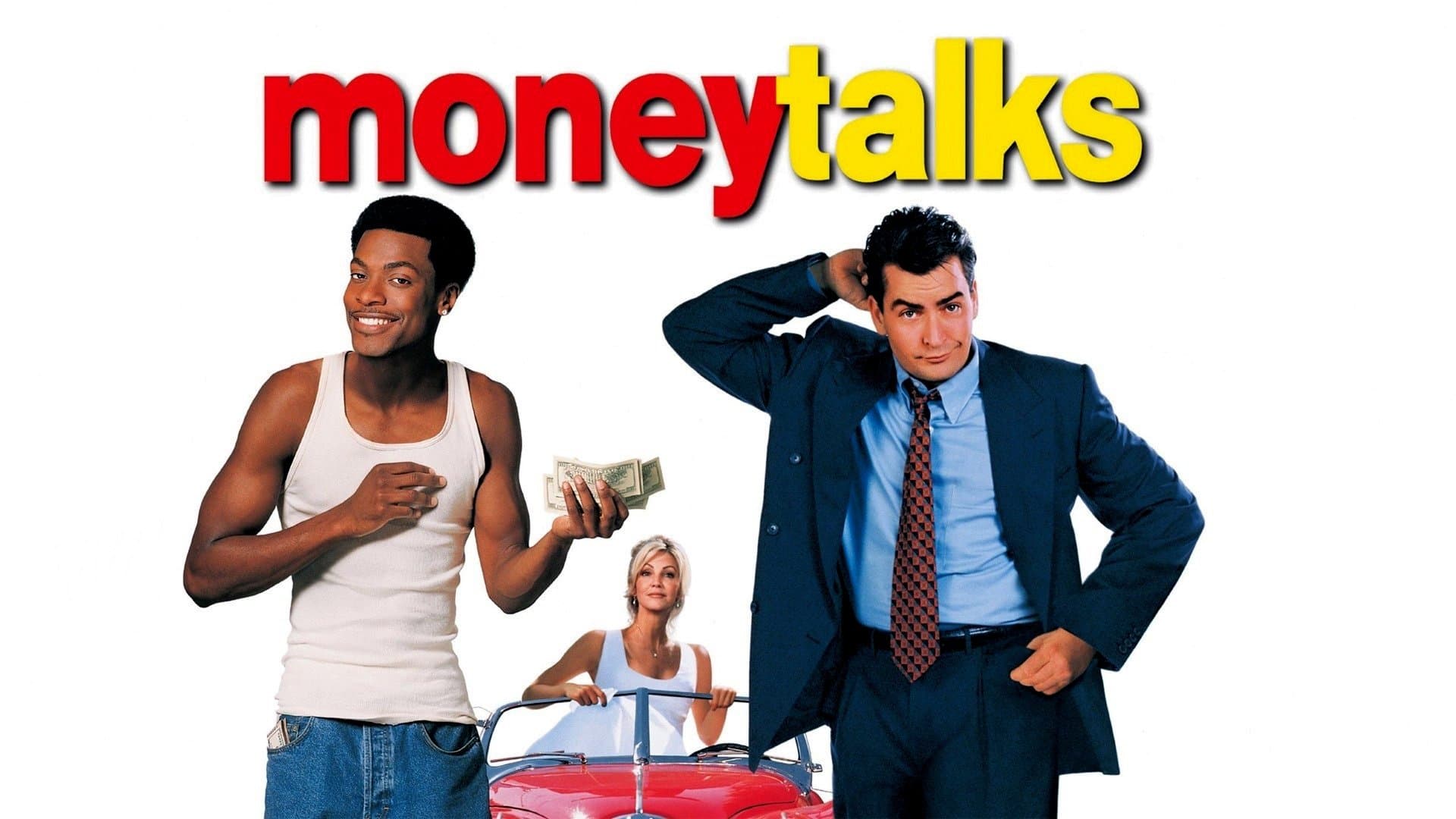
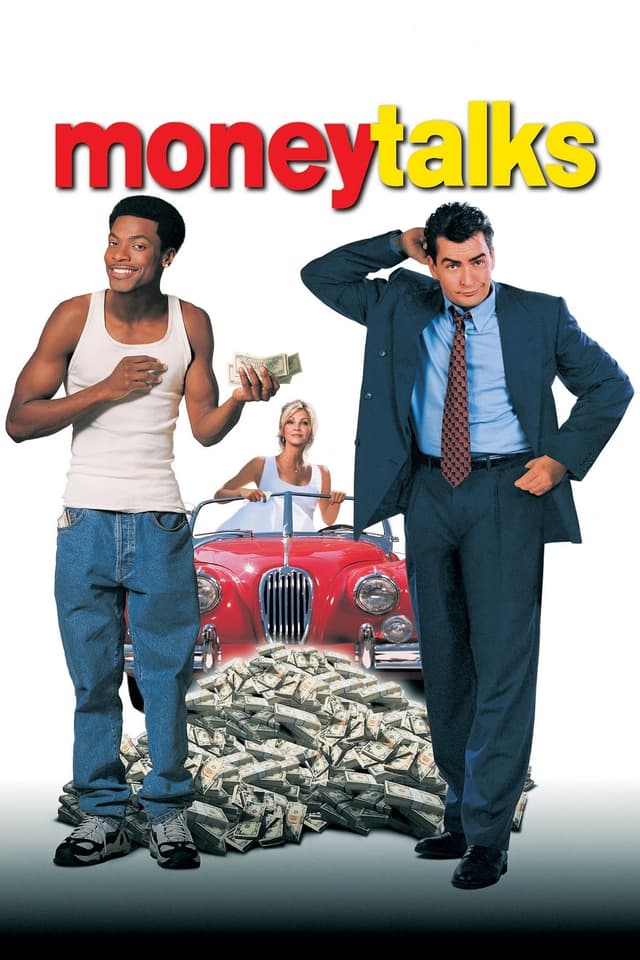
Money Talks Budget
 ActionComedyCrimeThriller1h 37m
Updated
Synopsis
Fast-talking Los Angeles car-wash hustler Franklin Hatchett escapes from a prison transport after being framed for a jewel heist and a string of murders. Forced to ally himself with sleazy television reporter James Russell, who needs a sensational story to keep his job and salvage his marriage to socialite Grace Cipriani, Hatchett races to clear his name before a French gangster and a corrupt police force catch up with him.
What Is the Budget of Money Talks (1997)?
Money Talks (1997), directed by Brett Ratner in his feature film directorial debut and released by New Line Cinema, was produced on a budget of $25,000,000. The film starred Chris Tucker and Charlie Sheen in a buddy action comedy that drew heavily on the chemistry-driven formula popularized by films such as 48 Hrs. and Lethal Weapon. New Line Cinema, then expanding its genre output with mid-budget action comedies, committed to the project on the strength of Tucker's rising star power following his breakthrough in Friday (1995) and Jackie Chan's Who Am I? (1998).
The $25 million production budget was a reasonable investment for a buddy action comedy of the era, allowing for practical car chases and action sequences set in Los Angeles while keeping costs contained through efficient studio-backed production logistics. Director Ratner had built a reputation directing music videos, including several for Jay-Z and Mariah Carey, and had worked previously with Tucker. The project gave Ratner a viable path to features and would lead directly to his breakthrough Rush Hour (1998) the following year.
Key Budget Allocation Categories
The $25,000,000 budget was distributed across the production's primary cost centers:
- Cast: Chris Tucker received a significant portion of the budget given his rapidly escalating market value following Friday. Charlie Sheen, then one of Hollywood's more reliably bankable leading men, rounded out the principal cast, with Heather Locklear and Paul Sorvino in supporting roles.
- Action Sequences and Stunts: Practical car chases through downtown Los Angeles, an airport action set piece, and a climactic sequence at a French consulate gala required stunt coordinators and city location access.
- Los Angeles Location Filming: Real Los Angeles locations provided authenticity but required permits, logistics, and overtime costs typical of urban production.
- Production Design: The film's locations spanning street-level Los Angeles to upscale event venues required varied set dressing and production design to maintain tonal contrast between Tucker's street world and Sheen's TV journalist milieu.
- Post-Production: Editing, sound design, and the film's energetic music-driven sequences required a post-production schedule consistent with New Line Cinema's genre output standards.
- Marketing and Prints: New Line Cinema's theatrical release campaign targeted urban audiences and action comedy fans with a marketing strategy that heavily featured Tucker's comedic energy.
How Does Money Talks's Budget Compare to Similar Films?
Money Talks operated squarely in the mid-budget buddy action comedy tier of the late 1990s, a genre with established financial expectations:
- Friday (1995): Budget $3.5M | Worldwide $27.5M. Tucker's breakthrough film cost a fraction of Money Talks but proved his audience draw, directly informing New Line's confidence in committing $25 million.
- Money Talks (1997): Budget $25M | Worldwide $48.4M. The film effectively doubled Tucker's market value by pairing him with Sheen and placing him in a mainstream action comedy framework.
- Rush Hour (1998): Budget $33M | Worldwide $244.4M. Ratner's follow-up film with Tucker and Jackie Chan showed what the formula could achieve with a more refined script and a stronger comedy partnership.
- Beverly Hills Cop III (1994): Budget $55M | Worldwide $119.2M. The Eddie Murphy comparison point for solo Black comedy stars in buddy action films, showing that higher budgets did not always translate to proportionally higher returns.
- The Glimmer Man (1996): Budget $45M | Worldwide $34.4M. A competing buddy cop film from the same era on a larger budget that failed commercially, illustrating the risk of over-investing in the genre.
Money Talks Box Office Performance
Money Talks was released by New Line Cinema on August 22, 1997, opening in second place domestically with approximately $10.6 million from 1,798 theaters. The film held its position at number two the following weekend with $9.4 million, demonstrating above-average holding power for a comedy action release in the summer marketplace. The steady performance suggested strong audience satisfaction among its target demographic.
Box Office Breakdown
Money Talks

Money Talks generated approximately $1.94 for every $1 invested in production. The domestic gross of approximately $40.9 million formed the bulk of the worldwide total, with modest international returns. The film was profitable for New Line Cinema but its relatively contained performance made the path forward clear: Tucker needed a stronger comedic partner and a higher-concept script, which the studio delivered the following year in Rush Hour.
The film's financial success was sufficient to establish Tucker as a reliable commercial lead and to affirm Ratner as a director capable of managing a studio production. Both Tucker and Ratner leveraged Money Talks directly into Rush Hour, which multiplied the commercial achievement several times over and became one of the most profitable action comedies of the 1990s.
Money Talks Production History
The development of Money Talks began when director-to-be Brett Ratner and Chris Tucker had already worked together on a music video. Tucker, who was gaining rapid recognition following his scene-stealing performance in Friday (1995), recommended Ratner to New Line Cinema as a director for the project. Tucker's advocacy was decisive: Steve Chase had initially been attached to direct but departed approximately one week before production was scheduled to begin, citing creative differences with Tucker and the studio. Ratner was brought in as a replacement on short notice.
Production was not without its difficulties. In candid later interviews, Tucker acknowledged that he frequently arrived late to set during filming. Charlie Sheen, whose personal and professional life was under increasing press scrutiny by the late 1990s, reportedly missed shooting days entirely on multiple occasions. Director Ratner has described navigating the schedule around both principals as one of the more challenging aspects of the production, requiring creative rescheduling and improvisation on set.
Filming took place primarily across Los Angeles locations, using the city's diversity of environments to give the buddy comedy its visual range. The production shot at and around LAX airport for action sequences, downtown Los Angeles streets for chase scenes, and upscale venues on the Westside for the consulate gala sequence. The contrast between Tucker's street-level character Franklyn Hatchett and Sheen's television journalist James Russell was reflected in deliberate production design choices that grounded each character in visually distinct environments.
The collaboration between Tucker and Ratner directly preceded Rush Hour. Ratner has said in interviews that the experience of working with Tucker on Money Talks convinced him that Tucker's comic timing required a partner who could genuinely match his energy. Jackie Chan, whom Ratner cast in Rush Hour the following year, provided that counterbalance. Money Talks served as the proving ground for a comedic and directorial partnership that would become one of the most commercially successful in 1990s Hollywood.
Awards and Recognition
Money Talks received no significant nominations from major awards bodies, which was consistent with its positioning as a mainstream summer commercial release rather than a prestige production. The film's recognition came primarily through its commercial performance and its role in launching careers:
- MTV Movie Awards consideration: Chris Tucker's performance was discussed in the context of breakthrough comedic performances of 1997, though no formal nomination was recorded.
- Brett Ratner's directorial career: Money Talks served as the launching pad for Ratner's Hollywood career, with Rush Hour (1998) following immediately and earning him a reputation as one of the most commercially effective action comedy directors of the era.
- CinemaScore: Audiences awarded Money Talks an 'A' grade at CinemaScore, indicating strong positive response from the general moviegoing public regardless of professional critical response.
- Chris Tucker's trajectory: The film's success was instrumental in Tucker's negotiating position for Rush Hour, where his Rush Hour salary of $3.5 million rose to $40 million for Rush Hour 3 a decade later.
Critical Reception
Money Talks received mostly negative reviews from professional critics. On Rotten Tomatoes the film holds a 19% approval rating based on 21 reviews, one of the lower critical scores among mid-budget buddy action comedies of its era. Metacritic did not compile a score for the film. Despite the critical reception, audiences showed considerably more enthusiasm: CinemaScore recorded an A grade from opening weekend audiences, a notable contrast with the critical consensus.
Roger Ebert of the Chicago Sun-Times gave the film three out of four stars, writing that Tucker 'comes on as obnoxious and irritating at first, and then you see the smile and the intelligence underneath.' Ebert's review focused on Tucker's natural comedic gift and his ability to find genuine warmth beneath the character's brash exterior. Owen Glieberman of Entertainment Weekly assigned a C+ grade, writing that Money Talks 'has been slapped together with all the flair and wit of a bad Damon Wayans comedy,' though he acknowledged that there was 'joy amid the tedium' in Tucker's performance.
The film's critical reputation has remained low, but its cultural significance has grown in retrospect as the project that effectively launched both Brett Ratner's feature film career and Chris Tucker's ascent to A-list commercial stardom. Money Talks is now routinely discussed as the direct precursor to Rush Hour, and its rough-edged quality is viewed by Tucker fans as an appealing early document of a then-developing comedic voice.
Frequently Asked Questions
What was the budget for Money Talks (1997)?
Money Talks had a production budget of $25,000,000. The film was produced by New Line Cinema and served as Brett Ratner's feature film directorial debut. The budget covered practical action sequences across Los Angeles, a cast led by Chris Tucker and Charlie Sheen, and a marketing campaign targeting summer audiences.
How much did Money Talks make at the box office?
Money Talks earned approximately $48,400,000 worldwide, with domestic receipts of approximately $40.9 million forming the bulk of the total. The film opened at number two domestically with $10.6 million and held well in its second weekend. Against a $25 million production budget, the film was profitable for New Line Cinema.
Is Money Talks Brett Ratner's first film?
Yes. Money Talks (1997) was Brett Ratner's feature film directorial debut. Ratner had previously directed music videos and was recommended for the project by Chris Tucker, with whom he had worked previously. The film led directly to Rush Hour (1998), which made Ratner one of the most commercially successful action comedy directors of the late 1990s.
What is Money Talks' Rotten Tomatoes score?
Money Talks holds a 19% approval rating on Rotten Tomatoes based on 21 reviews. Despite poor critical reception, the film earned an 'A' grade from opening weekend audiences at CinemaScore, indicating that general moviegoers responded much more positively than professional critics. Roger Ebert gave it 3 out of 4 stars.
What production challenges did Money Talks face?
Money Talks faced notable production disruptions. Director Steve Chase departed the project approximately one week before filming was scheduled to begin due to creative differences, and Brett Ratner replaced him on short notice. During production, Chris Tucker frequently arrived late to set, and Charlie Sheen reportedly missed shooting days entirely, requiring creative scheduling adjustments from the production team.
Filmmakers
Money Talks

Official Trailer
Build budgets like this one in Saturation
Start from an industry-standard feature film template, import the schedule and rates you already have, and let the cost report keep itself current as you spend. Real-time collaboration, no spreadsheets.