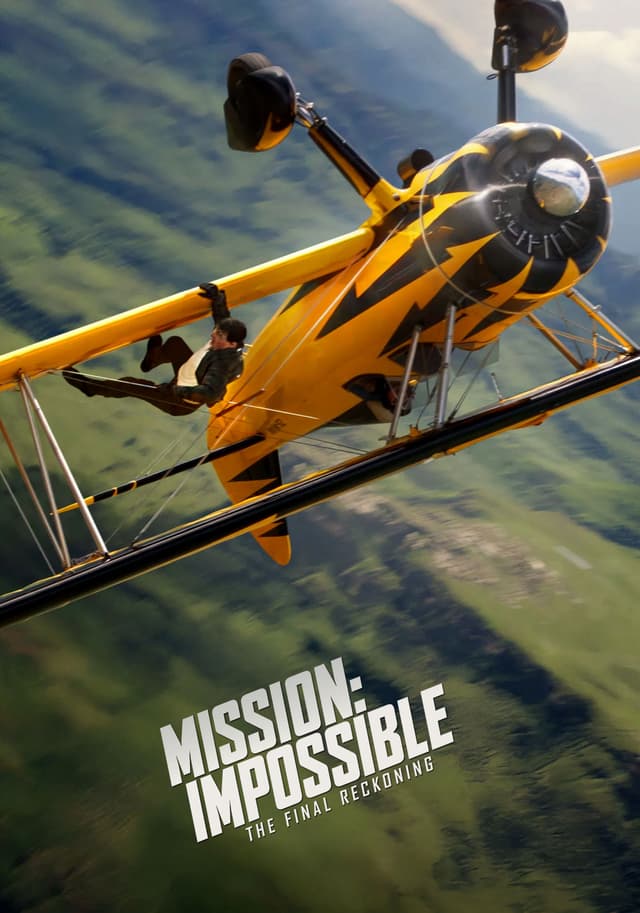
Mission Impossible – The Final Reckoning Budget
 ActionThrillerAdventure2h 50m
Updated
Synopsis
Ethan Hunt and the IMF team face their most dangerous mission yet as they confront a threat that has been building across the franchise's history. The direct continuation of Dead Reckoning Part One brings the long-running espionage saga to its conclusion, with Hunt navigating betrayals, impossible odds, and a final reckoning with forces that threaten global security. The film's globe-spanning narrative moves through England, Malta, Norway, and South Africa as Hunt rallies allies old and new for a confrontation that will determine the future of the Impossible Missions Force.
What Is the Budget of Mission: Impossible - The Final Reckoning?
Mission: Impossible - The Final Reckoning (2025), directed by Christopher McQuarrie and released by Paramount Pictures, carries a reported production budget between $300 million and $400 million. The CMS-listed figure of $400 million places it among the most expensive films ever produced, driven by an extraordinarily prolonged shoot spanning from March 2022 through November 2024. The eighth mainline entry in the franchise serves as the direct conclusion to the storyline begun in Mission: Impossible - Dead Reckoning Part One and was originally announced in January 2019 as a back-to-back production with that film before plans shifted in February 2021.
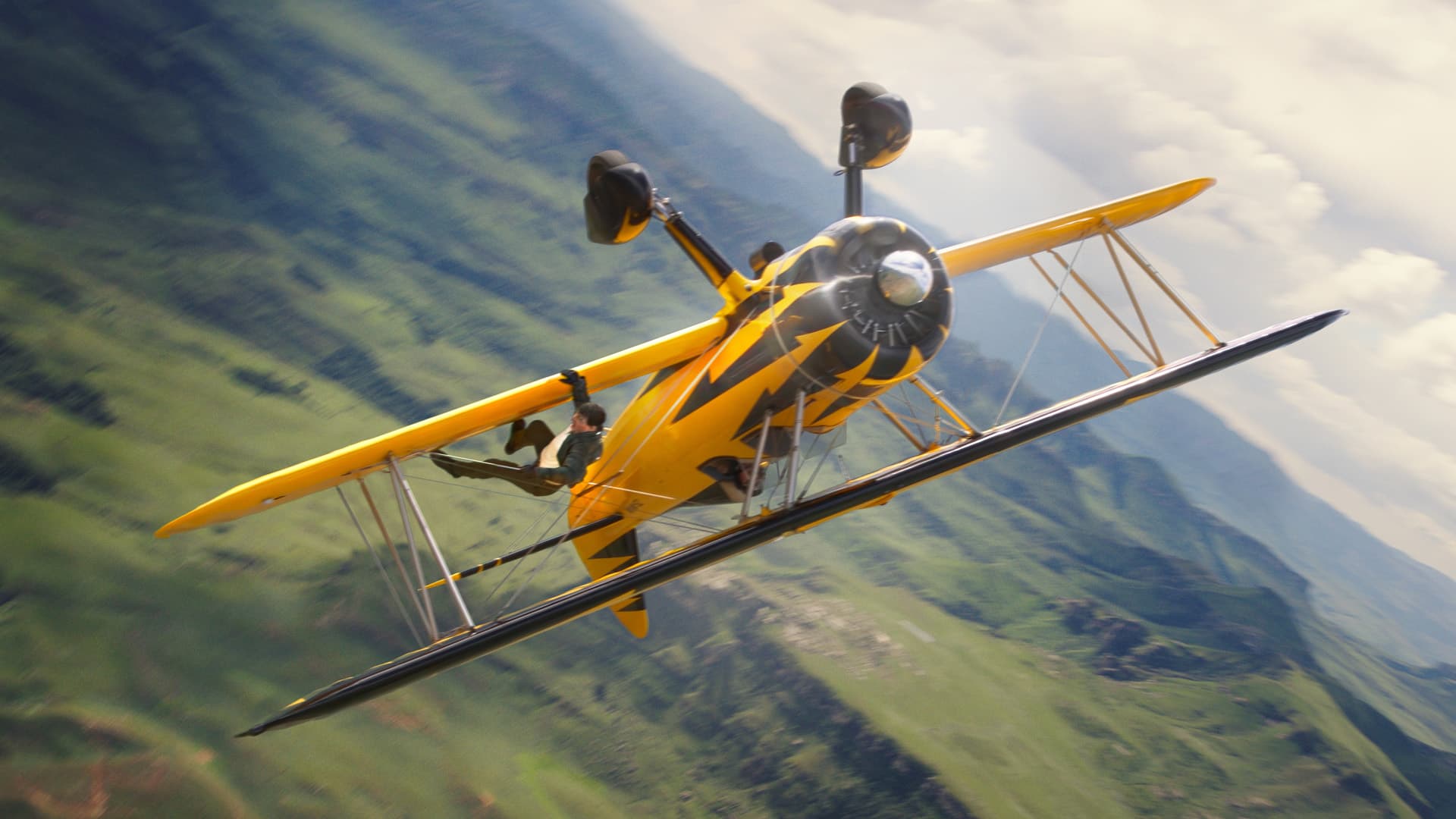
The staggering cost reflects a production that weathered the SAG-AFTRA strike (which suspended filming from July 2023 to March 2024), extensive location shooting across four countries, and Tom Cruise's insistence on performing increasingly dangerous practical stunts. Cruise set a Guinness World Record by completing 16 burning parachute jumps for the film, continuing the franchise's tradition of pushing the boundaries of live-action filmmaking. Paramount and Skydance Media committed to a scope that included aerial sequences, underwater work, and large-scale set pieces filmed without digital stand-ins for the lead actor.
Key Budget Allocation Categories
The $300-400 million budget was distributed across several major production areas:
- Lead Actor and Above-the-Line Talent: Tom Cruise serves as both star and producer, commanding a significant share of the budget through his upfront compensation and back-end participation. Christopher McQuarrie, who has directed four consecutive entries in the franchise, also carries substantial above-the-line costs as both director and co-writer alongside Erik Jendresen.
- Practical Stunts and Action Photography: The franchise's defining commitment to practical stunt work reached new extremes. Cruise performed 16 burning parachute jumps, earning a Guinness World Record, alongside sequences filmed aboard the USS George H.W. Bush aircraft carrier. The stunt coordination, safety infrastructure, specialized camera rigs, and insurance costs for these sequences represent a major budget category that most productions never encounter.
- Extended Production Timeline: Principal photography ran from March 2022 through November 2024, a span of over two and a half years. The SAG-AFTRA strike forced a suspension from July 2023 to March 2024, during which sets, equipment, and crew availability had to be maintained or renegotiated. Carrying a production of this scale for 30+ months generates enormous overhead in facility rentals, insurance, crew retainers, and equipment leases.
- International Filming Locations: Production spanned England (including extensive work at studio facilities), Malta, Norway, South Africa, and the Lake District. Each location required permits, local crew, transportation logistics, set construction, and security. The geographic diversity, while essential for the globe-trotting narrative, multiplied logistics costs substantially compared to a single-location shoot.
- Visual Effects and Post-Production: While the franchise prioritizes practical photography, digital effects are still required for environment extensions, wire removal, compositing of stunt sequences, and the film's more fantastical elements. The 170-minute runtime also meant extended editorial, color grading, and sound mixing timelines. Composers Max Aruj and Alfie Godfrey scored the film, and editor Eddie Hamilton assembled the final cut.
How Does Mission: Impossible - The Final Reckoning's Budget Compare to Similar Films?
At $300-400 million, The Final Reckoning sits in rarefied territory among action blockbusters. Comparing it with franchise peers and genre contemporaries:
- Mission: Impossible - Dead Reckoning Part One (2023): Budget $291,000,000 | Worldwide $571,810,492. The direct predecessor carried a similarly inflated budget due to pandemic-era production costs and underperformed commercially, grossing well below the franchise average. The Final Reckoning's even higher budget compounded the financial pressure on the franchise.
- Top Gun: Maverick (2022): Budget $170,000,000 | Worldwide $1,495,696,292. Tom Cruise's other franchise vehicle cost roughly half as much and became the highest-grossing film of 2022, demonstrating that Cruise's star power could still drive massive returns when paired with a tighter production scope and strong audience word-of-mouth.
- The Dark Knight (2008): Budget $185,000,000 | Worldwide $1,003,045,358. Christopher Nolan's practical-effects-driven blockbuster achieved over $1 billion worldwide at a fraction of The Final Reckoning's cost, though inflation and the franchise's stunt ambitions account for some of the gap.
- Fast X (2023): Budget $340,000,000 | Worldwide $714,543,580. Another action franchise entry that ballooned past $300 million and struggled to justify its costs at the box office, reflecting a broader industry trend of escalating blockbuster budgets with diminishing returns.
- John Wick: Chapter 4 (2023): Budget $100,000,000 | Worldwide $440,157,655. Lionsgate's action franchise achieved strong returns at a third of The Final Reckoning's budget, illustrating how action films with lower cost bases can deliver better ROI even with smaller total grosses.
Mission: Impossible - The Final Reckoning Box Office Performance
Mission: Impossible - The Final Reckoning opened in the United States on May 23, 2025 (Memorial Day weekend), earning $79 million in its domestic opening, the largest opening weekend in the franchise's history. However, given the $300-400 million production budget plus an estimated $150-200 million in global prints and advertising costs, the film faced a steep path to profitability.
Box Office Breakdown
Mission Impossible – The Final Reckoning

At approximately +50%, Mission Impossible , The Final Reckoning returned roughly $1.50 for every $1 of production budget invested during its theatrical run.
With a worldwide gross of $598.8 million against a budget that could reach $400 million, The Final Reckoning has been classified as a box office disappointment. The break-even threshold, accounting for theatrical distribution fees and marketing costs, likely sits between $800 million and $1 billion. The film's 49.7% ROI against the production budget alone does not account for the substantial P&A investment, meaning the theatrical run almost certainly resulted in a loss before ancillary revenues from streaming, home video, and television licensing are factored in.
The international split of 67% ($401.4 million) versus 33% domestic ($197.4 million) is typical for the franchise, but both figures fell short of what was needed to recoup the inflated investment. For comparison, the franchise's peak performer, Mission: Impossible - Fallout (2018), earned $791 million worldwide on a $180 million budget.
Mission: Impossible - The Final Reckoning Production History
Paramount Pictures first announced plans for what would become The Final Reckoning in January 2019, when the studio revealed that the seventh and eighth Mission: Impossible films would shoot back-to-back under Christopher McQuarrie's direction. This ambitious plan was modeled on the approach Peter Jackson used for The Lord of the Rings, aiming to deliver a two-part conclusion to the franchise's overarching narrative. However, by February 2021, the studio confirmed the films would be produced sequentially rather than simultaneously, with Dead Reckoning Part One completing first.
Principal photography for The Final Reckoning began in March 2022, picking up where Dead Reckoning's production infrastructure left off. Filming took place across England, Malta, Norway, South Africa, and the Lake District, with significant work aboard the USS George H.W. Bush aircraft carrier. The production's geographic ambition was matched by its stunt demands: Tom Cruise performed increasingly complex practical sequences, culminating in 16 burning parachute jumps that earned him a Guinness World Record.
The SAG-AFTRA strike, which began in July 2023, forced the production into suspension. Filming did not resume until March 2024, creating a gap of approximately eight months during which the production carried significant overhead costs. The strike's impact on the budget was substantial, as maintaining sets, retaining key crew, and renegotiating schedules across multiple international locations added tens of millions to the final cost.
Post-production extended through early 2025, with the film premiering in Tokyo on May 5, 2025 and screening out of competition at the Cannes Film Festival on May 14, 2025 before its wide U.S. release on May 23, 2025. The 170-minute runtime reflected McQuarrie's expansive vision for the franchise conclusion, though critics would later note that the film's second act suffered from pacing issues.
Awards and Recognition
Mission: Impossible - The Final Reckoning received recognition primarily for its technical achievements and action filmmaking. The film won the Saturn Award for Best Action Film and Tom Cruise received the Saturn Award for Best Actor, continuing the franchise's strong showing at the genre-focused ceremony. The Critics' Choice Super Awards honored it as Best Action Movie, and the film's stunt team earned ensemble awards recognizing the extraordinary practical work.
The stunt community, in particular, celebrated Cruise's Guinness World Record for the 16 burning parachute jumps, which was widely cited as one of the most remarkable practical stunts in film history. While the film did not receive significant attention from the Academy Awards, its technical craftsmanship in cinematography (Fraser Taggart) and editing (Eddie Hamilton) was acknowledged within industry circles as among the most demanding work in contemporary action cinema.
Critical Reception
Mission: Impossible - The Final Reckoning received generally positive reviews, earning an 80% approval rating on Rotten Tomatoes and a 67 out of 100 on Metacritic. Audiences gave it an A- CinemaScore, indicating solid audience satisfaction despite the mixed critical consensus on certain aspects of the film.
Critics praised the film's practical stunt work and action sequences, with several reviewers calling the burning parachute jumps and aircraft carrier sequences among the best action filmmaking of the decade. Tom Cruise's commitment to performing his own stunts at age 62 drew widespread admiration, and Christopher McQuarrie's direction of the set pieces was singled out as the film's strongest element.
The primary criticisms centered on the film's 170-minute runtime and second-act pacing. Several reviewers felt the narrative momentum stalled in the middle section as the film balanced its espionage plot mechanics with character payoffs for the franchise's long-running ensemble. The conclusion to the storyline begun in Dead Reckoning Part One received a more divided response, with some critics finding the resolution satisfying and others viewing it as overly complex for what is fundamentally an action spectacle.
Frequently Asked Questions
How much did it cost to make Mission: Impossible - The Final Reckoning (2025)?
The production budget is reported between $300 million and $400 million, with the CMS figure at $400 million. Costs were driven by a 2.5-year shoot across England, Malta, Norway, and South Africa, the SAG-AFTRA strike suspension, Tom Cruise's practical stunts (including 16 burning parachute jumps), and extensive location work aboard the USS George H.W. Bush.
How much did Mission: Impossible - The Final Reckoning earn at the box office?
The film grossed $197,413,515 domestically and $401,353,542 internationally for a worldwide total of $598,767,057. It opened at $79 million domestically over Memorial Day weekend, the largest opening in franchise history.
Was Mission: Impossible - The Final Reckoning profitable?
The film has been classified as a box office disappointment. Against a $300-400 million production budget plus an estimated $150-200 million in marketing costs, the break-even point likely sits between $800 million and $1 billion. The $598.8 million worldwide gross falls well short of that threshold on theatrical revenue alone.
Who directed Mission: Impossible - The Final Reckoning?
Christopher McQuarrie directed the film, his fourth consecutive entry in the franchise following Rogue Nation (2015), Fallout (2018), and Dead Reckoning Part One (2023). He also co-wrote the screenplay with Erik Jendresen.
What stunts did Tom Cruise perform in The Final Reckoning?
Cruise performed 16 burning parachute jumps, earning a Guinness World Record for the feat. The film also involved sequences aboard the USS George H.W. Bush aircraft carrier and extensive practical action across multiple countries, continuing Cruise's tradition of performing his own stunts without digital stand-ins.
Why was The Final Reckoning so expensive to produce?
The budget ballooned due to several factors: an unprecedented 2.5-year shoot from March 2022 to November 2024, the SAG-AFTRA strike suspending production for eight months (July 2023 to March 2024) while overhead continued, filming across four countries, practical stunt work requiring specialized safety infrastructure, and Tom Cruise's above-the-line compensation as star and producer.
How does The Final Reckoning compare to other Mission: Impossible films at the box office?
The Final Reckoning's $598.8 million worldwide gross places it above Dead Reckoning Part One ($571.8 million) but well below the franchise peak of Mission: Impossible - Fallout ($791 million on a $180 million budget). The significantly higher budget means the ROI is the lowest in the franchise's history.
Was The Final Reckoning shown at any film festivals?
Yes. The film premiered in Tokyo on May 5, 2025 and screened out of competition at the Cannes Film Festival on May 14, 2025, before its wide U.S. theatrical release on May 23, 2025.
What did critics think of Mission: Impossible - The Final Reckoning?
The film received generally positive reviews: 80% on Rotten Tomatoes, 67 on Metacritic, and an A- CinemaScore. Critics praised the practical stunt work and action sequences but noted issues with the 170-minute runtime and second-act pacing.
Did Mission: Impossible - The Final Reckoning win any awards?
The film won the Saturn Award for Best Action Film and Best Actor (Tom Cruise), the Critics' Choice Super Award for Best Action Movie, and stunt ensemble awards. Cruise's 16 burning parachute jumps earned a Guinness World Record.
Filmmakers
Mission Impossible – The Final Reckoning

Official Trailer
Build budgets like this one in Saturation
Start from an industry-standard feature film template, import the schedule and rates you already have, and let the cost report keep itself current as you spend. Real-time collaboration, no spreadsheets.