Miss Peregrine’s Home for Peculiar Children Budget
 FantasyAdventureDramaFamily2h 7m
Updated
Synopsis
When Jake discovers clues to a mystery that spans alternate realities and times, he uncovers a secret refuge known as Miss Peregrine's Home for Peculiar Children. As he learns about the residents and their unusual abilities, Jake realizes that safety is an illusion, and danger lurks in the form of powerful, hidden enemies. Jake must figure out who is real, who can be trusted, and who he really is.
What is the budget of Miss Peregrine’s Home for Peculiar Children?
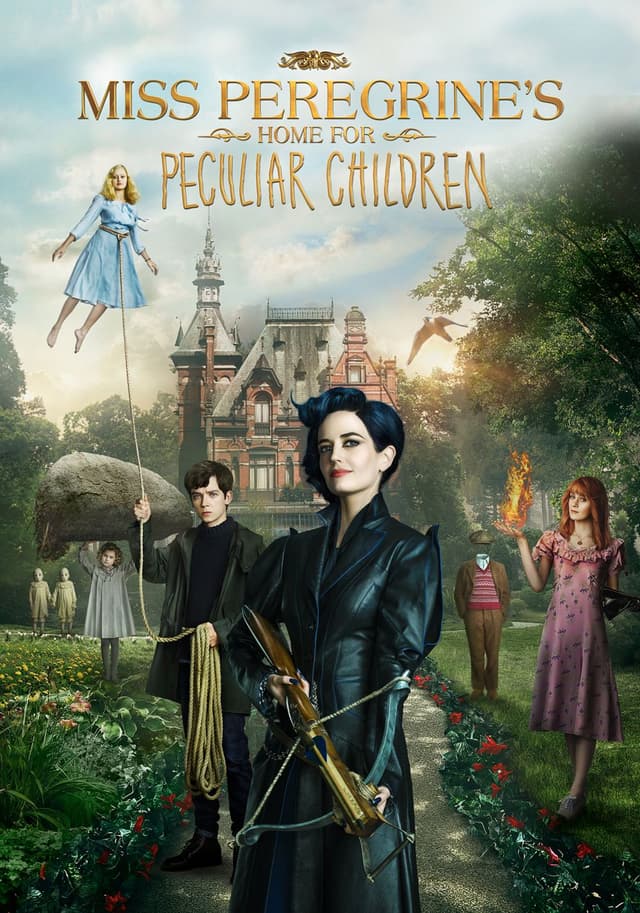
"Miss Peregrine’s Home for Peculiar Children," a fantasy released in 2016, was directed by Tim Burton and stars Eva Green, Asa Butterfield. The production budget was $110,000,000, placing it in the high-budget range for fantasy productions of its era.
Key Budget Allocation Categories
While specific budget breakdowns are not publicly available, typical cost drivers for a fantasy production like this include:
- Visual Effects & Creature Design: Fantasy productions require extensive VFX for magical elements, mythical creatures, and fantastical battle sequences.
- Costumes, Prosthetic Makeup & Production Design: Period-inspired or wholly original costumes, elaborate prosthetic and makeup applications, and richly detailed set construction are hallmarks of fantasy filmmaking.
- Music Score & Sound Design: Fantasy epics typically commission full orchestral scores recorded with 80 to 100 piece ensembles, plus extensive sound design for magical effects, creature vocalizations, and immersive world audio.
What were the major cost factors in Miss Peregrine’s Home for Peculiar Children?
Several factors contributed to the overall production costs of "Miss Peregrine’s Home for Peculiar Children."
- Visual Effects: Visual Effects & Creature Design is one of the primary cost drivers in fantasy productions of this scale.
- Costumes: Costumes, Prosthetic Makeup & Production Design is one of the primary cost drivers in fantasy productions of this scale.
- Music Score: Music Score & Sound Design is one of the primary cost drivers in fantasy productions of this scale.
How Does Miss Peregrine’s Home for Peculiar Children's Budget Compare to Similar Films?
At $110,000,000, Miss Peregrine’s Home for Peculiar Children sits in the high-budget range. Here is how it compares to productions with a similar budget:
- 300: Rise of an Empire (2014): Budget $110,000,000 , Gross $337,580,051
- Ocean's Twelve (2004): Budget $110,000,000, Worldwide Gross $362,744,280
- Deadpool 2 (2018): Budget $110,000,000, Worldwide Gross $785,896,632
- Deepwater Horizon (2016): Budget $110,000,000, Worldwide Gross $121,790,376
- Ender's Game (2013): Budget $110,000,000, Worldwide Gross $125,537,191
The median budget for wide-release fantasy films in the 2010s ranges from $30 to 80M for mid-budget to $150M+ for tentpoles.
Miss Peregrine’s Home for Peculiar Children Box Office Performance
"Miss Peregrine’s Home for Peculiar Children" earned $87,242,834 domestically and $296,482,446 worldwide at the box office. Against a production budget of $110,000,000, the film performed strongly at the box office.
A film typically needs to earn approximately twice its production budget to cover marketing and distribution costs. For "Miss Peregrine’s Home for Peculiar Children," that break-even threshold was roughly $220,000,000. With worldwide earnings of $296,482,446, the film cleared that threshold comfortably.
Box Office Breakdown
Miss Peregrine’s Home for Peculiar Children

At 169.5%, "Miss Peregrine’s Home for Peculiar Children" earned roughly $2.7 for every $1 invested in production.
Awards and Recognition
2 wins & 12 nominations total
Official Trailer
Build budgets like this one in Saturation
Start from an industry-standard feature film template, import the schedule and rates you already have, and let the cost report keep itself current as you spend. Real-time collaboration, no spreadsheets.