Midnight Cowboy Budget
 Drama1h 53m
Updated
Synopsis
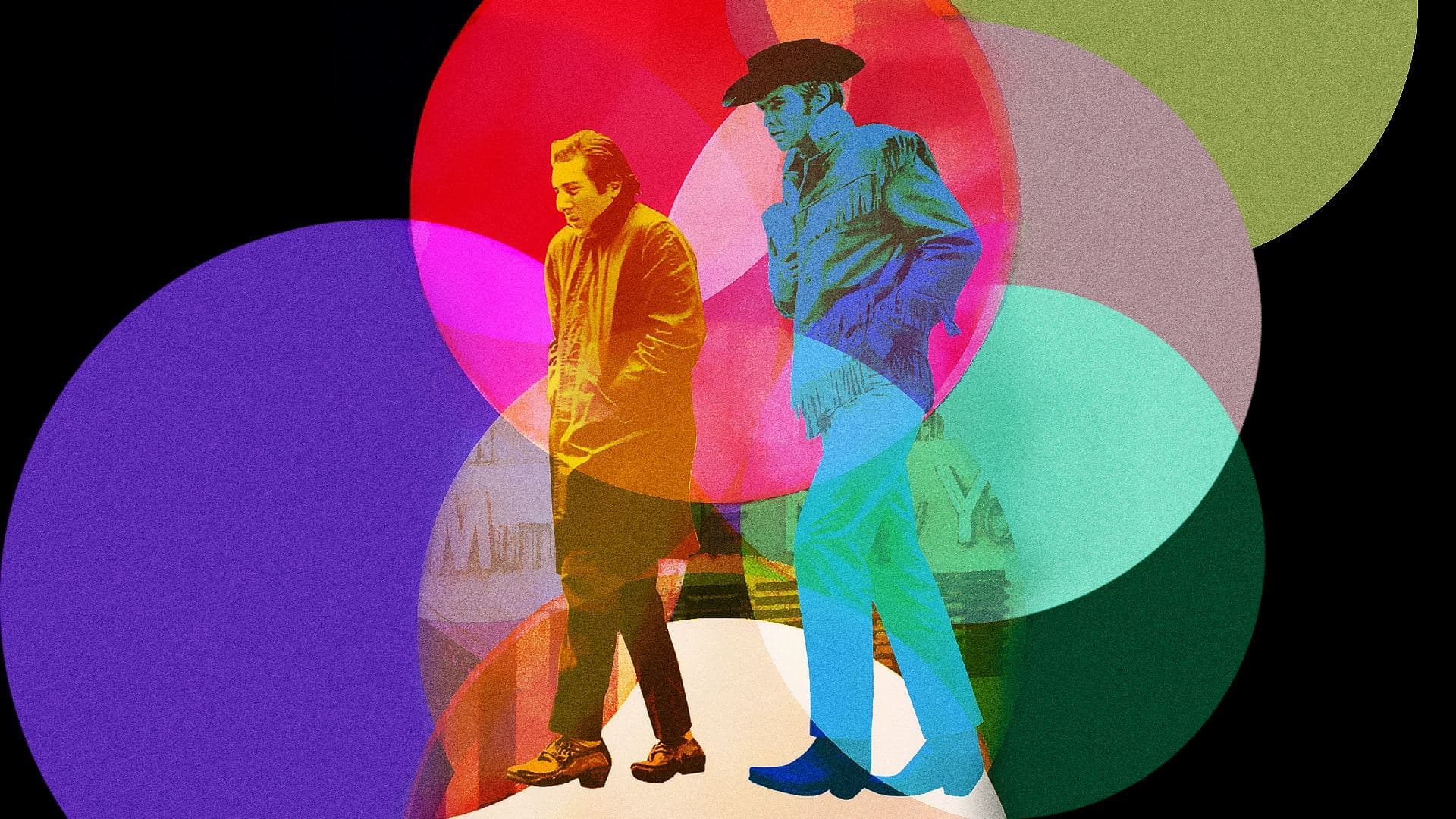
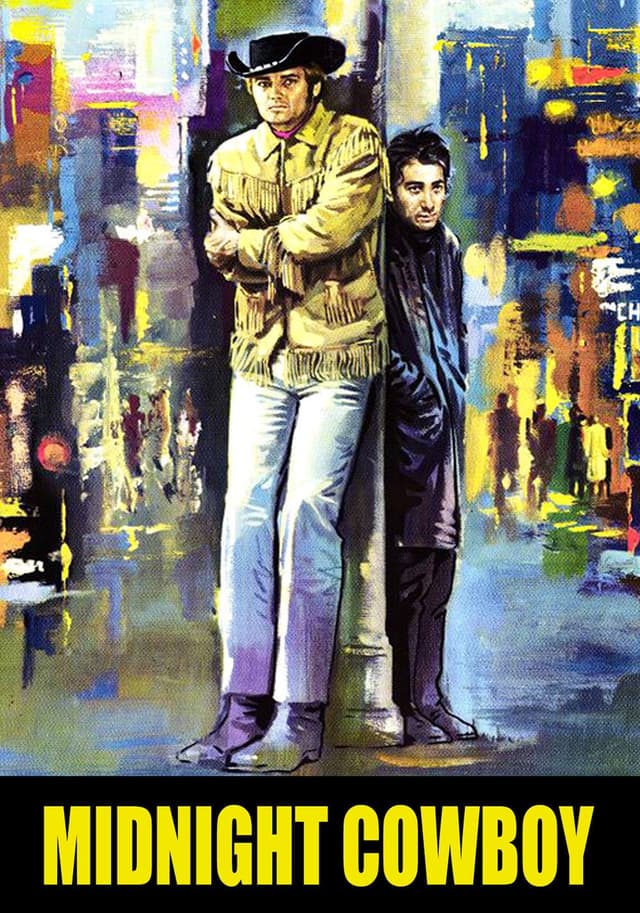
Texas greenhorn Joe Buck arrives in New York City for the first time. Preening himself as a real "hustler", he finds that he is the one getting "hustled" until he teams up with down-and-out but resilient outcast Ratso Rizzo. The initial "country cousin meets city cousin" relationship deepens. In their efforts to bilk a hostile world rebuffing them at every turn, this unlikely pair progress from partners in shady business to comrades. Each has found his first real friend.
What is the budget of Midnight Cowboy?
"Midnight Cowboy," a drama released in 1969, was directed by John Schlesinger and stars Dustin Hoffman, Jon Voight. The production budget was $3,600,000, placing it in the micro-budget range for drama productions of the 1960s.
Key Budget Allocation Categories
While specific budget breakdowns are not publicly available, typical cost drivers for a drama production like this include:
- Above-the-Line Talent: Drama films live or die on the strength of their performances.
- Location Filming & Period Production Design: Authentic locations , whether contemporary or historical , require scouting, permits, travel, lodging, and often significant dressing to match the story's time period.
- Post-Production, Color Grading & Score: The editorial process for dramas is typically longer than genre films, with careful attention to pacing and tone.
- Production: The opening scenes were filmed in Big Spring, Texas, in 1968.
What were the major cost factors in Midnight Cowboy?
Several factors contributed to the overall production costs of "Midnight Cowboy."
- Above-the-Line Talent: Above-the-Line Talent is one of the primary cost drivers in drama productions of this scale.
- Location Filming: Location Filming & Period Production Design is one of the primary cost drivers in drama productions of this scale.
- Post-Production: Post-Production, Color Grading & Score is one of the primary cost drivers in drama productions of this scale.
How Does Midnight Cowboy's Budget Compare to Similar Films?
At $3,600,000, Midnight Cowboy sits in the micro-budget range. Here is how it compares to productions with a similar budget:
- The Children's Hour (1961): Budget $3,600,000, Worldwide Gross $3,000,000
- Carandiru (2003): Budget $3,684,600, Worldwide Gross $10,782,155
- My Neighbor Totoro (1988): Budget $3,700,000, Worldwide Gross $41,000,000
- Call Me by Your Name (2017): Budget $3,500,000, Worldwide Gross $43,143,046
- Flow (2024): Budget $3,700,000, Worldwide Gross $17,660,107
The median budget for wide-release drama films in the era ranges from $30 to 80M for mid-budget to $150M+ for tentpoles.
Midnight Cowboy Box Office Performance
"Midnight Cowboy" earned $44,785,053 worldwide at the box office. Against a production budget of $3,600,000, the film performed strongly at the box office.
A film typically needs to earn approximately twice its production budget to cover marketing and distribution costs. For "Midnight Cowboy," that break-even threshold was roughly $7,200,000. With worldwide earnings of $44,785,053, the film cleared that threshold comfortably.
Box Office Breakdown
Midnight Cowboy

At 1144%, "Midnight Cowboy" earned roughly $12.44 for every $1 invested in production.
Midnight Cowboy Production History
John Barry composed the score, winning a Grammy Award for Best Instrumental Theme, although he did not receive an on-screen credit. Fred Neil's song, "Everybody's Talkin", won a Grammy Award for Best Contemporary Vocal Performance, Male for Harry Nilsson. Schlesinger chose the song as its theme, and the song underscores the first act.
Awards and Recognition
Won 3 Oscars. 28 wins & 16 nominations total
- Academy Award for Best Writing, Adapted Screenplay: Waldo Salt (42nd Academy Awards)
- National Board of Review: Top Ten Films
- Academy Award for Best Director: John Schlesinger (42nd Academy Awards)
- Academy Award for Best Picture: Jerome Hellman (42nd Academy Awards)
Critical Reception
Critical response to the film has been largely positive. Vincent Canby's lengthy 1969 review in The New York Times was blunt: "a slick, brutal (but not brutalizing) movie version of... Herlihy's 1965 novel. It is tough and good in important ways, although its style is oddly romantic and at variance with the laconic material....
Frequently Asked Questions
How much did it cost to make Midnight Cowboy (1969)?
The production budget was $3,600,000, covering principal photography, cast and crew salaries, locations, sets, post-production, and music. Marketing and distribution (P&A) costs are estimated at an additional $1,800,000 - $2,880,000, bringing the total studio investment to approximately $5,400,000 - $6,480,000.
How much did Midnight Cowboy (1969) earn at the box office?
Midnight Cowboy grossed $44,785,053 domestic, totaling $44,785,053 worldwide.
Was Midnight Cowboy (1969) profitable?
Yes. Against a production budget of $3,600,000 and estimated total costs of ~$9,000,000, the film earned $44,785,053 theatrically - a 1144% ROI on production costs alone.
What were the biggest costs in producing Midnight Cowboy?
The primary cost drivers were above-the-line talent (Dustin Hoffman, Jon Voight, Sylvia Miles); talent compensation, authentic period production design, and meticulous post-production.
How does Midnight Cowboy's budget compare to similar drama films?
At $3,600,000, Midnight Cowboy is classified as a micro-budget production. The median budget for wide-release drama films in the era ranges from $30 - 80M for mid-budget to $150M+ for tentpoles. Comparable budgets: The Children's Hour (1961, $3,600,000); Carandiru (2003, $3,684,600); My Neighbor Totoro (1988, $3,700,000).
Did Midnight Cowboy (1969) go over budget?
There are no widely reported accounts of significant budget overruns for this production. However, studios rarely disclose precise budget overrun figures publicly. The reported production budget reflects the final estimated cost.
What was the return on investment (ROI) for Midnight Cowboy?
The theatrical ROI was 1144.0%, calculated as ($44,785,053 − $3,600,000) ÷ $3,600,000 × 100. This measures gross revenue against production budget only - it does not account for P&A or exhibitor shares.
What awards did Midnight Cowboy (1969) win?
Won 3 Oscars. 28 wins & 16 nominations total.
Who directed Midnight Cowboy and who were the key crew members?
Directed by John Schlesinger, written by Waldo Salt, shot by Adam Holender, with music by John Barry, Toots Thielemans, edited by Hugh A. Robertson.
Where was Midnight Cowboy filmed?
Midnight Cowboy was filmed in United States of America.
Filmmakers
Midnight Cowboy

Official Trailer
Build budgets like this one in Saturation
Start from an industry-standard feature film template, import the schedule and rates you already have, and let the cost report keep itself current as you spend. Real-time collaboration, no spreadsheets.