What Ever Happened to Baby Jane Budget
Updated
Synopsis
A former vaudeville child star viciously torments her paraplegic sister in their decaying Hollywood mansion.
What Is the Budget of What Ever Happened to Baby Jane?
What Ever Happened to Baby Jane? was produced for approximately $825,000, an extraordinarily lean sum even by the standards of 1962 Hollywood. The figure was made possible by an unusual financing arrangement: both Bette Davis and Joan Crawford agreed to waive their normal six-figure upfront salaries and instead accept percentages of the film's net profits. This profit-participation deal was not a sign of their diminished stature so much as a calculated bet that a prestige psychological thriller featuring two screen legends would find an audience.
Producer-director Robert Aldrich structured the production through his Associates and Aldrich Company banner in partnership with Seven Arts Productions, distributing through Warner Bros. The independent structure gave Aldrich tight control over the budget and the shooting schedule. The film shot in roughly three weeks on a shoestring, using a rented Hollywood mansion as the primary location and keeping the crew lean. The result was a production whose economics were driven almost entirely by the creative bets made before principal photography began.
Key Budget Allocation Categories
- Davis and Crawford Profit Participation: Bette Davis and Joan Crawford both deferred their typical upfront fees in exchange for profit percentages of the film's net earnings. That deal made the $825,000 budget possible. Given that the film earned approximately $11 million worldwide, both stars ultimately received far more than they would have commanded as flat salaries, making the arrangement one of the most financially successful talent negotiations in early-1960s independent cinema.
- Robert Aldrich Production Design: Aldrich and his team re-created the look of a decaying Hollywood mansion on a minimal budget by securing a real location in Los Angeles and dressing it in period detail rather than building sets from scratch. The practical approach saved significantly on construction costs while lending the film the texture of a real physical space, which the black-and-white cinematography could exploit through contrast and shadow.
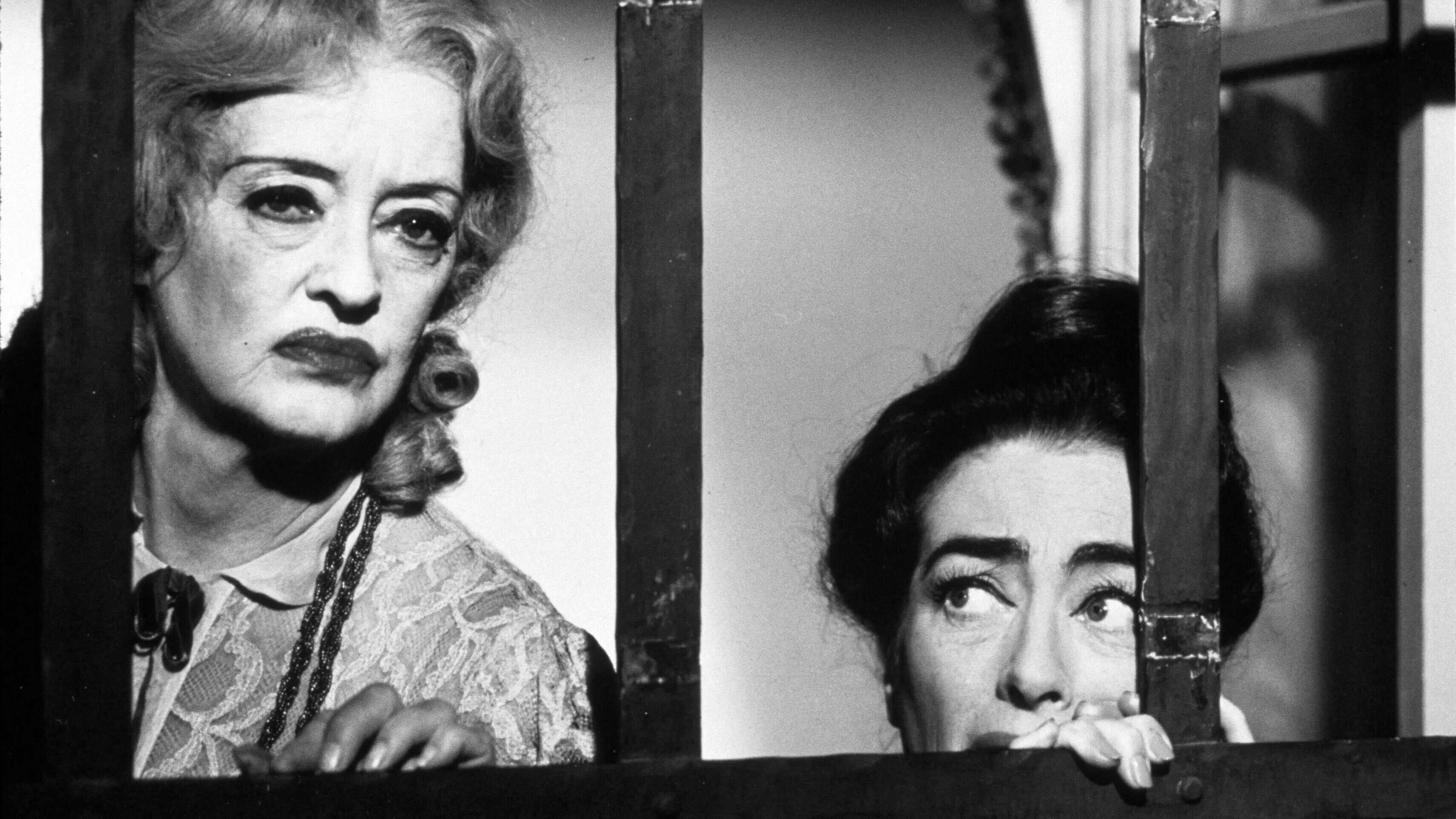
- Ernest Haller Cinematography: Veteran director of photography Ernest Haller, who had shot Bette Davis in Jezebel (1938) and had a long Warner Bros. track record, brought a mastery of chiaroscuro lighting that amplified the film's psychological horror at minimal technical cost. His approach relied on shadows, tight framing, and close-ups rather than elaborate lighting rigs, which kept below-the-line costs in check while delivering the film's visual signature.
- Production Scale and Schedule: The confined, two-hander nature of the story was itself a budget advantage. With most scenes set in the Hudson mansion and a small supporting cast, What Ever Happened to Baby Jane? required a short shooting schedule and a modest crew. That production footprint was essential to staying within the $825,000 ceiling while still achieving the visual and dramatic ambition that Robert Aldrich brought to the project.
How Does Baby Jane's Budget Compare to Similar Films?
What Ever Happened to Baby Jane? occupies a distinctive position in the history of low-budget commercial filmmaking: a prestige psychological thriller made for less than $1 million that outgrossed films costing ten times as much. Here is how it compares to productions with clear genre or thematic parallels.
- Psycho (1960): Budget $800,000 | Worldwide $50,000,000. Alfred Hitchcock's own experiment in low-budget black-and-white filmmaking is the obvious reference point. Like Baby Jane, Psycho used the budget constraint as a creative force, shooting quickly with a television crew and relying on performance and suspense rather than spectacle. Both films demonstrated that psychological horror did not need scale to generate enormous commercial returns.
- Sunset Boulevard (1950): Budget $1,750,000 | Worldwide ~$5,000,000. Billy Wilder's decaying-Hollywood-actress story is the spiritual predecessor to Baby Jane: a faded female star in a gothic mansion, a suffocating relationship, and a narrative that interrogates the cruelty of Hollywood's cult of youth. Baby Jane consciously inhabits the same thematic territory, drawing on audience knowledge of both Davis and Crawford as real Hollywood relics as part of its dramatic strategy.
- Hush...Hush, Sweet Charlotte (1964): Budget $1,000,000 | Domestic ~$4,000,000. Aldrich's immediate follow-up was conceived as an informal sequel to Baby Jane, again featuring Davis alongside Olivia de Havilland after Crawford withdrew from the production. The film proved that Aldrich and Davis had struck on a viable subgenre, the gothic Southern thriller with an aging female star, that could be produced inexpensively and reliably find an audience.
- Mommie Dearest (1981): Budget $5,000,000 | Worldwide $39,000,000. Frank Perry's biopic of Joan Crawford arrived two decades after Baby Jane and found its audience largely through the same Davis-Crawford mythology that Baby Jane had created. Its commercial success, built in part on camp readings of Crawford's persona, is a direct legacy of the cultural work Baby Jane did in turning the two stars' mutual antagonism into a lasting piece of American pop mythology.
What Ever Happened to Baby Jane? Box Office Performance
What Ever Happened to Baby Jane? was released by Warner Bros. on November 6, 1962, and became one of the most profitable films of the year. The film earned approximately $9 million domestically and $11 million worldwide, a remarkable performance for a film with no major studio infrastructure behind its production.
At an $825,000 production budget and an estimated $500,000 in prints and advertising, the total investment was approximately $1,325,000. Theatrical distributors retain roughly 50 percent of gross ticket sales, meaning Warner Bros.'s studio share of the worldwide gross was approximately $5,500,000. The film cleared break-even by a significant margin, returning an estimated $5,500,000 to the studio against a total investment of $1,325,000.
Box Office Breakdown
What Ever Happened to Baby Jane

On production budget alone, What Ever Happened to Baby Jane? earned roughly $13.33 for every $1 invested, placing it among the highest-returning studio films of its decade. The P&A investment and the theatrical split reduce the true net return, but the margin was large enough that both Davis and Crawford received substantial profit participation checks, vindicating the unconventional deal structure that had made the production possible in the first place.
What Ever Happened to Baby Jane? Production History
Henry Farrell's novel What Ever Happened to Baby Jane? was published in 1960 and quickly attracted Hollywood interest. Robert Aldrich acquired the rights and hired screenwriter Lukas Heller to adapt the material. Aldrich had established a reputation for bold, commercially ambitious films on modest budgets, including Kiss Me Deadly (1955), and saw in Farrell's story an opportunity to work with two of Hollywood's most famous and polarizing stars at a price that made the risk manageable. The key strategic insight was that Davis and Crawford's box office value in 1962 was uncertain, making both women willing to accept unconventional financial arrangements.
Securing Davis and Crawford required delicate negotiation. Both women were considered past their box office peak by most studios. Aldrich pitched the film directly to each star as a career reinvention: a chance to play the kind of dark, physically demanding material that neither the major studios nor their agents would normally bring them. Davis, who had more recently stayed active in theater and television, agreed relatively quickly. Crawford, whose MGM career had ended acrimoniously in the early 1950s, was attracted by the chance to appear opposite Davis and by the financial upside of profit participation.
Principal photography took place in the summer of 1962 on a rapid schedule. The primary location was a rented mansion in the Hancock Park neighborhood of Los Angeles, used extensively for both interior and exterior scenes. The on-set tensions between Davis and Crawford were real and well-documented. Davis has been widely cited as wearing a weighted belt during scenes in which she kicked Crawford, causing a genuine back injury. Crawford reportedly wore a weighted vest during scenes in which Davis was required to carry her, making the physical demands heavier. Aldrich managed the hostility by scheduling their scenes together carefully and exploiting their mutual antagonism as dramatic fuel.
The film opened in November 1962 to strong commercial response and mixed genre reviews. Critics who dismissed it as grand guignol camp missed its commercial momentum. When Academy Award nominations were announced, Davis received a Best Actress nomination but Crawford did not. Crawford's subsequent campaign against Davis, in which she contacted Academy voters on behalf of other nominated actresses and then accepted Anne Bancroft's award for The Miracle Worker at the ceremony while Bancroft was on Broadway, became as famous as the film itself. Davis's Oscar loss cemented the Davis-Crawford feud as a permanent fixture of Hollywood mythology.
Awards and Recognition
What Ever Happened to Baby Jane? received five Academy Award nominations at the 35th Academy Awards in 1963: Best Actress (Bette Davis), Best Supporting Actor (Victor Buono), Best Black-and-White Cinematography (Ernest Haller), Best Sound, and Best Costume Design, Black-and-White. The film won one Oscar: Best Costume Design, Black-and-White, awarded to Norma Koch.
Bette Davis's Best Actress nomination was widely regarded as one of the strongest of her career. Her loss to Anne Bancroft for The Miracle Worker was accompanied by the notorious story of Joan Crawford's behind-the-scenes campaign against her, collecting proxy votes from absent nominees and accepting Bancroft's award at the ceremony. The controversy extended the film's cultural life beyond its theatrical run, making the Davis-Crawford rivalry itself a permanent subject of Hollywood history.
In 1994, What Ever Happened to Baby Jane? was selected for preservation in the United States National Film Registry by the Library of Congress as being culturally, historically, or aesthetically significant. The film is now recognized as a founding text of the hagsploitation or psycho-biddy subgenre it effectively created, and it was the direct inspiration for Ryan Murphy and Ian Brennan's FX limited series Feud: Bette and Joan (2017), which dramatized the making of the film with Susan Sarandon as Davis and Jessica Lange as Crawford.
Critical Reception
Initial critical response in 1962 was divided. Reviewers who took the film seriously recognized the sustained power of Davis's performance, a genuinely unnerving piece of physical and psychological acting that required Davis to appear grotesque, delusional, and pitiable in the same frame. Critics who dismissed the film focused on its genre roots and its sensationalist elements, reading it as a vehicle designed to exploit the stars' age and the audience's prurient interest in Hollywood decay.
Long-term reassessment has been nearly unanimous in the film's favor. What Ever Happened to Baby Jane? is now understood as a legitimate psychological horror film that used its low budget and its stars' real-life antagonism as structural elements rather than liabilities. Davis's performance in particular is considered one of the great physical transformations in American screen acting: the white pancake makeup, the baby ringlets, the baby-talk delivery are not camp affectations but a fully committed characterization of delusional arrested development.
The film currently holds a 95 percent approval rating on Rotten Tomatoes based on a limited but representative sample of contemporary and retrospective reviews. It is consistently included in lists of great horror films and great films about Hollywood, and it has accumulated a critical legacy that far exceeds what its modest production budget and its 1962 commercial framing would have predicted. FX's Feud series (2017) introduced the film and the Davis-Crawford mythology to a new generation, further cementing its position in the cultural record.
Frequently Asked Questions
How much did What Ever Happened to Baby Jane? cost to make?
The production budget was approximately $1,025,000, with Bette Davis and Joan Crawford each accepting a reduced base salary plus profit participation. Warner Bros. distributed the Robert Aldrich-directed psychological thriller after multiple major studios passed.
How much did What Ever Happened to Baby Jane? earn at the box office?
The film grossed approximately $9,000,000 in U.S. rentals against a worldwide gross of approximately $12,000,000 in 1962 dollars, equivalent to over $100,000,000 in present-day purchasing power. The result was an enormous return on the modest production budget.
Who stars in What Ever Happened to Baby Jane?
Bette Davis plays the former child star Baby Jane Hudson and Joan Crawford plays her wheelchair-bound sister Blanche, with Victor Buono as the opportunistic pianist Edwin Flagg. The casting of two legendary stars in adversarial roles drove substantial pre-release publicity.
Was there a real feud between Bette Davis and Joan Crawford?
Yes. The two stars had been antagonists for decades and continued the feud throughout production. The Davis-Crawford rivalry was dramatized in the 2017 FX limited series Feud: Bette and Joan, with Susan Sarandon as Davis and Jessica Lange as Crawford.
Who directed What Ever Happened to Baby Jane?
Robert Aldrich directed the film. Aldrich had previously directed Kiss Me Deadly (1955) and went on to direct Hush... Hush, Sweet Charlotte (1964), The Dirty Dozen (1967), and The Longest Yard (1974). Baby Jane was the first feature in what became known as the "psycho-biddy" or hagsploitation subgenre.
Did What Ever Happened to Baby Jane win any Oscars?
The film received five Academy Award nominations, with Bette Davis nominated for Best Actress and Victor Buono for Best Supporting Actor. The film won one Oscar, for Costume Design (Black-and-White) for Norma Koch. Joan Crawford was not nominated, despite arranging a campaign to support the nominees in her place.
What is What Ever Happened to Baby Jane? about?
The film follows former child vaudeville star Jane Hudson, who lives with her former movie-star sister Blanche, wheelchair-bound after a car accident the family attributes to Jane. As Jane descends into mental illness, she increasingly torments her sister, leading to a climactic beach revelation that recasts the entire family history.
Where was What Ever Happened to Baby Jane? filmed?
Principal photography took place at the Producers Studio in Los Angeles, with the exterior of the Hudson home shot at a real residence at 172 South McCadden Place in the Hancock Park neighborhood. The film was shot in black and white over a tight 36-day schedule.
What did critics think of What Ever Happened to Baby Jane?
Reviews were strong, with a 92% approval rating on Rotten Tomatoes in retrospective assessment. Contemporary critics praised the dual lead performances and the bold tonal swings, with Pauline Kael and Bosley Crowther offering notable positive reviews. The film has been preserved in the National Film Registry.
How does What Ever Happened to Baby Jane compare to other Bette Davis films?
What Ever Happened to Baby Jane? revived Bette Davis' career after several commercially disappointing years, leading directly to her supporting role in Hush... Hush, Sweet Charlotte (1964) and the broader psycho-biddy cycle. It remains alongside All About Eve (1950) and Jezebel (1938) among her three most-cited performances.
Official Trailer
Build budgets like this one in Saturation
Start from an industry-standard feature film template, import the schedule and rates you already have, and let the cost report keep itself current as you spend. Real-time collaboration, no spreadsheets.