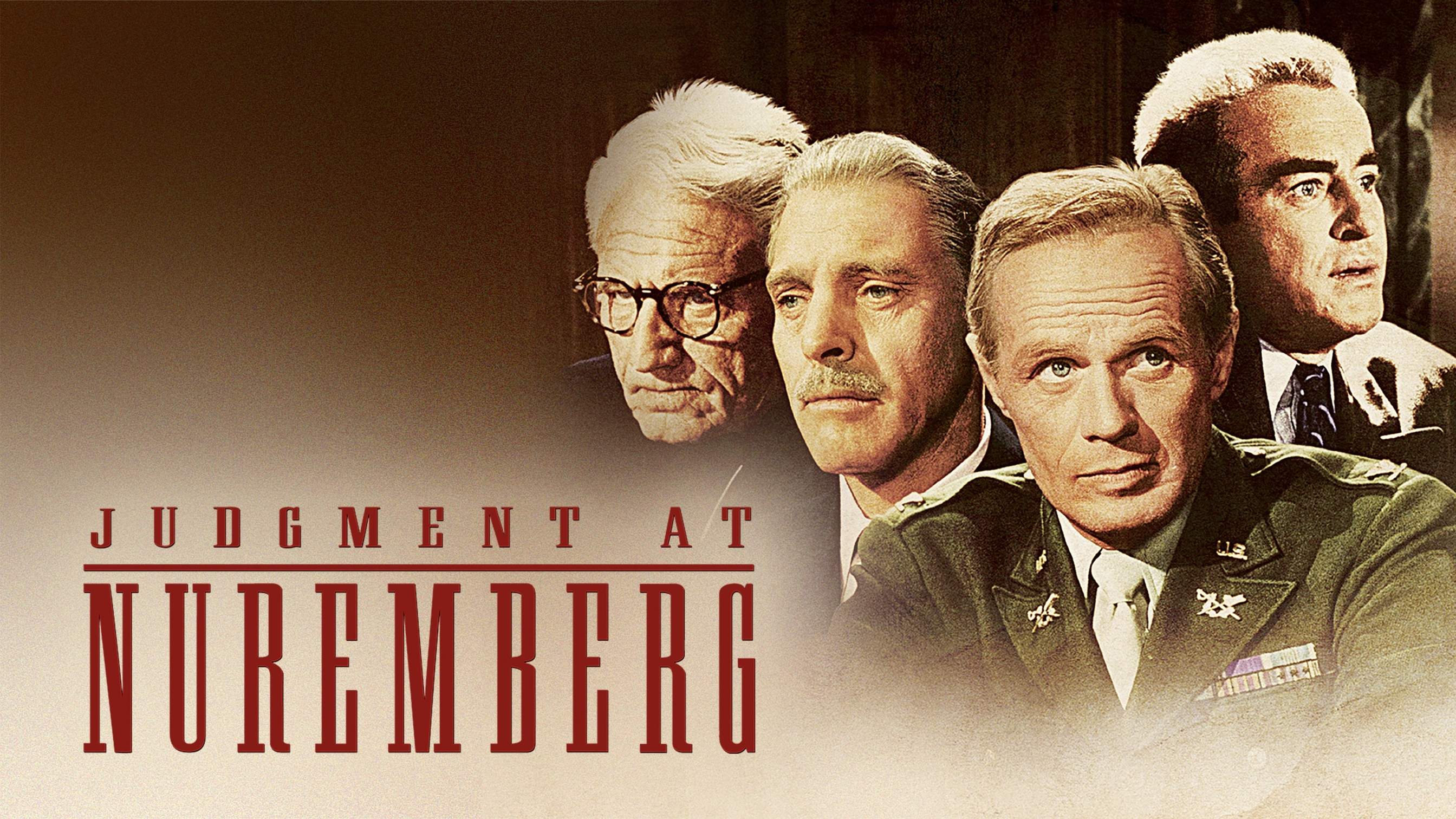
Judgment at Nuremberg Budget
Updated
Synopsis
It has been three years since the most important Nazi leaders had already been tried. This trial is about 4 judges who used their offices to conduct Nazi sterilization and cleansing policies. Retired American judge, Dan Haywood has a daunting task ahead of him. The Cold War is heating up and no one wants any more trials as Germany, and Allied governments, want to forget the past. But is that the right thing to do is the question that the tribunal must decide.
What is the budget of Judgment at Nuremberg?
"Judgment at Nuremberg," a drama released in 1961, was directed by Stanley Kramer and stars Spencer Tracy, Richard Widmark. The production budget was $3,000,000, placing it in the micro-budget range for drama productions of the 1960s.
Key Budget Allocation Categories
While specific budget breakdowns are not publicly available, typical cost drivers for a drama production like this include:
- Above-the-Line Talent: Drama films live or die on the strength of their performances.
- Location Filming & Period Production Design: Authentic locations , whether contemporary or historical , require scouting, permits, travel, lodging, and often significant dressing to match the story's time period.
- Post-Production, Color Grading & Score: The editorial process for dramas is typically longer than genre films, with careful attention to pacing and tone.
- Music & Score: * "Lili Marleen" ** Music by Norbert Schultze (1938) ** Lyrics by Hans Leip (1915) * "Liebeslied" ** Music by Ernest Gold ** Lyrics by Alfred Perry * "Wenn wir marschieren" ** German folk song (ca.
What were the major cost factors in Judgment at Nuremberg?
Several factors contributed to the overall production costs of "Judgment at Nuremberg."
- Above-the-Line Talent: Above-the-Line Talent is one of the primary cost drivers in drama productions of this scale.
- Location Filming: Location Filming & Period Production Design is one of the primary cost drivers in drama productions of this scale.
- Post-Production: Post-Production, Color Grading & Score is one of the primary cost drivers in drama productions of this scale.
How Does Judgment at Nuremberg's Budget Compare to Similar Films?
At $3,000,000, Judgment at Nuremberg sits in the micro-budget range. Here is how it compares to productions with a similar budget:
- Ghost in the Shell (1995): Budget $3,000,000, Worldwide Gross $10,000,000
- Witness for the Prosecution (1957): Budget $3,000,000, Worldwide Gross $9,000,000
- Perfect Blue (1998): Budget $3,000,000, Worldwide Gross $683,666
- In the Mood for Love (2000): Budget $3,000,000, Worldwide Gross $15,867,968
- One Flew Over the Cuckoo's Nest (1975): Budget $3,000,000, Worldwide Gross $108,981,275
The median budget for wide-release drama films in the era ranges from $30 to 80M for mid-budget to $150M+ for tentpoles.
Judgment at Nuremberg Box Office Performance
"Judgment at Nuremberg" earned $10,000,000 worldwide at the box office. Against a production budget of $3,000,000, the film performed strongly at the box office.
A film typically needs to earn approximately twice its production budget to cover marketing and distribution costs. For "Judgment at Nuremberg," that break-even threshold was roughly $6,000,000. With worldwide earnings of $10,000,000, the film cleared that threshold comfortably.
Box Office Breakdown
Judgment at Nuremberg

At 233.3%, "Judgment at Nuremberg" earned roughly $3.33 for every $1 invested in production.
Judgment at Nuremberg Production History
* "Lili Marleen" ** Music by Norbert Schultze (1938) ** Lyrics by Hans Leip (1915) * "Liebeslied" ** Music by Ernest Gold ** Lyrics by Alfred Perry * "Wenn wir marschieren" ** German folk song (ca. 1910) * “Wenn die Soldaten” ** German folk song (ca. 1840) * "Care for Me" ** By Ernest Gold * "Notre amour ne peur" ** By Ernest Gold * "Du, du liegst mir im Herzen" ** German folk song, arrangement by Ernest Gold * "Piano Sonata No.
Awards and Recognition
Won 2 Oscars. 16 wins & 26 nominations total
- Academy Award for Best Writing, Adapted Screenplay: Abby Mann (34th Academy Awards)
- Silver nugget for the best foreign film
- National Board of Review: Top Ten Films
- Academy Award for Best Actor: Maximilian Schell (34th Academy Awards)
Critical Reception
The world premiere was held on December 14, 1961, at the in West Berlin, Germany. and earphones offering the soundtrack dubbed in German, Spanish, Italian and French were made available. Variety wrote: "With the most painful pages of modern history as its bitter basis, Abby Mann's intelligent, thought-provoking screenplay is a grim reminder of man's responsibility to denounce grave evils of which he is aware.
Frequently Asked Questions
How much did it cost to make Judgment at Nuremberg (1961)?
The production budget was $3,000,000, covering principal photography, cast and crew salaries, locations, sets, post-production, and music. Marketing and distribution (P&A) costs are estimated at an additional $1,500,000 - $2,400,000, bringing the total studio investment to approximately $4,500,000 - $5,400,000.
How much did Judgment at Nuremberg (1961) earn at the box office?
Judgment at Nuremberg grossed $10,000,000 domestic, totaling $10,000,000 worldwide.
Was Judgment at Nuremberg (1961) profitable?
Yes. Against a production budget of $3,000,000 and estimated total costs of ~$7,500,000, the film earned $10,000,000 theatrically - a 233% ROI on production costs alone.
What were the biggest costs in producing Judgment at Nuremberg?
The primary cost drivers were above-the-line talent (Spencer Tracy, Richard Widmark, Maximilian Schell); talent compensation, authentic period production design, and meticulous post-production.
How does Judgment at Nuremberg's budget compare to similar drama films?
At $3,000,000, Judgment at Nuremberg is classified as a micro-budget production. The median budget for wide-release drama films in the era ranges from $30 - 80M for mid-budget to $150M+ for tentpoles. Comparable budgets: Ghost in the Shell (1995, $3,000,000); Witness for the Prosecution (1957, $3,000,000); Perfect Blue (1998, $3,000,000).
Did Judgment at Nuremberg (1961) go over budget?
There are no widely reported accounts of significant budget overruns for this production. However, studios rarely disclose precise budget overrun figures publicly. The reported production budget reflects the final estimated cost.
What was the return on investment (ROI) for Judgment at Nuremberg?
The theatrical ROI was 233.3%, calculated as ($10,000,000 − $3,000,000) ÷ $3,000,000 × 100. This measures gross revenue against production budget only - it does not account for P&A or exhibitor shares.
What awards did Judgment at Nuremberg (1961) win?
Won 2 Oscars. 16 wins & 26 nominations total.
Who directed Judgment at Nuremberg and who were the key crew members?
Directed by Stanley Kramer, written by Abby Mann, shot by Ernest Laszlo, with music by Ernest Gold, edited by Frederic Knudtson.
Where was Judgment at Nuremberg filmed?
Judgment at Nuremberg was filmed in United States of America.
Filmmakers
Judgment at Nuremberg

Official Trailer
Build budgets like this one in Saturation
Start from an industry-standard feature film template, import the schedule and rates you already have, and let the cost report keep itself current as you spend. Real-time collaboration, no spreadsheets.