Michael Budget
 MusicDrama127 minutes
Updated
Synopsis
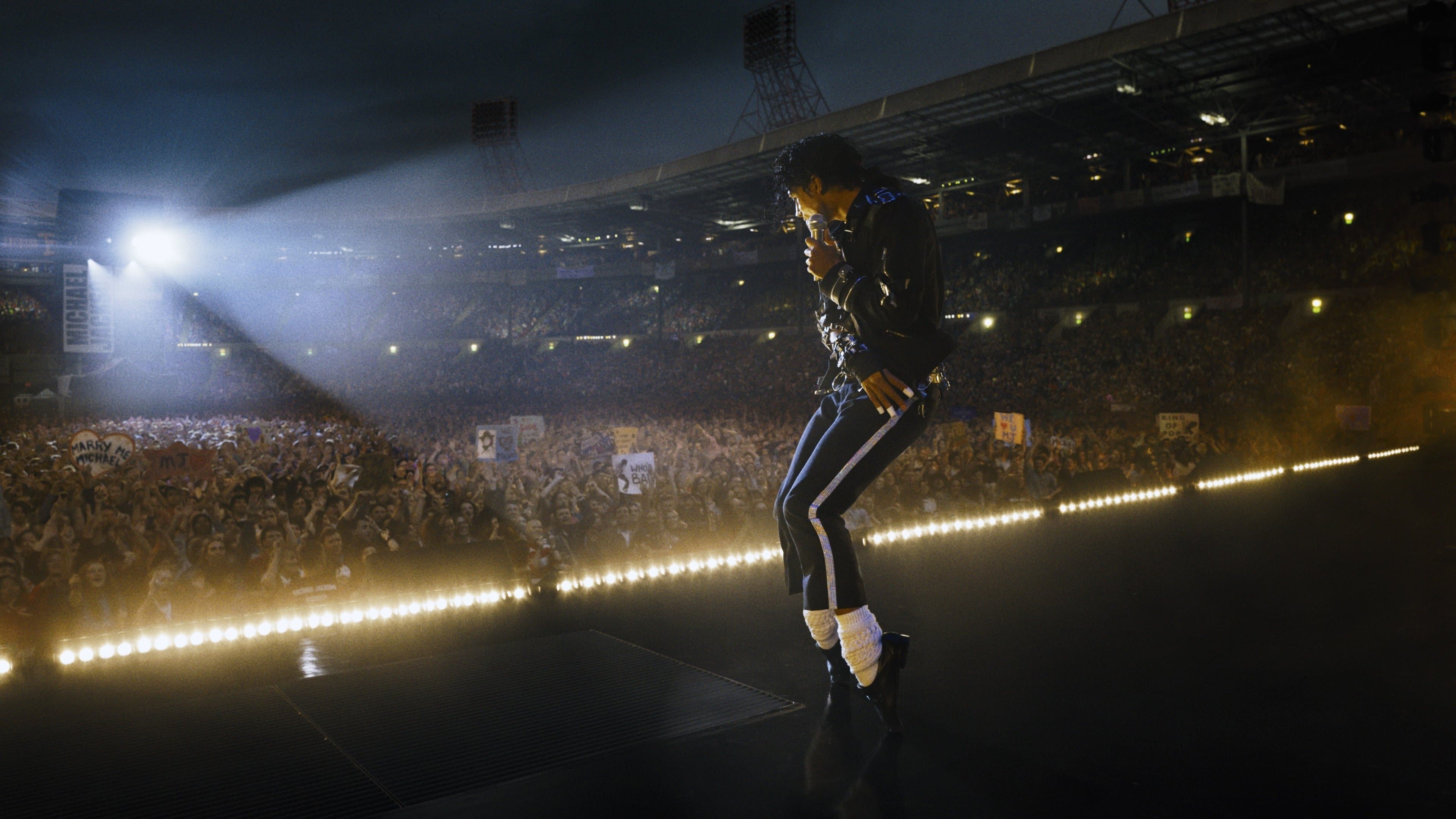
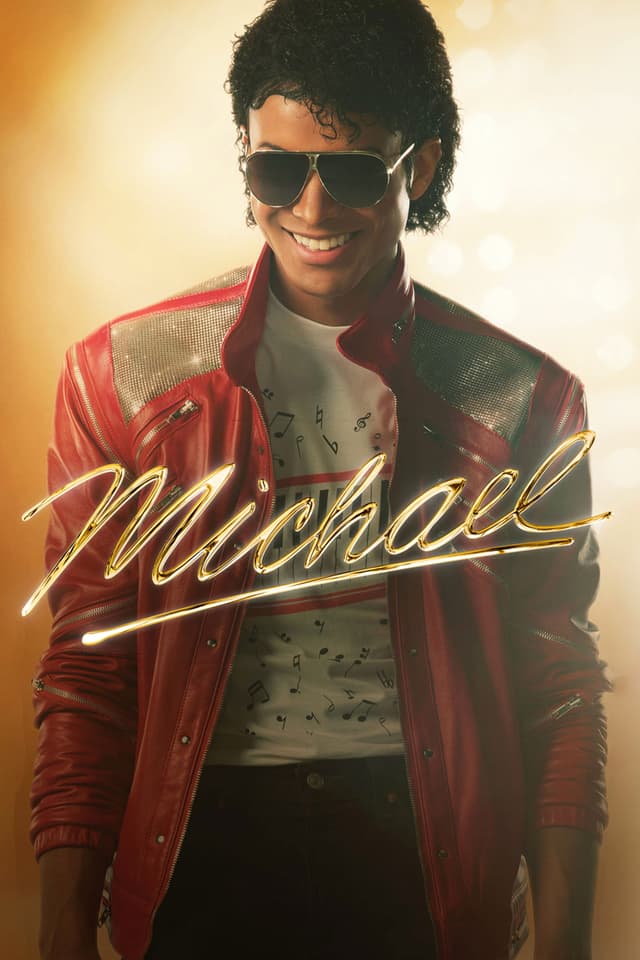
Discover the story of Michael Jackson, one of the most influential artists the world has ever known, and his life beyond the music, tracing his journey from the discovery of his extraordinary talent as the lead of the Jackson Five, to the visionary artist whose creative ambition fueled a relentless pursuit to become the biggest entertainer in the world, highlighting both his life off-stage and some of the most iconic performances from his early solo career.
What Is the Budget of Michael (2026)?
Michael (2026), directed by Antoine Fuqua and distributed domestically by Lionsgate, carries a confirmed production budget of $155,000,000. That figure places it among the most expensive biographical dramas ever produced, more than twice the cost of Elvis (2022) and nearly three times the cost of Bohemian Rhapsody (2018). The film was co-financed by the Jackson estate alongside GK Films and Optimum Productions, with Universal Pictures handling international distribution.
The $155 million budget reflects the final cost after a production that stretched across more than two years. Principal photography ran 80 days in Santa Barbara, California, beginning January 22, 2024, and wrapping May 30, 2024. The California Film Commission projected a $120 million spend on crew wages and vendors alone. A 22-day reshoot in June 2025 restructured the third act and added a new ending after the script was revised to remove direct treatment of the child sexual abuse allegations. Variety reported the reshoots added $10 to $15 million, funded by the Jackson estate. An earlier report cited $50 million for the new sequences; the gap reflects the opacity typical of productions under estate oversight.
With estimated Prints and Advertising costs of $75 to $100 million, the total investment likely approaches $230 to $255 million. That puts the theatrical break-even threshold at roughly $375 million worldwide, a figure only a handful of biographical films have ever reached.
Key Budget Allocation Categories
Michael's $155 million budget was driven by four production realities specific to this film.
- Period Recreation Across Six Decades , The film spans from 1960s Gary, Indiana through Motown-era Detroit, Neverland Ranch, Madison Square Garden, and 1993 Los Angeles. Each setting required era-accurate construction rather than location substitution. Production designer Barbara Ling and costume designer Marci Rodgers built wardrobes and environments covering six distinct periods of American cultural history, each needing to be immediately recognizable to audiences who grew up watching Jackson perform in them.
- Above-the-Line Talent , Antoine Fuqua's director fee reflects a career that includes Training Day, The Equalizer franchise, and Emancipation. Colman Domingo joined following an Academy Award nomination for Rustin (2023). Nia Long, Miles Teller, and Kendrick Sampson anchored the supporting cast at market rates. Jaafar Jackson, Michael's nephew and a first-time film lead, was the Jackson estate's condition for authentic casting rather than a cost-saving choice. His involvement required extensive preparation that extended into the production schedule.
- Visual Effects at Concert Scale , Six VFX houses worked on Michael: Cinesite, Industrial Light & Magic, Folks, Rodeo FX, Rising Sun Pictures, and Lola Visual Effects, with Louis Morin as VFX supervisor. The scope required de-aging performers, recreating stadium concert environments, and compositing period-accurate crowds and stages across multiple decades. The original assembly ran three and a half hours, meaning the VFX pipeline processed significantly more material than the 127-minute theatrical version required.
- Script Overhaul and Reshoots , The third act was substantially restructured after the decision to remove the original treatment of the abuse allegations. Fuqua shot 22 days of replacement material in June 2025, including a new ending. Replacing a completed third act is structurally different from adding supplemental footage, and its cost reflects that distinction.
How Does Michael's Budget Compare to Similar Films?
At $155,000,000, Michael sits at the top of the biographical drama budget range. The most relevant comparisons are other musician biopics and estate-adjacent productions at studio scale.
- Bohemian Rhapsody (2018) , Budget $52,000,000 | Worldwide $910,802,688. The Queen biopic is the commercial ceiling for the musician biopic genre and was produced for one-third of Michael's budget. Its success established the market expectation that estate-approved biopics can generate nine-figure worldwide returns. Michael needs to earn more than double Bohemian Rhapsody's worldwide gross just to approach its budget efficiency.
- Elvis (2022) , Budget $85,000,000 | Worldwide $287,100,000. The closest structural comparison: an estate-adjacent American music icon biopic with a relatively unknown lead, directed by an established filmmaker at major-studio scale. Elvis earned its budget back but fell short of the breakout its production cost implied. Michael carries $70 million more in budget against a comparable commercial ceiling.
- Rocketman (2019) , Budget $40,000,000 | Worldwide $195,300,000. The Elton John biopic was profitable at less than a third of Michael's scale and with more creative latitude than either Elvis or Michael. It demonstrates that the genre performs better when the estate's fingerprints are lighter on the final cut.
- Ray (2004) , Budget $40,000,000 | Worldwide $123,700,000. The Ray Charles biopic won Jamie Foxx the Academy Award and grossed three times its budget. Produced without the kind of estate control that shaped Michael, it addressed its subject's personal failings directly. Ray cost $115 million less than Michael and told a less sanitized version of a comparable story.
- I, Tonya (2017) , Budget $11,000,000 | Worldwide $53,900,000. Included as a counterexample: a biographical drama that leaned into its subject's controversy rather than away from it, made for a fraction of the scale, and earned critical and awards recognition that sanitized biopics rarely achieve.
Michael (2026) Box Office Performance
Michael opened on April 24, 2026, in 3,955 theaters domestically, earning $39,500,000 on its opening Friday alone. The film's opening weekend of $97,206,874 shattered the record for the best music biopic opening previously held by Straight Outta Compton (2015) at $60,000,000 and Bohemian Rhapsody (2018) at $51,000,000. Combined with $120,000,000 from international markets, the global opening reached $217,000,000. The film has since accumulated $372,205,734 domestically and $629,836,000 internationally for a worldwide total of $1,001,690,578 as tracked by Box Office Mojo, establishing it as the highest-grossing music biopic ever made.
Box Office Breakdown
Michael (2026)

Michael earned roughly $6.46 in worldwide gross for every $1 invested in production, an exceptional result for an original biopic without a pre-existing film franchise. The A- CinemaScore and 94% Rotten Tomatoes Popcornmeter audience score drove strong word of mouth among fans, sustaining legs well beyond the opening weekend: the domestic gross of $372,205,734 represents a 3.8x multiplier on the $97,206,874 opening weekend. International markets, particularly in Europe and Asia where Jackson's fanbase remains deeply invested, contributed $629,836,000, making the film more internationally skewed (62.9% of worldwide gross) than most domestic-first biopics.
With a 328% gross-to-total-investment ratio, Michael (2026) has firmly established itself as one of the most profitable music biopics of all time on a theatrical basis alone. These figures represent theatrical revenue only and do not include home entertainment, streaming licensing, or merchandise revenue, which will further bolster the film's overall profitability for Lionsgate. The film's performance is particularly notable given the overwhelmingly negative critical response (39% on Rotten Tomatoes), demonstrating that audience appetite for the music and Jaafar Jackson's performance proved immune to critical consensus.
Michael (2026) Production History
Michael was developed by Graham King's GK Films in partnership with the Jackson estate. John Logan received sole screenplay credit, with additional off-screen literary material attributed to Kenya Barris and Peter Saji. Earlier script versions addressed the child sexual abuse allegations against Jackson directly. King described the intent as wanting to "humanize but not sanitize" the subject. Dan Reed, director of the 2019 documentary Leaving Neverland, read a leaked version and described it as containing "outright distortions" of the allegations.
After the script was revised, filming began January 22, 2024, in Santa Barbara, California, delayed from its originally planned mid-2023 start by the SAG-AFTRA strike. The 80-day principal photography schedule wrapped May 30, 2024. Dion Beebe served as cinematographer, Barbara Ling as production designer, and Marci Rodgers as costume designer.
The original assembly ran three and a half hours. In April 2025, Variety reported discussions about splitting the film into two separate releases. Those plans did not materialize. The 22-day reshoots in June 2025 restructured the third act and produced the final 127-minute theatrical cut. VFX work involved Cinesite, Industrial Light & Magic, Folks, Rodeo FX, Rising Sun Pictures, and Lola Visual Effects. John Ottman and Harry Yoon edited the final cut. Lior Rosner composed the original score. The soundtrack features 13 Michael Jackson songs spanning his work with the Jackson 5 through selections from Off the Wall (1979), Thriller (1982), and Bad (1987).
The film premiered in Berlin on April 10, 2026. Lionsgate handles domestic distribution; Universal Pictures covers international territories. Lionsgate chairman Adam Fogelson noted the studio was positioned to deliver additional material from the extended cut if the first film performed, citing approximately 30 percent of the longer version as potentially usable in a sequel.
On opening weekend in April 2026, Michael set a new record for the highest-grossing music biopic opening of all time, surpassing both Straight Outta Compton and Bohemian Rhapsody. Variety reported the film earned $39.5 million on its opening Friday from 3,955 locations, with projections reaching $90 to $100 million for the full weekend.
Awards and Recognition
Michael has received 2 wins and 1 nomination across award circuits at the time of this writing.
Critical Reception
Critical response was sharply divided along critic-versus-audience lines. On Rotten Tomatoes, the film holds a 39% Tomatometer score from critics, with a 94% Popcornmeter audience score — one of the widest critic-audience gaps of 2026. On Metacritic, the film holds a 39 out of 100 from 51 critics, indicating generally unfavorable reviews, while the user score stands at 7.9 out of 10. Audiences surveyed by CinemaScore gave the film an A-, with PostTrak reporting an 85% definite recommend rate, figures that explain how a film with overwhelmingly negative reviews still opened to $97,206,874 domestically. The majority of critical reviews centered on the film's decision to avoid addressing the child sexual abuse allegations against Jackson, treating a contested and unresolved part of his legacy as off-limits.
Owen Gleiberman, writing for Variety, called Michael "a surprisingly effective middle-of-the-road biopic" and offered the most substantive positive case for the film, praising Jaafar Jackson's central performance: "he nails the look, the voice, the electrostatic moves, and the mix of delicacy and steel that made Michael who he was." Peter Bradshaw of The Guardian gave it two out of five stars, acknowledging Jaafar's performance while criticizing the film overall: "Jaafar fabricates Michael's onstage dancing and singing style with terrific, intuitive flair and the film naturally zaps you with the superb tracks themselves. But this is a frustratingly shallow, inert picture, a kind of cruise-ship entertainment."
Robert Daniels of RogerEbert.com gave the film one out of four stars: "Fuqua might've had some cameras and microphones on hand to produce moving images and sound for this estate-approved King of Pop biopic. But make no mistake about it: Michael isn't a movie. It's a filmed playlist in search of a story." Nicholas Barber of BBC News gave it one out of five, calling it "a bland and barely competent daytime TV movie." John Nugent of Empire gave it two out of five, calling it "cosplay tribute with no artistic point of view."
Robbie Collin of The Telegraph wrote that the film "refused to address the elephant in the room." Kate Erbland of IndieWire concluded that by removing that material, "the final film has been mostly stripped of any humanity, good and bad," calling it "glossy, sanitised, and surprisingly dull."
Frequently Asked Questions
How much did it cost to make Michael (2026)?
The production budget for Michael (2026) has not been publicly disclosed. Marketing and distribution costs would be additional.
How much did Michael (2026) earn at the box office?
Box office figures for Michael (2026) are not yet available.
Was Michael (2026) profitable?
Profitability data is not yet available for Michael (2026). The film has not reported public budget or box office figures sufficient for a profitability analysis.
What were the biggest costs in producing Michael (2026)?
The primary cost drivers for Michael (2026) included above-the-line talent (director, lead cast, and producers), visual effects and post-production, production design and set construction, location shooting, and music and scoring. The specific allocation varies by production, but these categories typically represent the majority of a Music, Drama film's budget.
How does Michael (2026)'s budget compare to similar films?
Budget comparison data is not available for Michael (2026) as the production budget has not been publicly reported.
Did Michael (2026) go over budget?
There are no public reports confirming whether Michael (2026) went over its original budget. Production budget overruns are common in the industry but are rarely disclosed publicly unless they become newsworthy due to significant delays, reshoots, or production issues.
What was the ROI of Michael (2026)?
ROI data is not yet available for Michael (2026). The film either has not been released or has not reported sufficient financial data for an ROI calculation.
What awards did Michael (2026) win?
Award information for Michael (2026) is based on reported nominations and wins. Check current awards databases for the most up-to-date recognition.
Who directed Michael (2026)?
Directing credits for Michael (2026) can be found in the filmmakers section on this page.
Where was Michael (2026) filmed?
Specific filming locations for Michael (2026) are based on publicly available production reports. Many Music, Drama films utilize a combination of studio facilities and practical locations to achieve the desired visual scope.
Filmmakers
Michael (2026)

Official Trailer
Build budgets like this one in Saturation
Start from an industry-standard feature film template, import the schedule and rates you already have, and let the cost report keep itself current as you spend. Real-time collaboration, no spreadsheets.