Sing Budget
 AnimationMusicComedyFamily1h 48m
Updated
Synopsis
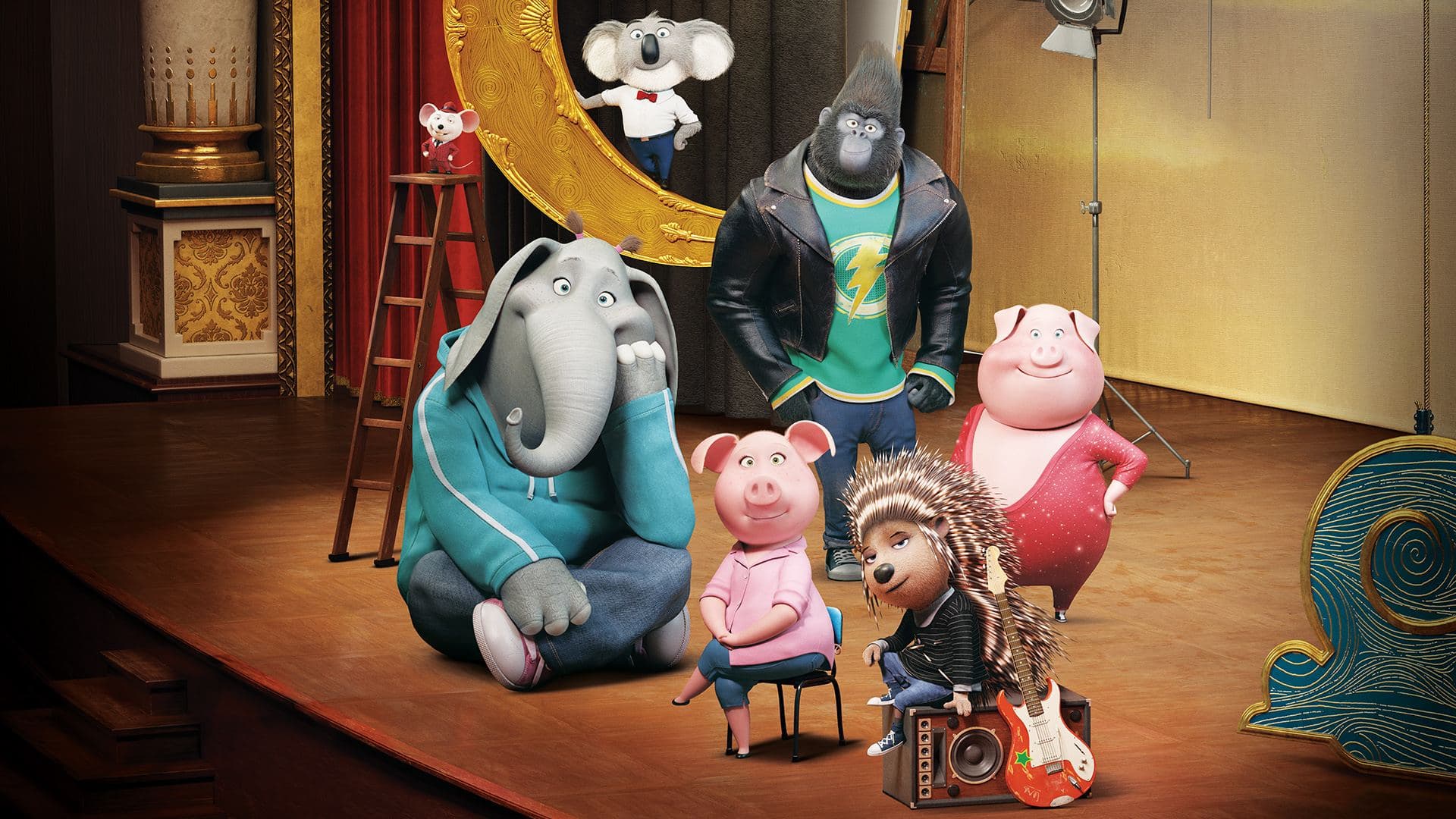
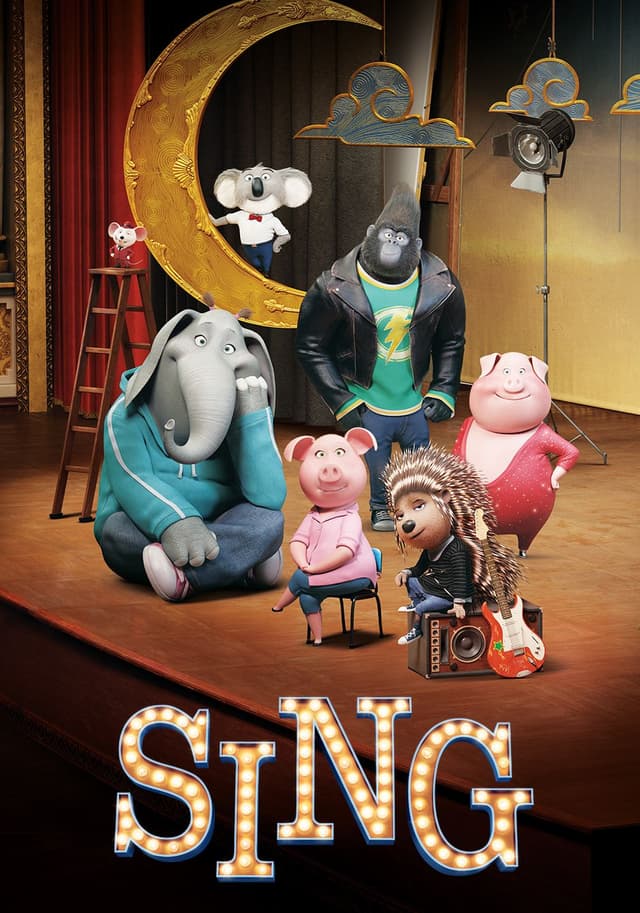
A koala named Buster recruits his best friend to help him drum up business for his theater by hosting a singing competition.
What Is the Budget of Sing?
Sing (2016) was produced with a budget of $75,000,000, a figure that proved remarkably lean for what became one of the most profitable animated films of the decade. Directed and written by Garth Jennings and produced by Illumination Entertainment and Universal Pictures, the film went on to earn $634,151,679 worldwide, making it one of the strongest returns on investment in studio animation history. For context, Illumination built its reputation on keeping budgets tighter than rivals Disney and Pixar, and Sing exemplifies that philosophy. Where comparable 2016 animated releases such as Finding Dory and Moana carried budgets of $200,000,000 and $150,000,000 respectively, Sing delivered a bigger audience hit at a fraction of the cost.
Key Budget Allocation Categories
- Star Voice Talent Fees: Assembling an ensemble that included Matthew McConaughey, Reese Witherspoon, Scarlett Johansson, Seth MacFarlane, John C. Reilly, and Taron Egerton required substantial fees. A-list voice actors on studio animated productions typically earn between $5 million and $15 million per picture, and Sing featured six prominent names alongside a supporting cast that included Tori Kelly, Jennifer Saunders, and Nick Kroll.
- Music Licensing for 65 Songs: The film features approximately 65 pop songs spanning decades of popular music, from Carly Rae Jepsen and Taylor Swift to Elvis Presley and Elton John. Music licensing for a catalogue of this size is one of the most expensive line items in any jukebox musical production, requiring synchronization rights and master recording rights for each track.
- Original Score and Songs: Composer Joby Talbot, a longtime collaborator of director Garth Jennings, composed an original orchestral score alongside the licensed catalogue. The production also commissioned "Faith," an original song written by Stevie Wonder and performed by Ariana Grande, which earned a Golden Globe nomination for Best Original Song.
- Animation Production Pipeline: Sing was animated entirely at Illumination Mac Guff in Paris, France. The multi-year production pipeline covered storyboarding, character modeling and rigging, full animation, lighting, rendering, and compositing for a large ensemble cast of anthropomorphic animals, each requiring distinct physical rigs and performance capture references.
- Marketing and Theatrical Distribution: Illumination and Universal invested an estimated $100,000,000 to $125,000,000 in prints and advertising to support the global theatrical campaign, covering television spots, outdoor placements, digital marketing, and promotional partnerships tied to the film's Christmas 2016 release window.
How Does Sing's Budget Compare to Similar Films?
At $75,000,000, Sing occupies the budget tier of a lean studio animated feature, well below the typical $100,000,000 to $200,000,000 range for major animated releases. The comparison to its 2016 contemporaries is striking because the film dramatically outperformed rivals carrying far larger budgets.
- The Secret Life of Pets (2016): Budget $75,000,000 | Worldwide $875,457,937. Another Illumination production from the same year, The Secret Life of Pets shared Sing's identical budget and outgrossed it worldwide, illustrating the studio's reliable return rate at this spend level.
- Finding Dory (2016): Budget $200,000,000 | Worldwide $1,029,266,989. Pixar's sequel cost nearly three times as much as Sing and while it earned more in absolute terms, the production efficiency gap between the two studios is clear.
- Moana (2016): Budget $150,000,000 | Worldwide $686,127,612. Disney's musical animated feature was released within weeks of Sing and carried double the budget while earning only $52,000,000 more worldwide, making Sing the more cost-efficient musical of the season.
- Trolls (2016): Budget $125,000,000 | Worldwide $342,831,709. The other major jukebox animated musical of 2016, Trolls spent $50,000,000 more than Sing but earned less than half the worldwide gross, making Sing the clear winner in the animated music-competition genre that year.
- Sing 2 (2021): Budget $85,000,000 | Worldwide $408,402,685. The direct sequel carried a slightly larger budget and performed solidly, though it did not replicate the original's breakout success, which remains the stronger performer per dollar invested.
Sing Box Office Performance
Sing opened in North American theaters on December 21, 2016, positioned as a family holiday release in direct competition with Rogue One: A Star Wars Story. Despite launching against one of the most heavily anticipated films of the year, Sing earned $35,258,145 in its opening weekend from 4,029 theaters. The film benefited from Rogue One drawing older audiences, leaving the family-with-children demographic largely to Sing. Over the Christmas holiday corridor, the film surged, accumulating $270,578,425 domestically over its theatrical run and $363,759,984 internationally, for a worldwide total of $634,151,679.
Box Office Breakdown
Sing

Accounting for total estimated investment, Sing returned approximately $3.43 for every $1 spent on production and marketing combined. On production budget alone, the gross-to-budget ratio exceeded 8:1, placing it among the most profitable animated films of the 2010s.
The domestic and international split of 42.7% domestic to 57.3% international reflected both the universal appeal of its music-competition premise and the global recognition of its voice cast. Home media performance reinforced the theatrical run: Sing ranked as the 7th best-selling home video title of 2017, generating $63,000,000 across 3.3 million units sold. The film also holds a notable record: it remained the highest-grossing animated film never to finish number one at the U.S. and Canadian box office in a single weekend until Oppenheimer surpassed that distinction in 2023.
Sing Production History
Sing began life under the working title Lunch before being retitled during development. Universal Pictures and Illumination Entertainment announced the project in January 2014, with Garth Jennings attached as writer and director. For Jennings, best known for the live-action features The Hitchhiker's Guide to the Galaxy (2005) and Son of Rambow (2007), Sing represented his first venture into feature animation, a genre he had long admired.
Illumination CEO Chris Meledandri and producer Janet Healy guided the project through the studio's Paris-based animation arm, Illumination Mac Guff. Matthew McConaughey was cast as the koala theater impresario Buster Moon in January 2015, with the full ensemble assembled by November of that year. Jennings designed the casting around performers who could carry genuine emotional weight in their voices: Reese Witherspoon as Rosita, a pig and mother of 25 piglets who rediscovers her passion for music, and Taron Egerton as Johnny, a gorilla trying to escape his criminal father's world through his gift for singing and piano. Egerton, then best known for Kingsman: The Secret Service, performed his own vocals throughout, a decision that drew significant attention when the film released and contributed to the perception of him as a credible singing talent ahead of his later role in Rocketman (2019).
Scarlett Johansson voiced Ash, a porcupine punk rocker navigating the dissolution of her musical partnership with her unsupportive boyfriend Lance. The character's arc, which culminates in the original song "Set It All Free," gave Johansson a showcase for her own vocals and became one of the film's most discussed performances. Seth MacFarlane brought a Frank Sinatra-influenced crooner quality to Mike, a street-performing mouse with talent matched only by his arrogance, while Nick Kroll played the exuberantly physical Gunter with a comedic physicality that translated well to animation.
The music selection process was among the most ambitious aspects of production. Jennings and music supervisor Jojo Villanueva assembled a catalogue of approximately 65 licensed songs spanning multiple decades and genres, covering everything from classic pop and rock to contemporary chart hits. Licensing synchronization and master recording rights for a catalogue of this scale represented a significant portion of the production budget, and the Hollywood Music in Media Awards recognized this work with wins for Best Soundtrack Album and Outstanding Music Supervision. The original song "Faith," written by Stevie Wonder and performed by Ariana Grande, was commissioned specifically for the film and earned a Golden Globe nomination for Best Original Song.
Awards and Recognition
Sing received two nominations at the 74th Golden Globe Awards in January 2017: Best Animated Feature Film and Best Original Song for "Faith" by Stevie Wonder and Ariana Grande. The Best Animated Feature nomination placed it in competition with Zootopia, Moana, My Life as a Zucchini, and Kubo and the Two Strings, with Zootopia winning the category.
At the 44th Annie Awards, the film received a nomination for Outstanding Achievement in Music in an Animated Feature Production, recognizing Joby Talbot's original score. The Hollywood Music in Media Awards honored the production with two wins: Best Soundtrack Album and Outstanding Music Supervision for Jojo Villanueva's work assembling the 65-song licensed catalogue.
The 43rd Saturn Awards nominated Sing for Best Animated Film. The film also received a nomination from the AARP Movies for Grownups Awards and a Best Music nomination from the Golden Trailer Awards. At the Nickelodeon Kids' Choice Awards, the film received a nomination for Favorite Animated Movie, with Reese Witherspoon additionally nominated for Favorite Voice from a Animated Movie.
Critical Reception
Sing earned a 71% approval rating on Rotten Tomatoes from 187 reviews, with an average score of 6.5 out of 10. The critics consensus reads: "Sing delivers colorfully animated, cheerfully undemanding entertainment with a solid voice cast and a warm-hearted, albeit familiar, storyline that lives up to its title." Audiences responded more warmly, with a Popcornmeter score of 73%. CinemaScore polling on opening weekend yielded an A grade, indicating strong word-of-mouth from family audiences.
Metacritic assigned the film a score of 59 out of 100 based on 37 critic reviews, categorizing it as "mixed or average reviews," reflecting a divide between critics who embraced the film's crowd-pleasing energy and those who found its plotting too thin to support its ambitions.
USA Today gave the film 3.5 out of 4 stars, with Brian Truitt writing that it was "a tale that might not be particularly thought-provoking but sure is toe-tapping." The Los Angeles Times called it "a cute movie with genuinely funny moments and some great tunes." Slashfilm highlighted that "the combination of a star-studded cast and an equally star-studded music catalogue make for a fun time." Variety praised Jennings' direction and the cast's performances while noting the subplots lacked "profound life lessons." The Arizona Republic offered the film's sharpest critique, describing it as having "too much filler and not enough hits."
The critical consensus largely converged on the view that Sing prioritized entertainment over storytelling depth, a trade-off that audiences accepted enthusiastically. The film's A CinemaScore and strong domestic legs through the Christmas holiday corridor reflected a disconnect between critical middling reviews and genuine audience affection for the material. The sequel, Sing 2 (2021), arrived in December 2021 with the same core cast and earned $408,402,685 worldwide, confirming the original's audience loyalty even if it did not replicate its predecessor's cultural impact.
Frequently Asked Questions
What was the production budget for Sing?
Sing (2016) had a production budget of $75,000,000. This placed it significantly below comparable 2016 animated releases such as Finding Dory ($200,000,000) and Moana ($150,000,000), making its worldwide gross of over $634 million all the more remarkable as a return on investment.
How much did Sing make at the box office?
Sing earned $270,578,425 domestically and $634,151,679 worldwide during its theatrical run. International markets accounted for approximately 57.3% of the total gross, with domestic representing 42.7%. The film also sold 3.3 million home video units in 2017, generating an additional $63,000,000.
Was Sing a box office success?
Sing was one of the most profitable animated films of 2016. Against a $75,000,000 production budget and an estimated total investment (including marketing) of around $185,000,000, the film returned over $634,000,000 worldwide. It was ranked 7th among the most valuable blockbusters of 2016 and held the distinction of being the highest-grossing animated film never to have finished number one at the domestic box office in a single weekend.
Did Sing win any awards?
Sing received two Golden Globe nominations at the 74th Golden Globe Awards: Best Animated Feature Film and Best Original Song for "Faith" by Stevie Wonder and Ariana Grande. It also received nominations at the Annie Awards for Outstanding Achievement in Music, the Saturn Awards for Best Animated Film, and the Hollywood Music in Media Awards, where it won Best Soundtrack Album and Outstanding Music Supervision.
Who are the main voice cast members in Sing?
The main voice cast includes Matthew McConaughey as Buster Moon, the optimistic koala theater owner; Reese Witherspoon as Rosita, a pig and mother rediscovering her singing talent; Scarlett Johansson as Ash, a porcupine punk rocker; Seth MacFarlane as Mike, a Sinatra-influenced mouse; John C. Reilly as Eddie; Taron Egerton as Johnny, a gorilla who performs his own vocals; Tori Kelly as Meena; and Nick Kroll as the flamboyant pig Gunter.
Did Sing get a sequel?
Yes. Sing 2 was released on December 22, 2021, with the full original cast returning. The sequel follows Buster Moon and the ensemble as they take their show to a dazzling entertainment complex in a big city. It earned $408,402,685 worldwide against a $85,000,000 production budget. In April 2023, Illumination CEO Chris Meledandri confirmed that a third Sing film is in development.
Filmmakers
Sing

Official Trailer
Build budgets like this one in Saturation
Start from an industry-standard feature film template, import the schedule and rates you already have, and let the cost report keep itself current as you spend. Real-time collaboration, no spreadsheets.