Popstar: Never Stop Never Stopping Budget
 ComedyMusic1h 26m
Updated
Synopsis
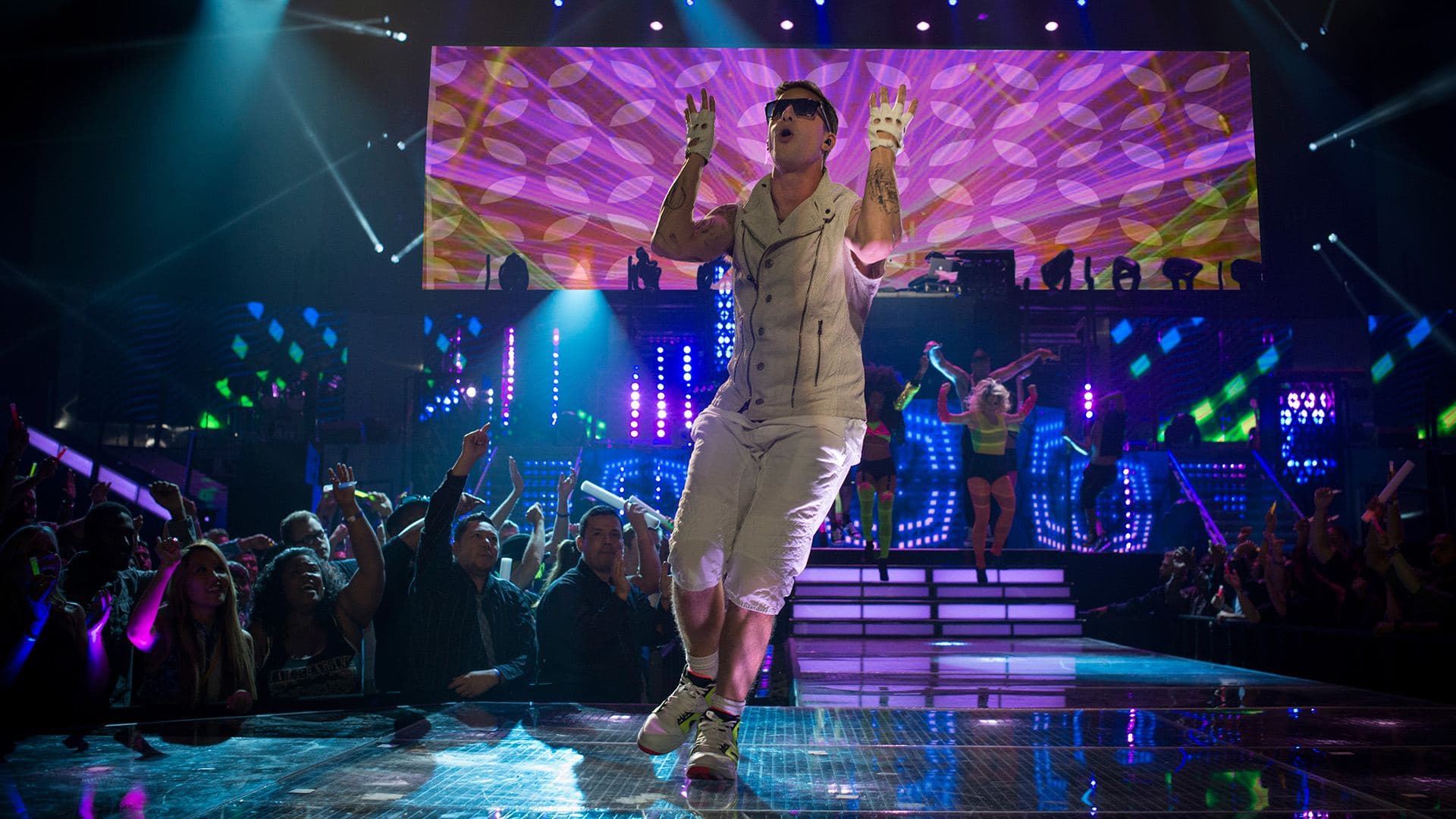
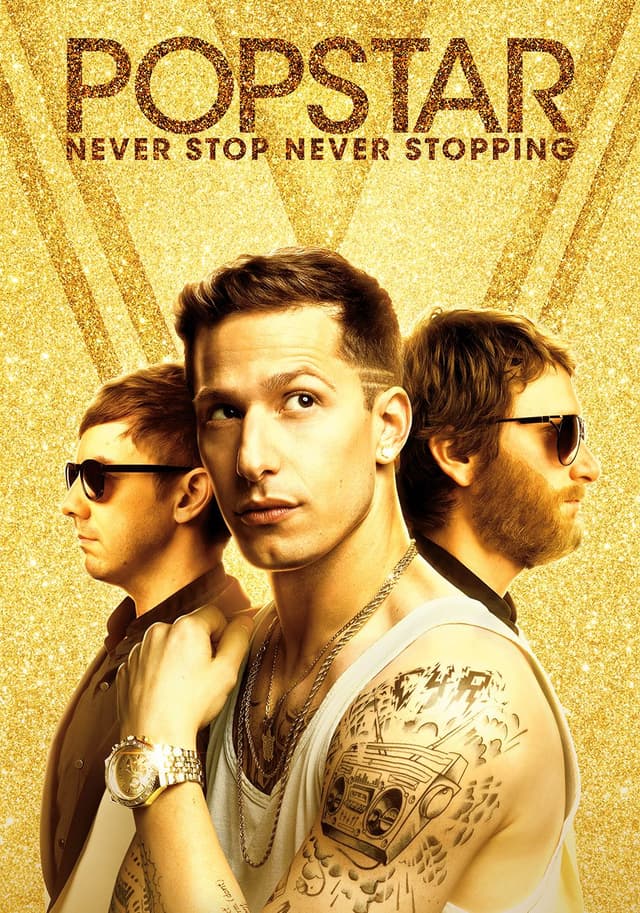
Popstar: Never Stop Never Stopping is a 2016 mockumentary musical comedy following Conner4Real (Andy Samberg), a narcissistic pop star who rose to fame as part of the Style Boyz rap trio before going solo. When his sophomore album flops spectacularly, Conner faces a public meltdown while his estranged bandmates Owen (Jorma Taccone) and Lawrence (Akiva Schaffer) watch from the sidelines. The film parodies the conventions of music documentaries and the manufactured celebrity culture of contemporary pop stardom.
What Is the Budget of Popstar: Never Stop Never Stopping?
Popstar: Never Stop Never Stopping was produced on a budget of approximately $20,000,000. For a comedy film anchored by a well-known Saturday Night Live cast and featuring dozens of celebrity cameos, that figure placed it squarely in the mid-budget range for studio comedies of the era. What made the number striking was the outcome: the film grossed just $9,639,125 domestically and $9,680,029 worldwide, recouping less than half its production costs from theatrical release alone and landing firmly in box office bomb territory.
The gap between critical reception and commercial performance is what defines the Popstar story. Critics responded warmly, many calling it a worthy successor to the mockumentary tradition. Audiences simply did not show up. The disconnect between a 79 percent Rotten Tomatoes score and a $4.7 million opening weekend became one of 2016's most-discussed Hollywood mysteries, and the film's subsequent cult following on streaming platforms has done more for its reputation than its theatrical run ever could.
Key Budget Allocation Categories
- Talent Fees: The Lonely Island trio (Andy Samberg, Akiva Schaffer, Jorma Taccone) served as writers, directors, and stars while also functioning as producers through their production company. Their combined above-the-line costs were substantial, reflecting both their SNL pedigree and Samberg's profile following Brooklyn Nine-Nine.
- Celebrity Cameo Parade: The film features more than 30 celebrities appearing as themselves, including Ringo Starr, Mariah Carey, Snoop Dogg, Simon Cowell, Katy Perry, Rihanna, Justin Timberlake, Emma Stone, and Carrie Underwood. Coordinating and compensating that many high-profile names added meaningfully to the budget, even when many performed as favors to the Lonely Island team.
- Music Production: Original songs were a central pillar of the film. The Lonely Island recorded a full-length soundtrack album of comedy pop songs parodying contemporary chart music, requiring studio time, producers, and clearances that added to overall costs beyond standard film scoring.
- Mockumentary Production Style: The handheld, documentary-style shooting approach kept below-the-line physical production leaner than a comparable studio comedy. Fewer elaborate sets and practical locations meant this portion of the budget was relatively modest compared to big-stage comedies of similar scale.
- Marketing and P&A: Universal Pictures spent heavily on prints and advertising to launch the film into more than 2,300 theaters nationwide. The marketing campaign targeted a broad mainstream audience rather than the comedy-nerd demographic already primed for the material, a mismatch that contributed to the film's underperformance.
How Does Popstar Compare to Similar Films?
Popstar falls into a small and financially precarious subgenre of big-budget comedy mockumentaries. Comparing it to peers reveals both how unusual its critical reception was and how difficult the format has been to monetize theatrically.
- Hot Rod (2007): Budget $25,000,000 | Worldwide $14,301,762. An earlier Lonely Island-adjacent comedy that also bombed theatrically before developing a devoted streaming audience, making it the closest spiritual predecessor to Popstar's arc.
- Superbad (2007): Budget $20,000,000 | Worldwide $169,901,095. The same budget as Popstar but a vastly different result, demonstrating that mid-budget studio comedies can succeed when the marketing hits the right demographic precisely.
- Get Hard (2015): Budget $40,000,000 | Worldwide $90,411,453. A conventional studio comedy double Popstar's budget but reaching ten times the audience, illustrating the commercial chasm between mockumentary niche fare and mainstream comedy.
- This Is Spinal Tap (1984): Budget approximately $2,000,000 | Worldwide modest theatrical gross. The gold standard mockumentary that Popstar consciously sought to update for the streaming-era pop landscape. Made for a fraction of the cost, it succeeded critically and commercially on its own scale.
- Walk Hard: The Dewey Cox Story (2007): Budget $35,000,000 | Domestic $18,297,671. Another music-industry parody that failed to find a theatrical audience despite critical praise, reinforcing how rarely this specific subgenre translates to box office success.
Popstar: Never Stop Never Stopping Box Office Performance
Popstar opened June 3, 2016 in 2,311 theaters and grossed $4,698,715 in its opening weekend, finishing eighth at the domestic box office. The opening was widely reported as a significant disappointment; projections had hoped for a $10 to $15 million launch. The film dropped sharply in subsequent weeks and exited wide release in under two months.
Box Office Breakdown
Popstar: Never Stop Never Stopping

Against its total estimated investment of roughly $35 million, Popstar earned approximately $0.28 for every $1 spent. Physical media (DVD and Blu-ray) added approximately $2.5 million in additional revenue, and the film's acquisition by NBC Universal for streaming helped offset losses over time, but theatrical performance alone made it one of the more notable comedy misfires of the mid-2010s.
The cult following that emerged on Netflix and later Peacock has since reframed the film's legacy considerably. Audiences who missed it in theaters discovered it on streaming and championed it as an underrated gem. By 2020 the conversation around Popstar had shifted from box office bomb to cult classic, a trajectory the film shares with several other comedy mockumentaries that struggled to find their audience in the theatrical window.
Popstar: Never Stop Never Stopping Production History
The Lonely Island had been developing a feature film for years before Popstar took shape. Andy Samberg, Akiva Schaffer, and Jorma Taccone rose to fame at Saturday Night Live through their Digital Shorts, including 'Lazy Sunday,' which became one of the first viral internet videos, and the Grammy-nominated 'I'm on a Boat.' A feature film had long been discussed, but finding the right format took time.
The mockumentary format was the key creative unlock. The trio drew explicit inspiration from Rob Reiner's This Is Spinal Tap (1984) and Christopher Guest's Best in Show (2000) and A Mighty Wind (2003), aiming to update the rockumentary parody for the era of social media, streaming, and the manufactured celebrity of pop stars like Justin Bieber and One Direction. The working title was 'Conner4real,' after the film's fictional protagonist.
Principal photography began May 14, 2015, with the film shooting in Los Angeles, including scenes at Calamigos Ranch in Malibu. Judd Apatow, who had produced several of the defining comedies of that era including Knocked Up and The 40-Year-Old Virgin, came aboard as producer through his Apatow Productions, alongside Rodney Rothman. The Apatow imprimatur gave the project major studio backing through Universal Pictures.
Assembling the cameo cast became a production achievement in its own right. The Lonely Island leveraged years of relationships from SNL, the music industry, and Hollywood to recruit Ringo Starr, Mariah Carey, Snoop Dogg, Simon Cowell, Katy Perry, Rihanna, Justin Timberlake, Carrie Underwood, Adam Levine, Nas, DJ Khaled, Pink, Usher, Pharrell Williams, Martin Sheen, and dozens more. Many appeared as favors to the trio. The sheer density of cameos became one of the film's calling cards and contributed substantially to its eventual cult reputation.
Brandon Trost served as director of photography, bringing experience from comedy productions including This Is the End and Neighbors. The film's mockumentary aesthetic required handheld camera work, talking-head interview setups, and concert footage that mimicked the visual grammar of real music documentaries and reality television. The original songs were recorded as a standalone album, with Matthew Compton handling the film score.
Universal opened Popstar on June 3, 2016. The marketing campaign positioned the film broadly, using television spots and social media to reach mainstream audiences. Post-mortem analysis pointed to a disconnect between the campaign's broad targeting and the film's core audience: comedy obsessives, SNL fans, and music industry insiders who would have appreciated the satire's precision. Streaming discovery did what theatrical marketing could not, building the audience the film deserved over the years that followed.
Awards and Recognition
Popstar: Never Stop Never Stopping received limited formal awards recognition during its initial run, which was unsurprising given its box office disappointment and the compressed awards consideration cycle for summer comedies. Andy Samberg received a nomination for Best Comedic Performance at the 2017 MTV Movie and TV Awards, representing the film's most notable formal recognition from a major ceremony.
The film's original music received more attention than its acting or direction in formal recognition contexts. The Lonely Island's satirical pop songs were praised in music criticism circles, continuing a tradition of their work being appreciated more fully outside the film awards system.
In the years since release, Popstar has been included on numerous retrospective lists of underrated comedies and cult films of the 2010s. Critics who revisited it for streaming-era retrospectives consistently rated it more highly than the original theatrical response would suggest, and it is now frequently cited alongside Hot Rod (2007) as a film that deserved a larger audience than it found.
Critical Reception
Critical reception was considerably warmer than the box office results suggested. On Rotten Tomatoes, Popstar: Never Stop Never Stopping holds an approval rating of 79 percent based on 172 reviews, with an average rating of 6.70 out of 10. The site's critical consensus reads: 'Popstar: Never Stop Never Stopping updates the rock mockumentary for the 21st century mainstream and hits many of its low-hanging targets with side-splitting impact.'
On Metacritic, the film earned a weighted average score of 68 out of 100 based on 43 critics, indicating generally favorable reviews. Audiences who saw the film gave it a CinemaScore of B on an A-plus to F scale, suggesting a moderate disconnect between critical enthusiasm and the satisfaction of the small theatrical audience.
Critics consistently praised the Lonely Island's commitment to the mockumentary format and the sharpness of its pop culture targets. Writing for Uproxx, Vince Mancini called it 'as stupid as it is relevant.' The Hollywood Reporter and other trade publications noted the film's savvy skewering of the modern celebrity machine. The most common critical complaint was that the film, at 87 minutes, occasionally felt stretched beyond the strength of its central conceit.
The comparison to This Is Spinal Tap was almost universal. Most critics concluded that Popstar did not reach those heights, a standard almost no comedy mockumentary has met, but several argued it came closer than any other film in the genre had in decades. The satire of social media performance, brand partnerships, and the manufactured nature of pop stardom was seen as particularly sharp and well-observed.
The film's critical-versus-commercial gap became a story in itself. Several retrospective pieces cited it as evidence that positive critical reception does not translate to theatrical attendance for mid-budget comedies when marketing fails to identify the target audience. Its critical rehabilitation on streaming has since become the more definitive record of how the film was received by the audience it was made for.
Frequently Asked Questions
What was the production budget for Popstar: Never Stop Never Stopping?
Popstar: Never Stop Never Stopping was produced on a budget of approximately $20,000,000. The film was distributed by Universal Pictures and produced through Apatow Productions and The Lonely Island's production company. Despite the mid-budget investment, the film grossed only $9,680,029 worldwide, recovering less than half its production costs from theatrical release.
How much did Popstar: Never Stop Never Stopping make at the box office?
Popstar earned $9,639,125 domestically and $40,904 internationally, for a worldwide gross of $9,680,029. The film opened June 3, 2016 in 2,311 theaters with a $4,698,715 opening weekend, finishing eighth at the box office that weekend. The theatrical performance made it a significant box office disappointment relative to its $20 million budget. Physical media sales added approximately $2.5 million in additional revenue, but the film fell well short of recouping its total investment.
Why did Popstar: Never Stop Never Stopping flop at the box office?
Post-release analysis pointed to a marketing mismatch. Universal's campaign targeted a broad mainstream audience rather than the comedy niche already primed for the material: SNL fans, music industry insiders, and audiences familiar with mockumentary films. The core audience that would appreciate the satire's precision was never effectively reached. The film's eventual cult following on streaming platforms demonstrated that the audience existed. Many viewers who discovered it on Netflix or Peacock championed it as one of the best comedies of the decade, suggesting the theatrical failure was a distribution and marketing problem rather than a content problem.
Did Popstar: Never Stop Never Stopping develop a cult following?
Yes. Popstar developed a substantial cult following after its theatrical run, primarily through streaming discovery on Netflix and later Peacock. Audiences who missed the film in theaters found it on streaming and repeatedly praised it as a severely underrated comedy. By the early 2020s, retrospective pieces consistently ranked Popstar among the best comedies of the 2010s. It is frequently cited alongside Hot Rod (2007) as a film that deserved far more attention than its theatrical performance suggested.
Who are The Lonely Island?
The Lonely Island is a comedy trio consisting of Andy Samberg, Akiva Schaffer, and Jorma Taccone. The three met in the early 2000s and began making short comedy films before joining Saturday Night Live in 2001 (Schaffer and Taccone as writers, Samberg as a cast member). Their SNL Digital Shorts became some of the first viral internet videos, and their comedy rap work earned Grammy nominations. Popstar: Never Stop Never Stopping was their first narrative feature film, following years of music videos and shorts. The group drew on their extensive relationships in music and entertainment to assemble the film's remarkable cameo cast of more than 30 celebrities.
Is Popstar: Never Stop Never Stopping based on a real musician?
No. Conner4Real, the film's fictional pop star protagonist played by Andy Samberg, is not based on any single real musician. The character is a composite satire of the early-2010s male pop star archetype, drawing on elements recognizable from the careers of Justin Bieber, One Direction, and other manufactured pop acts of that era. The film's mockumentary format parodies the genre conventions of real pop star documentaries like Justin Bieber: Never Say Never (2011). The title Popstar: Never Stop Never Stopping is itself a parody of that film's subtitle.
Filmmakers
Popstar: Never Stop Never Stopping

Official Trailer
Build budgets like this one in Saturation
Start from an industry-standard feature film template, import the schedule and rates you already have, and let the cost report keep itself current as you spend. Real-time collaboration, no spreadsheets.