
Metropolis Budget
Updated
Synopsis
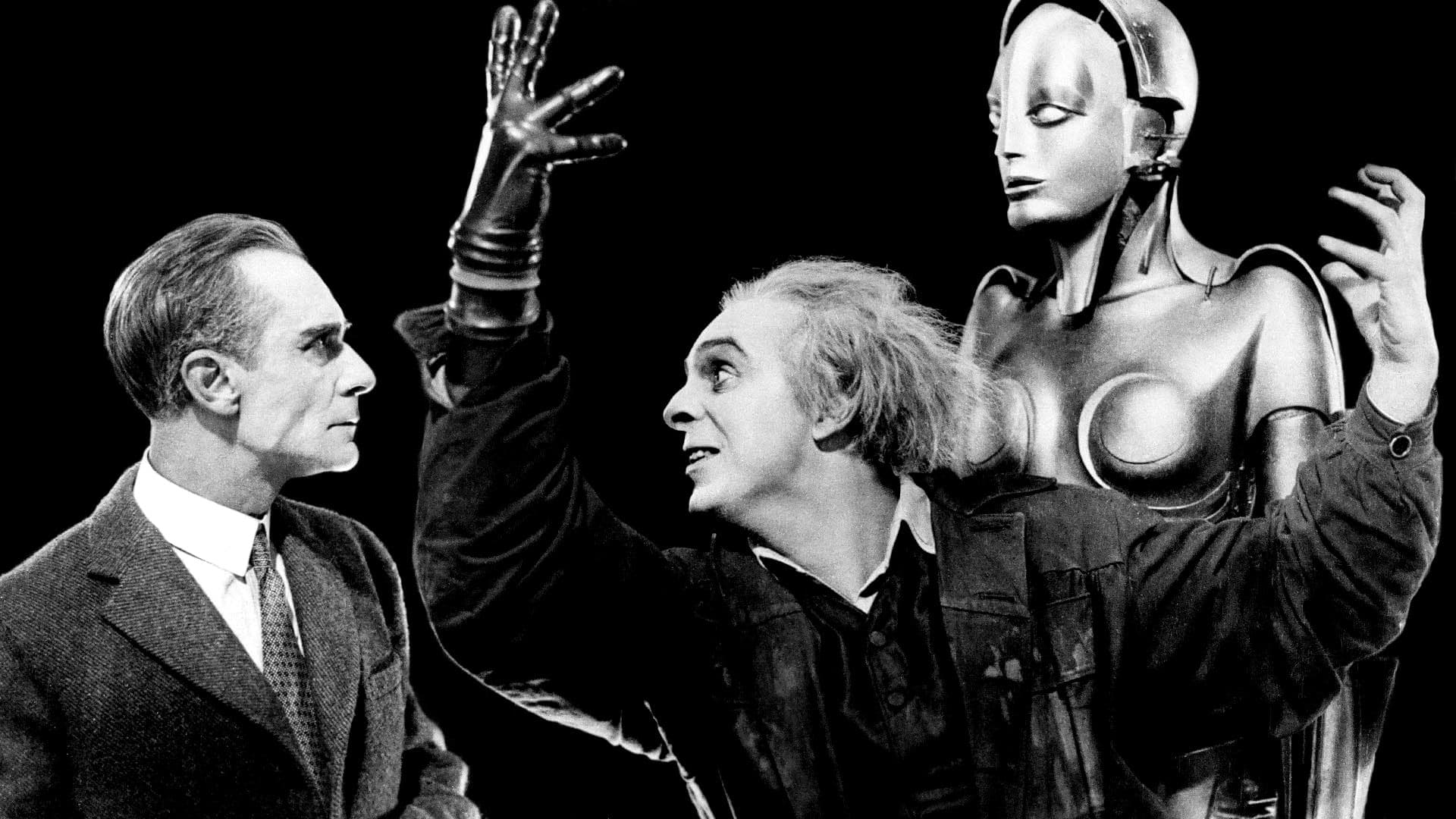
Sometime in the future, the city of Metropolis is home to a Utopian society where its wealthy residents live a carefree life. One of those is Freder Fredersen. One day, he spots a beautiful woman with a group of children, she and the children quickly disappear. Trying to follow her, he is horrified to find an underground world of workers who apparently run the machinery that keeps the Utopian world above ground functioning. One of the few people above ground who knows about the world below is Freder's father, John Fredersen, who is the founder and master of Metropolis. Freder learns that the woman is called Maria, who espouses the need to join the "hands" - the workers - to the "head" - those in power above - by a mediator who will act as the "heart". Freder wants to help the plight of the workers in their struggle for a better life. But when John learns of what Maria is advocating and that Freder has joined their cause, with the assistance of an old colleague. an inventor called Rotwang, who turns out to be But their nemesis goes to works towards quashing a proposed uprising, with Maria at the centre of their plan. John, unaware that Rotwang has his own agenda., makes plans that include shutting down the machines, with the prospect of unleashing total anarchy both above and below ground.
What is the budget of Metropolis?
"Metropolis," a drama released in 1927, was directed by Fritz Lang and stars Gustav Fröhlich, Brigitte Helm. The production budget was $5,300,000, placing it in the low-budget range for drama productions of the 1920s.
Key Budget Allocation Categories
While specific budget breakdowns are not publicly available, typical cost drivers for a drama production like this include:
- Above-the-Line Talent: Drama films live or die on the strength of their performances.
- Location Filming & Period Production Design: Authentic locations , whether contemporary or historical , require scouting, permits, travel, lodging, and often significant dressing to match the story's time period.
- Post-Production, Color Grading & Score: The editorial process for dramas is typically longer than genre films, with careful attention to pacing and tone.
- Filming & Locations: On 22 May 1925, Metropolis began principal photography with an initial budget of .
What were the major cost factors in Metropolis?
Several factors contributed to the overall production costs of "Metropolis."
- Above-the-Line Talent: Above-the-Line Talent is one of the primary cost drivers in drama productions of this scale.
- Location Filming: Location Filming & Period Production Design is one of the primary cost drivers in drama productions of this scale.
- Post-Production: Post-Production, Color Grading & Score is one of the primary cost drivers in drama productions of this scale.
How Does Metropolis's Budget Compare to Similar Films?
At $5,300,000, Metropolis sits in the low-budget range. Here is how it compares to productions with a similar budget:
- Riders of Justice (2020): Budget $5,300,000, Worldwide Gross $679,505
- Another Round (2020): Budget $5,150,000, Worldwide Gross $21,700,000
- The Sting (1973): Budget $5,500,000, Worldwide Gross $159,616,327
- Show Dogs (2018): Budget $5,500,000, Worldwide Gross $38,830,219
- 47 Meters Down (2017): Budget $5,500,000, Worldwide Gross $62,198,461
The median budget for wide-release drama films in the era ranges from $30 to 80M for mid-budget to $150M+ for tentpoles.
Metropolis Box Office Performance
"Metropolis" earned $1,236,166 domestically and $1,350,322 worldwide at the box office. Against a production budget of $5,300,000, the film faced challenges in theatrical release. Home video, streaming, and ancillary revenue may have contributed to its overall performance.
A film typically needs to earn approximately twice its production budget to cover marketing and distribution costs. For "Metropolis," that break-even threshold was roughly $10,600,000. With worldwide earnings of $1,350,322, the film did not reach break-even in theatrical release.
Box Office Breakdown
Metropolis

At -74.5%, "Metropolis" did not recoup its production budget through theatrical release alone.
Metropolis Production History
On 22 May 1925, Metropolis began principal photography with an initial budget of . Lang cast two unknowns with little film experience in the lead roles. Gustav Fröhlich (Freder) had worked in vaudeville and was originally employed as an extra on Metropolis before Thea von Harbou recommended him to Lang.
Awards and Recognition
7 wins & 6 nominations total
Critical Reception
Despite the film's later reputation, some contemporary critics panned it. Variety first review of the film in Berlin considered the scenario to be weak and felt that the artistic work had been wasted on the manufactured story although did acknowledge that nothing had been filmed like it before and its effect was positively overwhelming and that there were some exceptional performances. Critic Mordaunt Hall of The New York Times called it a "technical marvel with feet of clay".
Frequently Asked Questions
How much did it cost to make Metropolis (1927)?
The production budget was $5,300,000, covering principal photography, cast and crew salaries, locations, sets, post-production, and music. Marketing and distribution (P&A) costs are estimated at an additional $2,650,000 - $4,240,000, bringing the total studio investment to approximately $7,950,000 - $9,540,000.
How much did Metropolis (1927) earn at the box office?
Metropolis grossed $1,236,166 domestic, $114,156 international, totaling $1,350,322 worldwide.
Was Metropolis (1927) profitable?
The film did not break even theatrically, earning $1,350,322 against an estimated $13,250,000 needed. Ancillary revenue may have improved the picture.
What were the biggest costs in producing Metropolis?
The primary cost drivers were above-the-line talent (Gustav Fröhlich, Brigitte Helm, Alfred Abel); talent compensation, authentic period production design, and meticulous post-production.
How does Metropolis's budget compare to similar drama films?
At $5,300,000, Metropolis is classified as a micro-budget production. The median budget for wide-release drama films in the era ranges from $30 - 80M for mid-budget to $150M+ for tentpoles. Comparable budgets: Riders of Justice (2020, $5,300,000); Another Round (2020, $5,150,000); The Sting (1973, $5,500,000).
Did Metropolis (1927) go over budget?
There are no widely reported accounts of significant budget overruns for this production. However, studios rarely disclose precise budget overrun figures publicly. The reported production budget reflects the final estimated cost.
What was the return on investment (ROI) for Metropolis?
The theatrical ROI was -74.5%, calculated as ($1,350,322 − $5,300,000) ÷ $5,300,000 × 100. This measures gross revenue against production budget only - it does not account for P&A or exhibitor shares.
What awards did Metropolis (1927) win?
7 wins & 6 nominations total.
Who directed Metropolis and who were the key crew members?
Directed by Fritz Lang, written by Fritz Lang, Thea von Harbou, shot by Karl Freund, Günther Rittau, with music by Gottfried Huppertz, Otto Harzner, edited by Fritz Lang.
Where was Metropolis filmed?
Metropolis was filmed in Germany. On 22 May 1925, Metropolis began principal photography with an initial budget of . Lang cast two unknowns with little film experience in the lead roles.
Filmmakers
Metropolis

Official Trailer
Build budgets like this one in Saturation
Start from an industry-standard feature film template, import the schedule and rates you already have, and let the cost report keep itself current as you spend. Real-time collaboration, no spreadsheets.