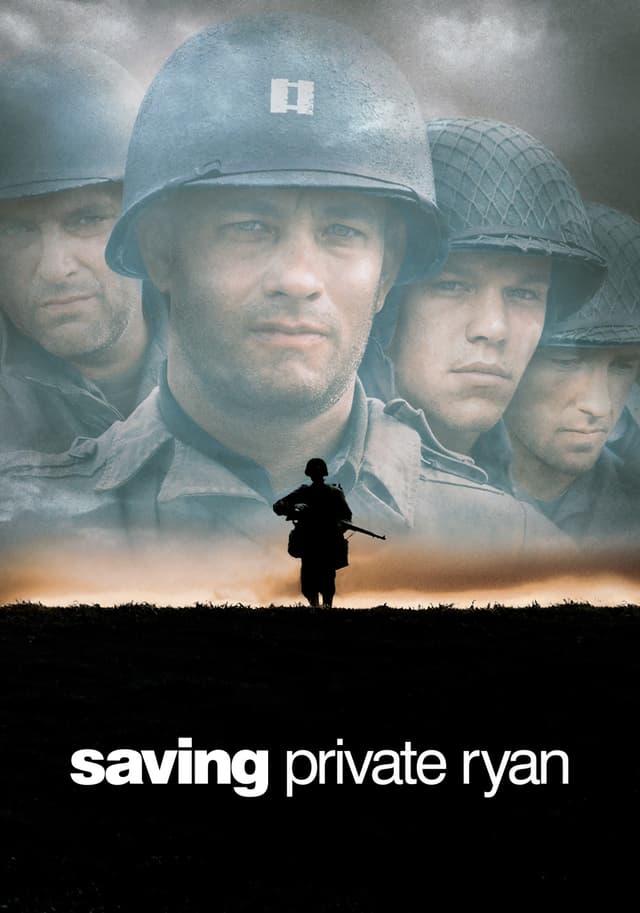
Saving Private Ryan
Synopsis
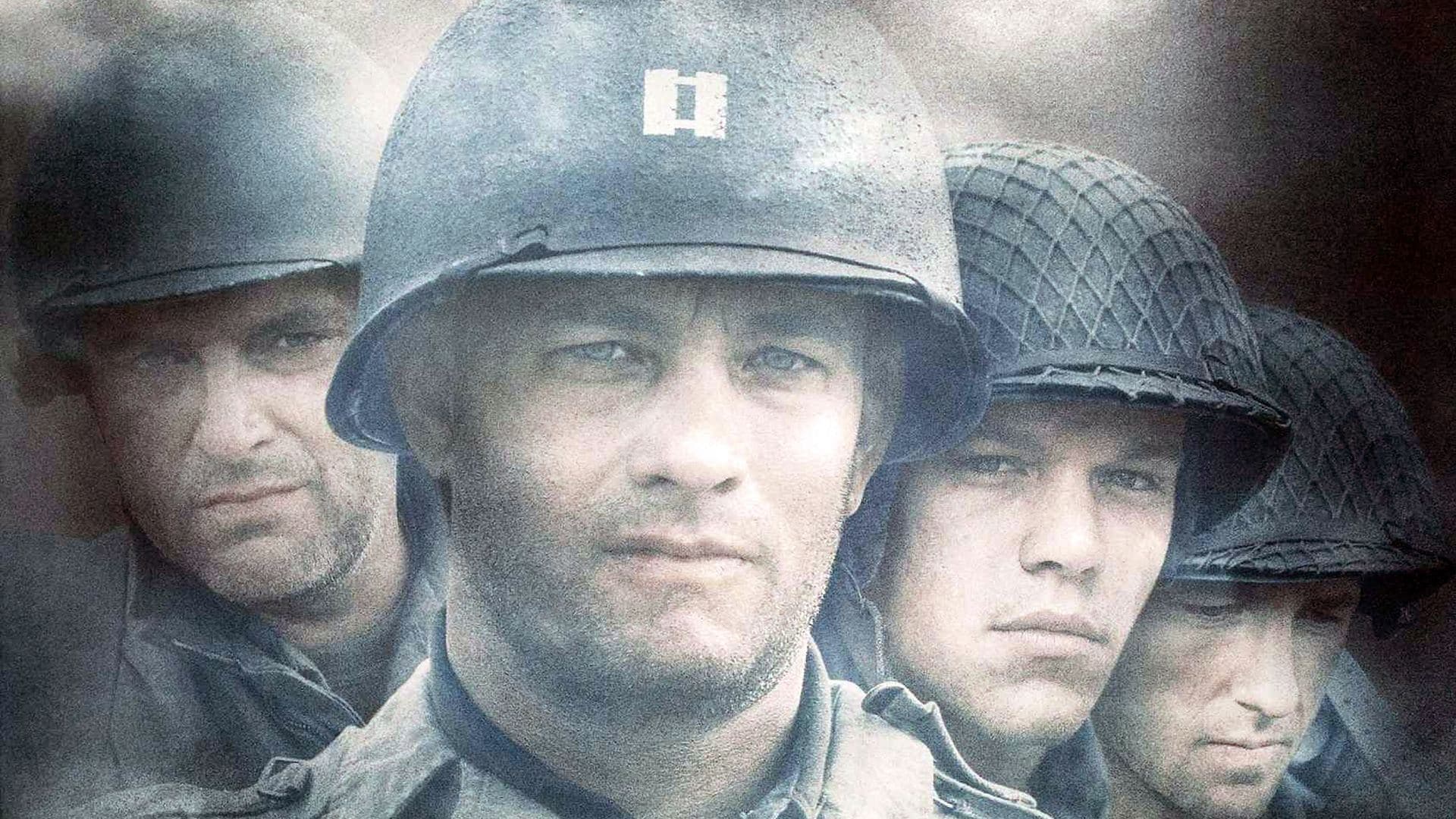
Opening with the Allied invasion of Normandy on 6 June 1944, members of the 2nd Ranger Battalion under Cpt. Miller fight ashore to secure a beachhead. Amidst the fighting, two brothers are killed in action. Earlier in New Guinea, a third brother is KIA. Their mother, Mrs. Ryan, is to receive all three of the grave telegrams on the same day. The United States Army Chief of Staff, George C. Marshall, is given an opportunity to alleviate some of her grief when he learns of a fourth brother, Private James Ryan, and decides to send out 8 men (Cpt. Miller and select members from 2nd Rangers) to find him and bring him back home to his mother...
Production Budget Analysis
What was the production budget for Saving Private Ryan?
Directed by Steven Spielberg, with Tom Hanks, Tom Sizemore, Edward Burns leading the cast, Saving Private Ryan was produced by DreamWorks Pictures with a confirmed budget of $70,000,000, placing it in the mid-budget category for war films.
With a $70,000,000 budget, Saving Private Ryan sits in the mid-range of studio releases. Marketing costs for a wide release at this level typically add $30–60 million, putting the break-even point near $175,000,000.
Budget Comparison — Similar Productions
• A Civil Action (1998): Budget $70,000,000 | Gross $56,709,981 → ROI: -19% • Babylon A.D. (2008): Budget $70,000,000 | Gross $72,109,200 → ROI: 3% • Beowulf (2007): Budget $70,000,000 | Gross $195,735,876 → ROI: 180% • Couples Retreat (2009): Budget $70,000,000 | Gross $171,844,840 → ROI: 145% • Dudley Do-Right (1999): Budget $70,000,000 | Gross $10,000,000 → ROI: -86%
Key Budget Allocation Categories
▸ Above-the-Line Talent Drama films live or die on the strength of their performances. Securing award-caliber actors and experienced directors represents the single largest budget line item, often consuming 30–40% of the total production budget.
▸ Location Filming & Period Production Design Authentic locations — whether contemporary or historical — require scouting, permits, travel, lodging, and often significant dressing to match the story's time period. Period dramas add the cost of era-accurate props, vehicles, and set decoration.
▸ Post-Production, Color Grading & Score The editorial process for dramas is typically longer than genre films, with careful attention to pacing and tone. Color grading, a nuanced musical score, and detailed sound mixing are critical to achieving the emotional resonance that defines the genre.
Key Production Personnel
CAST: Tom Hanks, Tom Sizemore, Edward Burns, Barry Pepper, Adam Goldberg Key roles: Tom Hanks as Captain Miller; Tom Sizemore as Sergeant Horvath; Edward Burns as Private Reiben; Barry Pepper as Private Jackson
DIRECTOR: Steven Spielberg CINEMATOGRAPHY: Janusz Kamiński MUSIC: John Williams EDITING: Michael Kahn PRODUCTION: DreamWorks Pictures, Paramount Pictures, Amblin Entertainment, Mutual Film Company FILMED IN: United States of America
Box Office Performance
Saving Private Ryan earned $217,049,603 domestically and $264,791,306 internationally, for a worldwide total of $481,840,909. Revenue was split 45% domestic / 55% international.
Break-Even Analysis
Using the industry-standard 2.5x multiplier (P&A + exhibitor shares of 40–50% + distribution fees), Saving Private Ryan needed approximately $175,000,000 to break even. The film surpassed this threshold by $306,840,909.
Return on Investment (ROI)
Revenue: $481,840,909 Budget: $70,000,000 Net: $411,840,909 ROI: 588.3%
Detailed Box Office Notes
The film premiered on July 21, 1998. The event was a low-profile affair without a party or many celebrities; Press said of the premiere, "it would have been inappropriate". Saving Private Ryan retained the number-one position in its third weekend with ($17.4million), ahead of the debuts of Snake Eyes ($16.3million) and Halloween H20: 20 Years Later ($16.1million), and its fourth with $13.2million, ahead of the debuts of How Stella Got Her Groove Back ($11.3million) and The Avengers ($10.3million). In its fifth weekend, Saving Private Ryan fell to number2 with $10.1million, behind the debut of Blade ($17.1million). Without regaining the number1 position, it ranked among the top ten for 12 weeks. By the end of its theatrical run, Saving Private Ryan earned a total box-office gross of $216.5million, making it the highest-grossing film of the year, ahead of Armageddon ($201.6million) and There's Something About Mary ($176.5million). This also made it only the third R-rated film to earn more than $200million, after 1984's Beverly Hills Cop ($235million) and 1991's Terminator 2: Judgment Day ($205million).
Outside of the U.S. and Canada, Saving Private Ryan is estimated to have earned a further $265.3million. This gave the film a cumulative worldwide gross of $481.8million, making it the second-highest-grossing film of 1998, behind Armageddon ($553.7million).
Saving Private Ryan was seen as the biggest success of the theatrical summer. The New York Times wrote that the success of a "prestige film" during a time of blockbuster entertainment with broad appeal was evidence that audiences were accepting of serious dramas alongside action films, such as Armageddon and Godzilla, and "gross-out comedy" like There's Something About Mary. The publication wrote that the popularity of Saving Private Ryan was, in part, because it depicted a "nobler, cleaner era" promoting values of heroism and "patriotic duty". The 1998 box office broke records with over $7billion earned. Despite expectations, the biggest successes had relatively modest budgets, such as Saving Private Ryan, There's Something About Mary, Rush Hour, and The Waterboy, while the anticipated blockbusters, such as Godzilla and Armageddon, were so expensive to make that they were less profitable. Re-releases of Saving Private Ryan have raised the box office to $482.3million. Spielberg's and Hanks's pay agreement earned them an estimated $30–$40 million each of the box office.
Profitability Assessment
VERDICT: Highly Profitable
Saving Private Ryan was a clear financial success, generating $481,840,909 worldwide against a $70,000,000 production budget — a 588% ROI. After estimated marketing costs, the film still delivered substantial profit to DreamWorks Pictures.
INDUSTRY IMPACT
The outsized success of Saving Private Ryan likely influenced studio greenlight decisions for similar war projects.
PRODUCTION NOTES
▸ Development
To develop Saving Private Ryan, Gordon founded the independent film studio Mutual Film Company, alongside producer Gary Levinsohn. Gordon brought Rodat's draft to Paramount Pictures executives; they responded positively and hired Rodat who wrote the script over the following 12 months. Michael Bay was hired as director, but left the project because he could not resolve how to approach the material. Carin Sage, a junior agent representing Tom Hanks at the Creative Artists Agency, gave the script to Hanks, who was immediately interested and met with Gordon and Levinsohn. Hanks shared the script with Steven Spielberg who agreed to direct because the pair had wanted to work together for some time. Rodat thought that Paramount would cancel the project after the studio purchased two other WWII-era scripts, Combat and With Wings as Eagles, with popular actors Bruce Willis and Arnold Schwarzenegger attached, respectively. However, having secured the involvement of Hanks and Spielberg, two of the highest-paid and most successful actors and directors, Gordon suggested Paramount executives prioritize Saving Private Ryan.
Describing what interested him about the project, Spielberg said, "So what you're doing is sending eight people out, all of whom have parents, to rescue one boy and send him back to his mom when any or all of these kids, along the mission route, could be killed. That was the central tug that made me want to tell the story." Spielberg had a lifelong interest in WWII, having made war films as a teenager because "it was the seminal conversation inside my family. My parents talked about the Holocaust and they talked about combat and war. And I was born knowing this. My dad was a veteran... he had many veterans over to the house, and I became absolutely obsessed... based on my father's stories, recollections, and also based on all the WWII movies".
▸ Casting
Spielberg wanted older actors for his main cast, claiming that young soldiers would look older than their age under the stresses of war.
At Hanks's and Dye's suggestion, Spielberg had the principal cast take part in a six-day boot camp, wanting them to experience cold, wet, and exhaustive conditions, like those of WWII soldiers. Overseen by Dye and retired U.S. Marines, the actors remained in character while simulating attacks, performing runs with full backpacks, weapons training, military exercises, and push-ups after making mistakes, on three hours of sleep per night in cold and rainy conditions. The men wanted to quit, but Hanks convinced them otherwise, saying they would regret not following through and the experience would help them understand their characters and motivations. Diesel said, "at that moment we got this huge respect for him in real life, we were all exhausted, we all wanted to leave and here was this guy who was a superstar, who doesn't have to be here, voting to stay". Dye was present throughout filming to remind the actors of their training. Spielberg kept Damon out of the boot camp because he wanted the other actors to resent him and his character.
▸ Pre-Production
The pre-production for Saving Private Ryan was truncated because Spielberg chose to film Amistad (1997) immediately after finishing work on The Lost World: Jurassic Park (1997). Cinematographer Janusz Kamiński spent several weeks performing camera tests to define the film's visual aesthetic. The pair considered filming monochromatically as Spielberg had with his Holocaust film, Schindler's List (1993). However, they considered that this would seem "pretentious," and were interested in emulating the colored WWII footage from their research. Kamiński let his interpretation of the narrative dictate how to light scenes and narrowed down visual styles by identifying which films he did not want Saving Private Ryan to emulate. He and Spielberg were visually influenced by WWII documentaries, such as Memphis Belle: A Story of a Flying Fortress (1944), The Battle of Midway (1942), Why We Fight (1942–1945), and the Nazi propaganda films of Leni Riefenstahl. They also looked at various books, paintings, and photographs of the Omaha Beach invasion taken by the war photographer Robert Capa. Kamiński wanted it to look like a major production "shot on [16 mm film] by a bunch of combat cameramen".
A variety of camera techniques were used to emulate the experience of being on a battlefield: Kamiński removed the protective coating on some lenses, creating a "flatter", degraded image akin to WWII-era cameras, and mismatched lenses when using multiple cameras for an inconsistent result; alternating shutter angles and speeds; and desynchronizing the camera shutter which created a "streaking" effect. Kamiński considered this a risky option because if it failed there was no way to fix the image in post-production. A Clairmont Camera Image Shaker vibrated the camera to emulate the effects of a nearby explosion or rolling tank.
▸ Filming & Locations
Principal photography began on June 27, 1997. Filming completed up to 50 shots per day. Spielberg wanted the actors to get little rest, "A war is fought fast, and I really wanted to keep all of the actors off-balance. I didn't want them to be able to read 75 pages of a novel... I wanted to work fast enough so that they always felt as if they were in combat... I had to keep them on the set, which meant shooting the film even faster than I normally do. War doesn't give you a break." Saving Private Ryan was shot almost entirely in continuity order, although some of the crew found this "a mentally demoralizing experience" because the cast started together and left as their characters died.
The Omaha Beach battle was filmed over three to four weeks, for $12million. The scene involved about 1,500 people including 400 crew, 1,000 volunteer reserve and Irish army soldiers, and dozens of extras and about 30 amputees and paraplegics fitted with prosthetic limbs to portray disfigured soldiers. Their numbers were supplemented with over one thousand detailed mannequins. The extras were divided into platoons with a designated leader, allowing Dye to control their action via four different radios with aid from three non-commissioned officers. Costume designer Joanna Johnston contracted an American company responsible for making boots for soldiers during WWII to create about 2,000 pairs, using the last batch of dye from that period. Soldiers in the ocean wore wet suits beneath their uniforms to minimize hypothermia. Armorer Simon Atherton was responsible for supplying authentic weapons.
Two Higgins Boats used in the landings were used in the scene; additional boats from the 1950s were brought from California, Donegal, and Southampton. Hanks recalled:
Soldiers vomiting from the boats was achieved using milk of magnesia.
▸ Post-Production
Kamiński chose to render his footage using Technicolor's proprietary ENR process (similar to a bleach bypass) which retained more silver in the film stock and produced deeper blacks. He used "70 percent ENR" for a desaturated image which added a blue hue. Concerned this change would make the fake blood appear inauthentic, the effects department mixed blue coloring into it, giving it a dark red appearance. Visual-effects studio Industrial Light & Magic provided digital enhancements; many bullet wounds and blood splatter were computer-generated imagery.
Michael Kahn edited the final 170-minute cut. Spielberg said that Kahn's style was intended to defy audience expectations and not make every scene or transition clear. Some scenes were cut because of their graphic imagery, such as Miller's unit encounter with burnt out tanks with charred bodies. Mellish's death was also trimmed, removing parts where the character screams in pain, after Spielberg's projectionist said "It's too painful to watch."
Spielberg said his movie had to be "ugly", but was worried the violent content could be seen as exploitative and earn it a restrictive NC-17 rating from the Motion Picture Association of America, restricting it to audiences over 17 years of age. He anticipated that the "historical importance" of the content would be taken into consideration; it received an R rating, meaning children could watch when accompanied by an adult.
▸ Music & Score
John Williams, Spielberg's longtime collaborator, produced, composed and conducted the score. Spielberg chose little music accompaniment, wanting the sounds of battle and death to be prominent. Using a spotting process, he and Williams watched a rough cut of the film to agree on which scenes would feature music. Williams deliberately avoided "anything grandiose or operatic". Williams recorded the 55-minute score over three days at Symphony Hall in Boston, with the Boston Symphony Orchestra and vocals by the Tanglewood Festival Chorus. The recording cost about $100,000 per hour. Spielberg chose the Orchestra: "This is a movie about a company of soldiers, and it seemed appropriate to use an experienced company of musicians who are all virtuosos. Also we really wanted the sound of this room, Symphony Hall. On a soundstage you can get acoustically correct sound, but you don't hear the air. Here you get a rich, warm sound off the walls and ceiling, and you do hear the air; Symphony Hall is an instrument too."
AWARDS & RECOGNITION
Summary: Won 5 Oscars. 79 wins & 75 nominations total
Awards Won: ★ Dallas-Fort Worth Film Critics Association Award for Best Film ★ Golden Globe Award for Best Motion Picture – Drama — Steven Spielberg (56th Golden Globe Awards) ★ Academy Award for Best Cinematography — Janusz Kamiński (71st Academy Awards) ★ National Board of Review: Top Ten Films ★ Academy Award for Best Director — Steven Spielberg (71st Academy Awards) ★ Academy Award for Best Sound Editing — Gary Rydstrom (71st Academy Awards) ★ Academy Award for Best Sound Editing — Richard Hymns (71st Academy Awards) ★ Academy Award for Best Sound — Andy Nelson (71st Academy Awards) ★ Academy Award for Best Sound — Gary Rydstrom (71st Academy Awards) ★ Academy Award for Best Sound — Gary Summers (71st Academy Awards) ★ Academy Award for Best Sound — Ron Judkins (71st Academy Awards) ★ Academy Award for Best Film Editing — Michael Kahn (71st Academy Awards)
Nominations: ○ Academy Award for Best Production Design (71st Academy Awards) ○ Academy Award for Best Film Editing (71st Academy Awards) ○ Academy Award for Best Director (71st Academy Awards) ○ Academy Award for Best Writing, Original Screenplay (71st Academy Awards) ○ Academy Award for Best Makeup and Hairstyling (71st Academy Awards) ○ European Film Award for Best Non-European Film (11th European Film Awards) ○ Academy Award for Best Sound (71st Academy Awards) ○ Academy Award for Best Sound Editing (71st Academy Awards) ○ Academy Award for Best Picture (71st Academy Awards) ○ Academy Award for Best Original Dramatic Score (71st Academy Awards) ○ Academy Award for Best Actor (71st Academy Awards) ○ Academy Award for Best Cinematography (71st Academy Awards)
Additional Recognition: At the 56th Golden Globe Awards in 1999, Saving Private Ryan won Best Drama and Best Director (Spielberg), and was nominated for Best Drama Actor (Hanks), Best Original Score (Williams), and Best Screenplay (Rodat). At the 71st Academy Awards, Saving Private Ryan won Best Director (Spielberg), Best Cinematography (Kamiński), Best Film Editing (Kahn), Best Sound (Gary Rydstrom, Gary Summers, Andy Nelson, Ronald Judkins), and Best Sound Effects Editing (Rydstrom and Richard Hymns) while it was nominated for Best Actor (Hanks), Best Original Screenplay (Rodat), Best Music (Williams), Best Production Design (Sanders and Lisa Dean Kavanaugh), and Best Makeup (Lois Burwell, Conor O'Sullivan, Daniel C. Striepeke). Saving Private Ryans unexpected loss of Best Picture to Shakespeare in Love is seen as one of the biggest upsets in the awards history and led DreamWorks executives to accuse its producers, Miramax, of "overly aggressive campaigning". A 2015 poll of academy voters suggested that, given another opportunity, they would have voted Saving Private Ryan as Best Picture.
At the 52nd British Academy Film Awards, Saving Private Ryan won Best Special Effects and Best Sound, and was nominated for Best Film, Best Direction (Spielberg), and Best Actor (Hanks). At the 25th Saturn Awards, it won Best Action, Adventure, or Thriller Film.
CRITICAL RECEPTION
Saving Private Ryan received critical acclaim, and audiences polled by CinemaScore gave the film an average grade of "A" on an A+ to F scale. Critics generally agreed that Saving Private Ryan presented the grim and brutal reality of the "Good War" in a way previously unseen on film. Writing for the Los Angeles Times, Kenneth Turan described the film as darker and more pessimistic than any of Spielberg's previous works, dispelling the mythos of WWII as staunchly good heroes fighting against evil forces, to depict the reality of combat where, "American soldiers mock virtue and shoot surrendering Germans, where decent and altruistic actions tend to be fatal, where death is random, stupid and redeems hardly anything at all". Some reviewers said this exploration of the limitations of morality in combat asked audiences to consider that the lives lost during the conflict were as valuable as those saved by their sacrifices. Writing for the Chicago Tribune, Gene Siskel lauded the film's ability to discuss the "brutality and madness" of war while "believably" celebrating the sacrifices and courage of those fighting it. Salon.coms Gary Kamiya concluded, "it will forever change the way people imagine the most important event in 20th century history. That is no small achievement." In The New York Times, Stephen Holden said "it's a safe bet that Saving Private Ryan, a powerful but flawed movie, will be revered as a classic decades hence."
Many reviewers focused on the film's two major combat sequences, particularly the opening on Omaha Beach. Focus was on the "horrifying," "visceral," "brutal," "shocking," and "fierce" violence present in the opening battle, described by Entertainment Weeklys Owen Gleiberman and Times Richard Schickel as one of the most revolutionary film sequences ever made.


Budget Templates
Build your own production budget
Create professional budgets with industry-standard feature film templates. Real-time collaboration, no spreadsheets.

Start Budgeting Free