Le Samouraï Budget
 CrimeThrillerDrama1h 45m
Updated
Synopsis
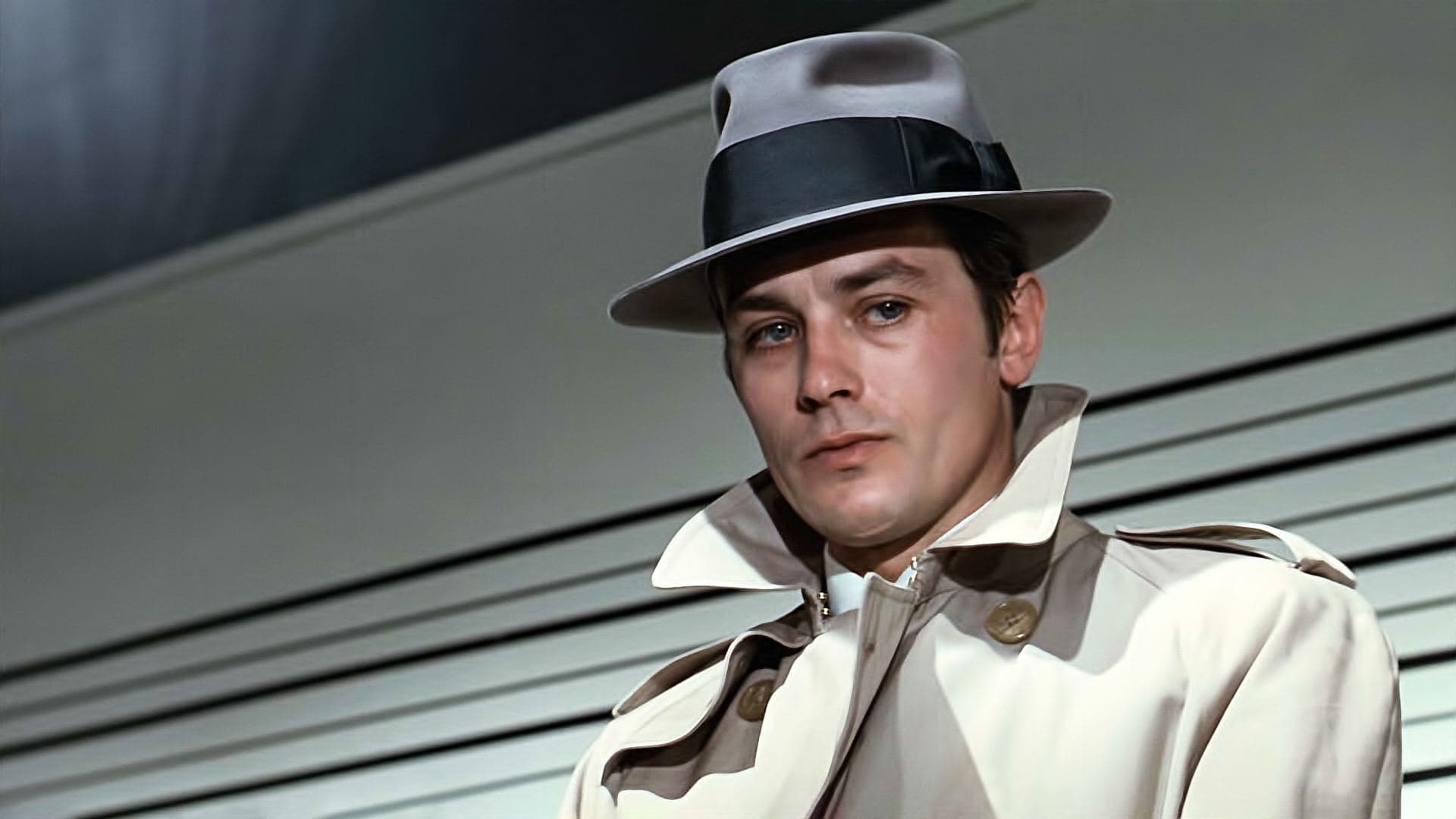
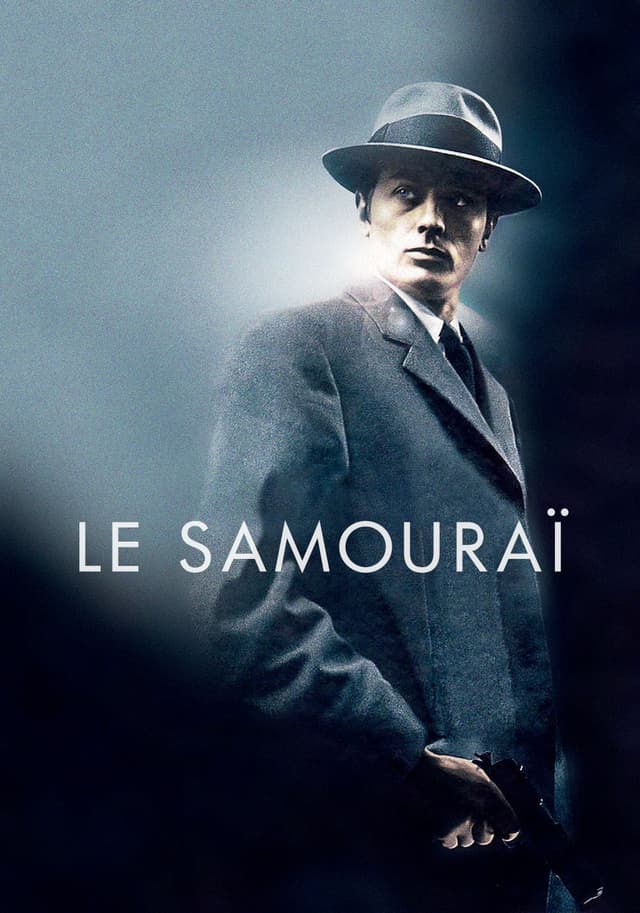
Le Samouraï follows Jef Costello, a meticulous and emotionally detached Paris contract killer who lives by a code of strict discipline modeled on the Bushido of the Japanese samurai. After carrying out a flawlessly planned hit at a Champs Elysees nightclub, Jef finds himself caught between the police closing in on him and the criminal organization that hired him and now wants him dead.
What Is the Budget of Le Samouraï (1967)?
Le Samouraï (1967), directed by Jean-Pierre Melville and starring Alain Delon, was produced on a budget that remains undisclosed in publicly accessible French film records but is estimated by film historians at approximately 3,000,000 to 4,000,000 French francs of the era (roughly $600,000 to $800,000 USD in 1967). The film was co-produced by Filmel (Raymond Borderie's production company) and CICC Films Borderie in France with Italian co-production partner Fida Cinematografica, a typical French-Italian arrangement of the late 1960s that pooled resources across the two countries' national film financing systems.
Melville, who founded his own production company Rhone-Alpes-Studios in suburban Paris in the late 1950s, shot the film primarily at his own facilities to control costs. The interior of hitman Jef Costello's spartan apartment was constructed on the Rhone-Alpes stage, with extensive Paris location work in the Montmartre neighborhood, on the Paris Metro, and at street and cafe locations across the city.
Key Budget Allocation Categories
Le Samouraï's budget was distributed across several late-1960s French cinema cost categories:
- Above-the-Line Talent: Alain Delon, already a major French star coming off Plein Soleil (1960), L'Eclisse (1962), and Le Guepard (1963), commanded top European star compensation. Co-producer Raymond Borderie structured the deal with Delon's own production company, Adel Films, as a profit participant.
- Paris Location Photography: Extensive shooting across Paris including the Metro chase sequence, Montmartre cafe interiors, and Champs Elysees street photography required permits, traffic management, and Paris municipal coordination.
- Rhone-Alpes Studio Construction: Melville's Jef Costello apartment set, the most iconic visual element of the film, was constructed at the director's own Rhone-Alpes-Studios facility. Production designer Francois de Lamothe created the deliberately monastic, blue-grey-toned apartment that defined the film's aesthetic.
- Cinematography: Director of photography Henri Decae, a Melville career-long collaborator who had previously shot Bob le Flambeur (1956) and Le Doulos (1962), used desaturated color stock and natural lighting to achieve the film's celebrated greyscale-color hybrid look.
- Original Score: Composer Francois de Roubaix wrote a sparse jazz-and-electronic score that became a touchstone of late-1960s French film music.
- Post-Production: Editor Monique Bonnot, another regular Melville collaborator, cut the film at Paris post-production facilities. Sound and mix were completed for the original 1967 French theatrical release.
How Does Le Samouraï's Budget Compare to Similar Films?
At an estimated 3,000,000 to 4,000,000 French francs (roughly $600,000 to $800,000 USD in 1967), Le Samouraï sits in the mid-range of late-1960s French cinema:
- Belle de Jour (1967): Budget approximately $1,000,000 USD | Worldwide $1,800,000 (initial theatrical). Luis Bunuel's contemporaneous French production with Catherine Deneuve cost roughly the same range.
- Playtime (1967): Budget approximately $3,000,000 USD | Worldwide undisclosed. Jacques Tati's contemporaneous comedy was a massive overrun that bankrupted the director, illustrating the upper bound of French film production cost in the period.
- Bonnie and Clyde (1967): Budget $2,500,000 USD | Worldwide $70,000,000. Arthur Penn's contemporaneous American film cost three to four times Le Samouraï and grossed nearly one hundred times the French film's estimated revenue, illustrating the scale difference between French and Hollywood economics in 1967.
- Le Doulos (1962): Budget undisclosed | French box office approximately 1,300,000 admissions. Melville's earlier hitman film with Jean-Paul Belmondo offers the closest stylistic and economic comparison to Le Samouraï.
Le Samouraï Box Office Performance
Le Samouraï was released theatrically in France on October 25, 1967 by Compagnie Lyonnaise de Cinema and recorded approximately 1,852,506 admissions in France on its initial theatrical release, making it a solid commercial success for the French market in the year of its release. Italian and other European markets followed in 1967 and 1968 through Fida Cinematografica and various subdistributors.
Box Office Breakdown
Le Samouraï

The film's commercial significance extended well beyond its initial 1967 theatrical run. Le Samouraï has been re-released multiple times in French and international cinemas, including a 4K restoration by Pathe in 2015 that played the Cannes Film Festival's Cannes Classics selection and went on to a theatrical art-house engagement in France and the United States. The Criterion Collection has released the film on DVD (2005) and Blu-ray (2017), with the restoration delivering sustained catalog revenue across decades.
The film's lasting commercial value is best measured in its cultural footprint rather than in dollar terms. Le Samouraï is cited as a direct influence on John Woo's The Killer (1989), Jim Jarmusch's Ghost Dog: The Way of the Samurai (1999), and Michael Mann's Heat (1995) and Collateral (2004), with each acknowledged debt extending the film's commercial life into successive eras of crime cinema.
Le Samouraï Production History
Jean-Pierre Melville began developing Le Samouraï in 1965 after the release of Le Deuxieme Souffle (1966). The screenplay, credited to Melville with Georges Pellegrin, was loosely adapted from Joan McLeod's novel "The Ronin." Melville constructed the film around a fictional Bushido quotation he claimed was from the "Book of Bushido" but which he had in fact invented himself, setting the philosophical tone for the silent hitman protagonist Jef Costello. Alain Delon committed to the project in early 1967 after the success of his collaborations with Rene Clement on Plein Soleil and with Luchino Visconti on Le Guepard, and the production benefited from Italian co-financing through Italy.
Principal photography took place in France across summer 1967, with Paris location work in Montmartre, on the Paris Metro's Chatelet and Auber stations, at the Place Vendome, and at various street and cafe locations. Interior work was completed at Melville's own Rhone-Alpes-Studios. Cinematographer Henri Decae used desaturated Eastmancolor stock and natural lighting to achieve the film's celebrated greyscale-color hybrid look that has been described as "color that wants to be black and white."
Post-production was completed in time for the October 25, 1967 French theatrical release. A devastating fire at Rhone-Alpes-Studios on June 29, 1967 destroyed Melville's sets, equipment, and pre-production materials for his subsequent project, but did not interrupt completion of Le Samouraï. The fire effectively ended Melville's independent production base, and his subsequent films were produced through external companies.
Awards and Recognition
Le Samouraï received no major French awards at the time of its 1967 release. The Cesar Awards did not exist until 1976, and the Prix Louis Delluc, which Melville had previously won for Le Doulos, was not awarded to Le Samouraï in its eligibility year. The film was not selected for the 1968 Cannes Film Festival, which was famously interrupted by the May 1968 protests and did not run a full competition.
Retrospective recognition has been substantial. The British Film Institute's Sight & Sound critics' poll has included Le Samouraï in multiple decade-end rankings of the greatest films ever made. The Criterion Collection's release positioned the film as a canonical entry in world cinema, with extensive critical apparatus including commentary by Rui Nogueira and essays by David Thomson. Time Out's critics ranked the film among the 100 Best French Films, and the film appears regularly on lists of the greatest crime films, neo-noir films, and Alain Delon's most acclaimed performances.
Critical Reception
Le Samouraï received broadly positive contemporary reviews and has accumulated near-universal critical acclaim across subsequent decades. The film holds a 99% approval rating on Rotten Tomatoes based on 80 critic reviews compiled across re-releases. On Metacritic, the film does not have a contemporary aggregate score but has received universal critical acclaim in retrospective coverage. The film does not carry a CinemaScore because the rating service did not exist in 1967.
Contemporary 1967 reviews in French press were positive but not yet recognizing the film as canonical. Cahiers du Cinema and Positif both treated the film as a significant Melville work without fully anticipating its future status. The film's reputation grew through critical reassessment in the 1970s and 1980s, when filmmakers including John Woo, Jim Jarmusch, Michael Mann, and Quentin Tarantino began citing the film as a foundational influence.
Roger Ebert's retrospective review for his Great Movies series in 2003 called Le Samouraï "a 1967 film that influenced everything from John Woo to Jarmusch to Tarantino, and one of the coolest movies ever made." David Thomson, in his Biographical Dictionary of Film, treats the film as Melville's masterpiece and Alain Delon's defining performance. The film's influence on the visual style and pacing of contemporary crime cinema, including Michael Mann's Heat (1995) and Drive (2011), is widely acknowledged.
Frequently Asked Questions
How much did Le Samouraï cost to make?
The production budget was never publicly disclosed. Film historians estimate the cost at approximately 3,000,000 to 4,000,000 French francs of the era, equivalent to roughly $600,000 to $800,000 USD in 1967. The film was co-produced between France and Italy under a typical late-1960s French-Italian co-financing arrangement.
How much did Le Samouraï earn at the box office?
The film recorded approximately 1,852,506 admissions in France on its initial 1967 theatrical release, a solid commercial success for the French market. Worldwide gross has not been publicly aggregated. The film has generated additional revenue across multiple re-releases including a 4K restoration in 2015 and ongoing Criterion Collection home video sales.
Who directed Le Samouraï?
Jean-Pierre Melville directed the film. Melville (born Jean-Pierre Grumbach) was a French filmmaker influential to the Nouvelle Vague generation. His other notable films include Bob le Flambeur (1956), Le Doulos (1962), and Army of Shadows (1969).
Where was Le Samouraï filmed?
Principal photography took place in France during summer 1967, with Paris location work in Montmartre, on the Paris Metro's Chatelet and Auber stations, at the Place Vendome, and at various street and cafe locations. Interior work was completed at Melville's own Rhone-Alpes-Studios facility.
Is Le Samouraï based on a true story?
No. The film is fictional. The screenplay is loosely adapted from Joan McLeod's novel "The Ronin." The Bushido quotation that opens the film, often cited as authentic samurai philosophy, was in fact invented by Jean-Pierre Melville himself as a framing device.
Did Le Samouraï win any awards?
Le Samouraï did not receive major French awards at the time of its 1967 release. The film was not selected for the 1968 Cannes Film Festival, which was interrupted by the May 1968 protests. Retrospective recognition has been substantial, with the film appearing regularly on critics' best-of-all-time lists including the British Film Institute's Sight & Sound poll.
What did critics think of Le Samouraï?
The film received broadly positive contemporary reviews and has accumulated near-universal critical acclaim across subsequent decades, holding a 99% approval rating on Rotten Tomatoes based on 80 critic reviews compiled across re-releases. Roger Ebert called it "one of the coolest movies ever made."
Who stars in Le Samouraï?
Alain Delon stars as Jef Costello. The supporting cast includes Francois Perier as the police inspector, Nathalie Delon (Alain Delon's real-life wife at the time) as Jane Lagrange, Cathy Rosier as Valerie, Jacques Leroy as the man on the footbridge, and Michel Boisrond.
How influential is Le Samouraï?
Le Samouraï is among the most influential French films of the postwar era. The film is cited as a direct influence on John Woo's The Killer (1989), Jim Jarmusch's Ghost Dog: The Way of the Samurai (1999), Michael Mann's Heat (1995) and Collateral (2004), and the films of Quentin Tarantino and Nicolas Winding Refn.
Why does Jef Costello wear a trench coat and fedora?
The character's monochromatic trench coat, fedora hat, and isolated apartment are deliberate Melville design choices that compress the protagonist into a samurai-like visual archetype. Jean-Pierre Melville used the Bushido framing to position the contract killer as a modern ronin, a masterless warrior bound by an internal code rather than external loyalty.
Filmmakers
Le Samouraï

Official Trailer
Build budgets like this one in Saturation
Start from an industry-standard feature film template, import the schedule and rates you already have, and let the cost report keep itself current as you spend. Real-time collaboration, no spreadsheets.