Le Cercle Rouge Budget
Updated
Synopsis
Newly released from prison, the gentleman thief Corey crosses paths with the escaped fugitive Vogel and the alcoholic former police marksman Jansen. Together, the three men plan an elaborate jewelry-store heist in central Paris, while Police Commissioner Mattei, charged with recapturing Vogel, slowly closes in on the trio through the network of underworld informers and the fated red circle that draws all four men toward a single inevitable encounter.
What Is the Budget of Le Cercle Rouge (1970)?
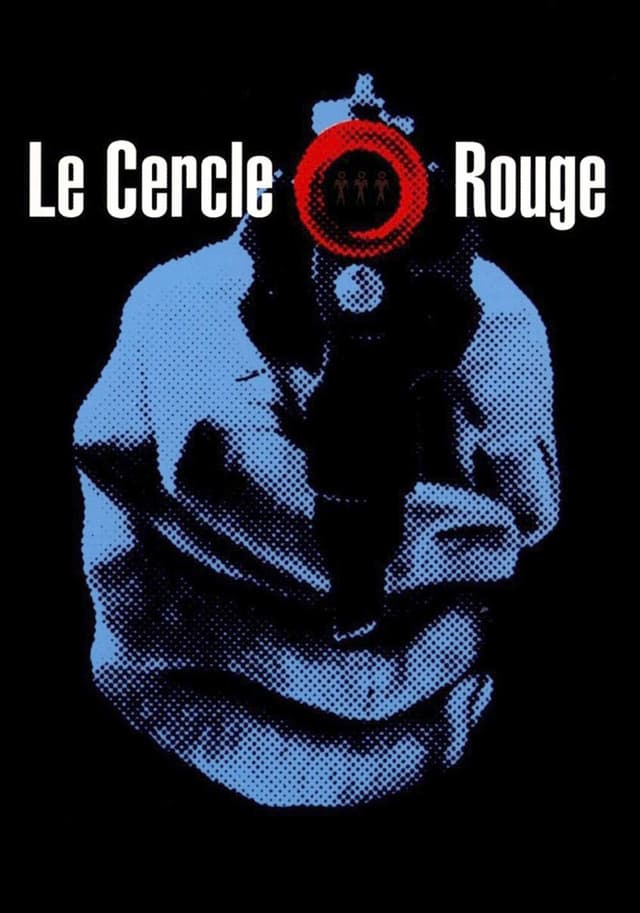
Le Cercle Rouge (1970, English title The Red Circle), written and directed by Jean-Pierre Melville, was produced on an undisclosed budget that contemporary French film accounting and Studio Canal restoration documentation suggest fell in the range of FRF 8,000,000 to FRF 12,000,000, equivalent to approximately $1,500,000 to $2,200,000 USD at 1970 exchange rates. The film is a French heist drama produced by Robert Dorfmann's Les Films Corona alongside an Italian co-production partner, with theatrical distribution through Cinéma International Corporation in France and Italian markets.
The budget reflected the cost structure of late-1960s and early-1970s French commercial auteur cinema. The film deployed a high-profile ensemble cast led by Alain Delon at the height of his French film stardom, alongside André Bourvil, Yves Montand, and Gian Maria Volonté, and required significant Paris location work, a thirty-minute jewelry-store heist set piece in central Paris, and the technical infrastructure to support Melville's exacting visual control. The financing came together through Dorfmann's long-standing relationship with Melville, which had previously produced Le Samouraï (1967).
Key Budget Allocation Categories
Le Cercle Rouge's estimated $1,500,000 to $2,200,000 USD budget was distributed across several core production areas:
- Above-the-Line Talent: Alain Delon, at the height of his French film stardom following Le Samouraï (1967), Plein Soleil (1960), and L'Eclisse (1962), commanded a top-tier French actor rate. André Bourvil, in his final film role before his death from cancer shortly after the film's release, was paid an established-veteran rate. Yves Montand, returning to French commercial film after a period in international work, commanded a top-tier salary. Gian Maria Volonté, the Italian co-production star, was paid through the Italian financing partner.
- Paris and France Location Shoot: Principal photography ran across Paris and surrounding France in late 1969 and early 1970, with major location work in central Paris streets, the Place Vendôme jewelry store environs that anchor the heist sequence, the Riviera coastal exteriors, and various French countryside settings. The Paris production was logistically demanding because of the heist set piece's exact-location reconstruction requirements.
- Heist Set Piece: The film's defining thirty-minute jewelry-store heist sequence required extensive technical preparation, including period-accurate jewelry, multiple camera setups for the dialogue-free heist execution, custom security-system reconstruction, and the choreography of a wordless sequence that became one of the most influential heist sequences in cinema history.
- Cinematography: Director of photography Henri Decaë, Melville's long-time collaborator on Le Samouraï and L'Armée des Ombres, shot the film in Eastmancolor with the desaturated, near-monochrome palette that became Melville's signature. Decaë's lighting work on the heist sequence required exact technical preparation.
- Production Design: Production designer Théo Meurisse dressed Paris locations and constructed studio interiors at Boulogne Studios. Costume design by Colette Baudot outfitted the cast in the trench-coat, fedora, and tailored-suit silhouette that defines Melville's mythic gangster aesthetic.
- Score and Music: Composer Eric Demarsan (then a young French composer in his second feature score) scored the film with a sparse, minimalist palette dominated by piano and brass that complements the film's long sequences of dialogue-free action. The score has become one of the most recognized in French crime cinema.
How Does Le Cercle Rouge's Budget Compare to Similar Films?
At an estimated $1,500,000 to $2,200,000 USD in 1970 dollars, Le Cercle Rouge sits in the upper tier of French commercial auteur cinema of its era. The comparison set illustrates the budget envelope:
- Le Samouraï (1967): Budget approximately $1,200,000 | Worldwide N/A. Jean-Pierre Melville's previous Alain Delon collaboration cost roughly two-thirds of Le Cercle Rouge and established the gangster-mythology template Le Cercle Rouge would expand.
- L'Armée des Ombres (1969): Budget approximately $1,000,000 | Worldwide N/A. Melville's previous feature, a French Resistance drama, illustrates the directly preceding film in his filmography.
- Borsalino (1970): Budget approximately $2,000,000 | Worldwide $25,000,000. Jacques Deray's Alain Delon-Jean-Paul Belmondo gangster vehicle from the same year sits at a near-peer budget and demonstrates the upper end of French commercial spending.
- Le Doulos (1962): Budget approximately $400,000 | Worldwide N/A. Melville's earlier crime drama with Jean-Paul Belmondo illustrates the lower end of his career-spanning crime-genre work.
- Performance (1970): Budget $1,500,000 | Worldwide $1,300,000. Donald Cammell and Nicolas Roeg's British contemporary crime film offers an international peer in budget and tonal ambition.
Le Cercle Rouge Box Office Performance
Le Cercle Rouge opened theatrically in France on October 20, 1970, where it became one of the year's highest-grossing French films. The film attracted approximately 4,300,000 admissions in France during its initial theatrical run, equivalent to approximately FRF 30,000,000 to FRF 40,000,000 in gross box office (approximately $5,500,000 to $7,500,000 USD at 1970 exchange rates).
International theatrical performance was significant in Italy through the co-production arrangement and modest in other European markets. Against the estimated $1,500,000 to $2,200,000 USD production budget, here is the financial breakdown:
Box Office Breakdown
Le Cercle Rouge

The film returned approximately $2 to $3 in worldwide gross for every $1 invested in its initial theatrical release, and the long-tail revenue from home video editions, the 2003 Rialto Pictures restoration release in the United States, the Criterion Collection DVD and Blu-ray editions, and ongoing repertory bookings has multiplied the original return many times over the past five decades.
Le Cercle Rouge Production History
Development on Le Cercle Rouge began with Jean-Pierre Melville writing the screenplay in 1968 and 1969 following the completion of L'Armée des Ombres. The title, drawn from the epigraph attributed (incorrectly) to Rama Krishna, frames the film as a contemplation of how men who are meant to meet will inevitably find each other within "the red circle" of fate.
Producer Robert Dorfmann of Les Films Corona financed the production with Italian co-production support that brought Gian Maria Volonté to the cast. Principal photography ran from late 1969 through early 1970 across Paris and various France locations, with major shoots at Place Vendôme, the Riviera coastal exteriors, and rural French countryside. Studio interiors were shot at Boulogne Studios outside Paris.
Post-production took place in Paris through summer 1970, with the film completed in time for its October 20, 1970 French theatrical release. The film became one of the year's highest-grossing French productions and cemented Melville's status as the foremost director of French crime cinema. The film's release coincided with André Bourvil's declining health, and Bourvil died of cancer on September 23, 1970, less than a month before the film opened, making it his posthumous final screen appearance.
Awards and Recognition
Le Cercle Rouge received limited initial awards recognition because Melville, characteristically, did not pursue the festival circuit aggressively for his commercial crime films. The film was not nominated for major French awards including the Prix Louis-Delluc in 1970, and it did not feature in international award circuits where Melville had not actively positioned the film.
Retrospective recognition has been substantial. The film is regularly cited among the greatest French crime films ever made and is included in critical canon lists from publications including Sight & Sound, Cahiers du Cinéma, and Time Out. The 2003 Rialto Pictures restoration release in the United States, the Criterion Collection editions, and the 4K restoration releases through Studio Canal in the 2010s have built sustained academic and cinephile recognition. The film has influenced subsequent directors including John Woo (The Killer), Quentin Tarantino, Michael Mann (Heat), and Nicolas Winding Refn (Drive), all of whom have cited the film as a direct influence.
Critical Reception
Le Cercle Rouge received generally positive but not universally rapturous reviews on its 1970 release, with the contemporary French critical establishment dividing on whether Melville's slow-paced, dialogue-light style represented genre mastery or stylized affectation. The film holds a 100% approval rating on Rotten Tomatoes based on retrospectively aggregated reviews, with the critical consensus calling it a masterpiece of crime cinema.
Contemporary 1970 French reviews were strong but did not reach the universal acclaim that would emerge from retrospective evaluation. Cahiers du Cinéma's Jean-Louis Comolli wrote an admiring contemporary review, while Positif's Michel Ciment was more measured. The British and American 1970 theatrical critical reception was even more limited because the film did not receive significant English-language theatrical release until the 2003 Rialto Pictures restoration.
Roger Ebert, writing on the 2003 restoration in his Great Movies series, called the film "a masterpiece of style and craft, in which every detail is calibrated for maximum effect." The New York Times' A.O. Scott called it "one of the supreme works of postwar French cinema." Subsequent academic film studies have treated Le Cercle Rouge as a foundational text on cinematic minimalism, professional-criminal mythology, and the influence of American film noir on French commercial cinema. The film's reputation has continued to grow across the past five decades.
Frequently Asked Questions
How much did it cost to make Le Cercle Rouge (1970)?
The exact budget was not publicly disclosed, but contemporary French film accounting and Studio Canal restoration documentation suggest the film cost approximately FRF 8,000,000 to FRF 12,000,000, equivalent to roughly $1,500,000 to $2,200,000 USD at 1970 exchange rates. Producer Robert Dorfmann financed the production through Les Films Corona with Italian co-production support.
How much did Le Cercle Rouge make at the box office?
The film attracted approximately 4,300,000 admissions in France during its initial theatrical run beginning October 20, 1970, equivalent to approximately FRF 30,000,000 to FRF 40,000,000 in gross box office (around $5,500,000 to $7,500,000 USD at 1970 exchange rates). It was one of the year's highest-grossing French films, with additional revenue from Italian and other European theatrical markets.
Who directed Le Cercle Rouge?
Jean-Pierre Melville wrote and directed Le Cercle Rouge. The film is Melville's penultimate feature, made between L'Armée des Ombres (1969) and Un Flic (1972). Melville died in 1973, two years after his next film, making Le Cercle Rouge one of his final masterpieces.
Who stars in Le Cercle Rouge?
Alain Delon stars as the gentleman thief Corey, with André Bourvil as Police Commissioner Mattei, Yves Montand as the alcoholic former police marksman Jansen, and Gian Maria Volonté as the escaped fugitive Vogel. The film was André Bourvil's final screen appearance, as he died of cancer one month before the film's release.
What is the famous heist sequence in Le Cercle Rouge?
The film's defining set piece is a thirty-minute jewelry-store heist sequence in the Place Vendôme of central Paris, executed largely without dialogue and choreographed with exacting technical precision. The sequence has become one of the most influential heist sequences in cinema history, directly inspiring later filmmakers including Michael Mann, John Woo, and Quentin Tarantino.
Where was Le Cercle Rouge filmed?
Principal photography ran from late 1969 through early 1970 across Paris and various France locations, with major shoots at the Place Vendôme jewelry-store environs, Riviera coastal exteriors, and rural French countryside. Studio interiors were shot at Boulogne Studios outside Paris.
What does the title Le Cercle Rouge mean?
The title means "The Red Circle." Melville frames the film with an epigraph he attributed to Rama Krishna (the attribution is not authentic and the quote is Melville's own invention): "When men, even unknowingly, are to meet one day, whatever may befall each, whatever their diverging paths, on the said day, they will inevitably come together in the red circle." The phrase frames the film as a contemplation of fated convergence among the four central characters.
How does Le Cercle Rouge compare to other Jean-Pierre Melville films?
Le Cercle Rouge sits alongside Le Samouraï (1967), Bob le Flambeur (1956), L'Armée des Ombres (1969), and Le Doulos (1962) as one of Jean-Pierre Melville's most celebrated crime films. It is generally considered the most ambitious of his late-career heist works and the fullest development of his trademark style: the trench-coat-and-fedora mythology, the dialogue-light long sequences, and the cool, near-monochrome visual palette executed by his long-time cinematographer Henri Decaë.
What did critics think of Le Cercle Rouge?
The film received generally positive contemporary reviews in 1970 and has been retrospectively recognized as a masterpiece of crime cinema. It holds a 100% approval rating on Rotten Tomatoes based on aggregated retrospective reviews. Roger Ebert called it "a masterpiece of style and craft" in his Great Movies series, and The New York Times' A.O. Scott called it "one of the supreme works of postwar French cinema."
Where can I watch Le Cercle Rouge?
The film is available on the Criterion Channel in North America and on various European streaming services. The Criterion Collection released DVD and Blu-ray editions in the United States, and Studio Canal has released 4K restoration editions in Europe. The film remains in continuous repertory theatrical circulation worldwide.
Filmmakers
Le Cercle Rouge

Official Trailer
Build budgets like this one in Saturation
Start from an industry-standard feature film template, import the schedule and rates you already have, and let the cost report keep itself current as you spend. Real-time collaboration, no spreadsheets.