A Clockwork Orange Budget
 Science FictionCrime2h 17m
Updated
Synopsis
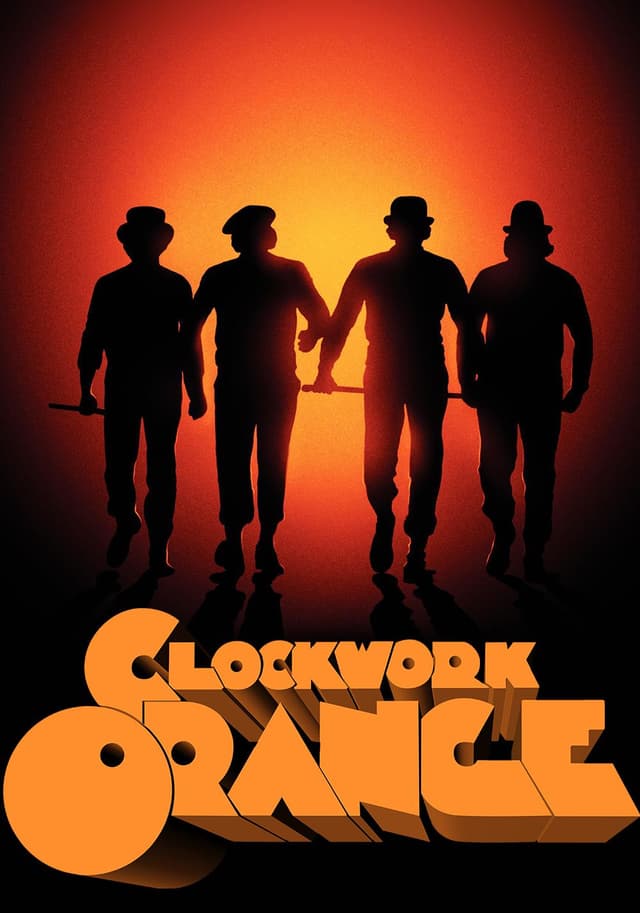
Protagonist Alex DeLarge is an "ultraviolent" youth in futuristic Britain. As with all luck, his eventually runs out and he's arrested and convicted of murder. While in prison, Alex learns of an experimental program in which convicts are programmed to detest violence. If he goes through the program, his sentence will be reduced and he will be back on the streets sooner than expected. But Alex's ordeals are far from over once he hits the streets of Britain..
What is the budget of A Clockwork Orange?
"A Clockwork Orange," a science fiction released in 1971, was directed by Stanley Kubrick and stars Malcolm McDowell, Patrick Magee. The production budget was $2,200,000, placing it in the micro-budget range for science fiction productions of the 1970s.
Key Budget Allocation Categories
While specific budget breakdowns are not publicly available, typical cost drivers for a science fiction production like this include:
- Visual Effects & CGI Pipeline: Sci-fi films are among the most VFX-intensive productions in Hollywood.
- Production Design & World-Building: Creating a believable sci-fi world required significant investment in set construction, prop fabrication, and conceptual design , from physical environments through LED volume stages and virtual production technology.
- Technology & Camera Systems: Cutting-edge camera rigs, motion capture stages, LED volume stages (virtual production), and proprietary rendering technology often push the technical budget far beyond conventional filming costs.
- Casting: McDowell was chosen for the role of Alex after Kubrick saw him in the film if.... (1968).
What were the major cost factors in A Clockwork Orange?
Several factors contributed to the overall production costs of "A Clockwork Orange."
- Visual Effects: Visual Effects & CGI Pipeline is one of the primary cost drivers in science fiction productions of this scale.
- Production Design: Production Design & World-Building is one of the primary cost drivers in science fiction productions of this scale.
- Technology: Technology & Camera Systems is one of the primary cost drivers in science fiction productions of this scale.
How Does A Clockwork Orange's Budget Compare to Similar Films?
At $2,200,000, A Clockwork Orange sits in the micro-budget range. Here is how it compares to productions with a similar budget:
- Silenced (2011): Budget $2,200,000, Worldwide Gross $31,500,000
- Paskal (2018): Budget $2,200,000, Worldwide Gross $6,748,935
- Minnal Murali (2021): Budget $2,111,711
- The Best Years of Our Lives (1946): Budget $2,100,000, Worldwide Gross $23,650,000
- The Cook, the Thief, His Wife & Her Lover (1989): Budget $2,300,000, Worldwide Gross $7,724,701
The median budget for wide-release science fiction films in the era ranges from $30 to 80M for mid-budget to $150M+ for tentpoles.
A Clockwork Orange Box Office Performance
"A Clockwork Orange" earned $26,617,553 domestically and $27,033,812 worldwide at the box office. Against a production budget of $2,200,000, the film performed strongly at the box office.
A film typically needs to earn approximately twice its production budget to cover marketing and distribution costs. For "A Clockwork Orange," that break-even threshold was roughly $4,400,000. With worldwide earnings of $27,033,812, the film cleared that threshold comfortably.
Box Office Breakdown
A Clockwork Orange

At 1128.8%, "A Clockwork Orange" earned roughly $12.29 for every $1 invested in production.
A Clockwork Orange Production History
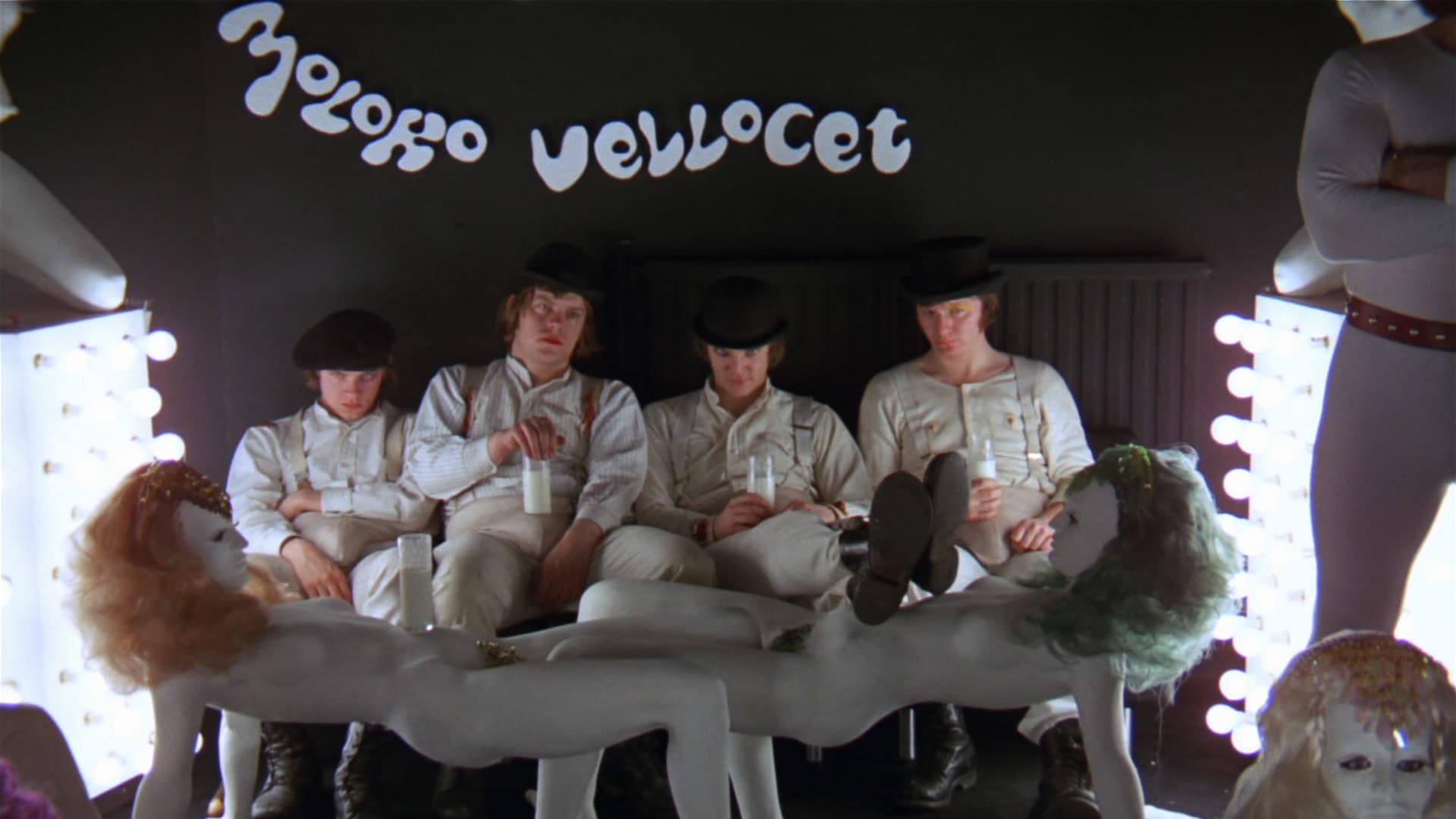
McDowell was chosen for the role of Alex after Kubrick saw him in the film if.... (1968). When asking why he was picked for the role, Kubrick told him: "You can exude intelligence on the screen." He also helped Kubrick on the uniform of Alex's gang, when he showed Kubrick the cricket whites he had. Kubrick asked him to put the box (jockstrap) not under but on top of the costume.
Filming took place between September 1970 and April 1971. During the filming of the Ludovico technique scene, McDowell scratched a cornea and was temporarily blinded. The doctor standing next to him in the scene, dropping saline solution into Alex's forced-open eyes, was a real physician present to prevent the actor's eyes from drying.
The main theme is an electronic arrangement of a short excerpt from Henry Purcell's Music for the Funeral of Queen Mary, and the soundtrack has two of Edward Elgar's Pomp and Circumstance Marches. Kubrick wanted to use the Pink Floyd song "Atom Heart Mother" in the film, but they refused. Alex is fanatical about Ludwig van Beethoven in general and his Ninth Symphony in particular, and the soundtrack includes an electronic version specially arranged by Wendy Carlos of the Scherzo and other parts of the Symphony.
Awards and Recognition
Nominated for 4 Oscars. 12 wins & 26 nominations total
- Hugo Award for Best Dramatic Presentation
Critical Reception
On release, A Clockwork Orange was met with mixed reviews. The following year, after the film won the New York Film Critics Award, he called it "a brilliant and dangerous work, but it is dangerous in a way that brilliant things sometimes are". The film also had notable detractors. Film critic Stanley Kauffmann commented, "Inexplicably, the script leaves out Burgess' reference to the title". Roger Ebert gave A Clockwork Orange two stars out of four, calling it an "ideological mess".
Frequently Asked Questions
How much did it cost to make A Clockwork Orange (1971)?
The production budget was $2,200,000, covering principal photography, visual effects, cast and crew salaries, locations, sets, post-production, and music. Marketing and distribution (P&A) costs are estimated at an additional $1,100,000 - $1,760,000, bringing the total studio investment to approximately $3,300,000 - $3,960,000.
How much did A Clockwork Orange (1971) earn at the box office?
A Clockwork Orange grossed $26,617,553 domestic, $416,259 international, totaling $27,033,812 worldwide.
Was A Clockwork Orange (1971) profitable?
Yes. Against a production budget of $2,200,000 and estimated total costs of ~$5,500,000, the film earned $27,033,812 theatrically - a 1129% ROI on production costs alone.
What were the biggest costs in producing A Clockwork Orange?
The primary cost drivers were above-the-line talent (Malcolm McDowell, Patrick Magee, Carl Duering); visual effects pipelines, virtual production technology, and speculative world-building; international production across United Kingdom, United States of America.
How does A Clockwork Orange's budget compare to similar science fiction films?
At $2,200,000, A Clockwork Orange is classified as a micro-budget production. The median budget for wide-release science fiction films in the era ranges from $30 - 80M for mid-budget to $150M+ for tentpoles. Comparable budgets: Silenced (2011, $2,200,000); Paskal (2018, $2,200,000); Minnal Murali (2021, $2,111,711).
Did A Clockwork Orange (1971) go over budget?
There are no widely reported accounts of significant budget overruns for this production. However, studios rarely disclose precise budget overrun figures publicly. The reported production budget reflects the final estimated cost.
What was the return on investment (ROI) for A Clockwork Orange?
The theatrical ROI was 1128.8%, calculated as ($27,033,812 − $2,200,000) ÷ $2,200,000 × 100. This measures gross revenue against production budget only - it does not account for P&A or exhibitor shares.
What awards did A Clockwork Orange (1971) win?
Nominated for 4 Oscars. 12 wins & 26 nominations total.
Who directed A Clockwork Orange and who were the key crew members?
Directed by Stanley Kubrick, written by Stanley Kubrick, shot by John Alcott, with music by Wendy Carlos, edited by Bill Butler.
Where was A Clockwork Orange filmed?
A Clockwork Orange was filmed in United Kingdom, United States of America. Filming took place between September 1970 and April 1971. During the filming of the Ludovico technique scene, McDowell scratched a cornea and was temporarily blinded. The doctor standing next to him in the scene, dropping saline solution into Alex's forced-open eyes, was a real physician present to prevent the actor's eyes from drying.
Filmmakers
A Clockwork Orange

Official Trailer
Build budgets like this one in Saturation
Start from an industry-standard feature film template, import the schedule and rates you already have, and let the cost report keep itself current as you spend. Real-time collaboration, no spreadsheets.