La Strada Budget
Updated
Synopsis
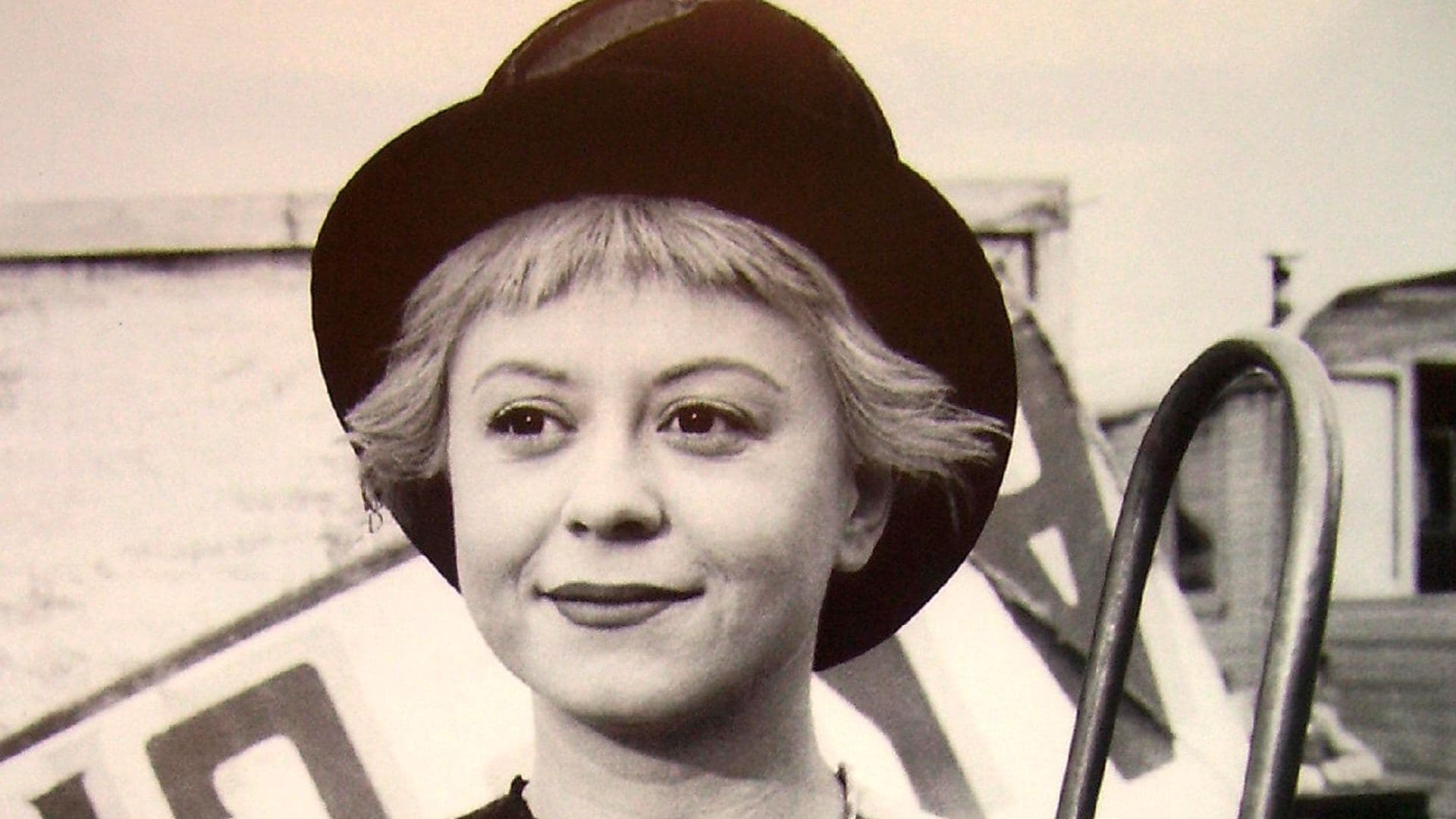
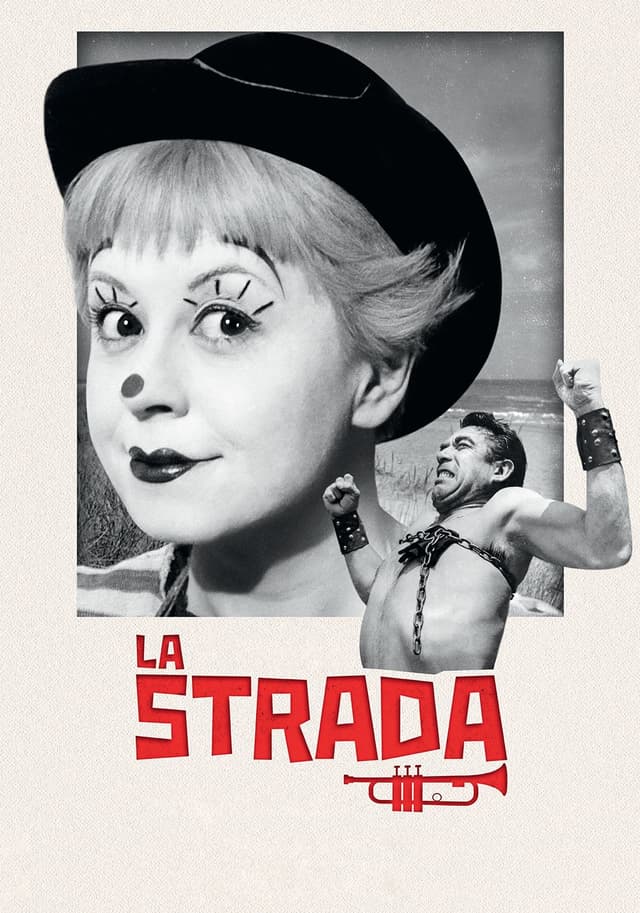
Federico Fellini's La Strada follows Gelsomina, a simple-minded young woman sold by her impoverished mother to Zampanò, a brutish travelling strongman who tours rural Italy performing chain-breaking feats. As Gelsomina endures Zampanò's cruelty, an encounter with the gentle high-wire performer Il Matto reveals a different way of living, setting in motion a tragedy that defines one of Italian neorealism's most enduring works.
What Is the Budget of La Strada (1954)?
La Strada (1954), directed by Federico Fellini and produced by Dino De Laurentiis and Carlo Ponti for Ponti-De Laurentiis Cinematografica, was made on a modest Italian production budget appropriate to early-1950s postwar European filmmaking. Exact production cost figures were never publicly disclosed by the producers and have not entered any of the standard public databases. Industry historians estimate the production at the low end of the studio's mid-1950s slate, somewhere in the range of $100,000 to $250,000 in 1954 lire equivalents.
Production financing came primarily from Ponti-De Laurentiis, the dominant Italian production company of the postwar era, which had backed Fellini's earlier features I Vitelloni (1953) and The White Sheik (1952). The film was made on the strength of Fellini's rising critical reputation and the team's confidence in Giulietta Masina (Fellini's wife) and Anthony Quinn, who agreed to participate during a window between Hollywood contracts.
Key Budget Allocation Categories
The film's modest production cost was distributed across several core areas of postwar Italian filmmaking:
- Above-the-Line Talent: Anthony Quinn, fresh off his Oscar win for Viva Zapata! (1952), commanded the highest single-line cost as the Hollywood-name lead. Giulietta Masina and Richard Basehart filled out the principal cast, with Basehart cast on the strength of his work for Fellini's peers in the Italian neorealist movement.
- Location Shooting: Principal photography took place across rural central Italy, primarily in Abruzzo and Lazio, with sequences in Bagnoregio, Ovindoli, and along Roman roads. The location-heavy schedule aligned with the neorealist aesthetic and kept studio overhead minimal but required extensive travel logistics for cast and crew.
- Music: Composer Nino Rota provided the film's iconic score, including the central trumpet melody that became one of the most recognized themes in Italian cinema. Rota worked at the standard Cinecittà composer rate and developed his career-defining Fellini collaboration on this production.
- Black-and-White Photography: Cinematographer Otello Martelli, who had shot Roma città aperta and other foundational neorealist works, captured the film in black-and-white 35mm. Lighting and camera package costs were typical for postwar Italian features.
- Costumes and Production Design: The film's itinerant-circus aesthetic required practical, weathered costumes for Zampanò's strongman act and Gelsomina's ragged clown attire, designed by Margherita Marinari Bomarzi within a tight budget. Production design relied heavily on found locations.
- Post-Production and Sound: Italian-language dialogue was recorded in post-production at Cinecittà per the standard postwar Italian dubbing workflow, with Anthony Quinn's voice initially dubbed by an Italian actor and his own English-language vocal track recorded for international release prints.
How Does La Strada's Budget Compare to Similar Films?
Although exact figures are unavailable, La Strada belongs to the cohort of early-1950s European art films made on small budgets that achieved outsized international impact:
- Bicycle Thieves (1948): Budget approximately $133,000 | Box office unknown. Vittorio De Sica's foundational neorealist work cost a similar small Italian sum and won the first honorary Academy Award for Best Foreign Language Film.
- Rashomon (1950): Budget approximately $250,000 | Box office unknown. Akira Kurosawa's Japanese contemporary, also made on a small studio budget, won the Golden Lion at Venice and the same honorary foreign-language Oscar that La Strada would later capture in its first regular year.
- I Vitelloni (1953): Budget unknown | Box office unknown. Fellini's previous feature, produced by the same Ponti-De Laurentiis team, established the production model that financed La Strada.
- Roman Holiday (1953): Budget $1,500,000 | Box office $12,000,000. Paramount's contemporary Italian-set Hollywood production cost roughly 6x to 15x what La Strada cost and grossed orders of magnitude more, illustrating the budget gap between Hollywood and Italian neorealist financing in the same period.
- La Dolce Vita (1960): Budget approximately $1,500,000 | Box office approximately $19,500,000. Fellini's post-La Strada international breakthrough, financed at roughly ten times the scale once his global reputation was established.
La Strada Box Office Performance
La Strada premiered out of competition at the Venice Film Festival on September 6, 1954 and went into Italian release in late September. Italian box office records from the period are incomplete, but the film was a commercial success in Italy and a major art-house hit internationally, ultimately running for years on the global repertory circuit. Janus Films and other foreign distributors handled the international release in the United States, France, the United Kingdom, and across Latin America.
Exact production budget and worldwide gross figures were never reliably published by Ponti-De Laurentiis or its distribution partners. The financial breakdown that follows reflects what is known and what remains undocumented:
Box Office Breakdown
La Strada

Although the precise return is undocumented, La Strada is universally regarded as a financial success for Ponti-De Laurentiis. The film's long international theatrical run, its 1956 Academy Award for Best Foreign Language Film, and decades of home-video and repertory revenue established the production as a paradigm of how a small Italian art film could compound returns over time through critical recognition and cultural longevity.
The film also launched Federico Fellini's international career and cemented Nino Rota's reputation as a film composer, both of which translated into long-running creative and commercial dividends for Ponti-De Laurentiis on subsequent collaborations.
La Strada Production History
Fellini conceived La Strada during his work on Roberto Rossellini's Il Miracolo (1948), inspired by the rural circus performers and itinerant strongmen he had observed during travels through central Italy. He developed the screenplay with frequent collaborator Tullio Pinelli, with additional contributions from Ennio Flaiano. The script was written specifically for Giulietta Masina, Fellini's wife, whose performance as Gelsomina would become one of the most celebrated in postwar cinema.
Production was hindered by Fellini's recurring health problems during the shoot, including a nervous breakdown that paused filming for several weeks. Anthony Quinn, who was simultaneously shooting Attila for the same producers, reportedly worked back-to-back schedules between the two productions. Richard Basehart, an American actor who had recently relocated to Italy, joined as Il Matto, the high-wire performer whose encounter with Gelsomina catalyzes the film's tragic third act.
Nino Rota's score was composed during principal photography, with the central trumpet theme written for the character of Gelsomina and refined through repeated takes of Masina's scenes. The film premiered at the 1954 Venice Film Festival on September 6, where it won the Silver Lion, igniting a public controversy with rival critics of Luchino Visconti's Senso, which had been the favored entry.
Awards and Recognition
La Strada won the Academy Award for Best Foreign Language Film in 1956, becoming the first film to win the award in its first regular non-honorary year. The film also received a Best Original Screenplay nomination for Fellini, Pinelli, and Flaiano. At the Venice Film Festival in 1954 it won the Silver Lion. The film won the New York Film Critics Circle Award for Best Foreign Language Film and was nominated for the BAFTA Award for Best Film from any Source in 1955.
Beyond its initial awards run, La Strada has been included in the Vatican's 1995 list of the 45 great films, the BFI Sight & Sound critics' poll repeatedly through subsequent decades, and innumerable critics' lists of the greatest films ever made. Giulietta Masina's performance as Gelsomina is consistently cited among the most influential screen acting achievements of the 20th century.
Critical Reception
La Strada was a critical phenomenon on its 1954 release and has only grown in stature in the decades since. The film holds a 96% approval rating on Rotten Tomatoes based on 47 reviews, an exceptionally high consensus for a film of its vintage, with a critical consensus that calls it "a deeply moving collaboration between Fellini and his wife Giulietta Masina that endures as one of cinema's most profound humanist works."
Initial Italian reception was divided. Marxist critics aligned with the Italian neorealist movement attacked the film for what they saw as a retreat from political engagement into mystical and personal symbolism, with Guido Aristarco's reviews in Cinema Nuovo positioning the film as a betrayal of neorealism's social commitments. International critics, by contrast, embraced the film immediately. Bosley Crowther of The New York Times called it "a powerful and provocative film," and André Bazin in Cahiers du Cinéma defended the film against its Italian detractors and identified Fellini as a major auteur.
In subsequent decades the film has been canonized as one of the foundational achievements of postwar cinema. Roger Ebert added it to his Great Movies list, writing that "few directors have approached the heartbreak of human loneliness so directly." Anthony Quinn called his performance as Zampanò the work he was most proud of. Giulietta Masina's Gelsomina has been cited as an influence by performers from Liza Minnelli to Audrey Tautou, and Nino Rota's theme remains one of the most instantly recognizable melodies in film-music history.
Frequently Asked Questions
How much did it cost to make La Strada (1954)?
Exact production budget figures were never publicly disclosed by Ponti-De Laurentiis Cinematografica and have not entered any standard public databases. Industry historians estimate the production at the low end of the studio's mid-1950s slate, somewhere between $100,000 and $250,000 in 1954 lire equivalents.
How much did La Strada earn at the box office?
Specific box office totals for La Strada were never published reliably by Ponti-De Laurentiis or its international distributors. The film is universally understood to have been a major commercial success across Italian, European, and American art-house markets, with a long international theatrical run that compounded its return through the late 1950s and 1960s.
Who directed La Strada?
Federico Fellini directed the film, working from a screenplay he co-wrote with Tullio Pinelli and Ennio Flaiano. La Strada was Fellini's fourth feature as director and the project that established his international reputation.
Who stars in La Strada?
Anthony Quinn stars as Zampanò the strongman, Giulietta Masina (Fellini's wife) plays Gelsomina, and Richard Basehart appears as Il Matto, the high-wire performer. Quinn was cast on the strength of his recent Oscar win for Viva Zapata! (1952).
Where was La Strada filmed?
Principal photography took place across rural central Italy, primarily in Abruzzo and Lazio, with sequences in Bagnoregio, Ovindoli, and along Roman countryside roads. The location-heavy schedule aligned with the Italian neorealist aesthetic.
Did La Strada win an Oscar?
Yes. La Strada won the Academy Award for Best Foreign Language Film in 1956, becoming the first film to win the award in its first regular non-honorary year. The film also received a nomination for Best Original Screenplay for Fellini, Pinelli, and Flaiano.
What other awards did La Strada win?
The film won the Silver Lion at the 1954 Venice Film Festival and the New York Film Critics Circle Award for Best Foreign Language Film. It was nominated for the BAFTA Award for Best Film from any Source in 1955 and has appeared on the Vatican's 1995 list of 45 great films and innumerable critics' polls.
Why was La Strada controversial in Italy?
Marxist critics aligned with the Italian neorealist movement attacked the film as a retreat from political engagement into mystical and personal symbolism, with Guido Aristarco's reviews in Cinema Nuovo positioning the film as a betrayal of neorealism. International critics including André Bazin defended the film and identified Fellini as a major auteur.
Who composed the music for La Strada?
Nino Rota composed the score, including the central trumpet melody written for the character of Gelsomina that became one of the most instantly recognizable themes in film-music history. La Strada launched Rota's career-defining ongoing collaboration with Fellini.
What is La Strada about?
La Strada follows Gelsomina, a simple-minded young woman sold by her impoverished mother to Zampanò, a brutish travelling strongman who tours rural Italy. As Gelsomina endures Zampanò's cruelty, an encounter with the gentle high-wire performer Il Matto reveals a different way of living, setting in motion a tragedy that defines one of Italian neorealism's most enduring works.
Filmmakers
La Strada

Official Trailer
Build budgets like this one in Saturation
Start from an industry-standard feature film template, import the schedule and rates you already have, and let the cost report keep itself current as you spend. Real-time collaboration, no spreadsheets.