The Treasure of the Sierra Madre Budget
Updated
Synopsis
Two jobless Americans convince a prospector to travel to the mountains of Mexico with them in search of gold. But the hostile wilderness, local bandits, and greed all get in the way of their journey.
What Is the Budget of The Treasure of the Sierra Madre?
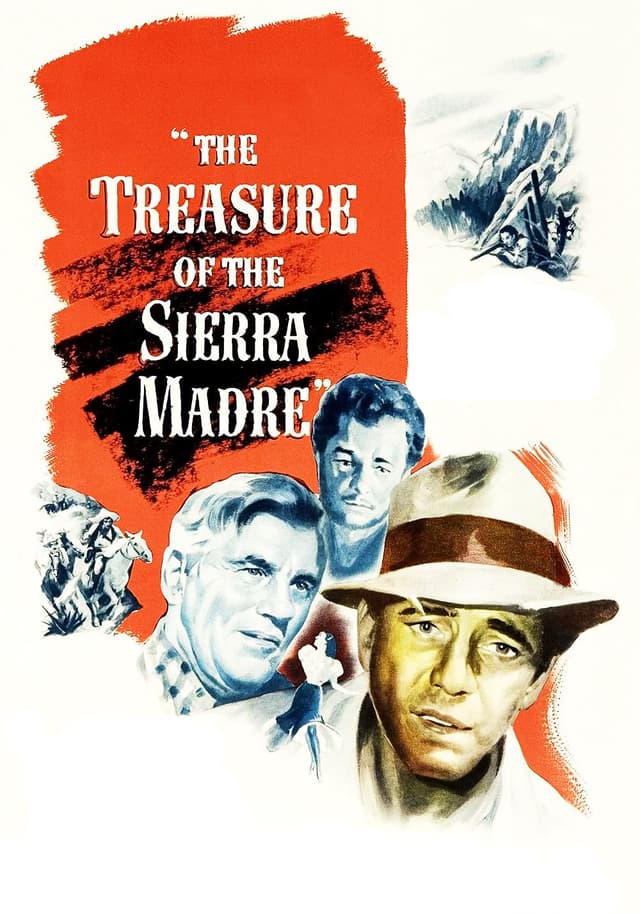
The Treasure of the Sierra Madre (1948) was produced by Warner Bros. with an estimated budget of $3 million, a substantial investment for a late 1940s production. Adjusted for inflation, that figure would exceed $40 million in today's dollars. The budget reflected the film's ambitious scope: extensive location shooting in Mexico, a large supporting cast of local extras, and weeks of outdoor production in rugged terrain that drove costs well above what a typical studio picture of the era required.
Director John Huston had earned creative leverage after the commercial success of The Maltese Falcon (1941), and Warner Bros. gave him unusual latitude to pursue an adaptation of B. Traven's 1927 novel. Studio head Jack Warner approved the budget despite concerns about the story's dark tone and the absence of a conventional love interest, trusting that Humphrey Bogart's star power would justify the expense.
Key Budget Allocation Categories
- Above-the-Line Talent accounted for a significant share, with Humphrey Bogart commanding top billing and his usual Warner Bros. contract rate. John Huston served as both writer and director, and Walter Huston, John's father, took a reduced fee for the supporting role of Howard, the grizzled old prospector.
- Location Production in Mexico represented the single largest cost driver. Filming took place in Tampico, the Sierra Madre mountains near Jungapeo, and the village of San Jose de Purua. Transporting a full Hollywood crew and equipment to remote Mexican locations in 1947 required extensive logistical planning, local permits, and weeks of additional per diem expenses.
- Set Construction and Practical Locations included building the mining camp, the flophouse interiors shot at Warner Bros. studios in Burbank, and the Mexican village sets. The production moved between studio work and location footage, requiring coordination across two countries.
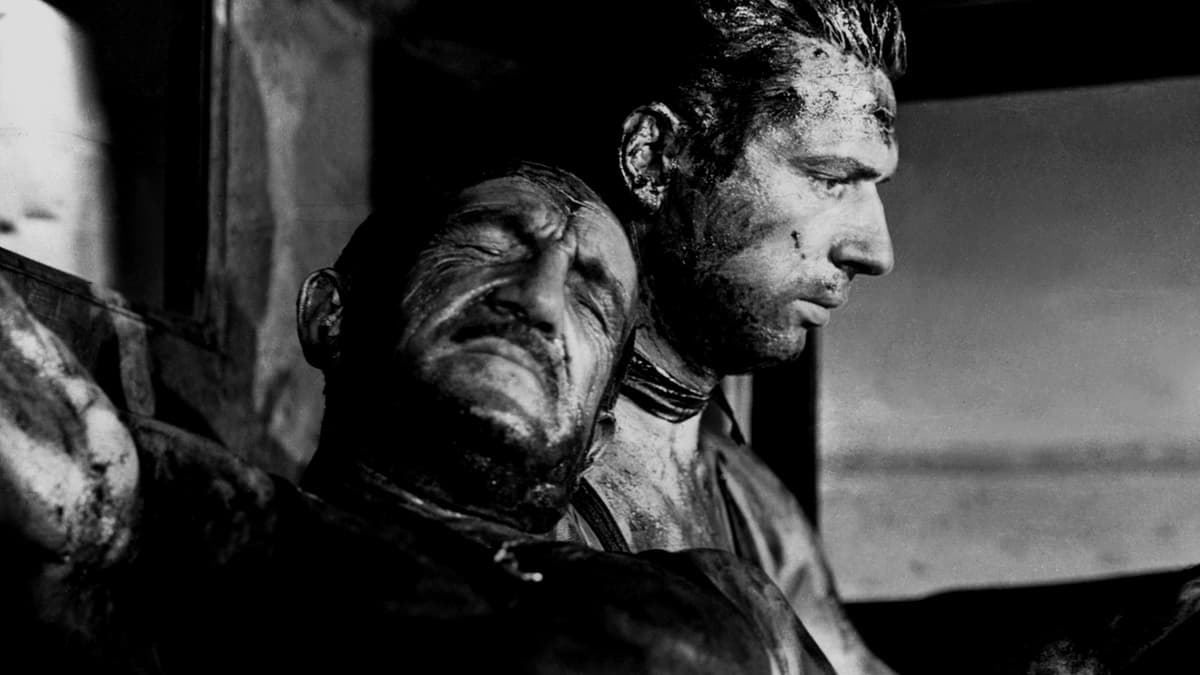
- Cinematography and Technical Crew costs reflected the work of cinematographer Ted McCord, who shot the film in black and white. McCord's outdoor photography in the Mexican mountains demanded careful planning around weather and natural light, with no controlled stage lighting available for exterior scenes.
- Music and Post-Production included Max Steiner's orchestral score, which underscored the film's shifting psychological tensions. Sound mixing, editing by Owen Marks, and final color timing for the black-and-white print completed the post-production budget.
- Extras and Local Casting involved hiring hundreds of Mexican extras for bandit attacks, town scenes, and the train sequences. Alfonso Bedoya, cast as the bandit leader Gold Hat, delivered one of cinema's most quoted lines and was paid a fraction of the American leads' salaries.
How Does The Treasure of the Sierra Madre's Budget Compare to Similar Films?
Placing the film's $3 million budget alongside other notable productions of the late 1940s reveals where it stood in the studio hierarchy:
- Key Largo (1948) had an estimated budget of $1.7 million. Shot almost entirely on a single studio set, it required far fewer resources than Sierra Madre's location-heavy production, illustrating the premium that on-location filming commanded.
- Red River (1948) cost approximately $3.1 million for Howard Hawks' sprawling cattle drive western. Like Sierra Madre, it required extensive outdoor shooting, though Hawks filmed in Arizona rather than Mexico.
- The Naked City (1948) was produced for roughly $1.1 million. Jules Dassin's decision to shoot entirely on location in New York City kept costs low despite the logistical complexity, as urban infrastructure was readily available compared to remote mountain terrain.
- Hamlet (1948) was budgeted at approximately $2 million for Laurence Olivier's British production. Studio-bound at Denham and Pinewood, it invested heavily in elaborate medieval sets rather than location work.
- Fort Apache (1948) cost an estimated $2.7 million for John Ford's cavalry western. Ford's use of Monument Valley, a location he knew intimately, kept production efficient despite the outdoor scope.
Sierra Madre's $3 million placed it at the upper end of 1948 budgets, driven primarily by the decision to shoot in Mexico rather than simulate the setting on a studio backlot. That commitment to authenticity was unusual for the era and directly shaped the film's visual identity.
The Treasure of the Sierra Madre Box Office Performance
The Treasure of the Sierra Madre earned an estimated $4.5 million in domestic gross during its initial theatrical run in 1948. Against its $3 million production budget, the film needed roughly $6 million at the box office to break even after accounting for Warner Bros.' distribution and marketing costs (the standard rule of thumb requiring approximately 2x the production budget to cover prints, advertising, and exhibitor splits).
By that measure, Sierra Madre fell short of profitability in its first run. Warner Bros.' marketing campaign leaned heavily on Bogart's name, but the film's bleak ending and lack of romance made it a difficult sell to mainstream audiences in 1948. Jack Warner reportedly told Huston, "You can't have Bogart playing a bum." The studio recut trailers to emphasize adventure over psychological darkness, but ticket sales plateaued after a strong opening.
The film's financial return improved substantially through re-releases and television licensing throughout the 1950s and 1960s. Its cultural stature grew steadily, and by the time it entered home video markets, it had long surpassed its break-even threshold. Calculating ROI purely on the initial theatrical run: ($4.5M - $3M) / $3M x 100 = 50% gross return, which was insufficient to cover distribution overhead. The film's true financial legacy came from decades of ancillary revenue that the original box office figures do not capture.
Box Office Breakdown
The Treasure of the Sierra Madre

The Treasure of the Sierra Madre Production History
John Huston first read B. Traven's 1927 novel The Treasure of the Sierra Madre in the mid-1930s and became determined to adapt it. He wrote a screenplay treatment before the war, but production stalled when Huston enlisted in the Army Signal Corps to make war documentaries, including the classified Let There Be Light (1946). When he returned to Warner Bros. after the war, he pushed the Sierra Madre project to the top of his slate.
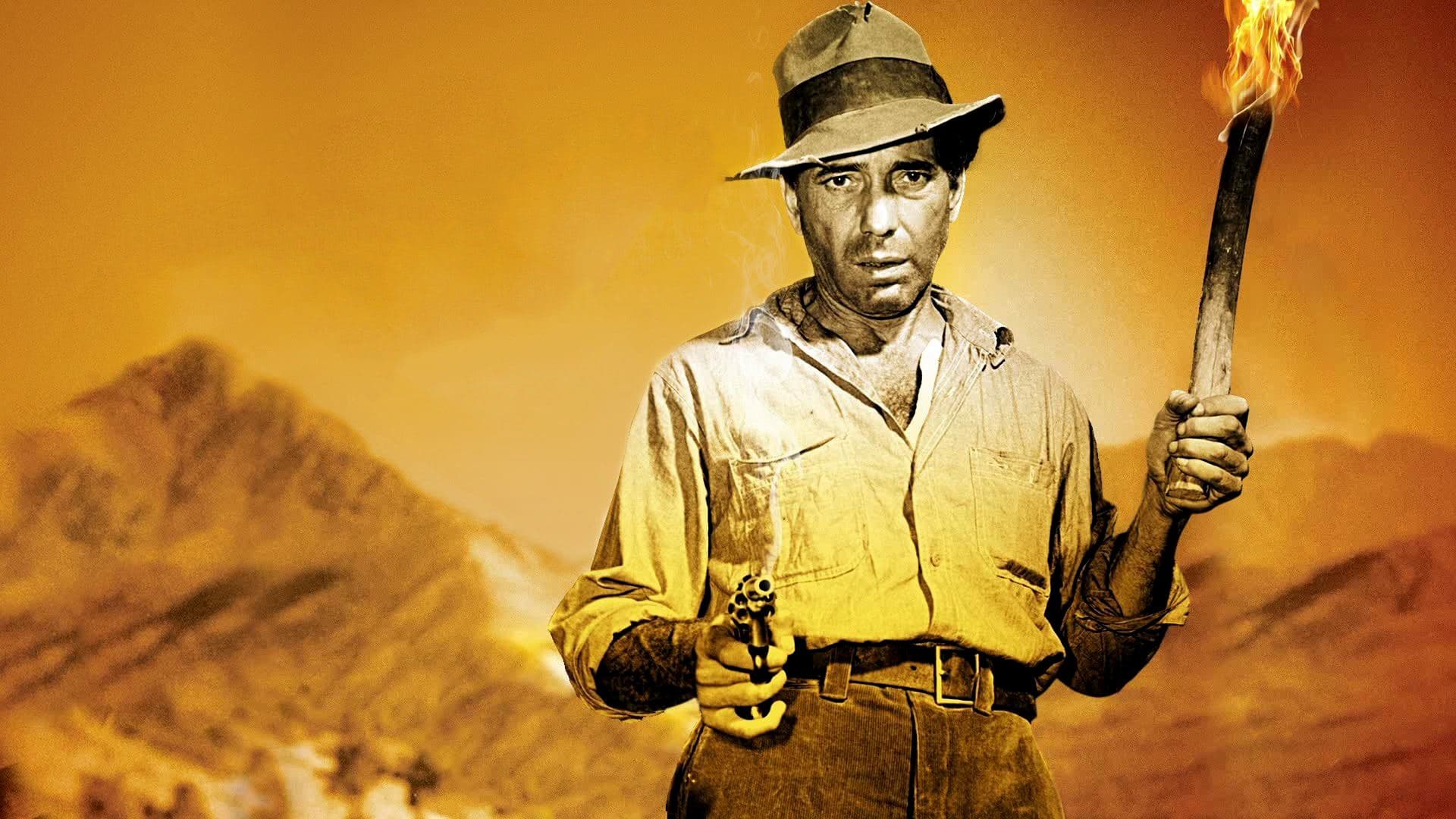
Casting Humphrey Bogart as Fred C. Dobbs was Huston's first priority. Bogart and Huston had forged their partnership on The Maltese Falcon, and Bogart trusted Huston enough to play a deeply unsympathetic character whose greed and paranoia destroy him. Warner Bros. executives were uneasy about their biggest star playing a villain who dies covered in dirt, but Huston insisted the role required Bogart's intensity. For the role of Howard, Huston cast his own father Walter Huston, a veteran stage and screen actor who brought physical comedy and warmth to the old prospector.
Production began in early 1947 with studio interiors at the Warner Bros. lot in Burbank, including the Tampico flophouse and cantina scenes. The company then relocated to Mexico for what was planned as eight weeks of location shooting. Huston chose sites in Durango, Tampico, and the mountain village of Jungapeo in Michoacan. The Mexican locations presented constant challenges: tropical rains delayed shooting, equipment had to be hauled up mountain trails by mule, and several crew members fell ill from local water. Huston, known for his adventurous temperament, relished the difficulties and often extended shooting days to capture specific light conditions.
The production ran over schedule by several weeks, pushing the budget past its original allocation. Jack Warner sent increasingly agitated telegrams demanding Huston return to the studio. According to crew accounts, Huston responded to one such telegram by requesting additional funds for "another burro." The final cut ran 126 minutes, and Warner Bros. released it in January 1948 with a marketing campaign that positioned it as a Bogart adventure picture rather than the psychological study Huston had made.
Awards and Recognition
The Treasure of the Sierra Madre swept the major creative categories at the 21st Academy Awards ceremony in 1949. John Huston won both Best Director and Best Adapted Screenplay, while Walter Huston won Best Supporting Actor for his performance as Howard. The father and son became the first parent-child duo to win Academy Awards, a milestone that stood alone for decades. The film also received a nomination for Best Picture but lost to Laurence Olivier's Hamlet.
Walter Huston's win was widely considered the emotional highlight of the ceremony. At 65, he delivered a performance that combined physical energy with subtle character work, and his acceptance speech was brief and gracious. The role became the defining screen performance of his career, though he had been a respected stage actor for decades before Hollywood.
Beyond the Oscars, the film received recognition from the Golden Globes (Best Director, Best Supporting Actor) and the National Board of Review. In 1990, the Library of Congress selected The Treasure of the Sierra Madre for preservation in the National Film Registry, citing its cultural, historical, and aesthetic significance. The American Film Institute ranked it among the greatest American films on multiple lists, and it holds a 100% approval rating on Rotten Tomatoes. Alfonso Bedoya's line "Badges? We ain't got no badges!" became one of the most frequently quoted and parodied moments in cinema history, often misquoted as "We don't need no stinking badges."
Critical Reception
Critics in 1948 recognized The Treasure of the Sierra Madre as a major artistic achievement, even as some expressed surprise at the darkness of its themes. Bosley Crowther of The New York Times called it "one of the best things Hollywood has done since it learned to talk," praising Huston's refusal to compromise the novel's bleak moral vision. James Agee, writing in The Nation, declared it the finest work to come out of Hollywood in years and singled out Walter Huston's performance as a masterclass in screen naturalism.
The film's critical reputation has only strengthened with time. Subsequent generations of filmmakers have cited it as a foundational influence on the revisionist western and the psychological thriller. Sam Peckinpah, Sergio Leone, and the Coen Brothers (whose No Country for Old Men shares thematic DNA with Sierra Madre) have all acknowledged Huston's film as a touchstone. Critics have noted that Bogart's performance as Dobbs represents his most daring work, stripping away the cool charisma of his Casablanca persona to reveal a character consumed by suspicion and moral collapse.
Modern appraisals consistently place the film among the finest American productions of the 1940s. Its exploration of greed, trust, and the corrosive effects of wealth in a lawless frontier remains as relevant today as it was in 1948. Ted McCord's black-and-white cinematography, capturing the harsh beauty of the Mexican mountains, and Max Steiner's restrained score continue to be studied as examples of classical Hollywood craftsmanship at its peak.
Frequently Asked Questions
How much did it cost to make The Treasure of the Sierra Madre (1948)?
The production budget was $3,800,000, covering principal photography, cast and crew salaries, locations, sets, post-production, and music. Marketing and distribution (P&A) costs are estimated at an additional $1,900,000 - $3,040,000, bringing the total studio investment to approximately $5,700,000 - $6,840,000.
How much did The Treasure of the Sierra Madre (1948) earn at the box office?
The Treasure of the Sierra Madre grossed $5,014,000 domestic, $-707,000 international, totaling $4,307,000 worldwide.
Was The Treasure of the Sierra Madre (1948) profitable?
The film did not break even theatrically, earning $4,307,000 against an estimated $9,500,000 needed. Ancillary revenue may have improved the picture.
What were the biggest costs in producing The Treasure of the Sierra Madre?
The primary cost drivers were above-the-line talent (Humphrey Bogart, Walter Huston, Tim Holt); visual effects, practical stunts, and A-list talent compensation.
How does The Treasure of the Sierra Madre's budget compare to similar adventure films?
At $3,800,000, The Treasure of the Sierra Madre is classified as a micro-budget production. The median budget for wide-release adventure films in the era ranges from $30 - 80M for mid-budget to $150M+ for tentpoles. Comparable budgets: Network (1976, $3,800,000); My Neighbor Totoro (1988, $3,700,000); Flow (2024, $3,700,000).
Did The Treasure of the Sierra Madre (1948) go over budget?
There are no widely reported accounts of significant budget overruns for this production. However, studios rarely disclose precise budget overrun figures publicly. The reported production budget reflects the final estimated cost.
What was the return on investment (ROI) for The Treasure of the Sierra Madre?
The theatrical ROI was 13.3%, calculated as ($4,307,000 − $3,800,000) ÷ $3,800,000 × 100. This measures gross revenue against production budget only - it does not account for P&A or exhibitor shares.
What awards did The Treasure of the Sierra Madre (1948) win?
Won 3 Oscars. 18 wins & 5 nominations total.
Who directed The Treasure of the Sierra Madre and who were the key crew members?
Directed by John Huston, written by John Huston, shot by Ted D. McCord, with music by Max Steiner, edited by Owen Marks.
Where was The Treasure of the Sierra Madre filmed?
The Treasure of the Sierra Madre was filmed in United States of America. The Treasure of the Sierra Madre was one of the early Hollywood films to be filmed on location outside the U.S., but many scenes were filmed back in the studio and elsewhere in the U.S. Filming took five and a half months.
Filmmakers
The Treasure of the Sierra Madre

Official Trailer
Build budgets like this one in Saturation
Start from an industry-standard feature film template, import the schedule and rates you already have, and let the cost report keep itself current as you spend. Real-time collaboration, no spreadsheets.