
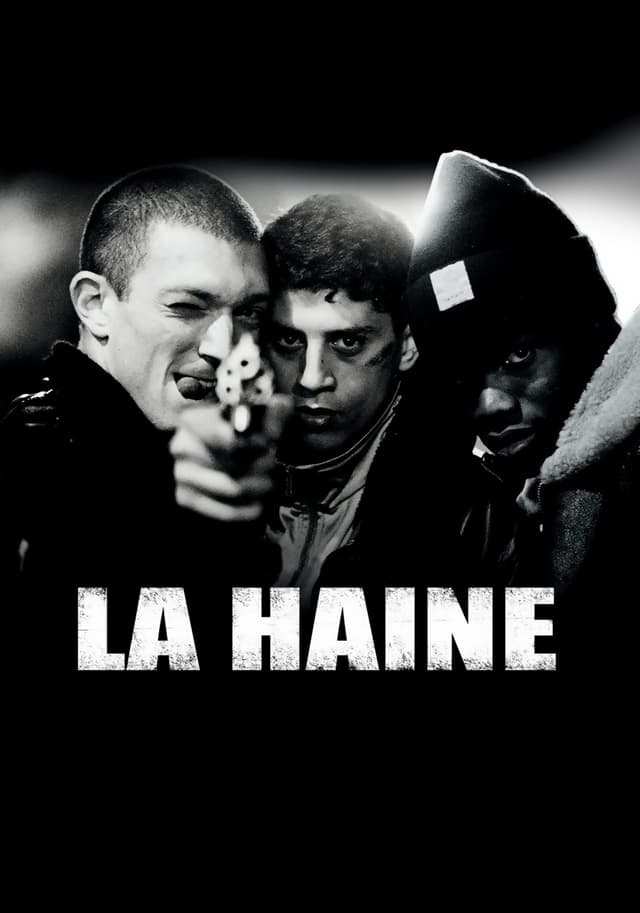
La Haine Budget
Updated
Synopsis
The film follows three young men and their time spent in the French suburban "ghetto," over a span of twenty-four hours. Vinz, a Jew, Saïd, an Arab, and Hubert, a black boxer, have grown up in these French suburbs where high levels of diversity coupled with the racist and oppressive police force have raised tensions to a critical breaking point. During the riots that took place a night before, a police officer lost his handgun in the ensuing madness, only to leave it for Vinz to find. Now, with a newfound means to gain the respect he deserves, Vinz vows to kill a cop if his friend Abdel dies in the hospital, due the beating he received while in police custody.
What is the budget of La Haine?
"La Haine," a drama released in 1995, was directed by Mathieu Kassovitz and stars Vincent Cassel, Hubert Koundé. The production budget was $2,600,000, placing it in the micro-budget range for drama productions of the 1990s.
Key Budget Allocation Categories
While specific budget breakdowns are not publicly available, typical cost drivers for a drama production like this include:
- Above-the-Line Talent: Drama films live or die on the strength of their performances.
- Location Filming & Period Production Design: Authentic locations , whether contemporary or historical , require scouting, permits, travel, lodging, and often significant dressing to match the story's time period.
- Post-Production, Color Grading & Score: The editorial process for dramas is typically longer than genre films, with careful attention to pacing and tone.
- Production: Kassovitz has said that the idea came to him when a young Zairian, was shot in 1993.
What were the major cost factors in La Haine?
Several factors contributed to the overall production costs of "La Haine."
- Above-the-Line Talent: Above-the-Line Talent is one of the primary cost drivers in drama productions of this scale.
- Location Filming: Location Filming & Period Production Design is one of the primary cost drivers in drama productions of this scale.
- Post-Production: Post-Production, Color Grading & Score is one of the primary cost drivers in drama productions of this scale.
How Does La Haine's Budget Compare to Similar Films?
At $2,600,000, La Haine sits in the micro-budget range. Here is how it compares to productions with a similar budget:
- Pinocchio (1940): Budget $2,600,000, Worldwide Gross $164,000,000
- Sputnik (2020): Budget $2,600,000, Worldwide Gross $354,023
- Singin' in the Rain (1952): Budget $2,540,800, Worldwide Gross $7,200,000
- Paper Moon (1973): Budget $2,500,000, Worldwide Gross $30,900,000
- An Elephant Sitting Still (2018): Budget $2,500,000
The median budget for wide-release drama films in the era ranges from $30 to 80M for mid-budget to $150M+ for tentpoles.
La Haine Box Office Performance
"La Haine" earned $280,859 domestically and $15,300,000 worldwide at the box office. Against a production budget of $2,600,000, the film performed strongly at the box office.
A film typically needs to earn approximately twice its production budget to cover marketing and distribution costs. For "La Haine," that break-even threshold was roughly $5,200,000. With worldwide earnings of $15,300,000, the film cleared that threshold comfortably.
Box Office Breakdown
La Haine

At 488.5%, "La Haine" earned roughly $5.88 for every $1 invested in production.
Awards and Recognition
8 wins & 15 nominations total
- Young European Film of the Year: Mathieu Kassovitz (8th European Film Awards)
- Young European Film of the Year: StudioCanal (8th European Film Awards)
- Young European Film of the Year: Arte France (8th European Film Awards)
- Young European Film of the Year: Les Productions Lazennec (8th European Film Awards)
- Lumière Award for Best Film: Mathieu Kassovitz
- Lumière Award for Best Director: Mathieu Kassovitz
Critical Reception
Upon its release, La Haine received widespread critical acclaim and was well received in France and abroad. The film was shown at the 1995 Cannes Film Festival where it enjoyed a standing ovation. Kassovitz was awarded the Best Director prize at the festival. It was number one for four consecutive weeks. The film had a total of 2,042,070 admissions in France where it was the 14th highest-grossing film of the year. Kevin Thomas of the Los Angeles Times called the film "raw, vital and captivating".
Frequently Asked Questions
How much did it cost to make La Haine (1995)?
The production budget was $2,600,000, covering principal photography, cast and crew salaries, locations, sets, post-production, and music. Marketing and distribution (P&A) costs are estimated at an additional $1,300,000 - $2,080,000, bringing the total studio investment to approximately $3,900,000 - $4,680,000.
How much did La Haine (1995) earn at the box office?
La Haine grossed $280,859 domestic, $15,019,141 international, totaling $15,300,000 worldwide.
Was La Haine (1995) profitable?
Yes. Against a production budget of $2,600,000 and estimated total costs of ~$6,500,000, the film earned $15,300,000 theatrically - a 488% ROI on production costs alone.
What were the biggest costs in producing La Haine?
The primary cost drivers were above-the-line talent (Vincent Cassel, Hubert Koundé, Saïd Taghmaoui); talent compensation, authentic period production design, and meticulous post-production.
How does La Haine's budget compare to similar drama films?
At $2,600,000, La Haine is classified as a micro-budget production. The median budget for wide-release drama films in the era ranges from $30 - 80M for mid-budget to $150M+ for tentpoles. Comparable budgets: Pinocchio (1940, $2,600,000); Sputnik (2020, $2,600,000); Singin' in the Rain (1952, $2,540,800).
Did La Haine (1995) go over budget?
There are no widely reported accounts of significant budget overruns for this production. However, studios rarely disclose precise budget overrun figures publicly. The reported production budget reflects the final estimated cost.
What was the return on investment (ROI) for La Haine?
The theatrical ROI was 488.5%, calculated as ($15,300,000 − $2,600,000) ÷ $2,600,000 × 100. This measures gross revenue against production budget only - it does not account for P&A or exhibitor shares.
What awards did La Haine (1995) win?
8 wins & 15 nominations total.
Who directed La Haine and who were the key crew members?
Directed by Mathieu Kassovitz, written by Mathieu Kassovitz, shot by Pierre Aïm, with music by Assassin, edited by Scott Stevenson, Mathieu Kassovitz.
Where was La Haine filmed?
La Haine was filmed in France.
Filmmakers
La Haine

Official Trailer
Build budgets like this one in Saturation
Start from an industry-standard feature film template, import the schedule and rates you already have, and let the cost report keep itself current as you spend. Real-time collaboration, no spreadsheets.