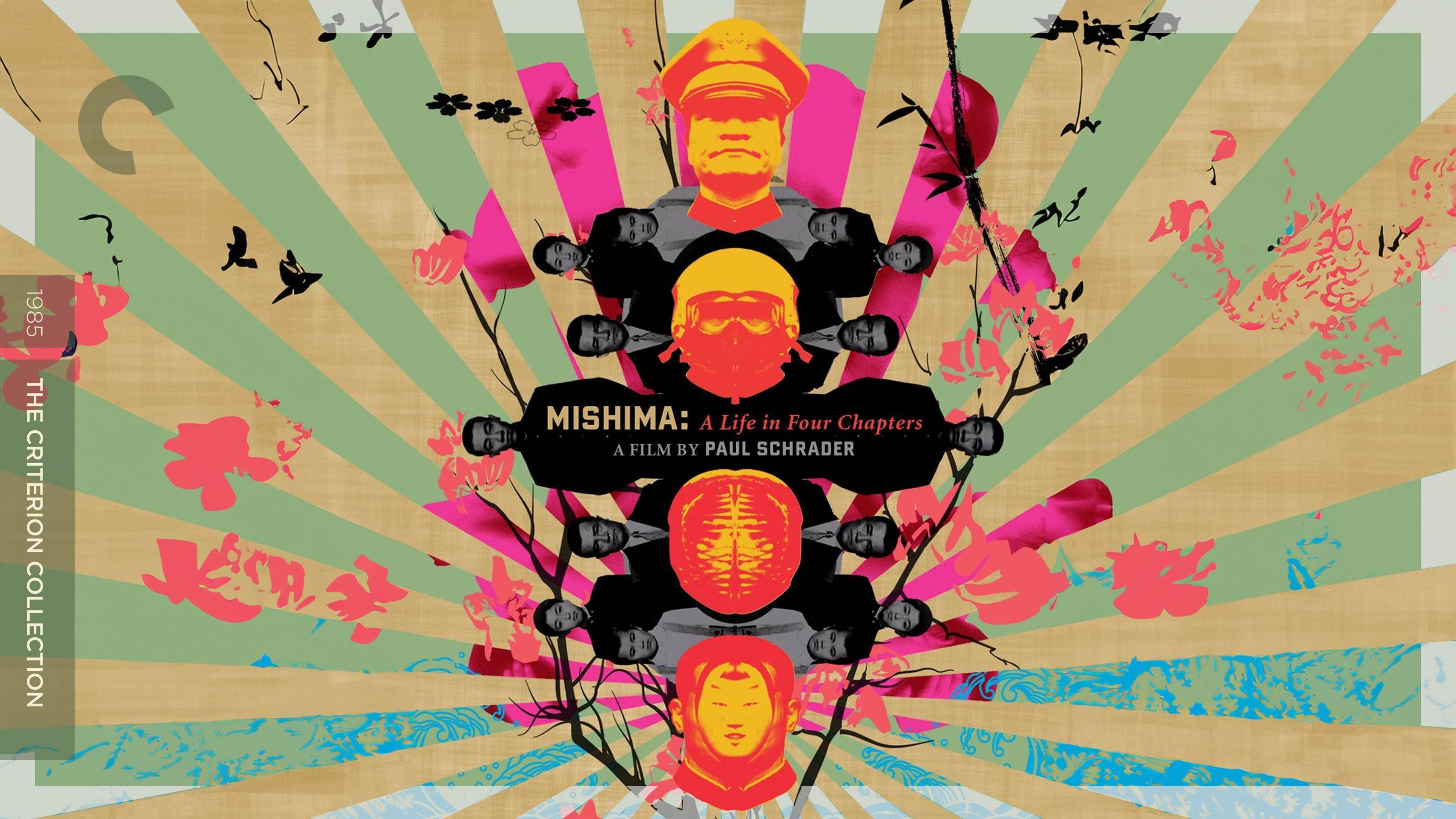
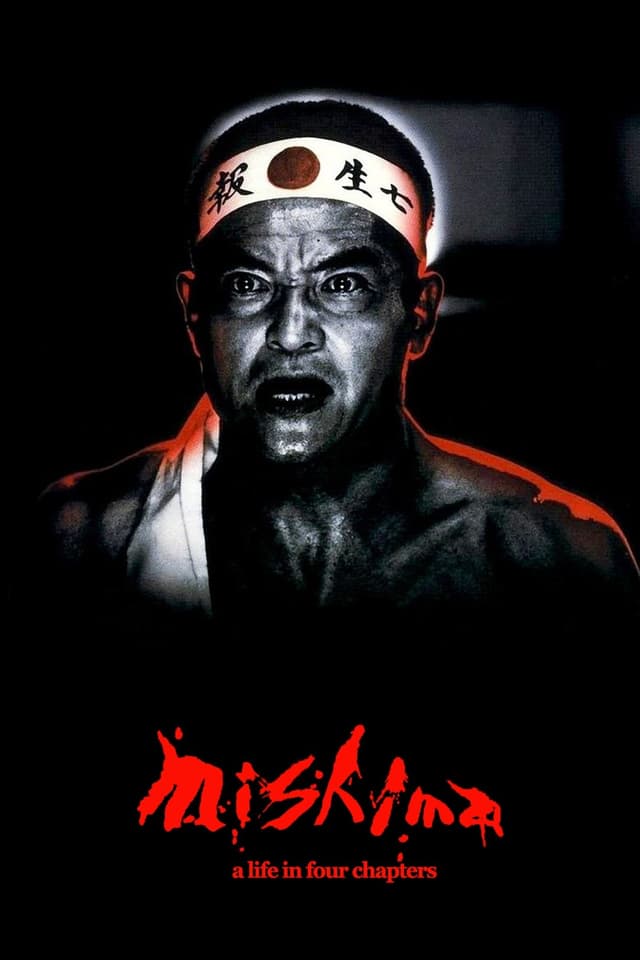
Mishima A Life in Four Chapters Budget
 Drama2h 1m
Updated
Synopsis
A fictionalized account in four chapters of the life of celebrated Japanese author Yukio Mishima. Three of the segments parallel events in Mishima's life with his novels (The Temple of the Golden Pavilion, Kyoko's House, and Runaway Horses), while the fourth depicts the actual events of the 25th Nov. 1970, "The Last Day".
What is the budget of Mishima A Life in Four Chapters?
"Mishima A Life in Four Chapters," a drama released in 1985, was directed by Paul Schrader and stars Ken Ogata, Kenji Sawada. The production budget was $5,000,000, placing it in the low-budget range for drama productions of the 1980s.
Key Budget Allocation Categories
While specific budget breakdowns are not publicly available, typical cost drivers for a drama production like this include:
- Above-the-Line Talent: Drama films live or die on the strength of their performances.
- Location Filming & Period Production Design: Authentic locations , whether contemporary or historical , require scouting, permits, travel, lodging, and often significant dressing to match the story's time period.
- Post-Production, Color Grading & Score: The editorial process for dramas is typically longer than genre films, with careful attention to pacing and tone.
- Casting: The title role was originally intended for Ken Takakura, who indeed proposed this to Paul Schrader, but had to withdraw due to pressure from ultranationalist groups.
What were the major cost factors in Mishima A Life in Four Chapters?
Several factors contributed to the overall production costs of "Mishima A Life in Four Chapters."
- Above-the-Line Talent: Above-the-Line Talent is one of the primary cost drivers in drama productions of this scale.
- Location Filming: Location Filming & Period Production Design is one of the primary cost drivers in drama productions of this scale.
- Post-Production: Post-Production, Color Grading & Score is one of the primary cost drivers in drama productions of this scale.
How Does Mishima A Life in Four Chapters's Budget Compare to Similar Films?
At $5,000,000, Mishima A Life in Four Chapters sits in the low-budget range. Here is how it compares to productions with a similar budget:
- Come and See (1985): Budget $5,000,000, Worldwide Gross $20,929,648
- Cinema Paradiso (1988): Budget $5,000,000, Worldwide Gross $35,962,062
- Once Upon a Time in the West (1968): Budget $5,000,000, Worldwide Gross $5,380,118
- A Separation (2011): Budget $5,000,000, Worldwide Gross $24,426,169
- The Elephant Man (1980): Budget $5,000,000, Worldwide Gross $26,000,000
The median budget for wide-release drama films in the era ranges from $30 to 80M for mid-budget to $150M+ for tentpoles.
Mishima A Life in Four Chapters Box Office Performance
"Mishima A Life in Four Chapters" earned $437,547 domestically and $502,758 worldwide at the box office. Against a production budget of $5,000,000, the film faced challenges in theatrical release. Home video, streaming, and ancillary revenue may have contributed to its overall performance.
A film typically needs to earn approximately twice its production budget to cover marketing and distribution costs. For "Mishima A Life in Four Chapters," that break-even threshold was roughly $10,000,000. With worldwide earnings of $502,758, the film did not reach break-even in theatrical release.
Box Office Breakdown
Mishima A Life in Four Chapters

At -89.9%, "Mishima A Life in Four Chapters" did not recoup its production budget through theatrical release alone.
Mishima A Life in Four Chapters Production History
The title role was originally intended for Ken Takakura, who indeed proposed this to Paul Schrader, but had to withdraw due to pressure from ultranationalist groups. Schrader eventually cast Ken Ogata, who he felt didn't physically resemble Mishima, but could provoke sympathy for the character. Roy Scheider was the narrator in the original movie version and on the early VHS release.
Shooting took place entirely in Japan, at Toho Studios and at various locations in Tokyo and Kōriyama. Because the crew was largely Japanese, Paul Schrader relied on four interpreters (including sister-in-law Chieko and producer Alan Poul) to direct. [Filming] Shooting took place entirely in Japan, at Toho Studios and at various locations in Tokyo and Kōriyama.
The musical score for Mishima was composed by Philip Glass, with parts performed by the Kronos Quartet. A soundtrack album was released on vinyl record and Audio CD in 1985 by Nonesuch Records.
Awards and Recognition
1 win & 1 nomination total
Critical Reception
On review aggregator website Rotten Tomatoes, Mishima has approval rating and an average rating of based on reviews.
Frequently Asked Questions
How much did Mishima: A Life in Four Chapters cost to make?
The production budget was approximately $5,000,000. Warner Bros. distributed the film domestically, with Coppola Company and Zoetrope Studios co-financing alongside George Lucas's Lucasfilm. Tom Luddy and Mata Yamamoto produced.
How much did Mishima earn at the box office?
Mishima had a limited theatrical release and grossed approximately $480,000 domestically. Specialty distribution patterns in 1985 limited the platform release to art-house theaters in major cities, with the film achieving commercial life primarily through home video, cable broadcast, and the Criterion Collection release in 2008.
Who directed Mishima?
Paul Schrader directed the film. Schrader had previously directed Hardcore (1979), American Gigolo (1980), and Cat People (1982), and written the screenplays for Martin Scorsese's Taxi Driver (1976) and Raging Bull (1980). Schrader has frequently cited Mishima as the film of which he is proudest.
What is Mishima about?
The film is a biopic of Japanese author Yukio Mishima, who committed ritual suicide in 1970 after a failed coup attempt at the Japanese Self-Defense Forces headquarters. The structure interweaves Mishima's final day with dramatizations of three of his novels: The Temple of the Golden Pavilion, Kyoko's House, and Runaway Horses.
Who stars in Mishima?
Ken Ogata stars as Yukio Mishima. Supporting cast includes Masayuki Shionoya, Hiroshi Mikami, Junya Fukuda, and Junkichi Orimoto. Roy Scheider provided uncredited English-language narration for the international release.
Why was Mishima never released in Japan?
The film was blocked from theatrical release in Japan due to objections from Yukio Mishima's widow Yoko Mishima, who maintained legal control of his estate and successfully prevented distribution. The dispute focused on the film's treatment of Mishima's sexuality and his political relationships, particularly the Shield Society paramilitary group. The blockade has been continuously honored since 1985.
Where was Mishima filmed?
Principal photography took place entirely in Japan, including Tokyo and stylized soundstage work for the novel-adaptation sequences. The production design by Eiko Ishioka, with its color-coded chapter aesthetic, is widely considered the film's most influential element.
What did critics think of Mishima?
The film received strong reviews, with a 91% approval rating on Rotten Tomatoes. Critics praised the formal ambition, Eiko Ishioka's production design, Philip Glass's score, and John Bailey's cinematography. The film won the Best Artistic Contribution Prize at the 1985 Cannes Film Festival.
What was the Philip Glass score?
The Philip Glass score for Mishima is widely considered among his most celebrated film compositions, alongside his work on Koyaanisqatsi (1982) and The Hours (2002). The Mishima string quartet adaptation has had a continuing concert life independent of the film.
How does Mishima compare to other Paul Schrader films?
Mishima is often cited as Schrader's most formally ambitious film, with a production budget that exceeded Hardcore (1979, $5,000,000 budget) and Cat People (1982, $18,000,000 budget) in artistic scope if not headline budget. Schrader has continued to reference Mishima's structural design across his later work including First Reformed (2017).
Official Trailer
Build budgets like this one in Saturation
Start from an industry-standard feature film template, import the schedule and rates you already have, and let the cost report keep itself current as you spend. Real-time collaboration, no spreadsheets.