The Breakfast Club Budget
 ComedyDrama1h 38m
Updated
Synopsis
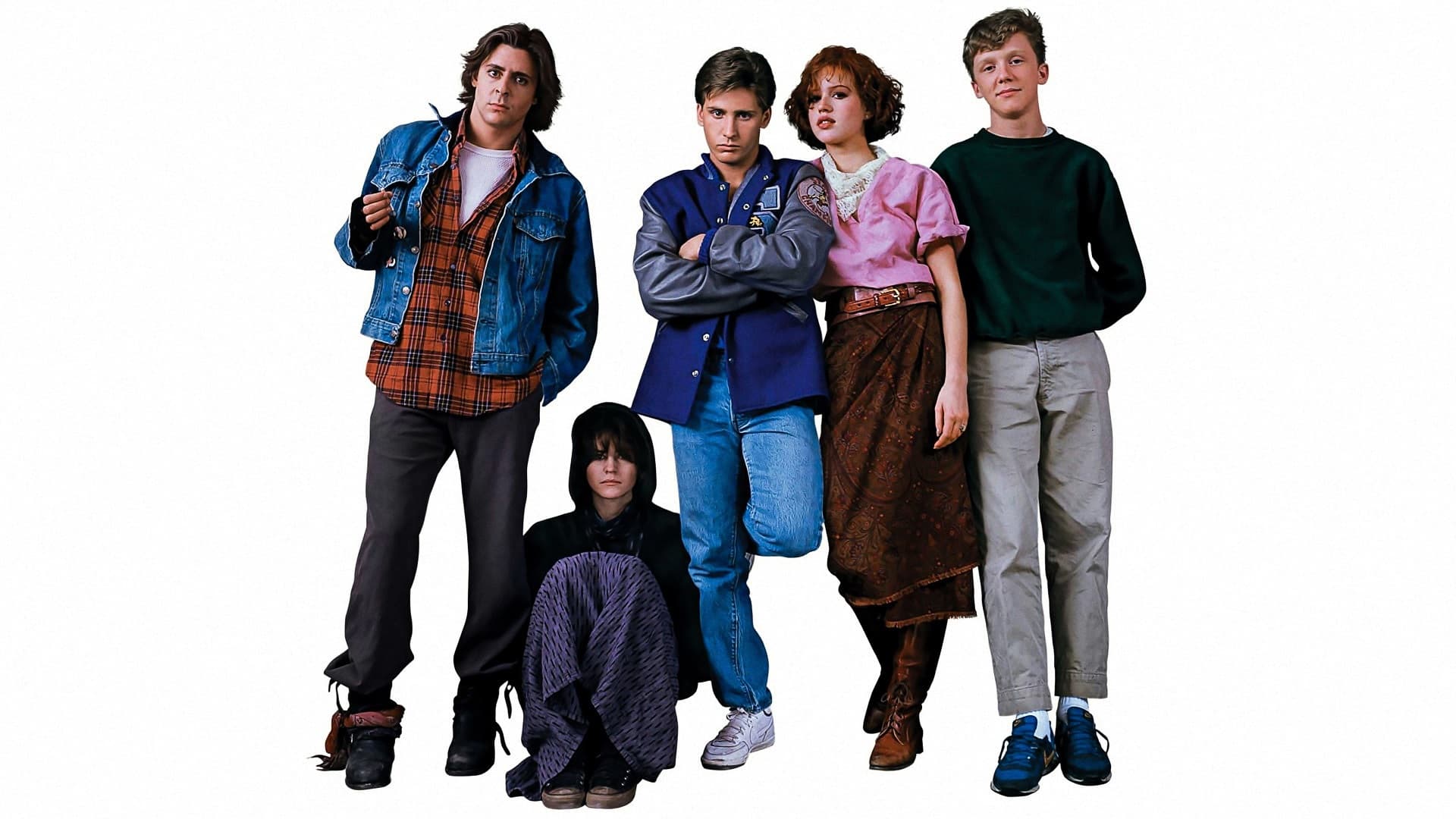
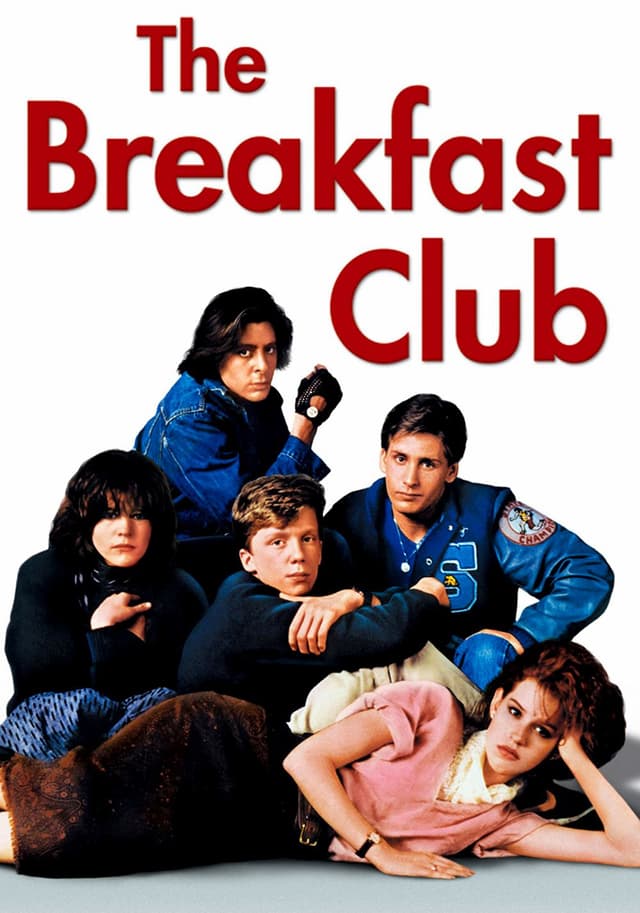
Five high school students from different walks of life endure a Saturday detention under a power-hungry principal. The disparate group includes rebel John, princess Claire, outcast Allison, brainy Brian and Andrew, the jock. Each has a chance to tell his or her story, making the others see them a little differently -- and when the day ends, they question whether school will ever be the same.
What Is the Budget of The Breakfast Club?
The Breakfast Club was produced for approximately $1 million, a modest sum even by 1985 standards. The film was financed through A&M Films and distributed by Universal Pictures. Writer-director John Hughes deliberately kept costs low by confining nearly the entire story to a single location: the library of a suburban high school. This constraint turned into an artistic advantage, forcing the film to rely on character, dialogue, and performance rather than spectacle.
Hughes had already proven he could deliver commercially successful youth films on tight budgets with Sixteen Candles (1984), which earned over $23 million domestically on a similarly lean production. Universal greenlit The Breakfast Club with confidence that Hughes could replicate that efficiency, and the gamble paid off handsomely.
Key Budget Allocation Categories
With a single primary set and a small cast, the budget was distributed across a handful of core categories:
- Cast Salaries accounted for a relatively small portion. The five leads were young actors without major leverage at the time of casting, though several had appeared in prior Hughes projects. Paul Gleason and John Kapelos rounded out the adult roles.
- Location and Set Design centered on Maine North High School in Des Plaines, Illinois, a recently closed public school that Hughes secured as the primary filming location. The school's gymnasium, hallways, and library served as the entire world of the film, minimizing the need for constructed sets.
- Writing and Direction costs were consolidated under Hughes, who both wrote the screenplay and directed. Hughes famously drafted the script in just two days, reducing the typical development overhead associated with separate writer and director fees.
- Music and Score covered Keith Forsey's original score and the licensing of Simple Minds' "Don't You (Forget About Me)," which Forsey co-wrote specifically for the film. The song became one of the defining tracks of the 1980s.
- Post-Production included editing a 2.5-hour rough cut down to the final 97-minute runtime. Editor Dede Allen shaped the film's pacing, and the trimming process was essential to keeping the energy tight across what is essentially a chamber piece.
How Does The Breakfast Club's Budget Compare to Similar Films?
The Breakfast Club stands out as one of the most cost-efficient hits of the 1980s. Comparing it to other teen and single-location films of the era reveals how much Hughes achieved with so little:
- Sixteen Candles (1984) had a budget of approximately $6.5 million and grossed $23.7 million domestically. Hughes proved the teen comedy formula worked, but The Breakfast Club delivered even stronger returns on a fraction of the investment.
- Ferris Bueller's Day Off (1986) cost $5.8 million and earned $70.1 million domestically. Hughes scaled up his ambition with location shooting across Chicago, but The Breakfast Club's single-set approach remains his most profitable film relative to cost.
- Pretty in Pink (1986) was produced for $9 million and grossed $40.5 million domestically. Written by Hughes and directed by Howard Deutch, it carried higher production costs due to multiple locations and a larger supporting cast.
- 12 Angry Men (1957) is the classic single-room drama benchmark. Made for $350,000, it earned modest theatrical returns but became a cultural touchstone. The Breakfast Club followed the same confined-space strategy nearly three decades later with far greater commercial success.
- My Dinner with Andre (1981) cost $475,000 and earned $1.9 million. Another minimalist production, it proved that dialogue-driven films could find an audience, though The Breakfast Club reached a vastly wider one by targeting the youth market.
The Breakfast Club Box Office Performance
The Breakfast Club opened on February 15, 1985, and became one of the defining films of its decade. On a $1 million production budget, it delivered extraordinary returns:
Box Office Breakdown
The Breakfast Club

The film exceeded its break-even threshold by more than 25 times, making it one of the most profitable films of 1985 relative to its cost. Its domestic performance alone returned over 45 times the production budget. The relatively modest international gross reflects the fact that teen comedies of the era were heavily U.S.-focused in their distribution, but the film's cultural influence spread globally through home video and television.
The Breakfast Club Production History
John Hughes wrote the screenplay for The Breakfast Club in just two days during a burst of creative energy in 1982. The script drew on Hughes's own memories of growing up in the Chicago suburbs and his observations of how teenagers from different social groups rarely interact outside the rigid hierarchies of high school. He conceived the film as a chamber piece: five students, one room, one Saturday.
Hughes cast five young actors who would come to define a generation of screen talent. Emilio Estevez played the athlete Andrew Clark, Anthony Michael Hall took the role of bookish Brian Johnson, Judd Nelson was cast as rebellious John Bender, Molly Ringwald played popular Claire Standish, and Ally Sheedy portrayed the reclusive Allison Reynolds. Paul Gleason brought a memorable antagonism to the role of Vice Principal Richard Vernon.
Principal photography took place at Maine North High School in Des Plaines, Illinois. The school had recently closed its doors permanently, which gave the production unrestricted access to the building. Hughes used the empty hallways, library, and gymnasium to create the enclosed world of Saturday detention. Filming lasted approximately four weeks in the spring of 1984.
Hughes encouraged improvisation on set and allowed extended takes to capture authentic interactions between the cast. Several scenes in the finished film contain improvised dialogue, particularly the group confessional sequences in the library. The director shot enough material to assemble a 2.5-hour rough cut, which was then edited down to 97 minutes. The trimming process removed several subplots and extended monologues but preserved the emotional arc that gives the film its lasting power.
The music became inseparable from the film's identity. Keith Forsey, who also served as the film's music supervisor, co-wrote "Don't You (Forget About Me)" with Steve Schiff. Simple Minds initially resisted recording the track but eventually agreed. The song reached number one on the Billboard Hot 100 and became the band's biggest hit in the United States.
Awards and Recognition
The Breakfast Club earned modest awards attention upon its release but has accumulated significant institutional recognition over the decades as its cultural impact became undeniable:
- National Film Registry (2016): The Library of Congress selected The Breakfast Club for preservation, citing the film as "culturally, historically, or aesthetically significant." The honor placed it alongside the most important American films ever made.
- Silver Bucket of Excellence Award (2005): The five principal cast members reunited at the MTV Movie Awards to accept this honorary award, marking the film's 20th anniversary and its enduring hold on popular culture.
- "Brat Pack" Legacy: While not a formal award, the media coined the term "Brat Pack" largely in response to the ensemble cast of The Breakfast Club and St. Elmo's Fire. The label defined an era of young Hollywood talent throughout the 1980s.
Critical Reception
The Breakfast Club holds an 89% approval rating on Rotten Tomatoes, reflecting strong critical consensus that the film transcended its genre. Upon release, reviewers noted that Hughes had created something rare: a teen film that treated its characters with genuine respect and psychological depth.
Roger Ebert awarded the film three and a half stars out of four, praising the performances and the honesty of the dialogue while noting that the film occasionally slipped into formula territory in its final act. He highlighted Judd Nelson's volatile performance as the emotional engine of the story. Janet Maslin of The New York Times called it "a shrewd and touching comedy" and credited Hughes with understanding adolescent anxiety better than any filmmaker working at the time.
Later reassessments have been even more favorable. Critics and scholars have examined the film as a serious exploration of class, identity, and the pressure that parental expectations place on teenagers. Its single-location structure has been compared favorably to stage plays, and its influence on subsequent teen films, from Clueless to The Perks of Being a Wallflower, is widely acknowledged. The American Film Institute and multiple film publications have ranked it among the greatest teen films ever made.
Frequently Asked Questions
How much did it cost to make The Breakfast Club (1985)?
The production budget was $1,000,000, covering principal photography, cast and crew salaries, locations, sets, post-production, and music. Marketing and distribution (P&A) costs are estimated at an additional $500,000 - $800,000, bringing the total studio investment to approximately $1,500,000 - $1,800,000.
How much did The Breakfast Club (1985) earn at the box office?
The Breakfast Club grossed $46,434,721 domestic, $5,095,721 international, totaling $51,530,442 worldwide.
Was The Breakfast Club (1985) profitable?
Yes. Against a production budget of $1,000,000 and estimated total costs of ~$2,500,000, the film earned $51,530,442 theatrically - a 5053% ROI on production costs alone.
What were the biggest costs in producing The Breakfast Club?
The primary cost drivers were above-the-line talent (Emilio Estevez, Judd Nelson, Molly Ringwald); star comedian salaries, location filming, and aggressive marketing campaigns.
How does The Breakfast Club's budget compare to similar comedy films?
At $1,000,000, The Breakfast Club is classified as a micro-budget production. The median budget for wide-release comedy films in the era ranges from $30 - 80M for mid-budget to $150M+ for tentpoles. Comparable budgets: Gone in 60 Seconds (1974, $1,000,000); A Woman Under the Influence (1974, $1,000,000); Rear Window (1954, $1,000,000).
Did The Breakfast Club (1985) go over budget?
There are no widely reported accounts of significant budget overruns for this production. However, studios rarely disclose precise budget overrun figures publicly. The reported production budget reflects the final estimated cost.
What was the return on investment (ROI) for The Breakfast Club?
The theatrical ROI was 5053.0%, calculated as ($51,530,442 − $1,000,000) ÷ $1,000,000 × 100. This measures gross revenue against production budget only - it does not account for P&A or exhibitor shares.
What awards did The Breakfast Club (1985) win?
4 wins total.
Who directed The Breakfast Club and who were the key crew members?
Directed by John Hughes, written by John Hughes, shot by Thomas Del Ruth, with music by Keith Forsey, edited by Dede Allen.
Where was The Breakfast Club filmed?
The Breakfast Club was filmed in United States of America. In 1999, Hughes said that his request to direct the film met with resistance and skepticism because he lacked filmmaking experience. He ultimately convinced the film's investors that, due to the modest $1 million budget and its single-location shoot, he could greatly minimize their risk.
Filmmakers
The Breakfast Club

Official Trailer
Build budgets like this one in Saturation
Start from an industry-standard feature film template, import the schedule and rates you already have, and let the cost report keep itself current as you spend. Real-time collaboration, no spreadsheets.