Jumanji Budget
Updated
Synopsis
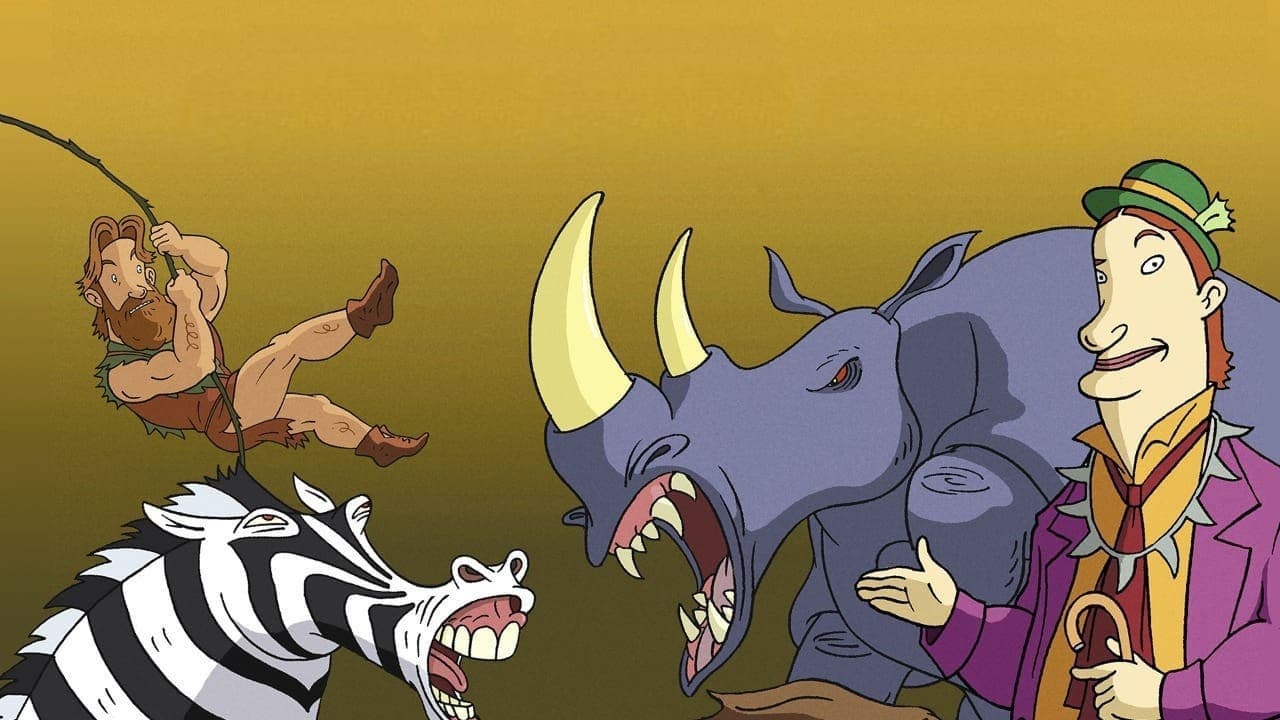
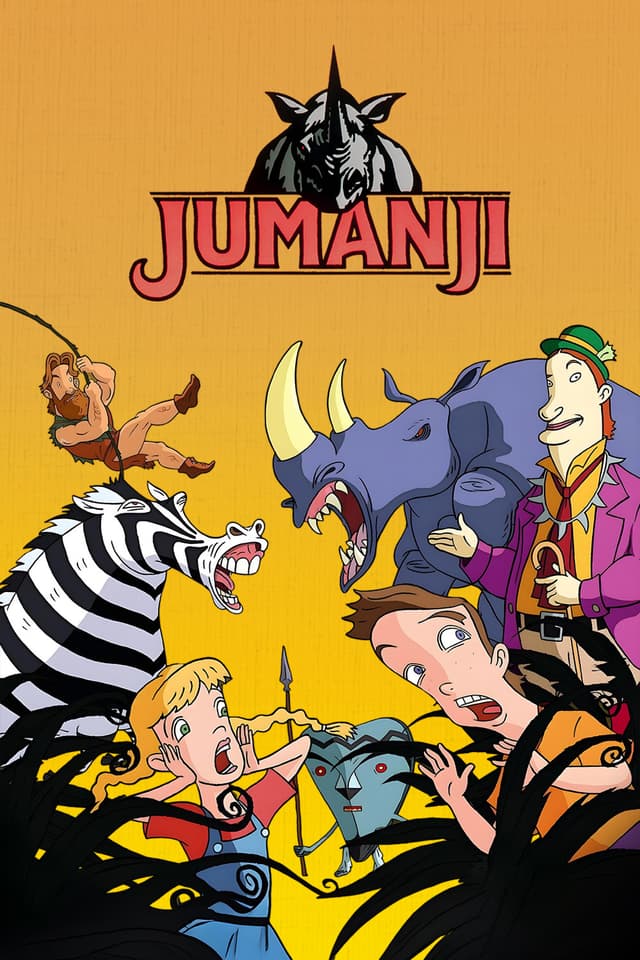
Judy and Peter Shepherd are two kids that found a board game called "Jumanji". With each turn, the two of them are given a "game clue" and then sucked into a dangerous jungle until they solve their clue. There they meet Alan Parrish, who was trapped in the Jumanji jungle because he had never seen his clue.
What Is the Budget of Jumanji (1995)?
Jumanji was produced on a budget of $65 million, a substantial investment by TriStar Pictures in a family adventure that required Industrial Light & Magic to develop entirely new visual effects software to realize its central premise. The film was released on December 15, 1995, and grossed $262.8 million worldwide against its $65 million production cost, ranking it as the tenth highest-grossing film of 1995. The decision to finance the production was directly tied to Robin Williams's attachment: TriStar conditioned its backing on Williams playing the lead role, reflecting his status at the time as one of the few actors considered capable of carrying a special effects-heavy family film to commercial success.
Key Budget Allocation Categories
The Jumanji budget was heavily weighted toward its visual effects requirements, which pushed the capabilities of ILM's production pipeline and required the development of software tools that did not yet exist when the film entered production.
- Visual Effects and ILM: Industrial Light & Magic created two pieces of proprietary software specifically for Jumanji: iSculpt, which generated realistic facial expressions on computer-generated animals, and the first production-ready digital hair system, used for the monkeys and lion sequences. These development costs were substantial, as ILM was building tools from scratch rather than adapting existing pipelines.
- Robin Williams and Principal Cast Salaries: Williams commanded a significant fee as the film's essential lead. The supporting cast included Kirsten Dunst, Jonathan Hyde, Bonnie Hunt, and Bradley Pierce, whose extensive prosthetic work added both makeup department costs and additional compensated shooting days.
- Practical Creature and Stunt Work: Beyond digital effects, the production used trained animals, physical stunt work, and practical sets for the sequences in which the game creatures invade the town. Coordinating live animals with child actors added safety and logistics costs.
- Location Shooting: Principal photography used Keene, New Hampshire, for the fictional town of Brantford, North Berwick, Maine, for the shoe factory sequences, and Vancouver, British Columbia, for studio work and the mansion interior. Three-location production added travel and accommodation costs above a single-location shoot.
- Prosthetic Makeup: Bradley Pierce underwent 3.5 hours of prosthetic makeup application per day for approximately two and a half months to depict his character's progressive transformation. The accumulated makeup department costs for this work were significant.
How Does Jumanji's Budget Compare to Similar Films?
Jumanji occupied the mid-to-upper range of family adventure film budgets in 1995, spending more than most live-action family productions but less than the decade's largest fantasy spectacles.
- Home Alone (1990): Budget $18,000,000 | Worldwide $476,684,675. The most commercially successful family comedy of the era was made for a fraction of Jumanji's cost, illustrating how effects-heavy family films commanded a distinct budget tier.
- The Lion King (1994): Budget $45,000,000 | Worldwide $968,483,777. Disney's animated blockbuster was produced for less than Jumanji but returned nearly four times as much, making it the more efficient family entertainment investment of the period.
- Casper (1995): Budget $55,000,000 | Worldwide $287,928,194. The Universal ghost comedy, also relying heavily on ILM digital effects for its title character, was released the same year as Jumanji at a slightly lower budget with comparable worldwide returns.
- Babe (1995): Budget $30,000,000 | Worldwide $254,134,910. The Australian-American talking pig film was produced for less than half of Jumanji's budget and generated nearly equivalent worldwide returns, highlighting the efficiency differential possible in effects-lite family filmmaking.
Jumanji Box Office Performance
Jumanji opened on December 15, 1995, debuting at number one at the North American box office with an opening weekend gross of approximately $11 million. The film built steadily through the Christmas and New Year holiday corridor, benefiting from its family positioning during the peak moviegoing season. By the end of its theatrical run it had accumulated $100.5 million domestically and $162.3 million internationally for a worldwide total of $262.8 million, making it the tenth highest-grossing film released in 1995.
Box Office Breakdown
Jumanji

The film generated approximately $2.76 for every $1 invested at the theatrical level, before accounting for home video, television licensing, and the substantial merchandise revenue associated with the Jumanji brand. The combination of Robin Williams's popularity, ILM's effects work, and the Christmas release window drove a performance that justified the studio's investment despite the mixed critical response.
Sony Pictures eventually leveraged the Jumanji property into a successful franchise reboot with Jumanji: Welcome to the Jungle (2017) and Jumanji: The Next Level (2019), both of which substantially outgrossed the original. The 1995 film's enduring cultural presence, sustained by home video, cable television runs, and streaming, maintained the brand's recognition among younger audiences who later drove the franchise's revival.
Jumanji Production History
Jumanji is based on Chris Van Allsburg's 1981 illustrated children's book, a brief and deliberately spare text about a board game that releases dangerous animals and phenomena into the real world. Adapting it required an almost entirely original screenplay, since the source material provided a concept and a tone rather than a plot structure. TriStar Pictures commissioned multiple drafts from writers including Jonathan Hensleigh, Greg Taylor, and Jim Strain before Van Allsburg himself contributed additional material, earning a story credit on the finished film.
Robin Williams initially declined the first version of the script, finding it insufficiently engaging. After the extensive rewrites, he agreed to participate, which unlocked TriStar's financing commitment. Director Joe Johnston, who had previously directed The Rocketeer (1991) and Honey, I Shrunk the Kids (1989), was chosen in part for his ability to work comfortably with heavy visual effects and child actors simultaneously. Johnston was reportedly concerned about Williams's tendency to improvise on set, a worry that proved unfounded: Williams worked closely with the structured script and contributed improvisations primarily within established scenes rather than departing from the narrative framework.
Industrial Light & Magic's work on the film pushed the studio into new technical territory. The digital animals, particularly the stampeding rhinos, elephants, and pelicans that invade the fictional town, required physics-based simulation and fur rendering at a quality level that ILM had not previously achieved. The iSculpt software and the digital hair system developed for Jumanji were subsequently used on other productions, meaning the development investment had value beyond the single film. Principal photography ran from November 14, 1994, through April 1995, with additional effects work continuing into the fall of 1995.
Awards and Recognition
Jumanji received recognition primarily from genre-specific and family entertainment awards bodies rather than from the major prestige film organizations, consistent with its positioning as a special-effects-driven family adventure.
- Saturn Award for Best Fantasy Film: Won at the Academy of Science Fiction, Fantasy, and Horror Films, recognizing the film's achievement within the genre.
- Young Artist Award for Best Family Feature (Action-Adventure): Won in 1996, recognizing the film's appeal to younger audiences.
- Channel 4 List "100 Greatest Family Films" (2005): Ranked 48th, reflecting its enduring place in the family film canon.
- Huabiao Film Award for Outstanding Translated Foreign Film (1997): Recognized in China, reflecting the film's strong international performance and distribution.
Critical Reception
Jumanji holds a 56% approval rating on Rotten Tomatoes based on 52 reviews, with the critics' consensus describing it as a visual spectacle that sacrifices narrative depth for effects showmanship. Metacritic assigns it a score of 41 out of 100, in the "mixed or average reviews" category. The CinemaScore from opening weekend audiences was A-, indicating that the audiences who paid to see the film found it more satisfying than critics did, a common divergence for effects-heavy family entertainment.
Roger Ebert gave the film one and a half stars out of four, questioning whether the PG rating adequately warned parents about scenes he found potentially traumatizing for young children, particularly the prolonged transformation sequence involving Bradley Pierce. Leonard Klady of Variety similarly flagged the tone as occasionally too intense for the youngest family audience members. Peter Bradshaw of The Guardian was more positive, giving the film four out of five stars for its technical achievement and Robin Williams's central performance. Kim Newman of Empire awarded three out of five, calling it a technically impressive but emotionally thin entertainment.
Frequently Asked Questions
How much did it cost to make Jumanji (1996)?
The production budget has not been publicly disclosed.
How much did Jumanji (1996) earn at the box office?
Box office figures are not publicly available.
Was Jumanji (1996) profitable?
Insufficient data for a profitability assessment.
What were the biggest costs in producing Jumanji?
Specific cost breakdowns are not publicly available.
How does Jumanji's budget compare to similar animation films?
Without a confirmed budget, comparison is not possible.
Did Jumanji (1996) go over budget?
There are no widely reported accounts of significant budget overruns for this production. However, studios rarely disclose precise budget overrun figures publicly. The reported production budget reflects the final estimated cost.
Who directed Jumanji and who were the key crew members?
Directed by Unknown.
Filmmakers
Jumanji

Official Trailer
Build budgets like this one in Saturation
Start from an industry-standard feature film template, import the schedule and rates you already have, and let the cost report keep itself current as you spend. Real-time collaboration, no spreadsheets.