Josie and the Pussycats Budget
 ComedyMusic1h 38m
Updated
Synopsis
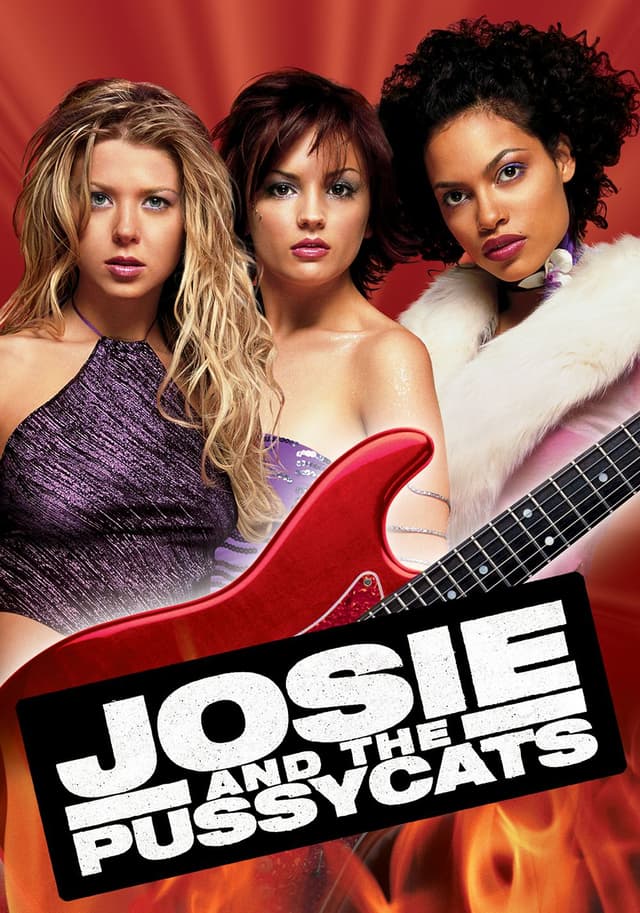
The latest fashion trends, designer labels and status symbols mean nothing to Josie, Melody and Val. They are more interested in creating their own home-grown rocker chic fashions and singing their own kind of rock music from their garage, while dreaming that one day they will make it big. When they are “discovered” by a band manager Wyatt, who instantly delivers a recording contract with Mega Records, it looks as if Josie and the Pussycats are on their way to the top. Before long, the girls have the number one single in the country, but they soon begin to suspect foul play. Realizing they are pawns in an evil attempt by the record label’s maniacal CEO Fiona, to control the youth of America, the girls vow to clear their names and kick some major corporate butt while they’re at it!
What Is the Budget of Josie and the Pussycats?
Josie and the Pussycats was produced on a $22 million budget, co-financed by Universal Pictures and Metro-Goldwyn-Mayer. The film was directed by Deborah Kaplan and Harry Elfont, the duo behind the 1998 teen hit Can't Hardly Wait, and adapted the Archie Comics character created by Dan DeCarlo in 1963. The Pussycats had already enjoyed a run as a pop-culture staple through the 1970-71 Hanna-Barbera animated series, which gave the property strong name recognition among audiences of the era.
The film is set in a fictional present-day music industry and centers on three small-town friends who are catapulted to global stardom by a scheming record label executive. What distinguishes Josie and the Pussycats from virtually every other studio release of its era is its approach to product placement: Kaplan and Elfont deliberately flooded the film with real and fictional brand logos as a satirical statement about consumerism and the manufactured nature of pop stardom. Crucially, most of the brands seen on screen did not pay for placement. Some companies, including McDonald's, later asked to have their logos removed when they understood that the film was mocking them.
Released on April 11, 2001, the film opened to a disappointing $5.3 million and earned only $14.87 million worldwide, making it a clear theatrical loss. However, the film found its audience steadily over the following decade through DVD sales, cable television, and eventually streaming, and has since undergone a significant critical reappraisal as a genuinely clever satire that was ahead of its time.
Key Budget Allocation Categories
- Above-the-Line Talent: Rachael Leigh Cook led the cast as Josie McCoy, joined by Rosario Dawson and Tara Reid as Valerie and Melody. Parker Posey and Alan Cumming played the villains with considerable relish. The ensemble required strong comedic timing and musical credibility, shaping casting decisions and talent costs.
- Music Production: Original songs were a central component of the film, recorded with a studio band assembled specifically for the project. Lead vocals were performed by Kay Hanley of the Boston rock band Letters to Cleo, with Rachael Leigh Cook and Rosario Dawson also featured on some tracks. The soundtrack was released on Elektra Records, adding music production costs and label partnership coordination.
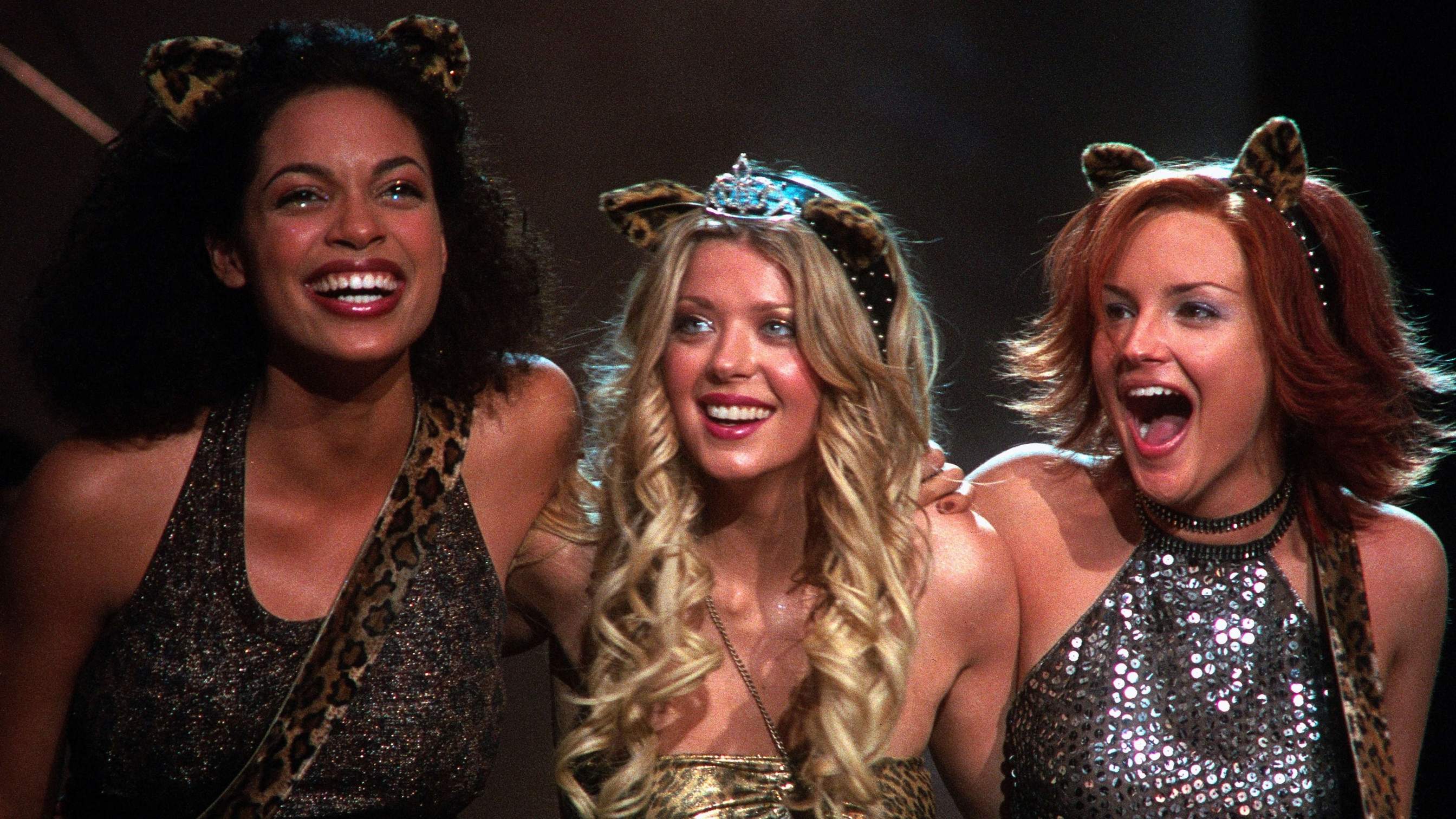
- Production Design and Costumes: The film's signature cat-ear aesthetic, elaborate stage show sequences, and the deliberately brand-saturated visual design required extensive set dressing and costume work. The production design had to simultaneously look like a glossy pop confection and function as a vehicle for visual satire, with logos and corporate imagery woven into virtually every frame.
- Brand Integration and Set Dressing: Contrary to the conventional logic of product placement deals, the majority of the brand appearances in Josie and the Pussycats were not purchased by the featured companies. Kaplan and Elfont's satirical vision required sourcing, clearing, and in some cases fabricating brand imagery, which carried its own production and legal coordination costs.
- Cinematography: Director of photography Matthew Libatique brought a vibrant, oversaturated visual palette to the film. Libatique would go on to earn Academy Award nominations for Black Swan and A Star Is Born, and his work on Josie is a stylistically confident example of his early Hollywood career. His approach helped cement the film's pop-art visual identity.
- Marketing: Universal mounted a conventional pop-music marketing campaign that positioned the film as a straightforward teen comedy. Many critics have since argued that this campaign actively worked against the film, failing to signal the satirical tone to audiences who might have appreciated it and instead drawing in viewers who felt misled by the gap between marketing and content.
How Does Josie and the Pussycats' Budget Compare to Similar Films?
Josie and the Pussycats occupied a mid-range budget tier for early-2000s music-driven live-action adaptations, but its commercial result was among the weakest of its peers.
- Spice World (1997): Budget $25M, worldwide gross $77M. The British girl-group vehicle succeeded by leaning into its own absurdity and generating enormous goodwill from an established fanbase. Its international gross far exceeded its domestic numbers, a trajectory Josie could not replicate.
- Crossroads (2002): Budget $12M, worldwide gross $61M. Britney Spears's starring vehicle cost roughly half as much as Josie and returned four times the worldwide gross, reflecting the difference that a superstar vehicle and a built-in audience makes at a lower budget tier.
- Confessions of a Teenage Drama Queen (2004): Budget $20M, worldwide gross $29M. Lindsay Lohan's follow-up to Mean Girls operated at a similar budget level and returned comparable if slightly stronger results, benefiting from stronger star momentum at the time of release.
- Jem and the Holograms (2015): Budget $5M, worldwide gross $2.4M. The later adaptation of a comparable animated property shows how dramatically the market for live-action animated-IP adaptations compressed over the following decade, with Jem spending far less and earning far less than Josie despite the intervening years of franchise-film dominance.
Josie and the Pussycats Box Office Performance
Josie and the Pussycats opened on April 11, 2001 across 2,631 theaters in North America. Its opening weekend gross of $5.3 million placed it seventh at the box office, a weak debut that signaled the theatrical run would be brief. The film's domestic total reached just $14.27 million over its full run, with a negligible $595,000 in international markets.
Box Office Breakdown
Josie and the Pussycats

On a purely theatrical basis, Josie and the Pussycats returned roughly $0.34 for every $1 invested, making it a significant commercial failure by conventional metrics. The studios recovered some losses through ancillary revenue: the Elektra Records soundtrack performed adequately, and DVD sales through the early-to-mid 2000s brought the film to the audience that would eventually turn it into a cult property.
The theatrical disappointment had lasting effects on similar projects. It contributed to a temporary cooling of enthusiasm for live-action animated-property adaptations at major studios, a pattern that would not fully reverse until the late 2000s and 2010s. The film's eventual rehabilitation as a cult classic and media studies reference point has not translated into conventional sequel or remake activity, though development conversations have emerged periodically since the mid-2010s.
Josie and the Pussycats Production History
The Josie character was created by artist Dan DeCarlo for Archie Comics, debuting in Archie's Girls Betty and Veronica in 1963 before receiving her own title in 1969. The Hanna-Barbera animated series, which aired from 1970 to 1971, established the band format and the core trio of Josie, Valerie, and Melody as a pop-culture fixture for a generation of American children. The series was notably ahead of its time in featuring Valerie Brown as one of the earliest Black female protagonists in American animation.
The live-action adaptation was developed in the late 1990s as part of a broader wave of studio interest in reviving animated properties from the 1970s and 1980s. Deborah Kaplan and Harry Elfont, who had written and directed the well-received teen ensemble film Can't Hardly Wait in 1998, were attached early and brought a specific satirical vision to the project. Their central creative choice, filling the film's world with real and fake brand imagery as a commentary on commercial manipulation, shaped every aspect of the production.
Cinematographer Matthew Libatique was brought on to give the film a glossy, oversaturated pop-art look that would simultaneously mimic and undercut the aesthetics of MTV-era music marketing. Libatique's involvement gave the film a visual confidence that many critics eventually came to appreciate, even when the satirical intent was initially missed.
The approach to product placement was, by all accounts, intentional and defiant. Kaplan and Elfont have described in interviews how they pitched the concept to studios and brands alike. Most brands did not pay for their appearances; the filmmakers simply used their logos. When McDonald's representatives previewed the film and grasped that they were being satirized rather than promoted, they requested removal. The directors have cited this reaction as evidence that the satire worked, even if it cost them conventional placement revenue.
Kay Hanley of Letters to Cleo was recruited to record the lead vocals for the Pussycats' musical performances. The band had released several indie-rock albums and had a following in the alternative music community, and Hanley's voice gave the songs a credibility that went beyond the typical movie-soundtrack fare. The resulting Elektra soundtrack album is now considered a genuinely strong pop record in its own right.
The film was released on April 11, 2001 to a largely confused critical and commercial reception. Most reviewers in 2001 processed it as a failed attempt at a campy teen comedy, missing or dismissing the satirical framework. Universal's marketing campaign, which positioned the film conventionally, arguably made this outcome more likely by priming audiences with expectations the film was designed to subvert.
Awards and Recognition
Josie and the Pussycats received five award nominations on its initial release, primarily from teen-oriented industry organizations rather than the mainstream awards circuit.
- MTV Movie Award nomination for Best Musical Sequence
- Teen Choice Award nominations for Choice Actress: Comedy (Rachael Leigh Cook) and Choice Movie Soundtrack
- Saturn Award consideration in youth science fiction and fantasy categories
- The Elektra Records soundtrack album received favorable coverage in alternative music press, with Kay Hanley's vocal performances singled out
The more significant form of recognition has come retrospectively. The film's satirical product placement has been incorporated into academic media studies curricula and marketing courses as a pioneering example of anti-advertising embedded within a studio film. Articles in The AV Club, Vulture, Slate, and The Guardian published between 2016 and 2022 credited the film with a satirical coherence that reviewers in 2001 had not recognized. Rosario Dawson's performance as Valerie received particular attention in retrospective assessments, with critics noting that her grounded delivery served as an effective anchor for the film's more absurdist elements.
Critical Reception
Josie and the Pussycats holds a 54% approval rating on Rotten Tomatoes based on 103 reviews, with an average rating of 5.3 out of 10. The Metacritic score is 47 out of 100, indicating mixed or average reviews. The IMDb user rating is 5.7 out of 10. These scores reflect the confused and often dismissive reception the film received on release, though they do not capture the substantial critical reassessment that followed in the mid-2010s and beyond.
The original reviews in 2001 divided largely between critics who found the film aggressively stupid and those who detected something intentional in its excess but were not sure what to make of it. Roger Ebert gave the film two and a half stars, noting that it was "a movie that knows it's dumb but can't decide whether to be proud of it." Other reviewers at major papers were less generous, treating the brand-saturation as evidence of creative bankruptcy rather than satirical purpose.
The critical reappraisal began gaining momentum around 2016, when a series of essays reconsidered the film in the context of the streaming era's heightened interest in consumerism and manufactured celebrity. An influential piece at The AV Club argued that the film had been "right all along" about the trajectory of music-industry marketing, pointing out that the product-placement satire read as darkly prophetic when set against the brand-integration practices that had become standard in the years since. Similar essays followed at Vulture and Slate.
Subsequent reassessments have particularly praised Kaplan and Elfont's screenplay for its internal consistency, the three lead performances for calibrating the tone correctly, and Matthew Libatique's cinematography for giving the film a visual language that worked on both the surface and satirical levels simultaneously. The film is now regularly cited in discussions of early-2000s studio films that were misread on release, and its reputation among cinephiles has risen considerably from its 2001 starting point.
Frequently Asked Questions
How much did Josie and the Pussycats cost to make?
Josie and the Pussycats was produced on a $22 million budget, co-financed by Universal Pictures and Metro-Goldwyn-Mayer. The film was directed by Deborah Kaplan and Harry Elfont and adapted the Archie Comics character who first appeared in 1963 and gained wider recognition through the 1970-71 Hanna-Barbera animated series. The production involved original music recorded specifically for the film, elaborate production design saturated with brand imagery, and a cast that included Rachael Leigh Cook, Rosario Dawson, Tara Reid, Parker Posey, and Alan Cumming.
Was the product placement in Josie and the Pussycats paid for?
This is one of the most widely misunderstood aspects of the film: most of the product placement was not paid for. Directors Deborah Kaplan and Harry Elfont deliberately inserted real and fictitious brand logos throughout every scene as a satirical commentary on consumerism and the manipulation of pop music audiences. Several brands featured in the film never made a placement deal with the production. McDonald's, upon previewing the film and realizing it was mocking brand culture rather than promoting their products, asked to have their logos removed. The directors have described this reaction as confirmation that the satire was functioning as intended.
How much did Josie and the Pussycats make at the box office?
Josie and the Pussycats earned $14.87 million worldwide against its $22 million production budget, making it a clear theatrical loss when P&A costs are factored in. The film opened on April 11, 2001 across 2,631 theaters and debuted seventh at the box office with a $5.3 million opening weekend. The domestic total was $14.27 million and international receipts added only $595,000. The film recovered some losses through DVD sales and cable television over the following years, where it gradually found the audience that would eventually transform it into a cult property.
Has Josie and the Pussycats become a cult classic?
Yes, the film has undergone a significant critical reappraisal since its release. Initially dismissed by most reviewers as a generic and confused studio comedy, Josie and the Pussycats is now widely recognized as a genuinely clever satire of the music industry and consumerism. Beginning around 2016, essays in publications including The AV Club, Vulture, and Slate reexamined the film and credited its satirical coherence. The product placement concept in particular has been described as prescient given the direction brand integration took in the decade after the film's release. The film is now regularly cited in discussions of early-2000s studio releases that were misread on initial release.
Who performed the songs in Josie and the Pussycats?
The songs in the film were performed by a band assembled specifically for the project, with lead vocals provided by Kay Hanley of the Boston alternative rock group Letters to Cleo. Rachael Leigh Cook and Rosario Dawson also contributed vocals on some tracks. The soundtrack was released on Elektra Records and has been well-regarded by music critics in retrospective assessments, with Hanley's performances frequently singled out as a highlight. The music was composed by John Frizzell, with additional songs written by various collaborators for the Elektra release.
Was there a sequel to Josie and the Pussycats?
No theatrical sequel was produced following the box office disappointment in 2001. The commercial failure effectively ended near-term franchise plans at Universal and MGM. However, the growing cult following has generated recurring sequel and reboot discussions over the years. As of 2026, a new adaptation has been in various stages of development at different studios, though no project has been confirmed for production. The original film's increased standing among critics and audiences has kept interest in the property alive.
Filmmakers
Josie and the Pussycats

Official Trailer
Build budgets like this one in Saturation
Start from an industry-standard feature film template, import the schedule and rates you already have, and let the cost report keep itself current as you spend. Real-time collaboration, no spreadsheets.