Boomerang Budget
 ComedyRomance1h 57m
Updated
Synopsis
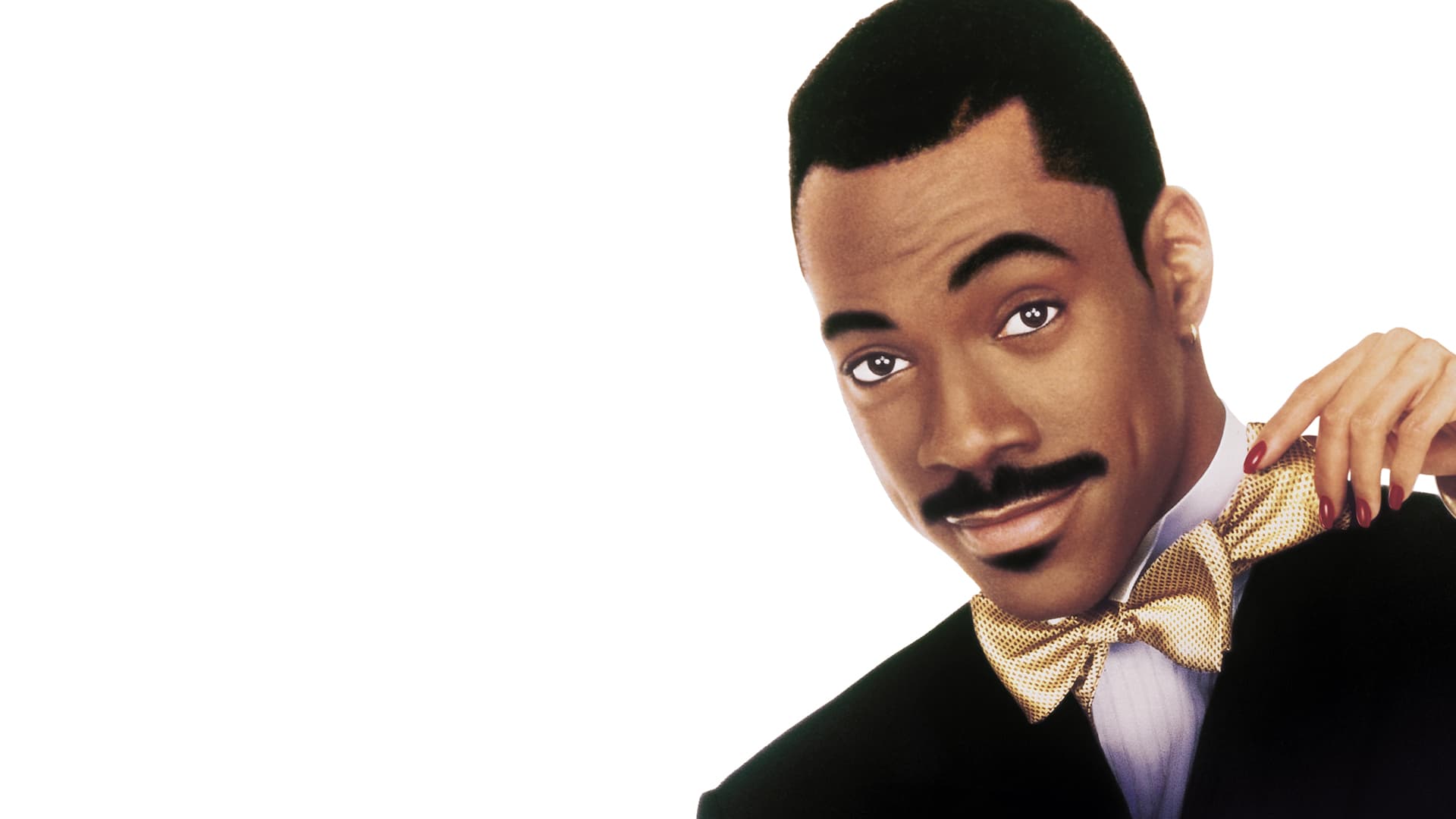
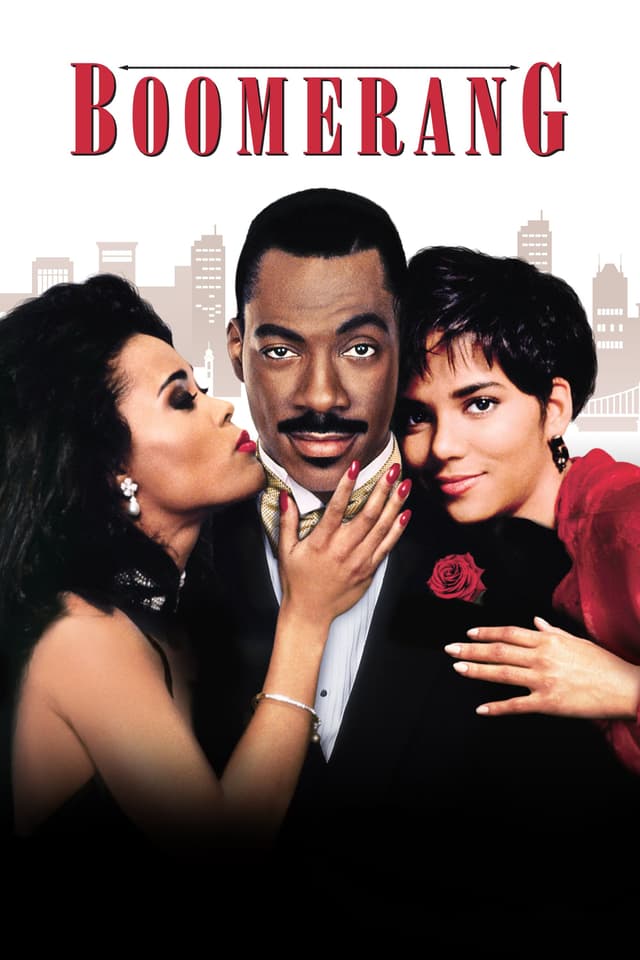
Marcus Graham, a charming and successful advertising executive in Manhattan, prides himself on being a relentless ladies' man until he meets his match in Jacqueline, a beautiful and powerful executive who treats him exactly the way he has treated women. As his life unravels, Marcus rediscovers what really matters when he reconnects with his coworker Angela, a kindergarten teacher whose warmth and patience offer him a chance at a different kind of love.
What Is the Budget of Boomerang (1992)?
Boomerang (1992), directed by Reginald Hudlin and distributed by Paramount Pictures, was produced on a reported budget of $42,000,000. The romantic comedy starred Eddie Murphy at the height of his post-Coming to America box office power, anchoring a predominantly Black ensemble cast that included Robin Givens, Halle Berry, David Alan Grier, Martin Lawrence, Grace Jones, Geoffrey Holder, and Eartha Kitt. Murphy also served as a producer through his Eddie Murphy Productions banner alongside Paramount executive Brian Grazer and Imagine Entertainment partner Warrington Hudlin, the director's brother.
The investment was substantial for an early 1990s romantic comedy, particularly one positioned as an upscale, glossy showcase for a Black creative ensemble rather than a broad four-quadrant studio comedy. The figure reflected Murphy's star salary, the New York City location shoot, a high-end production design built around the fictional Lady Eloise cosmetics company, and a wall-to-wall R&B soundtrack curated by LaFace Records co-founders Babyface and L.A. Reid. Paramount expected the film to clear roughly $80,000,000 to $90,000,000 worldwide to reach profitability after prints and advertising.
Key Budget Allocation Categories
Boomerang's reported $42,000,000 budget was distributed across several core production areas:
- Above-the-Line Talent: Eddie Murphy commanded a salary in the $8,000,000 to $10,000,000 range, consistent with his early 1990s quote following the success of Coming to America and Another 48 Hrs. Robin Givens and Halle Berry filled the two principal love-interest roles, with Berry cast against type as the warm kindergarten teacher Angela rather than her then-recent Jungle Fever or Strictly Business turns. Veteran supporting players Grace Jones, Eartha Kitt, and Geoffrey Holder added recognized name value at experienced-character-actor rates.
- New York City Location Shoot: Principal photography ran on location in Manhattan from late 1991 into early 1992, covering Madison Avenue exteriors, Tribeca apartment interiors built on stage at Kaufman Astoria Studios in Queens, and Soho gallery and restaurant scenes. New York shooting carried higher above- and below-the-line costs than a comparable Los Angeles or Vancouver shoot, with city permits, lodging for the Los Angeles unit, and union crew rates all contributing to a richer line-item total.
- Production Design and Wardrobe: Production designer Jane Musky, fresh off Ghost and When Harry Met Sally, built out the Lady Eloise offices, the Strange'e cosmetics counter-cosmetics rivalry sets, and Marcus Graham's magazine-spread bachelor pad to project an aspirational Black professional class rarely depicted in studio film at the time. Costume designer Francine Jamison-Tanchuck dressed Murphy in custom suits, Givens in haute couture, and Eartha Kitt in feathered Lady Eloise glamour, with the wardrobe department reportedly running into the seven figures.
- Original Score: Jazz bassist and composer Marcus Miller scored the film, integrating live R&B horns and a soulful instrumental palette that bridged the contemporary soundtrack songs and the dramatic scenes. Miller's score required orchestra recording sessions, custom arrangements, and a longer-than-typical music supervision schedule given the soundtrack's commercial ambitions.
- Soundtrack Curation and Music Licensing: The Boomerang soundtrack, executive produced by Babyface, L.A. Reid, and Daryl Simmons through LaFace Records and Arista, included original Boyz II Men, Toni Braxton, Johnny Gill, P.M. Dawn, Aaron Hall, A Tribe Called Quest, and Babyface tracks. Recording and licensing the album represented a meaningful share of the music budget and was treated as both a marketing asset and a separate commercial release.
- Visual Effects and Cosmetics Branding: While not effects-heavy, the film required practical work for the fashion-show set pieces, custom Lady Eloise and Strange'e cosmetics packaging and signage, and the Madison Avenue billboard inserts that established the cosmetics-industry world. Graphic design and prop fabrication for the fictional brands ran across several months of prep.
- Marketing and Soundtrack Cross-Promotion: Paramount allocated a sizable P&A budget that ran in parallel with LaFace and Arista's soundtrack rollout. The "End of the Road" single by Boyz II Men, which became the longest-running number one in Billboard Hot 100 history to that point at thirteen weeks, served as the film's lead promotional asset and drove cross-pollination between MTV, BET, and urban-format radio.
How Does Boomerang's Budget Compare to Similar Films?
At $42,000,000, Boomerang sat well above the typical 1990s romantic comedy and significantly above other Black ensemble films of its era. The comparison set illustrates how Murphy's star power inflated the production and how the film's outcome held up against its peers:
- Coming to America (1988): Budget $39,000,000 | Worldwide $288,752,301. Murphy's previous fish-out-of-water romantic comedy cost roughly the same as Boomerang but earned nearly six times its worldwide gross. The comparison underscored that Boomerang's contemporary urban setting and adult tone reached a narrower audience than the broader Akeem fairy tale.
- Beverly Hills Cop (1984): Budget $14,000,000 | Worldwide $316,360,478. Murphy's breakout earned more than seven times Boomerang's worldwide haul on a third of its budget, illustrating how dramatically the romantic comedy ceiling differed from the action-comedy ceiling for the same star.
- House Party (1990): Budget $2,500,000 | Worldwide $26,400,000. Reginald Hudlin's feature debut cost less than 6% of Boomerang and earned roughly $10 in worldwide gross for every $1 spent, a return ratio that Boomerang could not match despite its larger ambition.
- Jungle Fever (1991): Budget $14,000,000 | Worldwide $43,882,682. Spike Lee's contemporaneous interracial romance cost one third of Boomerang and earned roughly the same worldwide, demonstrating that the mid-budget Black drama was a viable studio model when costs were controlled.
- Waiting to Exhale (1995): Budget $16,000,000 | Worldwide $81,452,156. Forest Whitaker's adaptation of Terry McMillan's novel arrived three years later, cost less than 40% of Boomerang, and earned a comparable worldwide gross, marking the commercial success of the upscale Black ensemble film that Boomerang had partly opened the door for.
- The Best Man (1999): Budget $9,000,000 | Worldwide $34,556,330. Malcolm D. Lee's ensemble wedding comedy was made for roughly one fifth of Boomerang's cost and turned a clear profit, signaling that the genre Boomerang pioneered worked best at a more disciplined budget level.
Boomerang Box Office Performance
Boomerang opened on July 1, 1992, in the heart of the summer corridor, debuting to $13,623,290 across 1,679 theaters and finishing second at the domestic box office behind A League of Their Own. The opening weekend per-screen average of approximately $8,114 was strong, and the film held respectably through July despite competition from Batman Returns, Lethal Weapon 3, and Universal's Honey, I Blew Up the Kid.
Against a reported production budget of $42,000,000, the film needed approximately $85,000,000 in worldwide gross to reach profitability when accounting for marketing and distribution costs. Here is the financial breakdown:
Box Office Breakdown
Boomerang

Boomerang returned approximately $1.96 to $2.11 in theatrical revenue for every $1 invested when measured against total estimated production and marketing spend, qualifying as a clear theatrical hit. The domestic gross of $70,052,444 against an international gross of $61,000,785 produced a 53/47 split that was unusual for a Murphy vehicle, which typically over-indexed domestically, and reflected the contemporary urban setting that played better abroad than expected.
The soundtrack performed even more dramatically than the film. The Boomerang album, released through LaFace and Arista, peaked at number four on the Billboard 200 and was certified double platinum, with "End of the Road" by Boyz II Men topping the Hot 100 for thirteen consecutive weeks, breaking Elvis Presley's long-standing record. Soundtrack revenue meaningfully extended the property's overall profitability beyond the theatrical window.
Boomerang Production History
Boomerang originated with a screenplay credit shared by Barry W. Blaustein and David Sheffield, the writing partnership behind several of Eddie Murphy's most successful 1980s vehicles, including Coming to America and Saturday Night Live's Mr. Robinson's Neighborhood. Murphy himself shared story credit. The project was developed at Paramount Pictures under Murphy's longstanding studio output deal and was greenlit in 1991 with Murphy attached to star and produce.
Reginald Hudlin, fresh off the breakout success of House Party (1990) and its 1991 sequel, was brought in to direct. Hudlin and his brother Warrington Hudlin had founded the production company Hudlin Brothers and were positioned as commercially proven Black filmmakers at a moment when studios were actively seeking director-led Black projects in the wake of John Singleton, Spike Lee, and the Hudlins' own success. For Reginald Hudlin, Boomerang was a deliberate step up in scale, budget, and star caliber from the comparatively modest House Party.
Casting brought together a deep ensemble. Robin Givens, then known primarily for the sitcom Head of the Class and her high-profile marriage to Mike Tyson, was cast as the alpha executive Jacqueline. Halle Berry, who had just appeared in Jungle Fever and Strictly Business, took the role of the gentle kindergarten teacher Angela that would prove a turning point in her career trajectory. David Alan Grier and Martin Lawrence were cast as Marcus's best friends Gerard and Tyler, with Lawrence in particular still building his post-Def Comedy Jam profile. Grace Jones, Eartha Kitt, and Geoffrey Holder filled the heightened, comedic Lady Eloise cosmetics-industry roles.
Principal photography ran from late 1991 into early 1992 in New York, with location work across Manhattan and stage shooting at Kaufman Astoria Studios in Queens. The Madison Avenue corporate world, the Tribeca and Soho residential settings, and the cosmetics-industry fashion sequences were all built around the contemporary upscale Black New York milieu that distinguished the film from earlier Black romantic comedies set in lower-budget urban environments. Cinematographer Woody Omens, who had shot Eddie Murphy Raw and Harlem Nights, returned to lens the film.
Reginald Hudlin and editor Earl Watson assembled the cut at Paramount through the spring of 1992, with Marcus Miller scoring the film at sessions on both coasts. The film locked in late spring for a July 1, 1992 release, positioned to anchor Paramount's summer slate alongside Patriot Games. The soundtrack album was released on June 30, 1992, a day before the film, and the "End of the Road" single had already been on radio for weeks by the time the picture opened.
Awards and Recognition
Boomerang received modest awards-circuit attention dominated by its music. The soundtrack and "End of the Road" generated Grammy Award recognition in 1993, with Boyz II Men winning Best R&B Performance by a Duo or Group with Vocals and Best R&B Song for the track. The single also received a Grammy nomination for Record of the Year, ultimately losing to Eric Clapton's "Tears in Heaven."
The film itself received NAACP Image Award nominations in 1993, including Outstanding Motion Picture and Outstanding Actor in a Motion Picture for Eddie Murphy. Halle Berry was nominated for Outstanding Supporting Actress in a Motion Picture and won the category, an early industry recognition that contributed to the momentum she would carry into Losing Isaiah and Bulworth later in the decade. At the MTV Movie Awards, the film was nominated for Best Song From a Movie for "End of the Road."
Reginald Hudlin and the writing team were not nominated at the major industry guilds, and the film was passed over by the Golden Globes and the Academy Awards in all categories. Its long-term recognition has come instead from a steady reassessment as a landmark of upscale Black romantic comedy and a launchpad for Halle Berry and Martin Lawrence's subsequent leading careers.
Critical Reception
Boomerang received mixed reviews upon release but has been reassessed positively in the decades since. The film holds a 50% approval rating on Rotten Tomatoes based on 38 critic reviews, with a critical consensus that praised the ensemble while noting that the screenplay struggled to balance comedy and romantic drama. On Metacritic, the film carries a score in the mid-range, reflecting reviews that admired the visual style and the supporting performances even when they criticized the pacing.
Roger Ebert gave the film three stars in the Chicago Sun-Times, writing that "Murphy is in good form here, more relaxed than he's been in some time, and the supporting cast is exceptional," while flagging the script's reluctance to commit fully to either farce or sincerity. Janet Maslin in The New York Times praised Halle Berry's "easy, warm presence" and Grace Jones's "thunderous" comic turn but felt the film's 117-minute runtime ran past the natural endpoint of the central romantic premise. Variety's review highlighted Marcus Miller's score and the LaFace soundtrack as standout assets.
Audience reaction skewed sharply more positive than critics. The film opened to strong word-of-mouth, particularly among Black audiences for whom Boomerang represented an unprecedented theatrical depiction of upwardly mobile Black professionals, and the soundtrack became a cultural fixture that kept the title in active rotation across the early 1990s. Subsequent reappraisals in outlets including The Ringer, Vulture, and Slate have cited Boomerang as a foundational text for the late-1990s and 2000s Black ensemble romantic comedies that followed, including The Best Man, Brown Sugar, and Two Can Play That Game, and as the moment Halle Berry signaled the leading-lady career to come.
Frequently Asked Questions
How much did it cost to make Boomerang (1992)?
The reported production budget was $42,000,000. Paramount Pictures financed the production through Eddie Murphy Productions and Imagine Entertainment, with Brian Grazer and Warrington Hudlin producing. The figure was substantial for an early 1990s romantic comedy and reflected Eddie Murphy's star salary, the New York City location shoot, the upscale production design, and the curated R&B soundtrack overseen by LaFace Records.
How much did Boomerang earn at the box office?
The film grossed $70,052,444 domestically and $61,000,785 internationally, for a worldwide total of $131,053,229. It opened to $13,623,290 across 1,679 theaters on July 1, 1992, finishing second at the domestic box office behind A League of Their Own. The domestic-to-international split of 53/47 was unusual for an Eddie Murphy vehicle.
Was Boomerang a box office hit?
Yes. Against a $42,000,000 production budget and an estimated $20,000,000 to $25,000,000 in marketing spend, the film returned roughly $1.96 to $2.11 in worldwide gross for every $1 invested. It cleared profitability before backend participations and became one of Paramount's reliable summer hits of 1992.
Who directed Boomerang?
Reginald Hudlin directed Boomerang, working from a screenplay by Barry W. Blaustein and David Sheffield, with story credit shared by Eddie Murphy. Hudlin came to the project on the strength of House Party (1990) and its 1991 sequel, and Boomerang represented a deliberate step up in scale, budget, and star caliber from his earlier features.
Where was Boomerang filmed?
Principal photography took place in New York City from late 1991 into early 1992, with location shooting across Manhattan, including Madison Avenue and Soho, and stage work at Kaufman Astoria Studios in Queens. The Madison Avenue corporate world, the Tribeca and Soho residential settings, and the cosmetics-industry fashion sequences were all built around the contemporary upscale Black New York milieu that distinguished the film.
Who starred in Boomerang (1992)?
Eddie Murphy starred as advertising executive Marcus Graham, with Robin Givens as the alpha executive Jacqueline and Halle Berry as the warm kindergarten teacher Angela. The supporting cast included David Alan Grier and Martin Lawrence as Marcus's best friends, plus Grace Jones, Geoffrey Holder, and Eartha Kitt as the heightened Lady Eloise cosmetics-industry figures.
Was Boomerang Halle Berry's breakthrough?
Boomerang was the breakthrough showcase for Halle Berry. She had appeared in Jungle Fever (1991) and Strictly Business (1991) but Boomerang gave her a leading romantic role opposite Eddie Murphy at peak box office power and earned her the NAACP Image Award for Outstanding Supporting Actress in a Motion Picture in 1993. The visibility she gained from the film fed directly into her work in Losing Isaiah, Bulworth, and ultimately her Oscar-winning turn in Monster's Ball.
How successful was the Boomerang soundtrack?
The soundtrack was a cultural phenomenon. Released through LaFace Records and Arista, the album peaked at number four on the Billboard 200 and was certified double platinum. Boyz II Men's "End of the Road" from the soundtrack topped the Billboard Hot 100 for thirteen consecutive weeks, breaking Elvis Presley's long-standing record for the longest run at number one, and the single won the Grammy Award for Best R&B Performance by a Duo or Group with Vocals.
How does Boomerang compare to Coming to America (1988)?
Coming to America cost $39,000,000 and earned $288,752,301 worldwide, while Boomerang cost $42,000,000 and earned $131,053,229. The two Eddie Murphy romantic comedies were made for nearly the same price, but Coming to America's broader fish-out-of-water fairy tale reached nearly six times the worldwide audience that Boomerang's contemporary urban Manhattan setting did.
What did critics think of Boomerang?
The film received mixed reviews upon release, holding a 50% approval rating on Rotten Tomatoes from 38 critic reviews. Roger Ebert gave the film three stars and praised Murphy as relaxed and the supporting cast as exceptional. Janet Maslin in The New York Times highlighted Halle Berry's warmth and Grace Jones's comic energy while flagging the runtime. Subsequent reappraisals have positioned Boomerang as a foundational text for the late-1990s and 2000s Black ensemble romantic comedies that followed.
Filmmakers
Boomerang

Official Trailer
Build budgets like this one in Saturation
Start from an industry-standard feature film template, import the schedule and rates you already have, and let the cost report keep itself current as you spend. Real-time collaboration, no spreadsheets.