White Men Can't Jump Budget
 ComedyDrama1h 55m
Updated
Synopsis
Two street basketball hustlers try to con each other, then team up for a bigger score.
What Is the Budget of White Men Can't Jump (1992)?
White Men Can't Jump was produced on a budget of $15 million by 20th Century Fox and Rotting Clam Productions. For a studio sports comedy in 1992, that figure was modest but sufficient for a film built around authentic outdoor locations in Los Angeles rather than elaborate sets or special effects. Director Ron Shelton, whose previous film Bull Durham had proved that sports movies could succeed with low-key budgets and sharp writing, structured the production to maximize what the streets of Venice Beach already provided.
The $15 million budget allowed Shelton to hire a strong cast of rising stars, secure extended location permits along the Venice Beach courts, and devote meaningful resources to an original soundtrack rooted in hip-hop and R&B that felt native to the world of the film. The result was a movie that looked and felt expensive in its energy and specificity while spending carefully. White Men Can't Jump went on to earn $76.3 million domestically and approximately $90 million worldwide, returning six times its production cost and cementing Fox's confidence in Shelton's sports-comedy approach.
Key Budget Allocation Categories
- Above-the-Line Talent: Wesley Snipes, Woody Harrelson, and Rosie Perez were all on career trajectories in 1992 rather than at peak commanding salaries, which allowed Fox to assemble a genuinely charismatic trio for well within the budget. Snipes had Jungle Fever and New Jack City behind him; Harrelson was still best known as Woody on Cheers; Perez was a first-time lead. The combined above-the-line package likely ran $3 to $5 million, leaving substantial room for the below-the-line production.
- Venice Beach Location Shoot: The film was built around the outdoor basketball courts at Venice Beach and other Los Angeles pickup game locations. Securing city permits, managing crowd control, and integrating real local players as extras required dedicated logistical resources. Shelton used actual Venice Beach regulars as background, which added authenticity but also required coordinators and extended shooting days on exposed public courts.
- Pre-Production Athletics Training: Woody Harrelson arrived with minimal organized basketball experience. An intensive training program was built into pre-production to bring his game to a level that would hold up on screen against the genuinely skilled Snipes and real-life street players. This period of coaching, drilling, and court time was an unusual budget line for a narrative film and directly informed the credibility of the final product.
- Soundtrack Licensing: The film's soundtrack drew heavily on licensed hip-hop, R&B, and rock tracks including Jimi Hendrix's catalog, a significant licensing cost for a 1992 studio release. The music was inseparable from the Venice Beach setting and the film's cultural positioning, and Fox treated it as a genuine marketing asset rather than a secondary consideration.
- Post-Production: With no visual effects work required, post-production costs were standard for an early-1990s comedy: editing, color, sound mix, and a modest score from composer Bennie Wallace. The clean post budget reflected a film that was conceived and executed practically.
How Does White Men Can't Jump Compare to Similar Films?
White Men Can't Jump occupies a specific niche in the sports-comedy genre: a character-driven buddy film set in an authentic athletic subculture, made on a lean budget by a filmmaker who understood the sport from the inside. Its financial performance placed it well above what its production cost would have predicted, following the pattern of Ron Shelton's previous work and establishing a template for sports comedies that other studios would try to replicate throughout the 1990s.
- Bull Durham (1988): Budget $9M | Worldwide $50.9M. Shelton's prior sports film established his credentials as a writer-director who could translate genuine athletic knowledge into commercial entertainment. Bull Durham's success on a tight budget made White Men Can't Jump possible and set the expectation that Shelton's sports films punch well above their production cost.
- Hoosiers (1986): Budget $6.5M | Worldwide $28.6M. The most celebrated basketball film before White Men Can't Jump, Hoosiers worked in a wholly different register: inspirational, rural, period-set, and dramatically earnest. The contrast with White Men Can't Jump's urban street-hustle comedy shows how broadly basketball could anchor very different film types.
- Blue Chips (1994): Budget $17M | Worldwide $24.7M. The closest in setting and release proximity, Blue Chips starred Nick Nolte as a college coach and featured NBA players Shaquille O'Neal, Penny Hardaway, and Larry Bird. Despite the bigger names and slightly larger budget, it earned far less than White Men Can't Jump, confirming that star NBA talent does not automatically translate to box office.
- Space Jam (1996): Budget $80M | Worldwide $230.4M. The comparison illustrates how differently the basketball-film category scales when a studio leans fully into franchise IP and animation. Space Jam's budget was more than five times that of White Men Can't Jump and its worldwide gross more than double, but it required Michael Jordan, the Looney Tunes library, and a major marketing spend that no lean character comedy could match.
White Men Can't Jump Box Office Performance
White Men Can't Jump opened on March 27, 1992, distributed by 20th Century Fox. The film debuted strongly, driven by the chemistry of Wesley Snipes and Woody Harrelson and positive word of mouth from audiences who responded to its sharp dialogue and authentic basketball sequences. It earned $76.3 million domestically and approximately $90 million worldwide, making it one of the most commercially successful sports comedies of the decade.
On a $15 million production budget, Fox invested an estimated $12 million in print and advertising, bringing total costs to approximately $27 million. Because theatrical exhibitors retain roughly half of gross ticket sales, the studio's share of the worldwide gross was approximately $45 million. That represented a strong return on the production investment, though the P&A spend tightened the actual margin relative to the raw revenue figures.
Box Office Breakdown
White Men Can't Jump

White Men Can't Jump earned roughly $6 for every $1 invested in production. Accounting for P&A and theatrical splits, the actual studio profit was more modest, but the film's financial performance made it a clear commercial success for Fox and confirmed Shelton's model of low-budget, sports-specific storytelling as a repeatable formula.
White Men Can't Jump Production History
Ron Shelton came to White Men Can't Jump with hard-won credentials in the sports-film niche. A former minor league infielder who had spent years in the Baltimore Orioles system, Shelton brought insider athletic knowledge to his screenplays that set them apart from conventional Hollywood sports movies. Bull Durham (1988), his debut as a writer-director, had demonstrated that a sports film built around character, dialogue, and authentic subculture could find a wide audience. White Men Can't Jump was conceived as a different arena: the world of street basketball hustling on the courts of Los Angeles, a world as rule-governed and stratified as professional ball but operating outside any official structure.
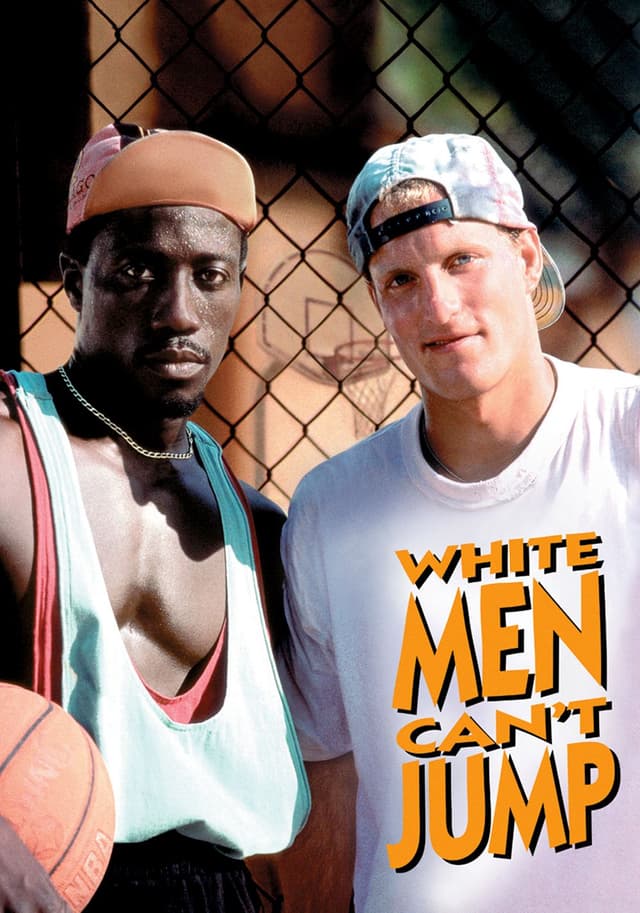
Casting was the foundation. Wesley Snipes, fresh from Spike Lee's Jungle Fever and Mario Van Peebles's New Jack City, brought genuine basketball skill and the charisma of an actor at the beginning of a major career. Woody Harrelson was Shelton's riskier choice: known primarily as the dim-witted Woody Boyd on the NBC sitcom Cheers, he had done little to suggest a credible screen athlete. Shelton bet on Harrelson's physical commitment and comic timing, and the gamble paid off. Harrelson trained intensively through pre-production, working with coaches and spending hours on the Venice Beach courts before cameras rolled. The result was a performance that held up convincingly against real street players in the background and Snipes's own evident skill. For Harrelson, White Men Can't Jump was effectively his first major film lead, a transition from television that permanently reset his career trajectory. Rosie Perez joined the cast as Gloria, Billy's Jeopardy-obsessed girlfriend, in a role that brought both comedy and unexpected emotional weight.
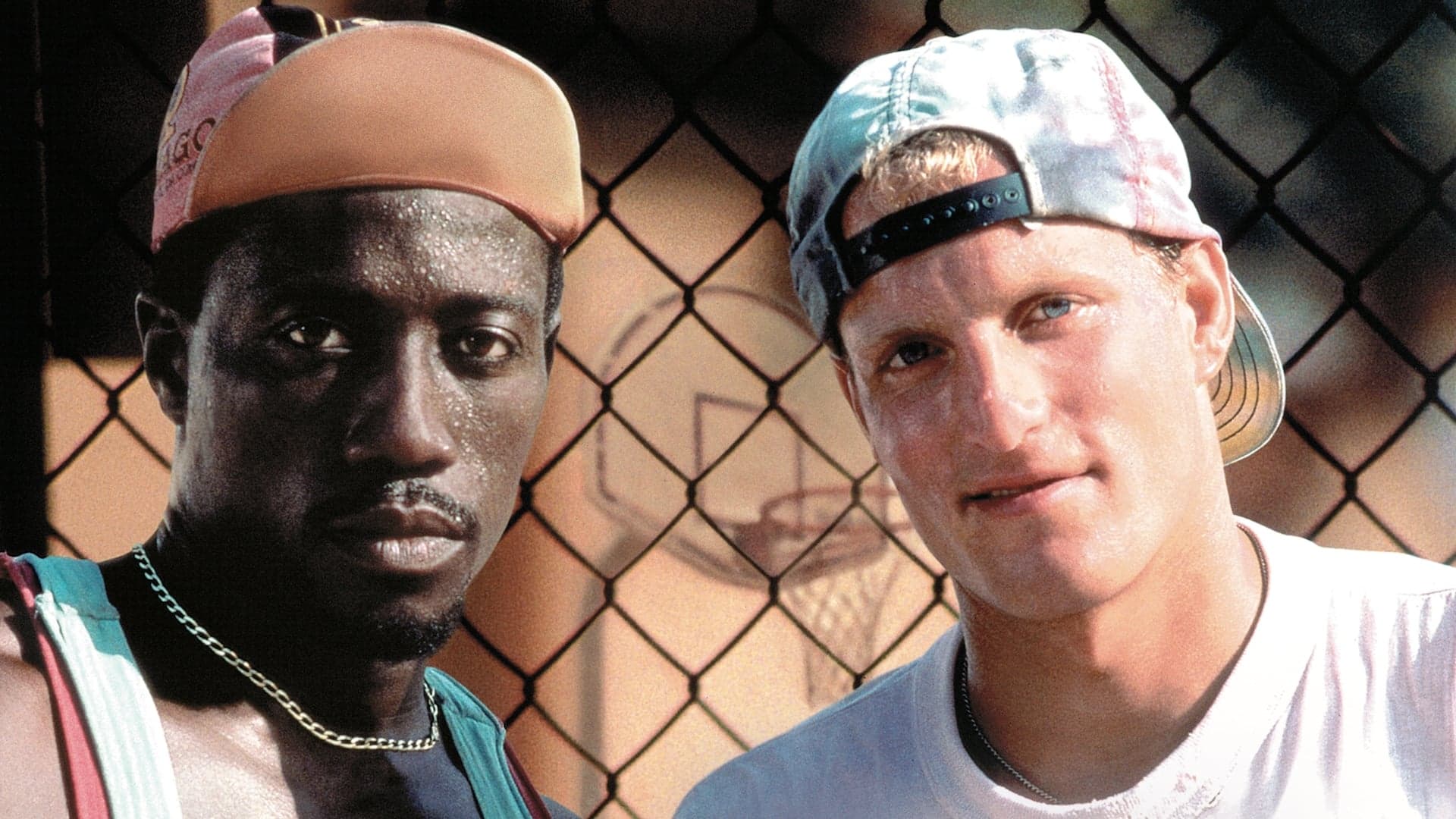
Principal photography was centered at Venice Beach, using the outdoor basketball courts that had been a real gathering place for Los Angeles street players for decades. Shelton chose the location not for its visual appeal alone but because it gave the film a ready-made community of extras: actual Venice Beach regulars who could fill the background with authentic game play, trash talk, and the specific culture of the courts. The decision created logistical challenges that a studio backlot shoot would have avoided, but it produced images that a constructed set could never replicate. Cinematographer Russell Boyd, known for his work on Crocodile Dundee and Master and Commander, brought a naturalistic visual approach suited to the outdoor, sun-bleached world of the film.
White Men Can't Jump was released on March 27, 1992, to strong critical and commercial reception. Fox marketed it on the strength of Snipes and Harrelson's pairing, leaning into the buddy-comedy dynamic and the novelty of a film set inside the world of street basketball hustle. The film became a cultural touchstone of early-1990s American cinema, defining the visual and sonic language of Venice Beach's basketball culture for a generation of viewers who had no direct connection to it. It led directly to Shelton's return to the sports-comedy format with Tin Cup (1996), and its influence on subsequent basketball films, from He Got Game to Hustle, is traceable in their shared interest in the game as a site of character, economics, and identity.
Awards and Recognition
White Men Can't Jump received no Academy Award nominations, and its genre and subject matter positioned it outside the awards circuit entirely. But the film earned a form of recognition more durable than most trophies: it established itself almost immediately as the defining fictional portrait of American street basketball and remained that reference point for more than thirty years.
The pairing of Wesley Snipes and Woody Harrelson was widely cited as one of the best buddy-comedy dynamics in recent Hollywood history, drawing comparisons to classic pairings in the Lethal Weapon franchise and 48 Hrs. Snipes's Sidney Deane became one of his most beloved performances, a character whose combination of hustle, pride, and warmth was cited repeatedly in retrospective coverage as evidence of the depth he brought to commercial films before his career shifted toward action franchises.
Rosie Perez's performance as Gloria brought her significant attention as a comic talent. Her work in the film contributed directly to her later Academy Award-nominated turn in Fearless (1993), demonstrating that White Men Can't Jump functioned as a launching pad for careers as much as a commercial vehicle. For Harrelson, the film permanently established his screen credibility as a dramatic and physical actor, opening the path to Natural Born Killers (1994) and The People vs. Larry Flynt (1996).
The film's cultural legacy extends into the soundtrack, the fashion, and the visual representation of Venice Beach, all of which influenced how hip-hop and street culture were depicted in American cinema through the rest of the decade. It remains a standard reference in conversations about sports cinema, buddy comedies, and the specific character of early-1990s Los Angeles as a cultural setting.
Critical Reception
White Men Can't Jump opened to strong reviews in March 1992. Roger Ebert awarded it four stars, calling it one of the best sports movies in years and praising Shelton's dialogue, the chemistry between Snipes and Harrelson, and the film's refusal to flatten its characters into simple racial archetypes. Ebert wrote that the film understood the world it depicted and trusted its audience to follow the moral complexity of its characters, a standard he applied to sports films that few in the genre met.
The critical consensus noted the originality of the setting and the quality of the writing alongside the performances. Reviewers who covered the film on release repeatedly singled out Rosie Perez's Gloria as the film's secret weapon, a supporting performance that matched Snipes and Harrelson beat for beat and added an emotional dimension that pure buddy comedies often lack. The Jeopardy subplot, in which Gloria prepares obsessively for a contestant appearance, became one of the most discussed elements of the film, praised as the kind of specific character detail that separates good writing from formula.
Decades on, White Men Can't Jump holds approximately an 82 percent approval rating on Rotten Tomatoes, a figure that reflects consistent reassessment. Critics writing retrospectively have placed it among the essential American sports comedies alongside Bull Durham, Hoosiers, and Slap Shot, a short list of films that treat athletic subculture as a genuine subject rather than a backdrop for conventional drama. The consensus is that Shelton made a film smarter and more specific than its premise suggested, one that has aged better than most of its contemporaries from 1992.
The 2023 Hulu remake prompted a wave of reappraisals that further cemented the original's reputation. Critics comparing the two films consistently found the 1992 version superior in script, performance, and cultural specificity, a judgment that reflected both the quality of Shelton's original work and the difficulty of replicating the context that made it resonate. White Men Can't Jump is now understood as a film that captured something true about Los Angeles street basketball in the early 1990s, and that specificity is not reproducible.
Frequently Asked Questions
How much did it cost to make White Men Can't Jump (1992)?
The production budget was $31,000,000, covering principal photography, cast and crew salaries, locations, sets, post-production, and music. Marketing and distribution (P&A) costs are estimated at an additional $15,500,000 - $24,800,000, bringing the total studio investment to approximately $46,500,000 - $55,800,000.
How much did White Men Can't Jump (1992) earn at the box office?
White Men Can't Jump grossed $76,253,806 domestic, $14,500,000 international, totaling $90,753,806 worldwide.
Was White Men Can't Jump (1992) profitable?
Yes. Against a production budget of $31,000,000 and estimated total costs of ~$77,500,000, the film earned $90,753,806 theatrically - a 193% ROI on production costs alone.
What were the biggest costs in producing White Men Can't Jump?
The primary cost drivers were above-the-line talent (Woody Harrelson, Wesley Snipes, Rosie Perez); star comedian salaries, location filming, and aggressive marketing campaigns.
How does White Men Can't Jump's budget compare to similar comedy films?
At $31,000,000, White Men Can't Jump is classified as a low-budget production. The median budget for wide-release comedy films in the era ranges from $30 - 80M for mid-budget to $150M+ for tentpoles. Comparable budgets: Arachnophobia (1990, $31,000,000); Arlington Road (1999, $31,000,000); Birth of the Dragon (2017, $31,000,000).
Did White Men Can't Jump (1992) go over budget?
There are no widely reported accounts of significant budget overruns for this production. However, studios rarely disclose precise budget overrun figures publicly. The reported production budget reflects the final estimated cost.
What was the return on investment (ROI) for White Men Can't Jump?
The theatrical ROI was 192.8%, calculated as ($90,753,806 − $31,000,000) ÷ $31,000,000 × 100. This measures gross revenue against production budget only - it does not account for P&A or exhibitor shares.
What awards did White Men Can't Jump (1992) win?
6 nominations total.
Who directed White Men Can't Jump and who were the key crew members?
Directed by Ron Shelton, written by Ron Shelton, shot by Russell Boyd, edited by Kimberly Ray, Paul Seydor.
Where was White Men Can't Jump filmed?
White Men Can't Jump was filmed in United States of America.
Filmmakers
White Men Can't Jump

Build budgets like this one in Saturation
Start from an industry-standard feature film template, import the schedule and rates you already have, and let the cost report keep itself current as you spend. Real-time collaboration, no spreadsheets.