Jingle All the Way Budget
 FamilyAdventureComedy1h 29m
Updated
Synopsis
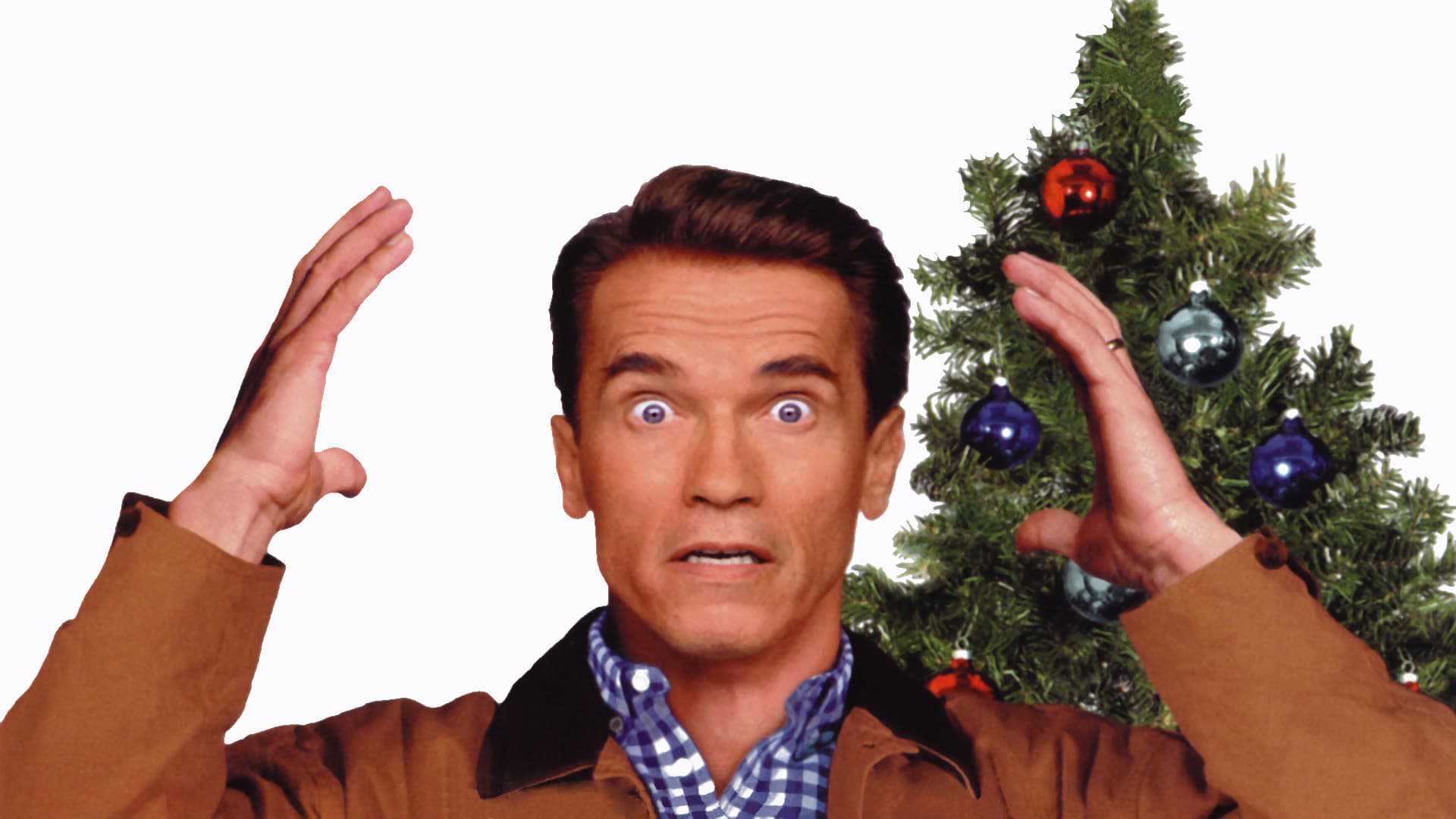
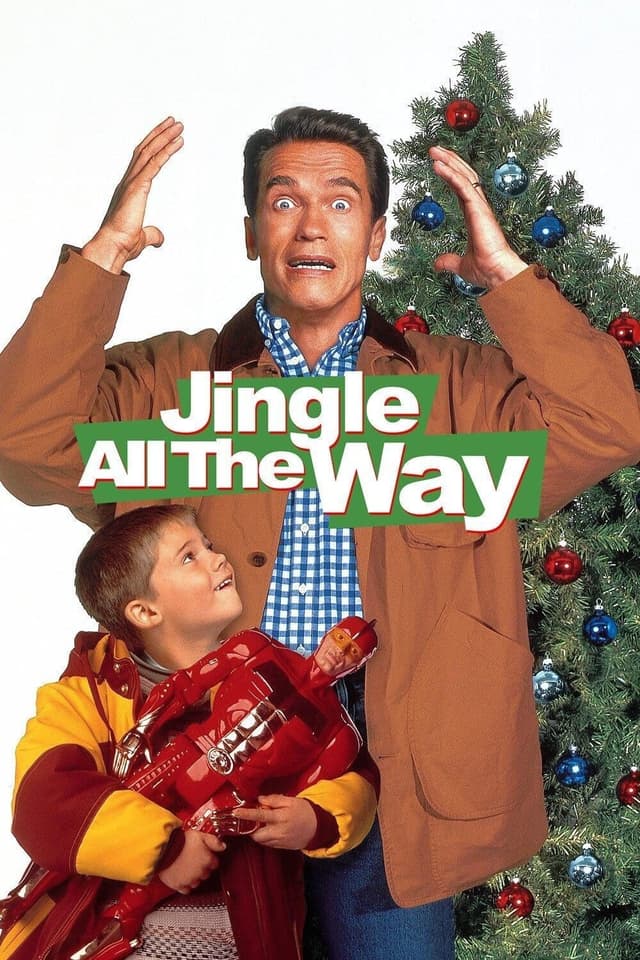
Howard Langston, a high-strung mattress salesman, has forgotten to buy his son the season's must-have toy, a Turbo Man action figure, on Christmas Eve. With every store in town sold out, Howard finds himself in a frantic, citywide race against a fellow desperate father, the postal worker Myron Larabee, to track down the last Turbo Man before sundown. The chase escalates from mall fistfights to reindeer mishaps to a downtown holiday parade where Howard ends up wearing the Turbo Man suit himself.
What Is the Budget of Jingle All the Way (1996)?
Jingle All the Way (1996), directed by Brian Levant and distributed by 20th Century Fox, was produced on a final budget of approximately $75,000,000, escalating from an initial green-light figure of around $60,000,000 after a series of mid-production cost overruns, additional second-unit photography, and expanded action set pieces. The film was produced by 1492 Pictures, the Chris Columbus shingle that had become a Fox-affiliated family-comedy machine on the strength of Home Alone, with Mark Radcliffe and Michael Barnathan serving alongside Columbus as producers. The $75,000,000 commitment placed the film in the upper tier of mid-1990s family comedies, reflecting the premium that Arnold Schwarzenegger commanded at the height of his post-Terminator 2 superstardom rather than the inherent scale of the screenplay.
The budget was structured around a single calculation: Schwarzenegger's $20,000,000 quote, locked in shortly after Eraser (1996), accounted for more than a quarter of the total negative cost before a single page of script had been shot. Co-star Sinbad, riding a wave of HBO comedy specials and First Kid (1996), commanded a substantially lower salary in the low seven figures, and Phil Hartman, then in his final season of NewsRadio, took a supporting role at a network-television rate. The film was rushed into production in spring 1996 to make a November 22 release, locking marketing spend and exhibitor commitments before the third act had been finalized.
Key Budget Allocation Categories
The $75,000,000 final budget for Jingle All the Way was distributed across several core production areas:
- Above-the-Line Talent: Arnold Schwarzenegger's reported $20,000,000 quote represented roughly 27% of the negative cost on its own. Director Brian Levant, coming off The Flintstones (1994), commanded a feature-tentpole rate. Sinbad, Phil Hartman, Rita Wilson, James Belushi, Martin Mull, and a then-five-year-old Jake Lloyd (in his first major role, two years before The Phantom Menace) filled out an ensemble whose collective compensation pushed the above-the-line line item past $30,000,000.
- Twin Cities Location Shoot: The film was based in the Minneapolis-Saint Paul metropolitan area for the bulk of principal photography in spring 1996, anchored by an extensive shoot at the Mall of America in Bloomington. The mall sequence required after-hours access, security coordination, and the construction of practical set dressing for the Wintertainment parade interior, all of which added significant location cost relative to a soundstage build.
- Los Angeles Practical Photography: Action photography, including the Mister Ponytail Boss action figure warehouse fight and the Turbo Man parade sequence finale, was shot in Los Angeles. The decision to bring the production home to California for second-half work increased the cost of stage rental, picture-car logistics, and the rigging required for the Turbo Man rocket-pack flight system.
- Practical Effects and Stunts: The Turbo Man rocket-pack rig, the suit construction for both Turbo Man and Dementor, the live reindeer, and the practical pyrotechnics used in the warehouse fight all sat in the budget. A dedicated stunt unit handled Schwarzenegger's mall pursuit sequences, with veteran coordinator Joel Kramer overseeing the action.
- Visual Effects and Suit Work: While the film leaned hard on practical effects, several composite shots, including the Turbo Man flight over downtown Minneapolis and the Dementor jetpack chase, required visual-effects vendor work. Stetson Visual Services and a handful of other shops handled the compositing budget.
- Score, Music, and Songs: David Newman scored the film, with original orchestral recording sessions and a Turbo Man theme song. Soundtrack licensing for needle drops including the Brian Setzer Orchestra's "Jingle Bells" cost additional money against the music line.
- Marketing Tie-Ins and Promotional Push: Fox positioned the film as a Thanksgiving weekend tentpole with an aggressive promotional push including Hasbro-produced Turbo Man toys at retail, fast-food tie-ins, and television spot saturation. While marketing sits outside the negative cost, the integrated retail rollout influenced production decisions including the practical design of the Turbo Man toy and the level of polish on the in-film commercials.
How Does Jingle All the Way's Budget Compare to Similar Films?
At a final $75,000,000, Jingle All the Way sat well above the typical 1990s Christmas comedy budget, reflecting the star-cost premium rather than the genre. The comparison set illustrates where the film fit in the holiday-feature landscape of its era:
- Home Alone (1990): Budget $18,000,000 | Worldwide $476,684,675. The Chris Columbus Christmas comedy that defined the genre cost less than a quarter of Jingle All the Way and earned more than three times its worldwide gross, an instructive contrast between concept-driven and star-driven holiday filmmaking.
- Home Alone 2: Lost in New York (1992): Budget $20,000,000 | Worldwide $358,994,850. The Macaulay Culkin sequel doubled the production scale of the original yet stayed at roughly a quarter of Jingle All the Way's budget, with John Hughes' screenplay and Plaza Hotel set pieces carrying the cost rather than a single above-the-line quote.
- The Santa Clause (1994): Budget $22,000,000 | Worldwide $189,833,357. Disney's Tim Allen vehicle established a holiday-comedy benchmark at less than a third of Jingle All the Way's cost and went on to spawn two theatrical sequels and a Disney+ series, demonstrating the durability of a contained Christmas premise.
- Elf (2003): Budget $33,000,000 | Worldwide $228,239,012. Jon Favreau's Will Ferrell vehicle, made seven years later for less than half of Jingle All the Way's budget, became a perennial holiday touchstone with stronger long-tail revenue across home entertainment and television licensing.
- Bad Santa (2003): Budget $23,000,000 | Worldwide $76,500,000. The Terry Zwigoff anti-Christmas comedy with Billy Bob Thornton earned a smaller worldwide gross than Jingle All the Way at less than a third of the budget, with stronger margin and a far longer cultural shelf life.
- How the Grinch Stole Christmas (2000): Budget $123,000,000 | Worldwide $345,141,403. Ron Howard's Jim Carrey vehicle, made four years later in the same star-driven holiday lane, cost roughly 64% more than Jingle All the Way and earned roughly 168% more worldwide, illustrating how a fully realized brand-IP wraparound (Dr. Seuss) outperformed an original concept built around a single star.
Jingle All the Way Box Office Performance
Jingle All the Way opened on November 22, 1996, the Friday before the Thanksgiving holiday corridor, earning $12,114,376 over its three-day opening weekend and finishing second behind the Whitney Houston musical The Preacher's Wife. Over the four-day Thanksgiving frame, the film grossed $16,830,000, expanding to wide release and holding through the December calendar against limited family competition. Domestic totals reached $60,592,859 by the close of its theatrical run, with international markets adding another $68,800,000 for a worldwide gross of $129,392,859.
Against a final production budget of $75,000,000, the film needed approximately $130,000,000 to $150,000,000 in worldwide gross to clear breakeven once Fox's marketing and exhibitor share were accounted for. Here is the financial breakdown:
Box Office Breakdown
Jingle All the Way

Jingle All the Way returned approximately $1.08 to $1.17 in worldwide theatrical revenue for every $1 invested when measured against total estimated production and marketing spend, a marginally profitable result on a theatrical basis. The domestic share of the gross was $60,592,859 against an international share of $68,800,000, an unusually balanced 47/53 split that reflected Schwarzenegger's consistent global box office draw across European, Latin American, and Asian markets.
The real return came after theaters. Home video sales, repeat television broadcasts during the holiday season, and a steady annual residual on cable have turned Jingle All the Way into one of Fox's most durable library titles. Hasbro's Turbo Man action figure became one of the most sought-after holiday toys of the 1996 season, with secondary-market premiums attached to the in-film "Booster" sidekick. The merchandise economics, never disclosed by Fox, are widely understood to have meaningfully exceeded the theatrical contribution to the title's lifetime profit.
Jingle All the Way Production History
The screenplay began as a 1993 spec script by Randy Kornfield, a satirical jab at consumerist holiday culture written in the immediate wake of the 1983 Cabbage Patch Kids buying frenzy. Producer Chris Columbus, fresh off Home Alone and Mrs. Doubtfire, optioned the script through 1492 Pictures with Fox attached as the studio partner. Several rewrites by Randy Kornfield, Brent Forrester, and Steve Koren over 1994 and 1995 sharpened the comedy beats and softened the satirical edge to a PG-rated family register.
Brian Levant, the television veteran who had just delivered The Flintstones (1994) for Universal, was attached to direct in late 1995 on the strength of his ability to manage live-action family comedy. Arnold Schwarzenegger committed in early 1996 on a $20,000,000 deal, signaling the film as a star-led tentpole rather than a smaller ensemble comedy. Sinbad joined as Myron Larabee shortly after, with Phil Hartman, Rita Wilson, James Belushi, Martin Mull, and Jake Lloyd rounding out the ensemble across the spring.
Principal photography ran from May through July 1996, with the unit anchored in the Minneapolis-Saint Paul metropolitan area in Minnesota for several weeks of location work at the Mall of America, the Skyway system in downtown Minneapolis, and various Twin Cities suburban neighborhoods doubling for the Langston family home. The Mall of America sequence required after-hours access, the dressing of multiple interior storefronts as practical Wintertainment-themed retail, and choreography for the chaotic Turbo Man toy-aisle melee. The production then relocated to Los Angeles, California, for stage work and the climactic Turbo Man parade sequence, which used a closed downtown Los Angeles street corridor doubling for downtown Minneapolis.
Cost overruns mounted across the shoot. The Turbo Man rocket-pack rig required extensive engineering and rigging time, and the practical reindeer used in the Santa's Village sequence proved difficult to wrangle on a tight schedule. Additional second-unit photography in October 1996, just weeks before release, captured pickup shots for the parade finale. The combination pushed the final negative cost from a green-lit $60,000,000 to a reported $75,000,000 by the time the film locked picture in late October.
Fox positioned the film as the studio's Thanksgiving weekend release and coordinated with Hasbro on a Turbo Man toy line that hit retail in October 1996. The integration was deliberate: the in-film Turbo Man toy mirrors the actual Hasbro product in size, accessories, and packaging, and the "Turbo Man Booster" sidekick referenced in the film was also produced as a tie-in toy. The film was followed in 2014 by a direct-to-video sequel, Jingle All the Way 2, with Larry the Cable Guy in the lead role and Santino Marella as the antagonist, a wholly disconnected continuation that recycled the title and concept but featured no returning cast or creative principals.
Awards and Recognition
Jingle All the Way received no major industry awards recognition. The film was not nominated at the Academy Awards, the Golden Globes, the BAFTAs, the Saturn Awards, or the Critics' Choice Awards. The American Film Institute, the Producers Guild, and the Directors Guild also bypassed the film at their respective 1996 and 1997 ceremonies.
On the negative-recognition side, the film fared poorly. Sinbad earned a Razzie nomination for Worst Supporting Actor at the 17th Golden Raspberry Awards in 1997, losing to Marlon Brando in The Island of Dr. Moreau. Schwarzenegger received subsequent Razzie attention across his late-1990s output but escaped a nomination for Jingle All the Way directly. The Stinkers Bad Movie Awards, the now-defunct unofficial critical poll that ran in parallel to the Razzies through the 1990s and 2000s, nominated Jingle All the Way in multiple categories including Worst Picture and Worst Screenplay, ultimately handing the film several wins in its 1996 ceremony.
The film's reputation has reversed substantially in the decades since release, with a generation that grew up watching it during holiday cable rotations now treating it as a kitschy seasonal favorite. That reappraisal has not translated into formal awards recognition, but it has driven the title's status as one of the most-discussed Christmas films of the 1990s on social media each December.
Critical Reception
Jingle All the Way received broadly negative reviews on first release. The film holds a 19% approval rating on Rotten Tomatoes based on 70 critic reviews, with a critical consensus calling it "noisy, mean-spirited and mostly laugh-free." On Metacritic, the film scored 26 out of 100 from 19 critics, indicating generally unfavorable reviews. Audiences surveyed by CinemaScore at opening weekend gave the film a B, a solid mid-range result for a family release that signaled stronger turn-out from target audiences than the critical reaction suggested.
Roger Ebert of the Chicago Sun-Times gave the film one and a half stars out of four, writing that it "settles for being a series of dumb gags," and his reviewing partner Gene Siskel agreed in their televised review. The New York Times' Lawrence Van Gelder called the film "a cinematic stocking that proves to be considerably less than the sum of its bulges," while Variety's Leonard Klady noted that "Schwarzenegger's comic timing remains a work in progress." Janet Maslin, also writing in The Times, observed that the film "comes from the assembly line rather than the heart."
Audience reception diverged from the critical consensus. The film's solid Thanksgiving multiple and steady December hold indicated that family audiences enjoyed it more than reviewers did, and three decades of cable replay, home video sales, and now streaming rotation on Disney+ have cemented its place in the holiday canon. Critic Brian Tallerico, writing on Roger Ebert's site in a 2021 retrospective, acknowledged the film as "a Schwarzenegger curio that has become weirdly endearing in a way no one in 1996 anticipated," capturing the broader critical reappraisal that has accompanied the film's status as a millennial-era holiday staple.
Frequently Asked Questions
How much did it cost to make Jingle All the Way (1996)?
The final production budget was approximately $75,000,000, having climbed from an initial green-light figure of around $60,000,000 after cost overruns on the Turbo Man rocket-pack rig, additional second-unit photography, and an expanded Twin Cities to Los Angeles shoot. 20th Century Fox financed the production through Chris Columbus' 1492 Pictures.
How much did Jingle All the Way earn at the box office?
The film grossed $60,592,859 domestically and $68,800,000 internationally, for a worldwide total of $129,392,859. It opened to $12,114,376 over the three-day weekend of November 22, 1996, expanding to $16,830,000 across the four-day Thanksgiving corridor and finishing second behind The Preacher's Wife.
Was Jingle All the Way a box office success?
It was a marginal theatrical success. Against a $75,000,000 production budget and an estimated $35,000,000 to $45,000,000 in marketing spend, the film returned approximately $1.08 to $1.17 in worldwide gross for every $1 invested. The real profit center came from home video sales, perennial holiday-season cable rotation, and Hasbro's Turbo Man action figure tie-in, which became one of the most sought-after toys of the 1996 holiday season.
Who directed Jingle All the Way?
Brian Levant directed the film. Levant came to the project off The Flintstones (1994) for Universal and had built his career on live-action family comedy after a long run as a television writer on Mork and Mindy and Happy Days. He went on to direct Are We There Yet? (2005) and the Beethoven sequels.
Where was Jingle All the Way filmed?
Principal photography took place from May through July 1996, anchored in the Minneapolis-Saint Paul metropolitan area in Minnesota. Locations included the Mall of America in Bloomington, the downtown Minneapolis Skyway system, and Twin Cities suburban neighborhoods doubling for the Langston family home. The production then relocated to Los Angeles, California, for stage work and the climactic Turbo Man parade sequence, which used a closed downtown Los Angeles street corridor doubling for downtown Minneapolis.
How does Jingle All the Way compare to other 1990s Christmas comedies?
Jingle All the Way cost roughly four times what Home Alone (1990) cost and earned roughly a quarter of that film's worldwide gross. Home Alone earned $476,684,675 against an $18,000,000 budget. Home Alone 2 (1992) earned $358,994,850 against a $20,000,000 budget. The Santa Clause (1994) earned $189,833,357 against a $22,000,000 budget. Jingle All the Way's $129,392,859 worldwide haul made it the most expensive holiday comedy of the decade by a wide margin, with a star-cost premium that compressed the margin relative to the genre's lower-budget hits.
How much did Arnold Schwarzenegger get paid for Jingle All the Way?
Schwarzenegger commanded his standard $20,000,000 quote, locked in shortly after Eraser (1996) earlier the same year. That fee accounted for roughly 27% of the negative cost on its own and represented the largest single line item in the production budget. The deal cemented Schwarzenegger as one of three actors, alongside Tom Cruise and Jim Carrey, holding $20,000,000 quotes in mid-1990s Hollywood.
Was there a Jingle All the Way sequel?
Yes. Jingle All the Way 2 was released direct-to-video in 2014 with Larry the Cable Guy in the lead role as Larry Phillips and former WWE wrestler Santino Marella as the antagonist. The sequel had no returning cast members and no creative continuity with the original. It was produced by WWE Studios and Twentieth Century Fox Home Entertainment as a holiday-window video premiere rather than a theatrical release.
What did critics think of Jingle All the Way?
The film received broadly negative reviews on first release, with a 19% approval rating on Rotten Tomatoes (based on 70 critics) and a 26 out of 100 score on Metacritic. Audiences gave it a B CinemaScore. Roger Ebert gave the film one and a half stars out of four. Sinbad received a Razzie nomination for Worst Supporting Actor at the 17th Golden Raspberry Awards. The film's reputation has reversed substantially in the decades since release, with a generation that grew up watching it now treating it as a kitschy seasonal favorite.
Did Jingle All the Way win any awards?
No major industry awards. The film was not nominated at the Academy Awards, the Golden Globes, the BAFTAs, the Saturn Awards, or the Critics' Choice Awards. Sinbad earned a Razzie nomination for Worst Supporting Actor, losing to Marlon Brando in The Island of Dr. Moreau. The Stinkers Bad Movie Awards nominated the film in multiple categories including Worst Picture and Worst Screenplay and handed it several wins in its 1996 ceremony.
Filmmakers
Jingle All the Way

Official Trailer
Build budgets like this one in Saturation
Start from an industry-standard feature film template, import the schedule and rates you already have, and let the cost report keep itself current as you spend. Real-time collaboration, no spreadsheets.